


Arizona Podiatrist Malpractice Lawyer
Podiatrist malpractice can leave patients facing lasting pain, infections, reduced mobility, and the need for additional treatment when foot and ankle care falls below the accepted standard. Arizona podiatrists have a defined scope of practice, and problems can arise when a provider misses signs of serious infection, performs surgery without adequate evaluation, fails to refer to an appropriate specialist, or does not provide proper follow up care. Understanding the difference between a known surgical risk and preventable negligence can shape what happens next. If you or a loved one were harmed or worse due to podiatrist malpractice in Arizona, contact Hastings Law Firm for a free, confidential case review.

Last Updated: July 27, 2026
Trusted Legal Representation for Foot and Ankle Specialist Negligence in Arizona
When a podiatrist’s care leaves you worse off than before, the path forward can feel unclear. You may be dealing with pain that was never supposed to happen, an infection that should have been caught sooner, or a surgery that created new problems instead of solving old ones. Podiatrists, also known as Doctors of Podiatric Medicine (DPMs), have a defined scope of practice focused on diagnosing and treating conditions of the foot, ankle, and related structures. When a DPM fails to meet the accepted standard within that scope, or performs procedures beyond it, the consequences can be life-altering.
If you believe a podiatrist’s negligence caused you harm, an Arizona podiatrist malpractice lawyer at Hastings Law Firm can review your medical records, explain what should have happened, and help you understand your legal options. Contact us for a free, confidential case evaluation.

Identifying Negligence in Podiatric Care and Surgery
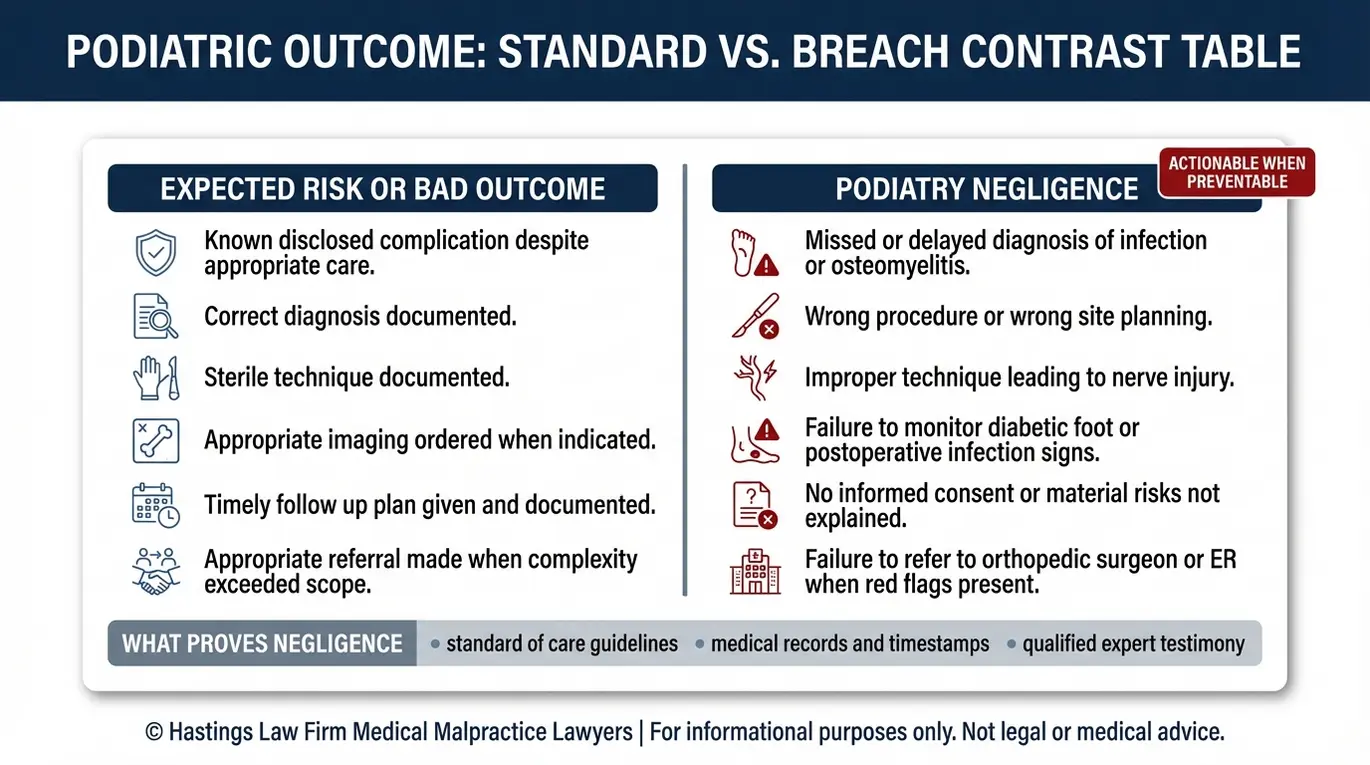
Podiatry negligence occurs when a Doctor of Podiatric Medicine (DPM), a physician licensed to treat conditions of the foot and ankle, deviates from the accepted standard of care, resulting in injury, infection, or permanent mobility loss. Not every poor outcome after treatment means something went wrong legally. Surgery carries inherent risks, and healing doesn’t always go as planned. The critical question is whether your podiatrist acted as a reasonably competent DPM would have under similar circumstances.
Under Arizona Revised Statutes § 32-801, podiatric medicine is a defined practice with specific boundaries. A DPM who operates outside those boundaries, or who fails to refer a patient to an orthopedic surgeon or other specialist when a condition exceeds the scope of podiatric training, may be liable for the resulting harm. The Arizona Supreme Court reinforced provider accountability standards in *Henke v. Hospital Development of West Phoenix*, underscoring the duty healthcare professionals owe their patients.
Our team of experienced Arizona malpractice attorneys looks for specific warning signs in medical records that may indicate a breach of the standard of care:
- Performing surgery without adequate diagnostic imaging or workup
- Failure to recognize or treat osteomyelitis, a serious bone infection that can spread rapidly if untreated
- Ignoring signs that a condition required referral to a specialist
- Inadequate post-operative follow-up care or monitoring
- Charting inconsistencies that suggest records were altered after the fact
Our in-house medical staff, including nurse practitioners and board-certified patient advocates, review your clinical records line by line. Because our team includes professionals who previously worked inside hospital systems, we know where to look for documentation gaps and protocol failures that other firms may miss. If you suspect your podiatrist’s care fell short, a lawyer for podiatrist malpractice at our firm can help determine whether you have a viable claim.
Common Surgical Errors and Complications We Litigate
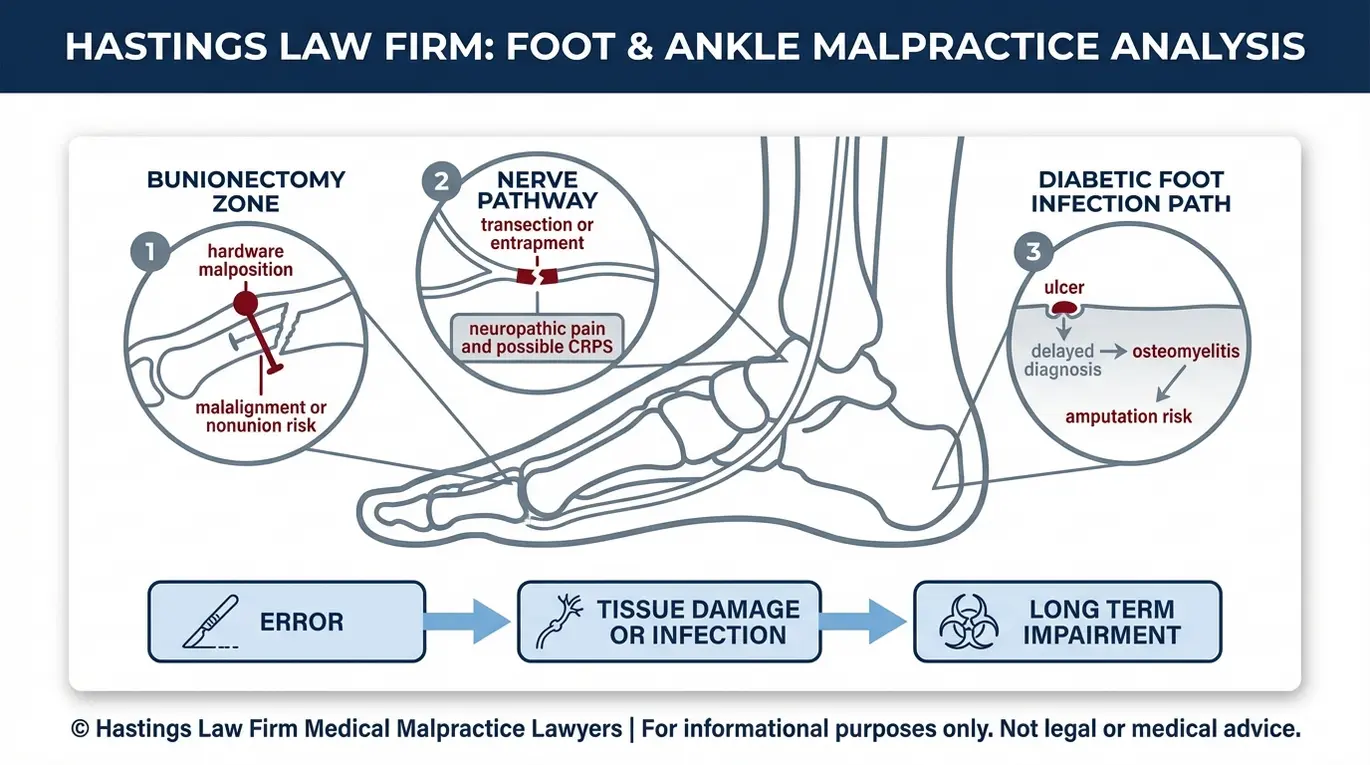
Common grounds for litigation include nerve damage during bunionectomies, failure to diagnose osteomyelitis, and performing unnecessary surgeries for financial gain. These injuries often result from a breach of medical protocols during foot and ankle procedures. Our Arizona podiatrist malpractice lawyers handle cases involving a wide range of preventable foot and ankle injuries, including botched surgery and misdiagnosis.
Surgical errors account for many of the cases we see. Botched bunionectomies, failed hammer toe corrections, and misplaced hardware can leave patients in worse condition than before surgery. Patients considering suing a foot doctor often find that when a surgeon uses improper technique, selects the wrong fixation method, or fails to address a known complication intraoperatively, the result can be chronic pain, repeat surgeries, or permanent disability.
Diabetic foot care failures are particularly serious. According to the National Diabetes Statistics Report from the CDC, millions of Americans live with diabetes, and many develop diabetic foot ulcers, which are open wounds on the foot caused by nerve damage and poor circulation. A podiatrist who fails to identify an ulcer, delays treatment, or misses early signs of infection may set off a chain of events that leads to amputation. These cases reflect our firm’s core belief that holding providers accountable helps prevent the same harm from happening to someone else.
Nerve injuries during foot surgery can trigger Complex Regional Pain Syndrome (CRPS), also called Reflex Sympathetic Dystrophy (RSD), a chronic condition involving severe burning pain, swelling, and sensitivity that can spread beyond the original surgical site. CRPS can be debilitating and permanent.
The following table illustrates the difference between an expected complication and potential negligence:
| Situation | Known Surgical Risk | Potential Negligence |
|---|---|---|
| Post-operative swelling and discomfort | Yes | No, if managed appropriately |
| Severed nerve causing CRPS | Rare but possible | Yes, if caused by improper technique |
| Minor wound infection treated promptly | Yes | No |
| Osteomyelitis missed for weeks despite symptoms | No | Yes, failure to diagnose and treat |
| Hardware migration requiring revision | Possible | Yes, if wrong hardware was selected or improperly placed |
Risks of Unnecessary Podiatric Surgery
Some podiatrist malpractice cases involve procedures that should never have been performed at all. A bunionectomy, the surgical removal or realignment of the bone at the base of the big toe, is one of the most commonly performed foot surgeries. But not every bunion requires surgery. When a podiatrist recommends an invasive procedure without a clear medical necessity, or without explaining the risks and alternatives through informed consent, the patient may have grounds for a claim. Informed consent means your doctor explained the risks and alternatives so you could make an educated decision about your treatment. A podiatrist malpractice lawyer in Arizona can evaluate whether the surgery was medically indicated and help you pursue financial compensation.
The Hastings Law Firm Difference
Results matter, but what truly sets us apart is how we achieve them. Every verdict, every settlement, and every Arizona courtroom victory comes from one guiding promise: To treat each client’s fight for justice as if it were our own.
This balance of skill, experience, and empathy reflects our core philosophy that justice should not only compensate the injured, but also make health care safer nationwide.

Recovering Full Damages Under Arizona Law
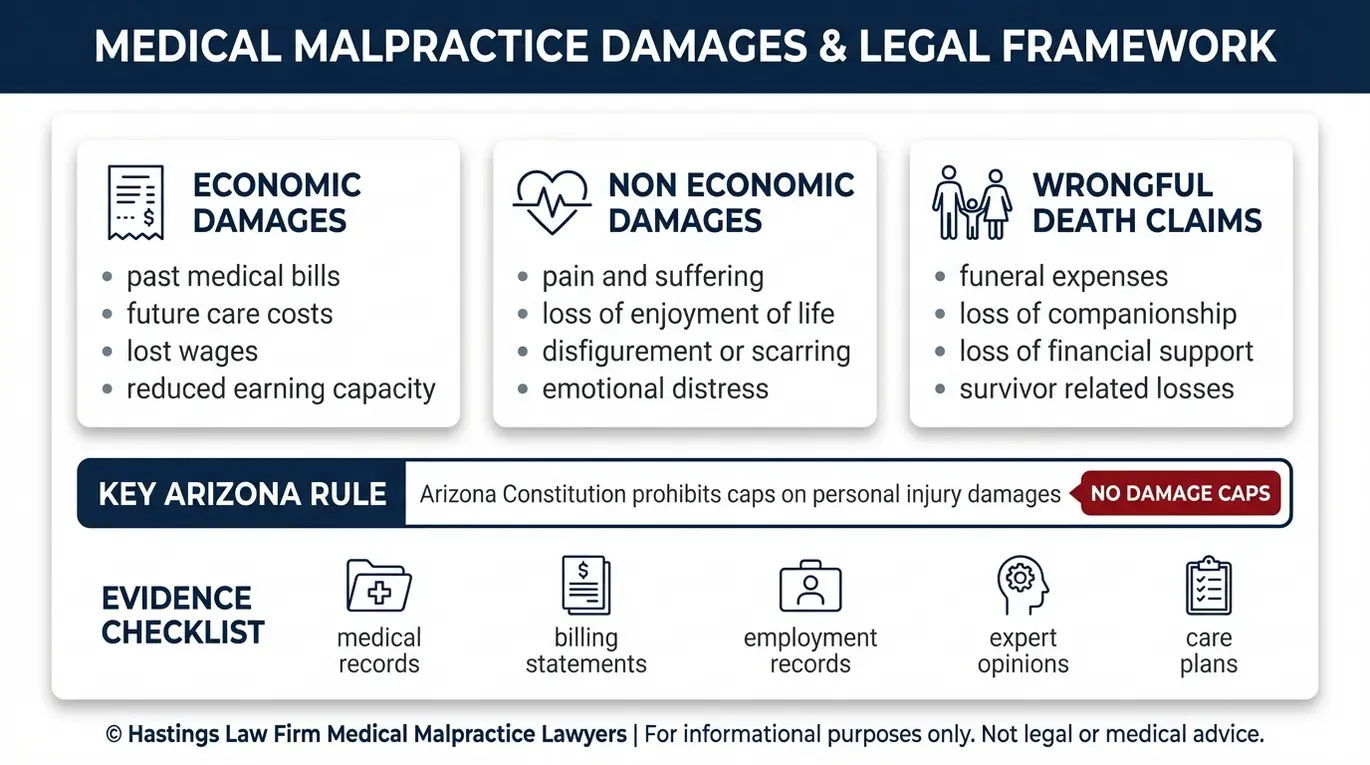
Arizona law allows victims to recover economic damages for medical bills and lost wages, as well as non-economic damages for pain and suffering, with no constitutional cap on the amount awarded. These financial recoveries help patients manage the long-term costs of medical negligence.
Economic damages cover the measurable financial losses caused by malpractice. These include past and future medical bills, rehabilitation costs, lost wages, lost income, and permanent disability if the injury affects your ability to work long-term.
Non-economic damages address the personal toll of the injury. This includes pain and suffering, loss of mobility, loss of enjoyment of life, and emotional distress. In cases where a patient dies as a result of podiatric negligence, surviving family members may pursue a wrongful death claim for their losses.
One important distinction sets Arizona apart from many other states: the Arizona Constitution expressly prohibits caps on damages in personal injury cases. This means juries are free to award financial compensation that truly reflects the scope of harm, without an arbitrary ceiling. An experienced malpractice attorney at our firm builds each case to document the full extent of your losses, both financial and personal, so that nothing is left on the table if your case goes to trial.
Contact the Arizona Doctor Malpractice Attorneys at Hastings Law Firm Today for Help
You do not have to carry this alone. Our legal team offers clear guidance to help you through this challenging time if a podiatrist’s negligence changed your life.
At Hastings Law Firm, board-certified trial attorney Tommy Hastings and our medical-legal team focus exclusively on medical malpractice. We prepare every case as if it will go before a jury, and we have the in-house medical professionals, former defense attorneys, and national expert network to build a thorough, evidence-driven claim on your behalf.
We work on a contingency fee basis, which means you pay no attorney fees or costs unless we recover compensation for you. There is no financial risk in reaching out.
If you are looking for an Arizona podiatrist malpractice lawyer who will listen, investigate, and hold the right people accountable, contact Hastings Law Firm for a free, confidential case evaluation. Let us help you take the first step toward answers and recovery.
Frequently Asked Questions About Podiatrist Malpractice in Arizona


This content was researched and written by the Hastings Law Firm editorial team, which includes attorneys, medical professionals, and experienced researchers. Our writing is informed by internal knowledge and practical experience, and we cross-check critical details against authoritative sources cited throughout. Every piece undergoes human-led fact-checking and legal review. Because legal and medical information can change, if you spot an error, please contact us. Learn more about our content standards and review process on our editorial policy page.

Tommy Hastings, founder of Hastings Law Firm, is a board-certified personal injury trial lawyer dedicated exclusively to healthcare injury cases. Since 2001, he has represented injured patients and families in litigation against major hospital systems, pharmaceutical companies, and negligent healthcare providers nationwide. He has handled numerous high-profile cases that have drawn national media attention and resulted in multi-million dollar recoveries. He draws on that experience in his writing, helping readers understand how these cases work and what options may be available to them.
