


Arizona Physical Therapist Malpractice Lawyer
Written by: Hastings Law Firm | Reviewed by: Tommy Hastings | Updated: July 27, 2026
Physical therapy is meant to support recovery, but unsafe rehabilitation care can leave a patient with new injuries and lasting limitations. Physical therapist negligence can involve poor supervision during transfers, overly aggressive exercises, improper manual techniques, or failure to adjust treatment when pain or distress is reported. Harm may also occur in home health settings when hazards are not addressed or equipment is not used safely. Clear documentation and a careful review of what occurred often shape accountability and recovery options. If you or a loved one were harmed or worse due to physical therapist negligence in Arizona, contact Hastings Law Firm for a free, confidential case review.

Top Rated Rehab Therapist Negligence Attorneys in Arizona
What You Should Know About PT Rehab Negligence Claims in Arizona:
- Lasting injury and extended recovery can follow when physical therapy care is unsafe or not adjusted to a patient condition.
- Serious falls can occur during therapy when transfers or balance activities are not properly supported or supervised.
- Significant harm can result when a therapist pushes movement beyond safe limits or uses improper manual techniques.
- Options for financial recovery can be broader in Arizona because non economic damages are not capped in medical malpractice claims.
- Compensation can cover medical bills and lost income as well as pain suffering and reduced quality of life.
- Responsibility can extend to home health therapy when hazards are not addressed and supervision is inadequate in a home setting.
- Access to therapy records can be crucial because session notes and logs may show ignored pain reports or unsafe changes in care.
- Disputes over whether an injury was a known complication or a preventable error can shape how responsibility is evaluated.
- Comparative fault can reduce financial compensation when partial responsibility is alleged.
- Internal documentation such as incident reports and equipment maintenance logs can be central when defective or poorly set equipment is involved.

A Healthcare Focused Law Firm
Physical therapy is supposed to help you recover, not leave you worse off than when you started. If you or a loved one was injured because a physical therapist failed to provide safe, competent care, you may have grounds for a medical malpractice claim.
At Hastings Law Firm, our team of attorneys, in-house nurse consultants, and patient advocates focuses exclusively on medical malpractice. We understand that questioning a healthcare provider feels uncomfortable, and we also know that accountability is the only path toward answers, fair compensation, and preventing the same thing from happening to someone else. As an experienced Arizona physical therapist malpractice lawyer, we are prepared to review what happened and explain your options in a free, confidential consultation.
Common Types of Physical Therapy Negligence
Physical therapy negligence occurs when a therapist deviates from the accepted standard of care, leading to patient injury through actions such as improper technique, failure to supervise, or pushing a patient beyond safe physical limits. Identifying these errors is the first step in determining if professional standards were ignored. These cases can involve a single moment of inattention or a pattern of care that ignored clear warning signs. Ensuring patient safety requires constant vigilance from the provider.
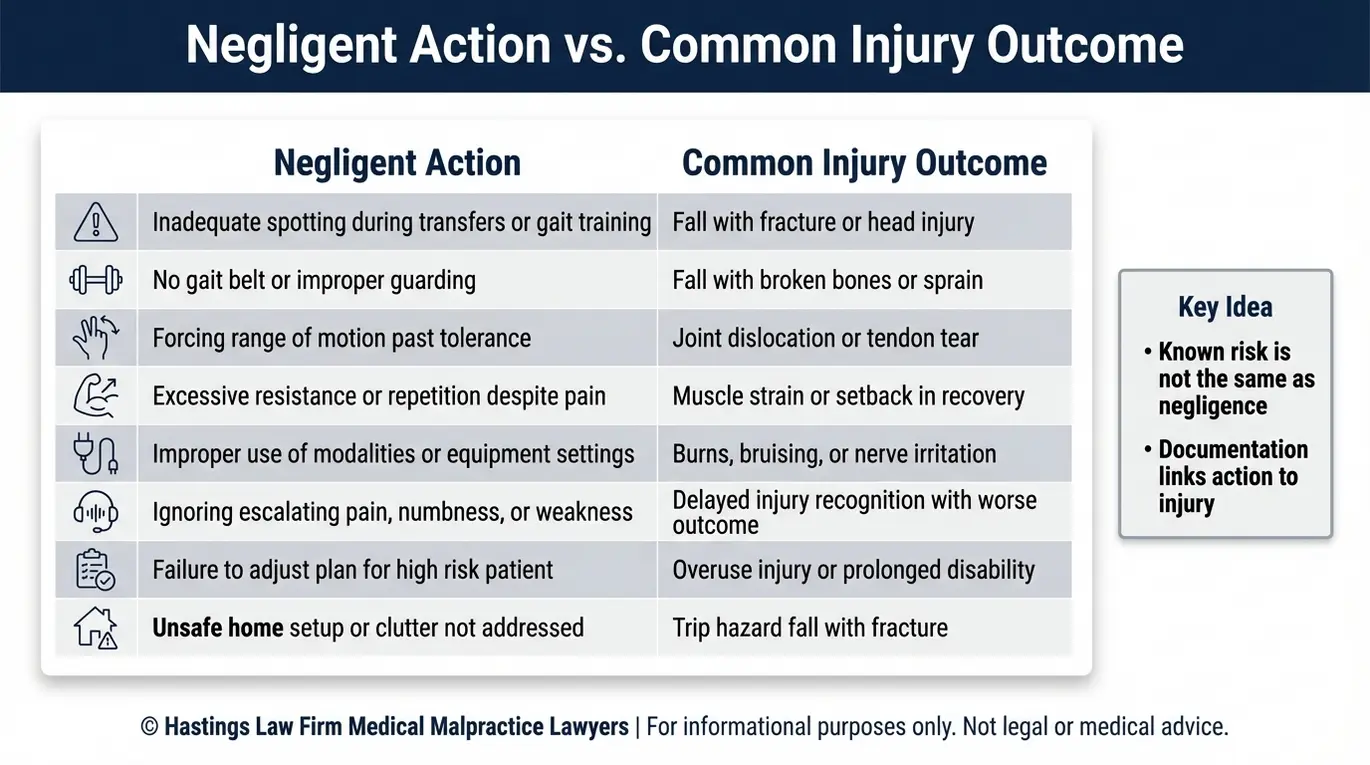
Falls and drops are among the most frequent injuries we see. A therapist may fail to use a gait belt, a safety strap worn around a patient’s waist to provide support during walking or transfer exercises. Inadequate supervision during bed-to-chair transfers or balance training can lead to serious falls, resulting in broken bones, head injuries, or joint dislocations.
Overexertion and improper technique cause harm when a therapist forces a joint beyond its safe range of motion or prescribes exercises that are too aggressive for the patient’s condition. Manual therapy, which involves hands-on joint mobilization and soft tissue work, carries real risk when performed incorrectly. Nerve damage, muscle tears, and re-injury to surgical sites can all result from careless or poorly executed treatment.
Failure to modify care is another common form of negligence. When a patient reports increased pain or shows signs of distress, the therapist has a duty to adjust the treatment plan. Ignoring those complaints, or continuing with a preset protocol despite clear patient deterioration, can turn a recoverable condition into a lasting injury. Therapists must constantly re-evaluate the patient’s status to prevent further harm.
| Negligent Action | Common Injury Outcome |
|---|---|
| Failure to use gait belt or supervise transfers | Falls, fractures, head injuries |
| Forcing range of motion beyond safe limits | Joint dislocation, ligament tears |
| Incorrect manual therapy technique | Nerve damage, soft tissue injury |
| Ignoring patient pain complaints | Worsened condition, re-injury |
| Using defective or improperly set equipment | Muscle strains, crush injuries |
If any of these situations sound familiar, speaking with a physical therapist malpractice lawyer can help you understand whether what happened qualifies as negligence under Arizona law. Our malpractice attorneys in Arizona evaluate these cases every day and can provide legal clarity quickly.
Proving Malpractice in Rehabilitation Settings
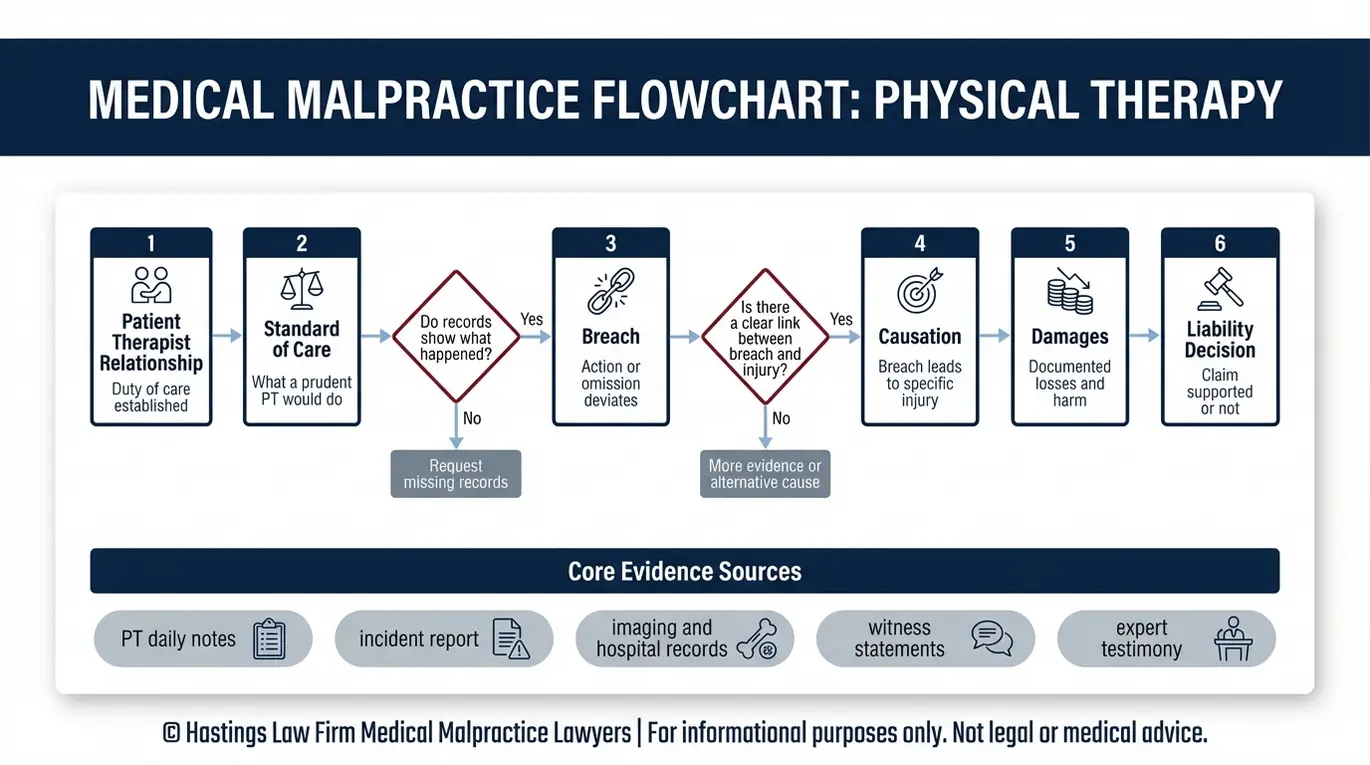
Proving a rehabilitation malpractice claim requires demonstrating that a professional duty existed, the therapist breached that duty by failing to meet the standard of care, and that breach directly caused specific, identifiable damages. The standard of care is the benchmark used to measure whether a therapist acted reasonably.
The standard of care in this context means the level of treatment a reasonably competent physical therapist with similar training would have provided under the same circumstances. This includes prescribing the correct therapeutic exercise dosage, defined as the specific sets, reps, and intensity of a movement. It also involves using proper techniques for transfer training to teach a patient safe mechanics for moving from bed to chair.
Under Arizona Revised Statutes § 12-561, a medical malpractice claim requires showing that the provider failed to exercise this standard. In physical therapy cases, that often means an Arizona physical therapist malpractice lawyer must retain a qualified expert. This professional, typically another licensed physical therapist, reviews the facts to establish the legal element of causation linking the error to the injury. This expert verifies that the breach was not a known complication, but a failure of professional duty.
Documentation is the foundation of these claims. Your medical records, physical therapy notes, and appointment logs often tell the full story. Under 45 CFR § 164.524, you have a federal right to access your own protected health information, which includes therapy session records. We assist clients in obtaining these critical documents to build a strong foundation for their case.
Using Granular PT Notes to Establish Liability
Detailed daily appointment notes are far more valuable than summary discharge reports. These session-level records can reveal inconsistent progress, ignored complaints of pain, or sudden changes that went unaddressed. Measurements from tools like a goniometer, which measures joint angles, help show when treatment deviated from safe practice.
We also look at manual muscle testing (MMT) scores that track strength over time. When our PT negligence attorney team reviews a medical malpractice claim, we look for gaps between what the notes describe and what the standard of care required.
Key evidence we collect and examine includes:
- Complete physical therapy session notes and progress reports
- Referring physician orders and treatment plan modifications
- Goniometry and strength testing records over time
- Incident reports or internal facility documentation
- Equipment maintenance and inspection logs
- Patient intake forms, including informed consent documents
The Hastings Law Firm Difference
Results matter, but what truly sets us apart is how we achieve them. Every verdict, every settlement, and every Arizona courtroom victory comes from one guiding promise: To treat each client’s fight for justice as if it were our own.
This balance of skill, experience, and empathy reflects our core philosophy that justice should not only compensate the injured, but also make healthcare safer nationwide.

Liability for Falls in Home Health Physical Therapy
Home health agencies and traveling physical therapists are liable for falls if they fail to clear the environment of hazards or fail to provide adequate support during exercises performed in the patient’s home. Home-based care requires specific safety protocols to protect patients in a non-clinical environment. The home health setting matters because, unlike a fully staffed outpatient clinic, a patient’s home may lack grab bars, stable surfaces, or nearby assistance.
Before starting any home-based session, the therapist has a duty to conduct a home safety assessment, a structured fall risk evaluation that identifies tripping hazards, unstable furniture, and inadequate lighting. Assistive device training, which involves properly instructing the patient on walker or cane use, is equally important. The CDC’s STEADI Patient and Caregiver Resources outline recognized fall prevention protocols that therapists should follow.
Portable equipment brought into the home creates additional liability. If defective equipment causes injury, such as a resistance band snapping or a portable table collapsing, the therapist or their employer may be responsible for negligence in rehabilitation. Without clinical support staff nearby, the therapist bears a heightened duty of supervision. A physical therapist malpractice lawyer can evaluate whether these obligations were met in your situation.
Compensation and Damages for PT Injuries
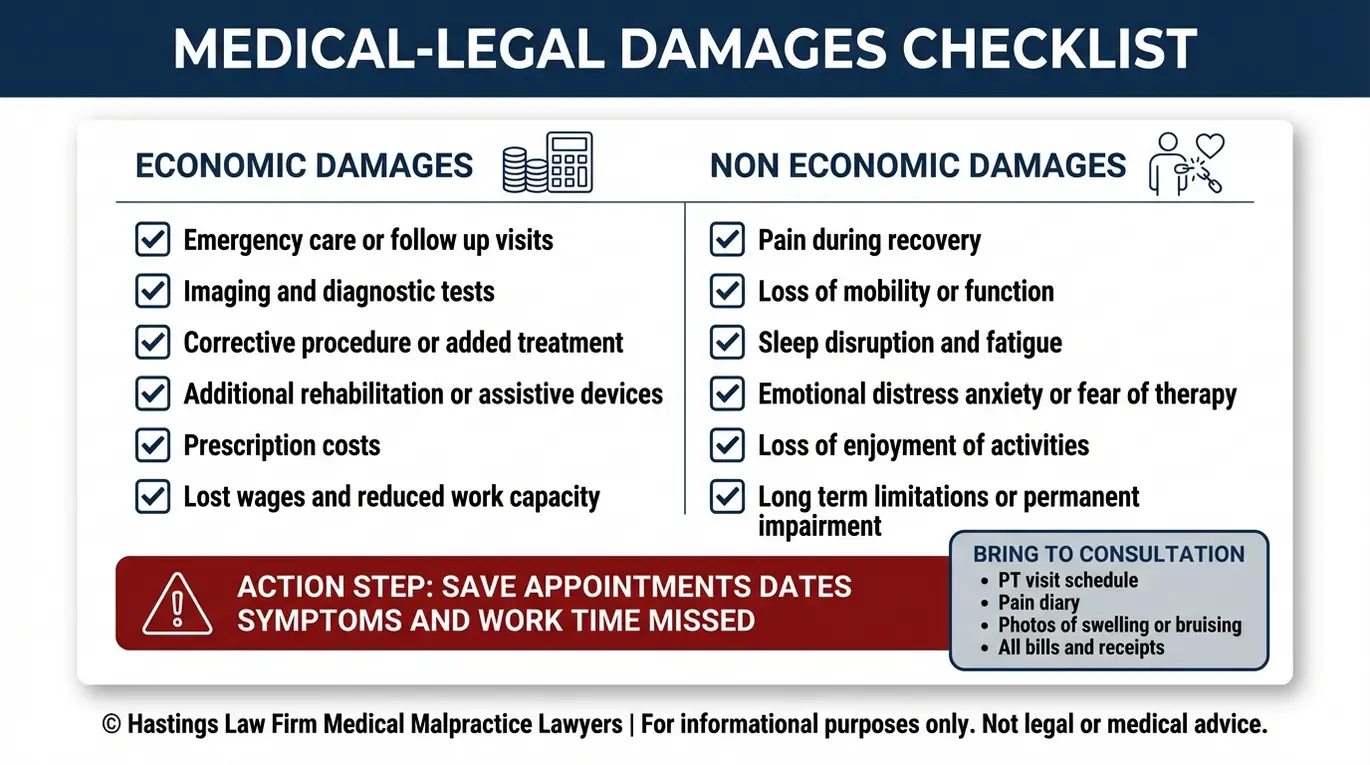
Victims of rehabilitation negligence can recover economic damages for medical bills and lost wages, as well as non-economic damages for pain, suffering, and loss of quality of life. Damages are the legal categories used to calculate the impact of an injury on your life. The Arizona Constitution protects the right to seek financial recovery for injuries caused by another party’s negligence, and Arizona law does not cap non-economic damages in medical malpractice claims.
Recoverable damages in physical therapy malpractice cases typically include:
- Medical costs: Corrective surgeries, additional rehabilitation, medications, and ongoing care made necessary by the new injury
- Lost wages: Income lost during recovery, as well as reduced future earning capacity if the injury limits your ability to work
- Pain and suffering: Physical pain, emotional distress, and the daily burden of living with a condition that should not have occurred
- Loss of quality of life: Permanent reductions in mobility, independence, or the ability to participate in activities you previously enjoyed
An Arizona malpractice lawyer experienced in rehabilitation injury cases can help document each category of loss so that nothing is overlooked during settlement discussions or at trial.
Contact the Arizona Healthcare Malpractice Attorneys at Hastings Law Firm Today for Help
You trusted a physical therapist to help you heal. Our firm handles the investigation and litigation of complex healthcare errors. When that trust is broken by careless or incompetent treatment, you deserve answers and a clear path forward.
At Hastings Law Firm, we dedicate our entire practice to medical malpractice. Our team includes in-house medical staff and former defense attorneys who understand how the other side builds its case. We prepare every claim from day one as if it will go before a jury. As your Arizona physical therapist malpractice lawyer, we handle the legal and medical complexity so you can focus on your recovery.
Our founder, Tommy Hastings, is board-certified in Personal Injury Trial Law, a distinction held by fewer than 2% of attorneys in the state. We use this deep expertise to provide a trial-ready approach for every client. There is no fee unless we recover compensation for you. Contact us today for a free, confidential case evaluation to discuss what happened and learn what options may be available.
Frequently Asked Questions About Physical Therapist Malpractice in Arizona


This content was researched and written by the Hastings Law Firm editorial team, which includes attorneys, medical professionals, and experienced researchers. Our writing is informed by internal knowledge and practical experience, and we cross-check critical details against authoritative sources cited throughout. Every piece undergoes human-led fact-checking and legal review. Because legal and medical information can change, if you spot an error, please contact us. Learn more about our content standards and review process on our editorial policy page.

Tommy Hastings, founder of Hastings Law Firm, is a board-certified personal injury trial lawyer dedicated exclusively to healthcare injury cases. Since 2001, he has represented injured patients and families in litigation against major hospital systems, pharmaceutical companies, and negligent healthcare providers nationwide. He has handled numerous high-profile cases that have drawn national media attention and resulted in multi-million dollar recoveries. He draws on that experience in his writing, helping readers understand how these cases work and what options may be available to them.
