


Arizona Persistent Pulmonary Hypertension Lawyer
Persistent Pulmonary Hypertension of the Newborn is a serious birth injury in which a newborn’s circulation does not properly transition after delivery, leading to dangerously low oxygen levels that can harm vital organs within minutes. Some cases occur without a preventable cause, but others are linked to medical errors such as missed warning signs, delayed testing, or failure to escalate care. Understanding how PPHN develops and how negligence is evaluated can help families make informed decisions after a frightening diagnosis. If you or a loved one were harmed or worse due to Persistent Pulmonary Hypertension of the Newborn in Arizona, contact Hastings Law Firm for a free, confidential case review.

Last Updated: July 27, 2026
Protecting Arizona Families After Preventable Birth Injuries
When your newborn is diagnosed with Persistent Pulmonary Hypertension of the Newborn (PPHN), the fear and confusion can be overwhelming. You expected to bring home a healthy baby, and instead, you are watching your child struggle in a NICU. If you suspect that a medical provider’s actions or inactions played a role in your child’s condition, you are not wrong to ask questions.
An Arizona Persistent Pulmonary Hypertension lawyer can help you understand what happened and whether your family has a path to compensation. At Hastings Law Firm, our legal and medical team reviews birth injury cases with the clinical detail these situations demand. Every consultation is free, confidential, and carries no obligation. If you are ready, we can review your child’s medical records and explain your options.

Understanding PPHN: When the Transition to Life Goes Wrong
Persistent Pulmonary Hypertension of the Newborn (PPHN) is a serious condition where a newborn’s circulatory system fails to adapt to breathing outside the womb, causing dangerously high blood pressure in the lungs and critically low oxygen levels throughout the body. To understand why PPHN is so dangerous, it helps to know how a baby’s circulation is supposed to change at birth.
Inside the womb, a baby doesn’t use its lungs to breathe. Oxygen comes from the mother through the placenta. Because the lungs aren’t active, most blood bypasses them through a small vessel called the ductus arteriosus, a temporary passageway that redirects blood flow away from the lungs during fetal development. This pattern of blood flow is known as fetal circulation, and it is completely normal before birth.
At the moment of delivery, a critical transition must happen:
- The baby takes its first breath, and the lungs expand with air for the first time.
- The blood vessels in the lungs relax and open, allowing blood to flow freely into the lungs to pick up oxygen.
- The ductus arteriosus closes, rerouting blood through the lungs instead of around them.
- Oxygen-rich blood begins circulating to the brain, heart, and every other organ.
When this transition fails, PPHN develops. The blood vessels in the lungs remain constricted, a condition known as pulmonary vasoconstriction, which is the abnormal tightening of the blood vessels in the lungs that prevents adequate blood flow. The ductus arteriosus may stay open, and blood continues to bypass the lungs just as it did in the womb. This is sometimes called persistent fetal circulation, meaning the baby’s circulatory system continues operating as if it were still inside the mother.
How PPHN Disrupts Fetal Circulation
The result of this failed transition is hypoxemia, a dangerously low level of oxygen in the blood that occurs when the baby’s circulatory system does not adjust after birth. When the pulmonary vessels do not dilate and the ductus arteriosus does not close, oxygen-poor blood is pumped to the baby’s organs instead of being sent to the lungs for oxygen exchange. This oxygen deprivation can damage the brain, kidneys, and heart within minutes.
The speed of diagnosis and treatment matters enormously. PPHN attorneys in Arizona often investigate whether medical teams recognized the signs of this failed transition and acted quickly enough to prevent lasting harm.

Linking Risk Factors to Medical Negligence
While some cases of PPHN are congenital or occur without a clear preventable cause, many are triggered or worsened by medical errors, including failure to manage meconium aspiration, untreated infections like sepsis, or improper use of maternal medications such as SSRIs or NSAIDs during pregnancy. An Arizona PPHN malpractice lawyer examines whether the medical team recognized and responded to known risk factors before and during delivery.
Meconium aspiration syndrome (MAS), a condition where a newborn inhales a mixture of meconium and amniotic fluid into the lungs, is one of the most common preventable triggers. If a delivery team fails to clear the airway or mismanages the aspiration, the resulting lung inflammation can lead directly to PPHN. Birth asphyxia, the dangerous deprivation of oxygen during labor and delivery, is another well-documented trigger that medical providers are trained to prevent.
| Natural / Unavoidable Causes | Potentially Negligent Causes |
|---|---|
| Congenital heart defects | Failure to perform a timely C-section during fetal distress |
| Congenital diaphragmatic hernia | Mismanagement of meconium aspiration |
| Genetic or chromosomal conditions | Untreated or delayed treatment of maternal infection (sepsis) |
| Idiopathic (no identifiable cause) | Prescribing high-risk NSAIDs or SSRIs in late pregnancy without monitoring |
| Premature lung development | Failure to recognize and respond to birth asphyxia |
The distinction between an unavoidable medical event and a preventable one is often the foundation of establishing causation in a PPHN claim. We work with qualified medical experts to evaluate whether the standard of care required earlier intervention.

The Hastings Law Firm Difference
Results matter, but what truly sets us apart is how we achieve them. Every verdict, every settlement, and every Arizona courtroom victory comes from one guiding promise: To treat each client’s fight for justice as if it were our own.
This balance of skill, experience, and empathy reflects our core philosophy that justice should not only compensate the injured, but also make health care safer nationwide.

Failure to Diagnose and Treat: A Breach of Standards
A delay in diagnosing PPHN or a failure to transfer a struggling infant to a Neonatal Intensive Care Unit (NICU) can constitute a breach of the standard of care if a competent physician would have acted sooner to prevent permanent injury. The standard of care is the legal benchmark used to determine if a medical professional acted with the same skill and caution as a competent peer in a similar situation.
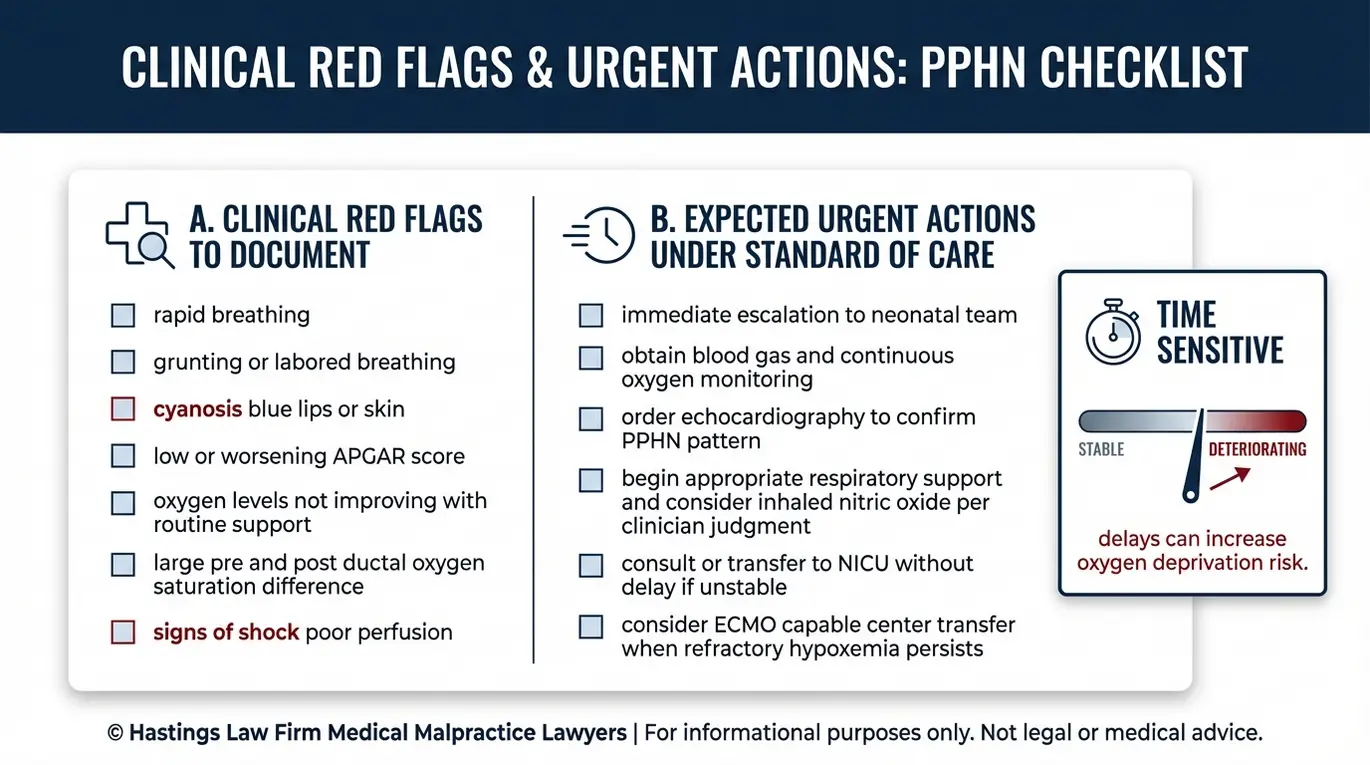
Newborns with PPHN often display recognizable warning signs that should prompt immediate evaluation and intervention. Symptoms a medical team should identify include:
- Rapid or labored breathing (respiratory distress)
- Cyanosis, a bluish discoloration of the skin, lips, or nail beds
- Low APGAR scores, a standardized rating system used at birth to assess a newborn’s heart rate, breathing, muscle tone, reflexes, and skin color
- Poor oxygen saturation readings despite supplemental oxygen
- Abnormal heart sounds or murmurs
Diagnostic confirmation of PPHN typically involves blood gas analysis to assess oxygen levels and echocardiography, an ultrasound of the heart that allows doctors to visualize blood flow and identify whether the ductus arteriosus remains open. Research published in the *Echocardiographic markers at diagnosis of persistent pulmonary hypertension of the newborn* study highlights the diagnostic markers clinicians should evaluate early. The Pulmonary Hypertension Association also outlines the standard diagnostic and treatment protocols, including timely NICU transfer, administration of inhaled nitric oxide, and, in severe cases, extracorporeal membrane oxygenation (ECMO).
When a medical team fails to order the appropriate tests, delays neonatal resuscitation, or does not escalate care, we examine whether that failure directly contributed to the child’s injuries.
Calculating Damages: The Lifetime Cost of PPHN Injuries
Compensation in PPHN lawsuits covers past and future medical bills, including NICU costs and ECMO treatments, as well as long-term care for resulting conditions like cerebral palsy, lost earning capacity, and pain and suffering. This includes the high costs of extracorporeal membrane oxygenation (ECMO), a life-support system that pumps and oxygenates blood outside the body, and care for conditions caused by hypoxemia, the critically low oxygen levels that can damage organs. Arizona birth injury counsel pursues damages for all financial and emotional losses.
Recoverable damages in a PPHN case may include:
- Immediate medical expenses: NICU care, surgeries, and medications
- Long-term care: Ongoing therapy for neurological damage or cerebral palsy, adaptive equipment, and home health care
- Lost earning capacity: Projected income the child may never be able to earn due to permanent disability
- Pain and suffering: The physical pain and emotional toll on both the child and the family
- Loss of quality of life: Diminished ability to enjoy daily activities and developmental milestones
These cases require careful economic analysis and testimony from qualified medical expert witnesses to project the full lifetime cost of a child’s injuries and ensure families have the resources needed for decades of care.
Proving Your Case: The Hastings Law Firm Approach
Proving malpractice requires establishing four legal elements: that the medical provider owed a duty of care to your child, that they breached that duty, that the breach directly caused the PPHN or worsened its effects, and that your child suffered measurable damages as a result. A PPHN lawyer in Arizona builds each element through rigorous investigation and testimony from a qualified medical expert witness.
Founded by board-certified trial lawyer Tommy Hastings, our firm prepares every case from day one as if it will go before a jury. Our team includes former defense attorneys who previously represented hospitals, giving us direct insight into the strategies the other side will use. We use this experience to counter arguments that attempt to shift blame away from medical negligence. Our in-house nurse consultants analyze medical records, fetal monitoring strips, and clinical timelines to identify where the standard of care may have been violated.
When we file on your behalf, we follow the procedural requirements outlined by the Arizona Superior Court civil case forms for filings over $10,000. Our birth injury lawyers handle every step of the litigation process so your family can focus on your child’s care and recovery.
Arizona Statute of Limitations for Birth Injury Claims
In Arizona, the statute of limitations for birth injuries is generally two years from the date the injury occurred. For minors, this deadline is “tolled,” meaning the clock is paused until the child reaches 18 years of age, at which point the two-year statute of limitations begins to run. The specific rule governing this filing deadline is found in Arizona Revised Statutes § 12-542.
Warning: Even though the tolling provision may extend the legal window, our Arizona malpractice legal team strongly encourages families to act well before that deadline. Medical records can be lost or altered, and key details may be forgotten. Witnesses relocate. Memories of critical events during labor and delivery fade with time. The sooner an investigation begins, the stronger the evidence will be to support your child’s claim.
Contact the Arizona Birth Injury Attorneys at Hastings Law Firm Today for Help
If your child was diagnosed with PPHN and you believe a medical provider’s negligence contributed to their condition, our team is here to help you find answers. Hastings Law Firm was founded on the belief that holding negligent providers accountable is how we protect the next family from the same harm.
Our legal and medical professionals, including in-house nurse consultants and board-certified patient advocates, will review your child’s records and help you understand what happened. The consultation is free, and you pay no attorney fees unless we recover compensation for your family.
Your child deserves a team that will stand beside your family for the long road ahead. Contact Hastings Law Firm to schedule your risk-free case evaluation and take the first step toward protecting your child’s future.

This content was researched and written by the Hastings Law Firm editorial team, which includes attorneys, medical professionals, and experienced researchers. Our writing is informed by internal knowledge and practical experience, and we cross-check critical details against authoritative sources cited throughout. Every piece undergoes human-led fact-checking and legal review. Because legal and medical information can change, if you spot an error, please contact us. Learn more about our content standards and review process on our editorial policy page.

Tommy Hastings, founder of Hastings Law Firm, is a board-certified personal injury trial lawyer dedicated exclusively to healthcare injury cases. Since 2001, he has represented injured patients and families in litigation against major hospital systems, pharmaceutical companies, and negligent healthcare providers nationwide. He has handled numerous high-profile cases that have drawn national media attention and resulted in multi-million dollar recoveries. He draws on that experience in his writing, helping readers understand how these cases work and what options may be available to them.
