


Arizona Periventricular Leukomalacia Lawyer
Periventricular leukomalacia is a serious neonatal brain injury that can affect movement, learning, and long term independence. It is often linked to prematurity, reduced blood flow or oxygen, and infection around pregnancy and delivery. Some cases are not preventable, but others may be tied to missed warning signs, delayed responses to fetal distress, or errors in newborn care. Understanding how PVL is diagnosed, treated, and connected to the standard of care can help families make informed decisions. If you or a loved one were harmed or worse due to periventricular leukomalacia malpractice in Arizona, contact Hastings Law Firm for a free, confidential case review.

Last Updated: July 27, 2026
Trusted Legal Advocacy for Arizona Families of Infants with PVL
Learning that your child has been diagnosed with periventricular leukomalacia can feel overwhelming. You may be searching for answers about what happened during labor, delivery, or neonatal care, and whether your child’s brain injury could have been prevented. These are fair questions, and you deserve honest, clear guidance from professionals who understand both the medicine and the law.
At Hastings Law Firm, we focus exclusively on medical malpractice. Our team includes in-house medical professionals and former defense attorneys who know how hospital systems work from the inside. As an experienced Arizona periventricular leukomalacia lawyer team, we are here to help families understand what went wrong and what legal options may be available.
If your child has been diagnosed with PVL, we can review the medical records and explain your options during a free, confidential case evaluation.

What Is Periventricular Leukomalacia and How It Affects Infants
Periventricular leukomalacia (PVL) is a type of brain injury characterized by the death of white matter near the brain’s ventricles, often caused by restricted blood flow or oxygen deprivation affecting premature infants. White matter is the tissue responsible for transmitting nerve impulses between the brain and the rest of the body. When that tissue is damaged or destroyed, the brain loses its ability to properly communicate with the muscles, organs, and sensory systems that depend on those signals. This disruption can lead to profound challenges in a child’s development, affecting their physical movement and cognitive processing capabilities significantly as they grow.
PVL is one of the most significant neonatal brain injuries because of its direct connection to long-term disability. Many children diagnosed with PVL go on to develop cerebral palsy, particularly a form called spastic diplegia, which primarily affects movement in the legs. Understanding the severity of this condition is important for parents, as the extent of the brain damage often correlates with the level of future impairment and the intensity of care required.
Key characteristics of PVL include:
- Damage concentrated in the periventricular white matter, the area surrounding the fluid-filled ventricles of the brain
- Injury that typically occurs during or shortly after birth, particularly in premature infants
- A strong association with cerebral palsy and other motor development disorders
- Severity that ranges from mild motor difficulties to significant physical and cognitive disabilities
If your child has been diagnosed with PVL and you suspect a medical error may have contributed, consulting with an Arizona periventricular leukomalacia lawyer can help you understand whether the injury was preventable.
Understanding the Cellular Mechanisms of PVL
Periventricular leukomalacia involves the death of white matter near the brain’s ventricles. At the cellular level, PVL involves damage to a specific type of glial cell called oligodendrocyte precursor cells, the cells responsible for producing myelin, the protective coating that insulates nerve fibers and allows electrical signals to travel efficiently through the brain. In a developing fetus, these cells are especially fragile and vulnerable to disruption.
When blood flow to the brain drops or an infection triggers widespread inflammation, these precursor cells can be destroyed before they have the chance to mature. The blood-brain barrier, a protective layer that normally shields the brain from harmful substances in the bloodstream, can also be compromised during these events. Once that barrier is weakened, toxins and inflammatory agents gain access to delicate brain tissue, accelerating the damage. Premature infants face the highest risk because their brains are still in early stages of development when these cells are most exposed.
Common Causes and Risk Factors of PVL During Childbirth
PVL is frequently caused by ischemia, a condition where blood flow to part of the brain is insufficient, or by infection during pregnancy and delivery. Major risk factors include premature birth, placental complications, and untreated maternal infections like chorioamnionitis, an infection of the membranes surrounding the fetus.
Ischemia and Hypoxia. When a fetus or newborn does not receive enough oxygen-rich blood, brain tissue begins to die. This oxygen deprivation, known as hypoxia, can result from umbilical cord compression, placental abruption, or prolonged labor without adequate monitoring. The periventricular white matter is particularly susceptible because it sits in a “watershed zone” between blood vessel territories, making it the first area to suffer when blood supply drops.
Maternal Infection. Chorioamnionitis and other maternal infections trigger an inflammatory response that can cross the placenta and directly damage the developing brain. The resulting inflammation attacks the fragile oligodendrocyte precursor cells discussed above, disrupting normal white matter development. When these infections go undiagnosed or untreated, the risk of PVL increases significantly.
Prematurity. Infants born before 32 weeks of gestation face the highest risk. Research published in a study on the Association Between Endotype of Prematurity and Cystic Periventricular Leukomalacia confirms that the type and circumstances of premature birth can directly influence PVL development. The premature brain is structurally immature, with blood vessels and protective barriers that are not yet equipped to handle the stresses of the outside world.
Not every case of PVL involves medical negligence, but some causes are preventable. An Arizona periventricular leukomalacia lawyer and birth injury lawyer team can evaluate whether the medical care your child received met the expected standard.
| Factor | Potentially Preventable (May Involve Negligence) | Typically Non-Preventable |
|---|---|---|
| Maternal infection (chorioamnionitis) | Failure to diagnose or treat a known infection | Sudden onset with no prior indicators |
| Oxygen deprivation (hypoxia) | Delayed response to fetal distress on monitors | Acute, unforeseeable cord accident |
| Premature birth | Failure to manage preterm labor or administer protective medications | Spontaneous premature labor with no warning signs |
| Placental abruption | Ignoring signs of abruption or delaying emergency delivery | Sudden abruption with no risk factors |
| Intraventricular hemorrhage | Improper handling or resuscitation of a premature newborn | Hemorrhage related to extreme prematurity alone |

The Hastings Law Firm Difference
Results matter, but what truly sets us apart is how we achieve them. Every verdict, every settlement, and every Arizona courtroom victory comes from one guiding promise: To treat each client’s fight for justice as if it were our own.
This balance of skill, experience, and empathy reflects our core philosophy that justice should not only compensate the injured, but also make health care safer nationwide.

Recognizing the Signs and Symptoms of Periventricular Leukomalacia
Symptoms of PVL may not be immediately obvious at birth but often manifest as developmental delays, abnormal muscle stiffness (spasticity), and vision problems as the infant matures. Because the damage affects white matter, the consequences tend to emerge gradually as the child’s brain is called upon to perform increasingly complex tasks.
In early infancy, parents and caregivers may notice subtle signs. These can include difficulty with feeding or suckling, excessive irritability, and unusual muscle tone, either too stiff or too floppy. As the child grows, missed developmental milestones often become the clearest indicators that something is wrong.
The Centers for Disease Control and Prevention Milestone Checklists by Age provide a helpful reference for tracking your child’s progress. Delays in reaching expected milestones can be an early signal of an underlying brain injury.
Early warning signs to watch for include:
- Difficulty latching or suckling during feeding in the first weeks of life
- Unusual stiffness or floppiness in the arms or legs (paralysis)
- Delayed ability to roll over, sit up, or crawl at expected ages
- Difficulty tracking objects with the eyes or apparent vision problems
- Seizures in the newborn period
- Slow or absent responses to sounds and voices
- Persistent irritability that does not respond to normal soothing
- Signs of spastic diplegia, such as stiffness specifically in the legs
Diagnosis typically involves imaging. A cranial ultrasound, a non-invasive test that uses sound waves to create images of the brain, is often the first tool used in premature infants. MRI and CT scans provide more detailed views and can reveal the extent of white matter damage. Dr. A Hansen’s video on Periventricular Leukomalacia offers an accessible overview of how PVL appears on imaging and what those findings mean.
Intraventricular hemorrhage (IVH), or bleeding within the brain’s ventricles, is a related condition that may occur alongside PVL and can complicate both diagnosis and treatment. If your child has shown any of these signs, speaking with both a medical specialist and an Arizona periventricular leukomalacia lawyer can help clarify what happened and whether the injury was preventable.

The Link Between Medical Malpractice and PVL Injuries
Medical malpractice occurs when healthcare providers deviate from the standard of care, the accepted level of treatment a reasonably competent professional would have provided under similar circumstances, and that deviation directly results in a brain injury like PVL. This form of medical negligence can transform a difficult medical situation into a devastating, lifelong injury for an infant.
Not every case of PVL is caused by negligence. But in many cases, the injury can be traced to specific failures during pregnancy, labor, delivery, or neonatal care. When those failures are preventable and cause harm, they may form the basis of a medical malpractice claim to hold the standard of care to the required level.
Common negligent actions we evaluate in PVL cases include:
- Failure to diagnose or treat mismanaged maternal infection. Chorioamnionitis and other infections can often be identified through routine labs and clinical assessment. When providers miss or ignore the signs, the resulting inflammation can damage the fetal brain.
- Failure to respond to fetal distress. Electronic fetal monitoring is designed to alert providers when a baby is in trouble. When abnormal heart rate patterns are present and the medical team does not act, oxygen deprivation can progress to the point of permanent brain damage.
- Delayed emergency delivery. In situations where the baby needs to be delivered immediately, delays in performing a C-section can extend the period of oxygen deprivation and increase the risk of PVL.
- Improper neonatal resuscitation. After birth, a newborn who is not breathing adequately needs immediate, skilled intervention. Errors in resuscitation technique or delays in starting treatment can worsen hypoxic injury.
- Medication errors. Our firm also has experience with pharmaceutical injury cases where improper medications or dosing during pregnancy or neonatal care contributed to harm.
An Arizona periventricular leukomalacia lawyer can review medical records, fetal monitoring strips, and nursing notes to determine whether the care provided fell below the standard of care and whether that failure caused or worsened your child’s condition.
Treatment Options and the Cost of Lifelong Care
While there is no cure for PVL, treatments such as physical therapy, occupational therapy, and speech therapy can help manage symptoms and improve a child’s quality of life. The specific treatment plan depends on the severity of the white matter damage and how it affects the child’s motor, cognitive, and sensory abilities.
Therapies. Most children with PVL require ongoing physical therapy to address spasticity and improve mobility. Occupational therapy helps with fine motor skills and daily living tasks, while speech therapy addresses communication and swallowing difficulties. Many children need all three, often for years or even throughout their lifetime.
Therapeutic Hypothermia (Brain Cooling). In some cases, therapeutic hypothermia, a treatment involving carefully lowering the newborn’s body temperature to slow cell death, may be applied shortly after birth to reduce the extent of brain injury. According to Neonatal Therapeutic Hypothermia research on the NCBI Bookshelf, this involves lowering the temperature to limit further damage. Brain cooling must be initiated within 6 hours of birth to be effective. When providers fail to recognize the need for this intervention or delay it, the window for reducing harm can close.
The Financial Burden. The lifetime cost of caring for a child with PVL-related disabilities can be staggering. Families may face expenses for specialized medical equipment, wheelchair-accessible home modifications, adaptive technology, 24/7 personal care, and ongoing therapy sessions. These costs can exceed millions of dollars over the child’s lifetime, placing an immense strain on household finances and requiring meticulous financial planning to ensure the child’s future care needs are met.
An Arizona periventricular leukomalacia lawyer can work with life-care planners and financial experts to calculate the full scope of your child’s future care needs, ensuring that any financial compensation pursued reflects the true cost of the care your family will provide.
Damages and Compensation in Arizona PVL Lawsuits
Arizona law allows families to recover economic damages for medical bills and lost wages, as well as non-economic damages for pain and suffering, with no constitutional cap on the amount a jury can award in personal injury cases. In a birth injury lawsuit, damages are the financial compensation awarded to cover the costs and losses associated with the injury.
This is an important distinction. Many states impose damage caps or statutory limits on what families can recover in medical malpractice cases. Arizona does not. Article 2, Section 31 of the Arizona Constitution explicitly prohibits any law that would limit the amount of damages recoverable for death or personal injury. This means that in a birth injury lawsuit involving PVL, the jury has the authority to award whatever amount it determines is fair based on the evidence, as there is no constitutional cap on these awards. The potential settlement and verdicts in these cases can therefore be substantial, reflecting the true magnitude of the loss.
Recoverable damages in an Arizona PVL case may include:
- Past and future medical expenses, including surgeries, hospitalizations, therapy, medications, and assistive devices
- Lost earning capacity, reflecting the income the child will likely never be able to earn due to their disabilities
- Cost of lifelong care, including in-home nursing, personal care attendants, and home modifications
- Pain and suffering, compensating the child for the physical discomfort and emotional distress caused by the injury
- Loss of enjoyment of life, addressing the ways in which the child’s disability limits their ability to experience and participate in daily activities
- Parental damages, including emotional distress and loss of consortium in certain cases
- Wrongful death damages, if the child’s injuries were fatal
Every case is different, and the value of a settlement or verdict depends on the specific facts and evidence. An Arizona periventricular leukomalacia lawyer can help you understand what categories of financial compensation may apply to your family’s situation.
How Our Arizona Periventricular Leukomalacia Lawyers Establish Liability
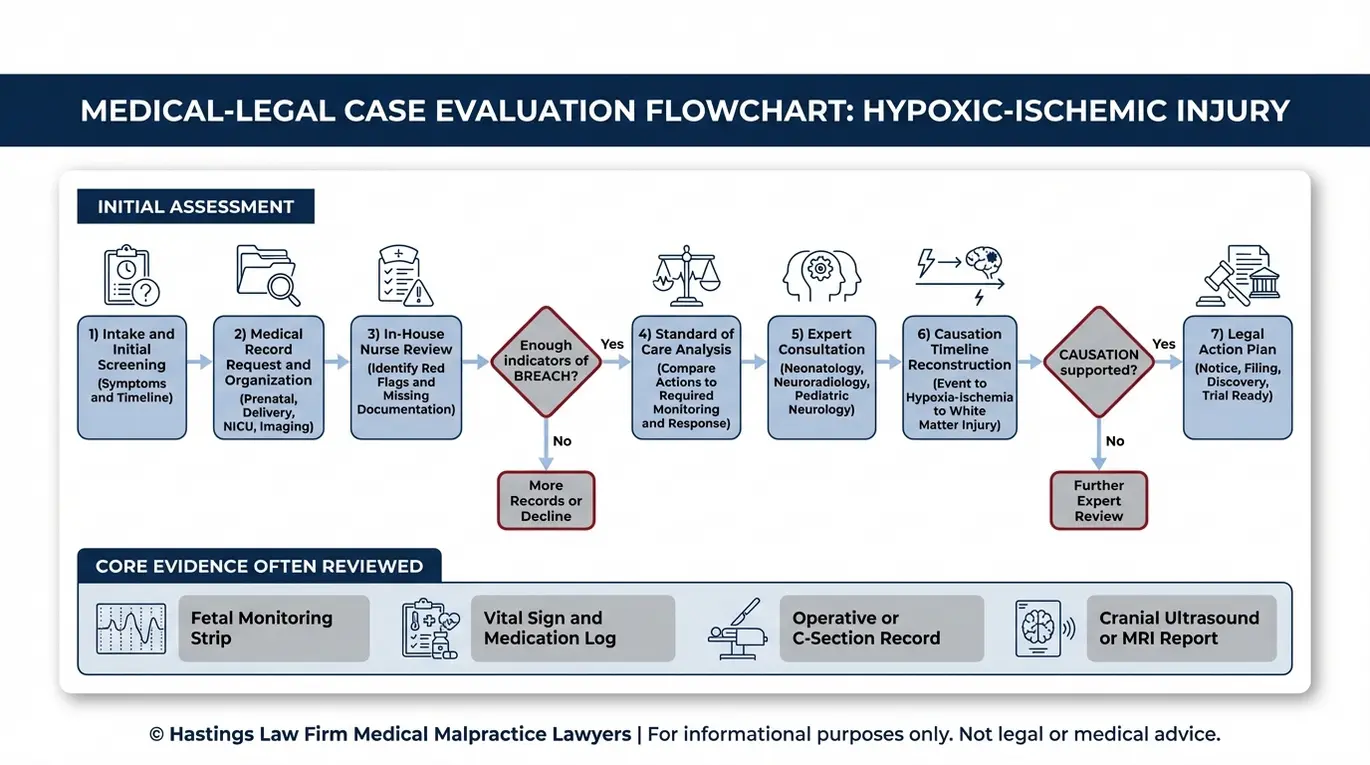
We establish liability by securing medical records, consulting with neonatologists and other specialists to identify breaches in the standard of care, and working with our in-house medical team to reconstruct the timeline of the injury. As your Arizona periventricular leukomalacia lawyer, we are committed to uncovering the truth.
Our process for investigating and building a birth injury lawsuit follows a structured approach:
- Initial Screening and Medical Record Review. Our in-house medical staff, including nurse practitioners and board-certified patient advocates, begin by conducting a thorough review of your child’s medical records. This includes labor and delivery notes, fetal monitoring strips, neonatal unit documentation, and imaging studies. Our goal at this stage is to identify any red flags that suggest the standard of care was not met.
- Expert Medical Consultation. We consult with qualified expert witnesses, including neonatologists, maternal-fetal medicine specialists, and neuroradiologists, to evaluate whether the care provided deviated from accepted medical practice. These experts help us build the causation argument by explaining how a specific error or omission led to the oxygen deprivation or infection that caused the PVL.
- Timeline Reconstruction and Filing. Using the evidence gathering process, we construct a detailed, minute-by-minute timeline of events. This reconstruction often reveals critical gaps, delays, or failures that may not be obvious from a surface-level review. Once the investigation supports a claim, we file the lawsuit and begin the discovery process to obtain additional evidence from the hospital and its staff.
As an Arizona birth injury attorney team with former defense counsel on staff, we understand the strategies hospitals and insurers use, and we prepare every case as though it is going to trial.
Why Choose Hastings Law Firm for Your Family
Hastings Law Firm offers a unique combination of board-certified legal expertise and in-house medical knowledge, operating on a contingency fee basis so that every family has access to skilled representation without upfront costs. We act as your dedicated Arizona periventricular leukomalacia lawyer, fighting for the justice your child deserves.
Trial-Ready from Day One. We prepare every case for trial from the moment we accept it. This is not a slogan; it is how we operate. By building a strong evidentiary foundation early, including expert reports, detailed timelines, and medical reconstructions, we create a firm negotiation posture that defense attorneys and insurance carriers recognize. They know that if a fair settlement is not offered, our skilled medical malpractice lawyers are prepared to present the case to a jury.
No Fee Unless We Win. Families dealing with a child’s PVL diagnosis are already under enormous financial strain. We do not add to that burden. Our contingency fee structure means you pay no attorney fees and no costs unless we recover compensation on your behalf. Contact us for a free evaluation to understand your rights.
A Team That Understands Both Medicine and Law. Our firm was built around the principle that medical malpractice cases require medical insight, not just legal skill. Our team includes former defense attorneys who know how hospitals prepare their cases, and in-house medical professionals, including nurses who have worked inside the hospital systems we now hold accountable. This combination allows us to spot charting inconsistencies, identify protocol failures, and interpret clinical data in ways that many general practice firms simply cannot.
Founded by Tommy Hastings, a board-certified trial lawyer and 2025 inductee into the American Board of Trial Advocates, our firm has recovered millions for families affected by birth injuries and medical negligence. Every case we take reflects our belief that accountability is the path to both justice and prevention.
Contact the Arizona Birth Injury Attorneys at Hastings Law Firm Today for Help
Arizona law imposes time limits for filing a birth injury lawsuit. While the statute of limitations may allow additional time when the injured person is a minor, waiting to take action can result in lost evidence, faded memories, and missed deadlines. The sooner medical records are secured and reviewed, the stronger the foundation for your case.
We understand the weight of what your family is carrying. A PVL diagnosis raises painful questions, and you deserve clear answers about what happened and what comes next. Our Arizona periventricular leukomalacia lawyer team has the medical knowledge, legal experience, and resources to stand beside you through this process.
Contact Hastings Law Firm today to request a free, confidential case evaluation. There is no fee unless we recover compensation for your family.
Frequently Asked Questions About Periventricular Leukomalacia in Arizona


This content was researched and written by the Hastings Law Firm editorial team, which includes attorneys, medical professionals, and experienced researchers. Our writing is informed by internal knowledge and practical experience, and we cross-check critical details against authoritative sources cited throughout. Every piece undergoes human-led fact-checking and legal review. Because legal and medical information can change, if you spot an error, please contact us. Learn more about our content standards and review process on our editorial policy page.

Tommy Hastings, founder of Hastings Law Firm, is a board-certified personal injury trial lawyer dedicated exclusively to healthcare injury cases. Since 2001, he has represented injured patients and families in litigation against major hospital systems, pharmaceutical companies, and negligent healthcare providers nationwide. He has handled numerous high-profile cases that have drawn national media attention and resulted in multi-million dollar recoveries. He draws on that experience in his writing, helping readers understand how these cases work and what options may be available to them.
