


Arizona Over Prescribing of Medication Lawyer
Negligent prescribing can happen when a provider orders too much medication, keeps a patient on a drug longer than is medically appropriate, or combines medications in a way that creates dangerous interactions. The results can be severe, including overdose, organ failure, addiction, and other life altering harm. Arizona claims often focus on whether the prescribing decision fell below the accepted standard of care and whether monitoring and pharmacy safeguards failed. If you or a loved one were harmed or worse due to over prescribing of medication in Arizona, contact Hastings Law Firm for a free, confidential case review.
Last Updated: July 27, 2026
Trusted Legal Representation for Negligent Prescribing in Arizona
When a doctor prescribes too much medication, or the wrong combination of drugs, the consequences can be devastating. Overdose, organ damage, addiction, and even death are not risks patients expect when they trust a physician’s judgment. If you or a loved one has been harmed by negligent prescribing, the confusion and anger you feel right now are completely understandable.
You deserve answers about what went wrong and who is responsible. We focus exclusively on medical malpractice, and our team includes in-house medical professionals, such as nurse practitioners and board-certified patient advocates, who know how to trace a prescribing error back to its source. As an experienced Arizona over prescribing of medication lawyer, we are prepared to review your case and explain your legal options at no cost and no obligation.

Defining Overprescribing and Excessive Medication Negligence in Arizona
Overprescribing occurs when a physician or healthcare provider directs a patient to take more medication than is medically necessary or safe, leading to toxicity, addiction, or severe physical harm. Under Arizona law, this can form the basis of a medical malpractice claim when the prescribing decision falls below the accepted standard of medical practice.
The legal scope of overprescribing covers several patterns. A doctor may prescribe a dosage that is too high for the patient’s weight or condition. They may also keep a patient on a medication for longer than clinically appropriate.
They may prescribe refills at a frequency that builds dangerous levels of the drug in the body. Each of these scenarios reflects a wrong dosage or medication error that a competent physician should have avoided.
There is a difference between a known side effect and negligent toxicity. Every medication carries some risk, and patients are expected to tolerate certain predictable effects. But when a prescribing decision causes harm that a reasonable doctor would have foreseen and prevented, the line between acceptable risk and negligence has been crossed. An Arizona overprescribing attorney evaluates exactly where that line falls in your case.
The physical consequences vary depending on the drug and dosage involved. In the short term, overprescribing can trigger respiratory depression, organ failure, or acute overdose.
Michigan Medicine’s research on opioids and respiratory depression shows that opioid medications can slow breathing to dangerous or fatal levels when prescribed in excessive amounts. These immediate threats often require emergency intervention to reverse the effects of toxicity, which occurs when a drug reaches harmful levels in the body.
Over time, patients who are kept on unnecessary medications may develop dependency, chronic organ damage, or conditions that require additional medical intervention. Long-term exposure to toxic levels forces the body to work harder to metabolize the drugs, often leading to liver or kidney strain that goes undetected until it is too late. A medication negligence lawyer in Arizona can help determine whether the harm you experienced was preventable.
Proving a Doctor Breached the Standard of Care by Prescribing Too Much Medication
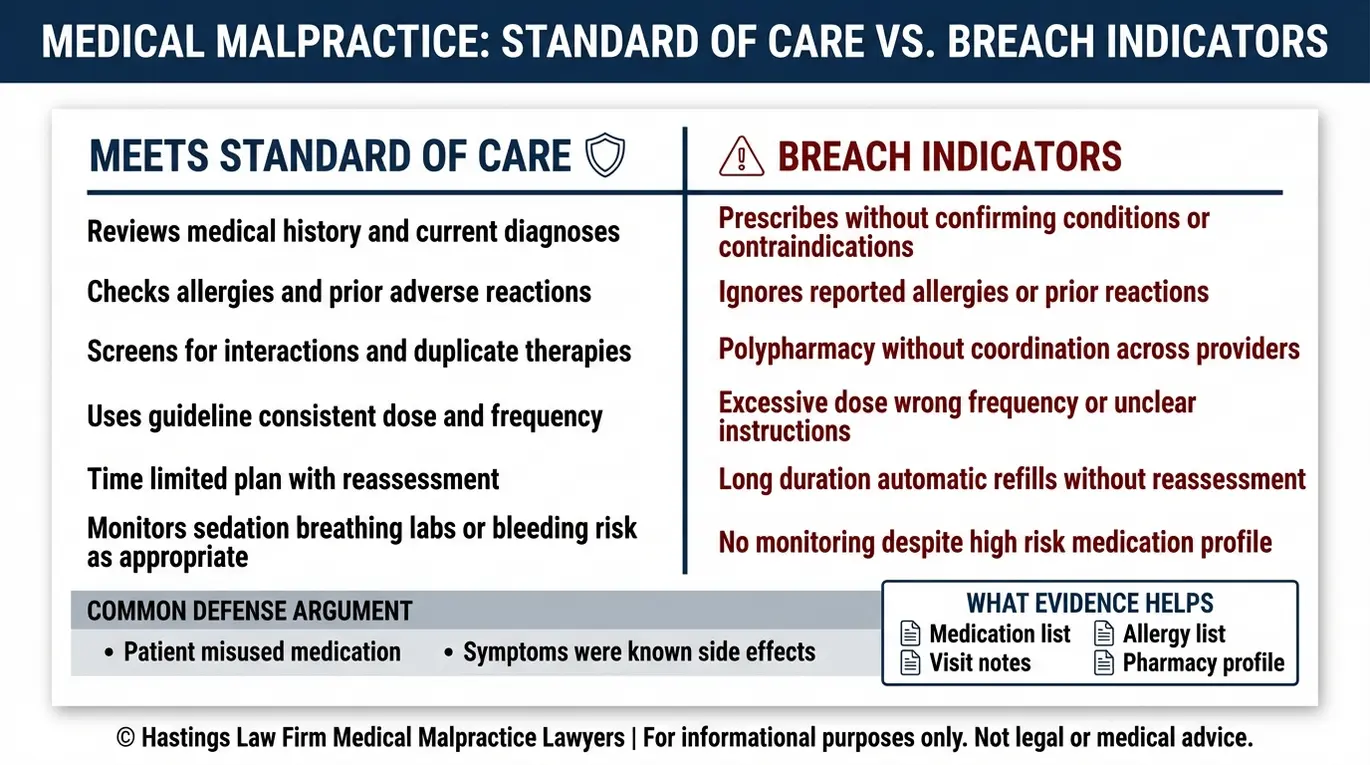
To prove a breach, your legal team must demonstrate that a prudent physician in the same specialty would not have prescribed the same dosage or combination of drugs under similar circumstances. This is the core of every overprescribing case, and it requires a detailed medical and legal investigation.
The Physician’s Duty
Every doctor has a duty of care to evaluate a patient’s full medical history and allergy history before writing a prescription. This includes reviewing current medications, checking for contraindications, and considering factors like age, kidney function, liver health, and prior adverse reactions. When a physician skips these steps or ignores red flags in the chart, the foundation for a negligence claim begins to form. A lawyer for overprescribing will focus heavily on what the doctor knew, or should have known, at the time the prescription was written.
Monitoring Failures
The duty does not end once the prescription is filled. High-risk medications, especially opioids and controlled substances, require ongoing physician monitoring. Lab work, follow-up appointments, and dosage adjustments are all part of responsible prescribing.
A gap in care occurs when there is an interruption in the expected level of medical oversight. If a doctor writes a high-dose prescription and then fails to monitor the patient for signs of toxicity or dependence, that gap in care can be a critical piece of evidence.
How the Defense Responds
Defense attorneys in these cases often try to shift blame to the patient. They may argue that the patient misused the medication, failed to follow instructions, or sought drugs from multiple providers. Our team, which includes former defense attorneys who previously represented hospitals, knows these tactics well. We anticipate these arguments early and build the evidence to counter them. As an Arizona medication error attorney, we gather pharmacy records, electronic prescribing logs, and clinical notes to reconstruct exactly what was prescribed and why.
Here is what we examine when evaluating an overprescribing claim:
- The patient’s complete medical history and documented allergy history
- Prescription records, including dosage, frequency, and duration
- Evidence of follow-up appointments and lab monitoring
- Communication between the prescribing physician and other providers
- Pharmacy dispensing records and any alerts that were overridden
- Expert medical opinions on whether the prescribing decision met the standard of care
The Hastings Law Firm Difference
Results matter, but what truly sets us apart is how we achieve them. Every verdict, every settlement, and every Arizona courtroom victory comes from one guiding promise: To treat each client’s fight for justice as if it were our own.
This balance of skill, experience, and empathy reflects our core philosophy that justice should not only compensate the injured, but also make health care safer nationwide.

Common Types of Medication Errors Leading to Severe Patient Harm
Dangerous medication errors often involve polypharmacy, where multiple drugs interact negatively, or simple dosage calculation errors that result in toxic levels of substance in the bloodstream. These errors are preventable, and according to FastStats medication safety data published by the CDC, adverse drug events account for a significant share of emergency department visits each year.
Polypharmacy
Polypharmacy, the simultaneous use of multiple medications, often five or more in a single patient, is especially common among elderly patients in nursing homes and long-term care facilities. Residents may see several specialists who each add prescriptions without coordinating with one another.
When drugs with overlapping effects or conflicting mechanisms are combined, the risk of a serious adverse reaction increases sharply. In nursing home abuse and neglect cases, polypharmacy is one of the most frequent contributors to preventable harm. An Arizona prescription negligence lawyer will examine every medication on the patient’s list to determine whether the combination was clinically justified.
Dosage Calculation Errors
Dosage calculation errors, mathematical mistakes that result in a patient receiving far more of a drug than intended, are particularly dangerous in pediatric care. Because drug dosages for children are calculated based on body weight, even small miscalculations can produce toxic concentrations. Toxic concentrations are levels of medicine in the blood that are high enough to cause harm. A tenfold dosage error, for example, can turn a routine prescription into a life-threatening overdose.
Duration Errors
Some medications are only safe for short-term use. Steroids, opioids, and certain sedatives can cause serious complications when prescribed for longer than medically appropriate. Keeping a patient on these drugs without a clear tapering plan or reassessment can lead to dependency, organ damage, or wrongful death. A medication overdose attorney can help establish whether the duration of your prescription exceeded what a reasonable physician would have ordered.
| Type of Error | Example | Potential Harm |
|---|---|---|
| Polypharmacy | Multiple sedatives prescribed by different specialists | Respiratory failure, fatal drug interactions |
| Dosage calculation error | Tenfold overdose in a pediatric patient | Acute toxicity, organ failure |
| Duration error | Opioids prescribed for months without reassessment | Addiction, overdose, withdrawal complications |
Dangers of Polypharmacy and Adverse Drug Events
The specific danger of polypharmacy intensifies when a patient sees multiple specialists who do not communicate with one another. Each physician may prescribe a drug that is reasonable on its own, but the combined effect creates a toxic cocktail the patient’s body cannot process safely. A drug-drug interaction, which occurs when one medication changes the way another is absorbed, metabolized, or eliminated, amplifies side effects or reduces the effectiveness of treatment. An adverse drug event (ADE), defined as any harm that results from medication use whether from an error or an interaction, can stem from a specific prescribing failure. Identifying these events and the unexpected adverse reaction at an otherwise standard dose is central to building a strong case.
Why Doctors and Pharmacies Fail to Prevent Dangerous Overdoses
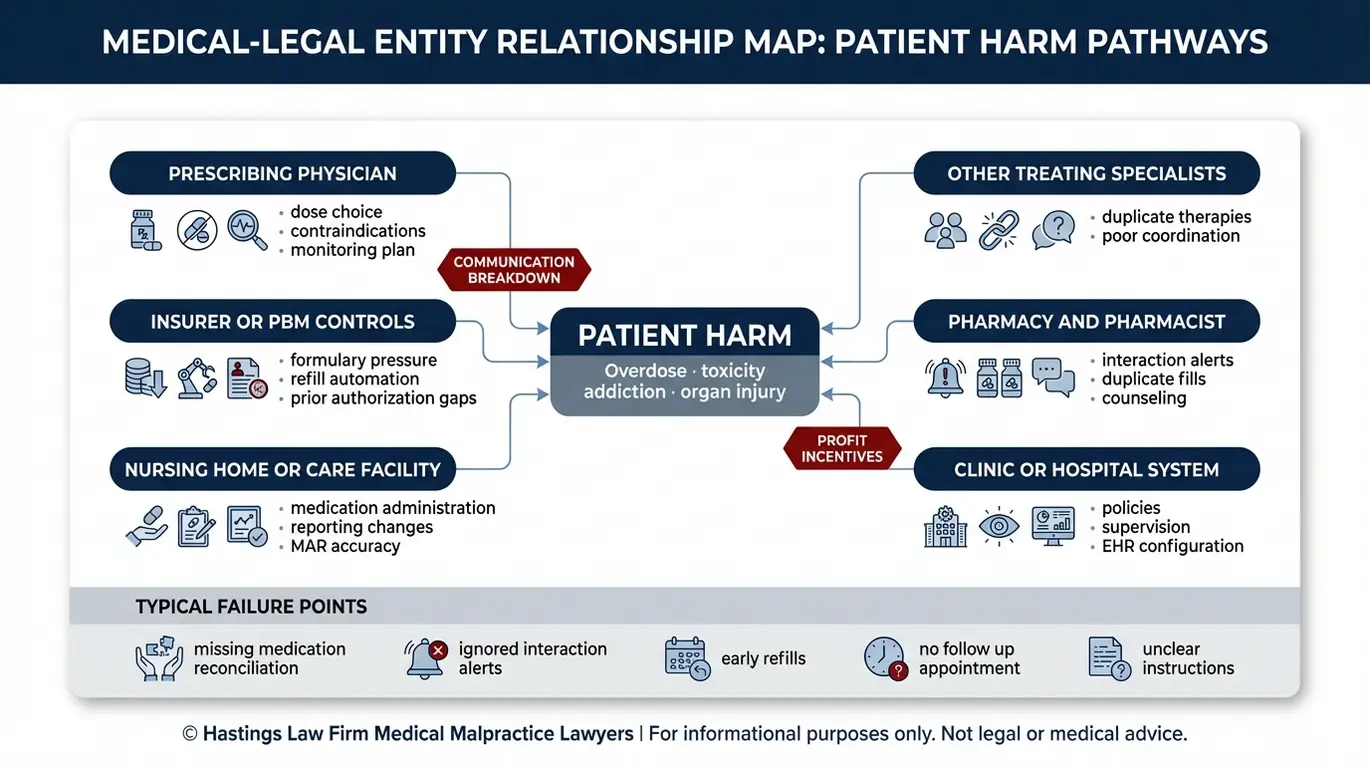
Failures often stem from a lack of communication between providers, financial incentives to push certain drugs, or pharmacy errors where safeguards to flag dangerous duplicates are ignored.
Pharmacy Liability
Pharmacists have a legal and professional obligation to conduct a drug utilization review, a screening process designed to catch potential interactions, excessive dosages, and duplicate therapies before a prescription is filled. If a pharmacist fills a prescription that should have triggered a safety alert, resulting in patient harm, both the pharmacist and the pharmacy may share liability. A lawyer for drug overdose cases will use pharmacy records to determine whether alerts were generated and whether they were dismissed.
Systemic Failures
Electronic health record systems designed to flag dangerous prescriptions automatically are not foolproof. Software glitches, outdated databases, and manual overrides can all allow a harmful prescription to slip through. In some cases, providers still rely on handwritten prescriptions, which are prone to misinterpretation and transcription errors. Our Arizona medical malpractice team investigates these system-level failures alongside individual provider decisions.
Controlled substances, medications with a high potential for abuse or dependence such as opioids and benzodiazepines, are subject to additional prescribing regulations. When these rules are not followed, the risk of addiction and overdose rises significantly.
Key systemic failures we investigate include:
- Pharmacy software alerts that were overridden without clinical justification
- Gaps in communication between prescribing physicians and dispensing pharmacists
- Missing or incomplete medication reconciliation during hospital admissions
- Electronic health record errors that allowed duplicate prescriptions
The Sunshine Act and Pharmaceutical Kickbacks
Financial relationships between pharmaceutical companies and prescribing physicians can also contribute to overprescribing patterns. The Sunshine Act, or Open Payments program, requires drug and device manufacturers to publicly report payments made to doctors, including consulting fees, speaking engagements, and travel reimbursements. These publicly accessible records can reveal whether an overprescribing physician had a financial relationship with the drug’s manufacturer. While a financial tie does not automatically prove wrongdoing, it can be relevant evidence in establishing a pattern of unnecessary prescribing driven by compensation or a conflict of interest.
High Risk Medications Frequently Overprescribed by Arizona Physicians
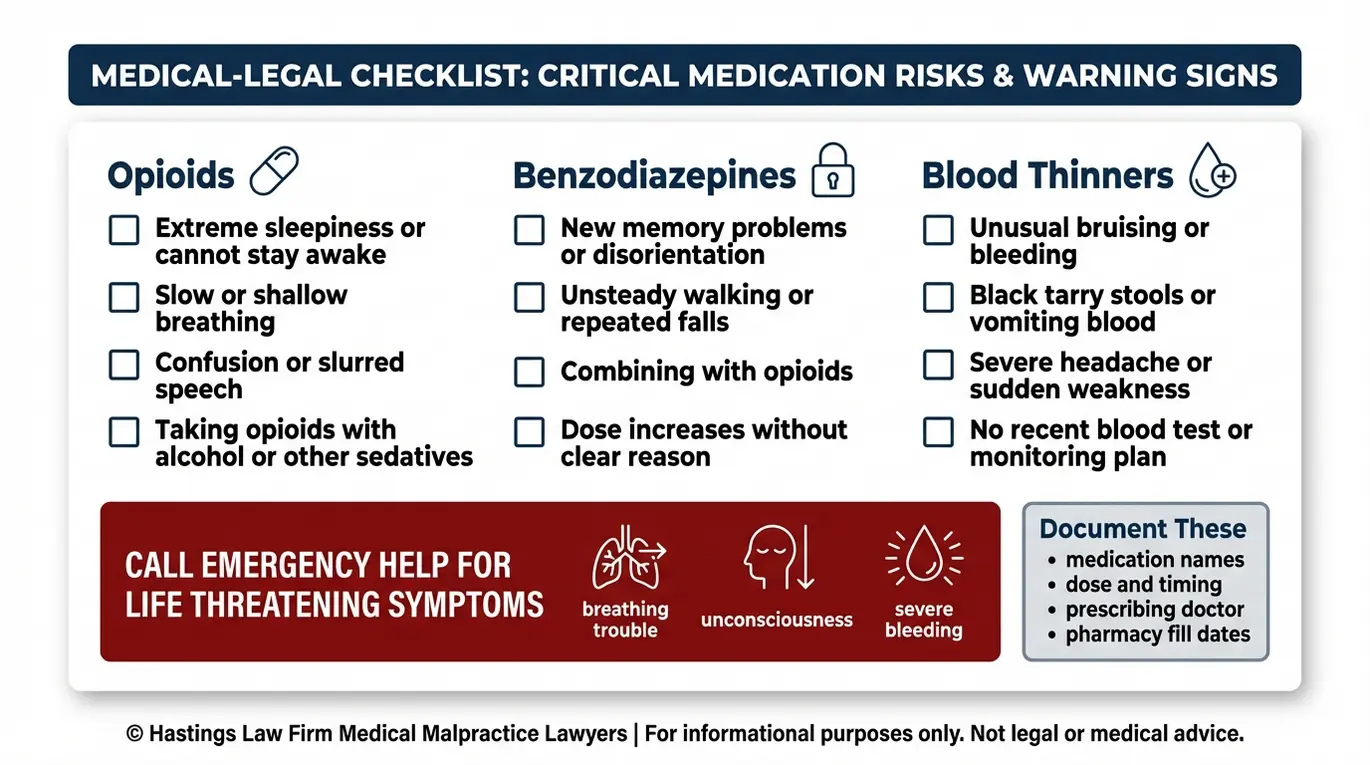
The most commonly overprescribed dangerous medications include opioids for pain management, benzodiazepines for anxiety, and anticoagulants, all of which carry high risks of addiction or fatal internal bleeding. Establishing causation is key, and an overprescribing lawyer Arizona patients rely on will focus on whether the prescribing physician accounted for these known risks before writing or renewing a prescription.
- Opioids (Oxycodone, Hydrocodone, Fentanyl): These medications carry a well-documented risk of addiction and fatal overdose. Opioid-induced respiratory depression, a condition where the drug slows breathing to dangerously low levels, is one of the leading causes of opioid-related death. The Arizona Health Care Cost Containment System (AHCCCS) provides guidance on recognizing and responding to an opioid overdose, underscoring how seriously the state treats this risk.
- Benzodiazepines (Xanax, Valium, Ativan): Frequently prescribed for anxiety and insomnia, benzodiazepines become especially dangerous when combined with opioids and other controlled substances or alcohol. The combination can suppress breathing and lead to respiratory failure.
- Blood Thinners (Warfarin, Xarelto, Eliquis): Anticoagulants require careful dosage management and regular blood monitoring. When overprescribed or inadequately monitored, they can cause uncontrolled internal bleeding, hemorrhagic stroke, or death.
Contact the Arizona Healthcare Malpractice Attorneys at Hastings Law Firm Today for Help
Overprescribing is not just an unfortunate side effect of modern medicine. It is a preventable form of negligence, and you have the right to hold the responsible parties accountable. If you are dealing with the aftermath of an overdose, a loved one’s addiction, or the loss of a family member, we are here to listen and to help you understand what happened.
Hastings Law Firm‘s medical-legal team, including in-house nurses and board-certified patient advocates, will review your records, identify where the standard of care was broken, and build your case from day one as if it is going to trial. Our founder, Tommy Hastings, secured a $10 million verdict against operators of a pill mill in a landmark overprescribing case, and that same level of preparation goes into every case we accept.
There is no fee unless we recover compensation for you. Contact our team today for a free, confidential case evaluation with an Arizona over prescribing of medication lawyer who is ready to get you answers.
Frequently Asked Questions About Over Prescribing of Medication in Arizona


This content was researched and written by the Hastings Law Firm editorial team, which includes attorneys, medical professionals, and experienced researchers. Our writing is informed by internal knowledge and practical experience, and we cross-check critical details against authoritative sources cited throughout. Every piece undergoes human-led fact-checking and legal review. Because legal and medical information can change, if you spot an error, please contact us. Learn more about our content standards and review process on our editorial policy page.

Tommy Hastings, founder of Hastings Law Firm, is a board-certified personal injury trial lawyer dedicated exclusively to healthcare injury cases. Since 2001, he has represented injured patients and families in litigation against major hospital systems, pharmaceutical companies, and negligent healthcare providers nationwide. He has handled numerous high-profile cases that have drawn national media attention and resulted in multi-million dollar recoveries. He draws on that experience in his writing, helping readers understand how these cases work and what options may be available to them.
