


Arizona Orthotist Malpractice Lawyer
Custom orthotics are meant to support healing and mobility, but a poorly designed or improperly fitted brace can cause serious harm. Orthotist malpractice involves preventable professional errors in design, fabrication, fitting, or follow up that lead to injuries such as skin breakdown, nerve compression, falls, and lasting functional limits. Claims can also involve product defects when the device itself fails. Understanding how liability, evidence, and compensation issues differ can help clarify what happened and what options may exist. If you or a loved one were harmed or worse due to orthotist malpractice in Phoenix, Arizona, contact Hastings Law Firm for a free, confidential case review.

Last Updated: July 27, 2026
Trial-Ready Arizona Orthotic Injury Attorneys
When a medical device that was supposed to help you heal causes new pain or injury, the experience can feel deeply disorienting. Custom orthotics, which are medical braces, splints, and supports designed specifically for your body, are prescribed to correct alignment, protect healing tissue, and restore mobility. If the device was improperly designed, poorly fitted, or made with the wrong materials, the consequences can range from chronic skin wounds to permanent nerve damage.
An experienced Arizona Orthotist Malpractice Lawyer can help you understand whether the harm you suffered resulted from a preventable professional error. At Hastings Law Firm, our team of attorneys, former defense counsel, and in-house nurses focuses exclusively on medical malpractice cases. If you or a loved one has been injured by a defective or negligently fitted orthotic device, we welcome you to contact our Phoenix office for a free, confidential case evaluation.

Understanding Orthotist Malpractice and Standard of Care
Orthotist malpractice occurs when a licensed orthotist fails to design, fabricate, or fit a medical brace or support device according to the accepted medical standard of care, resulting in injury to the patient. Understanding how these professionals are regulated helps clarify when a standard of care has been breached. This negligence involves an orthotist deviating from safety protocols. These professionals are trained to create and fit orthoses, which are external devices like ankle-foot braces or spinal supports used to correct the musculoskeletal system.
The standard of care for orthotists refers to the level of skill, diligence, and treatment that a reasonably competent orthotist would provide under similar circumstances. This standard touches every phase of the process, and a breach may require the attention of an orthotic negligence attorney:
- Proper casting and measurement: Taking an accurate negative cast or digital scan of the affected body part to ensure the device conforms to the patient’s anatomy.
- Material selection: Choosing appropriate plastics, foams, padding, and structural components based on the patient’s weight, activity level, and medical condition.
- Biomechanical alignment: Positioning the device so that joints, straps, and corrective forces work with the body rather than against it.
- Monitoring and follow-up: Scheduling adjustment appointments to check for skin breakdown, pressure points, and changes in the patient’s condition.
- Accounting for pre-existing conditions: Modifying the design when the patient has diabetes, neuropathy, vascular disease, or fragile skin.
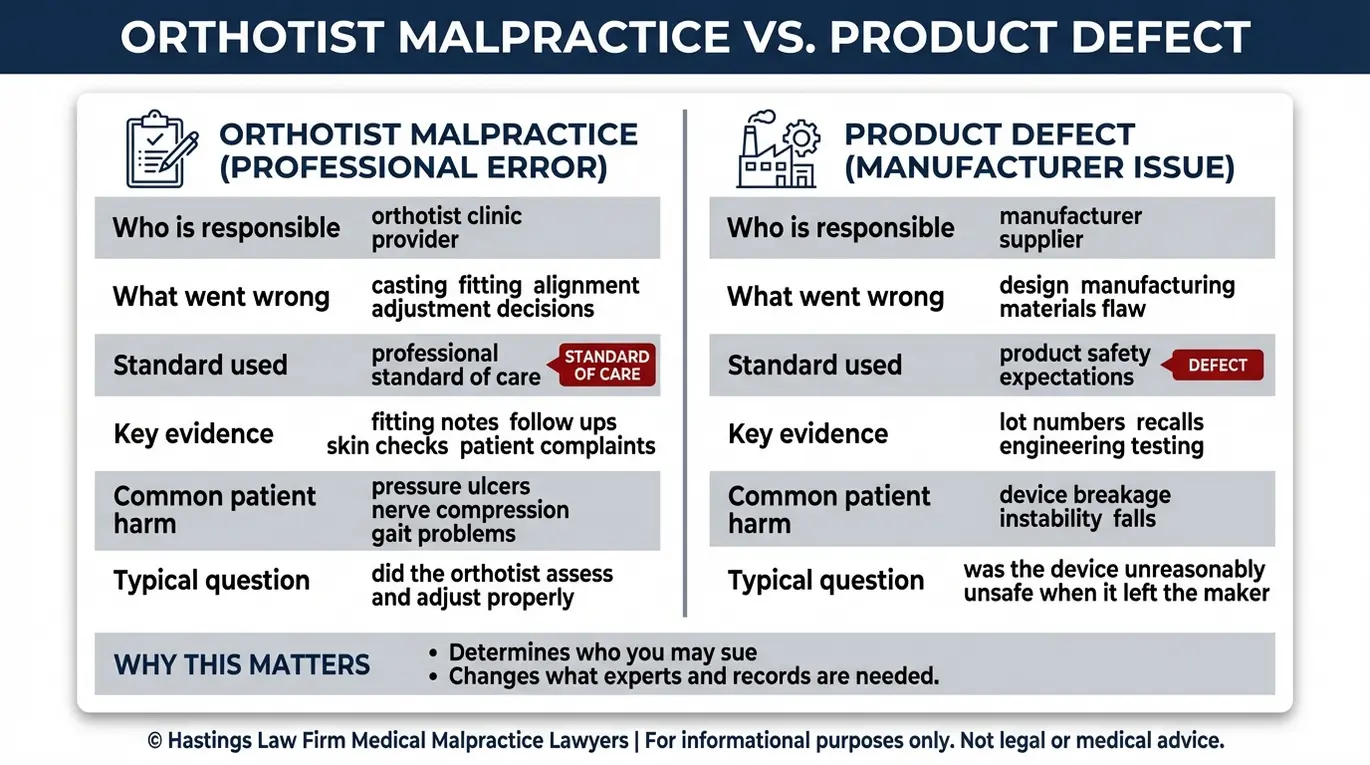
Two different categories of claims exist. If the orthotist made a professional error during the design, fitting, or follow-up process, that is medical negligence, and an improper orthotic fitting lawyer can assist. If the device itself was defective due to a manufacturing flaw or faulty component from a medical device manufacturer, that may fall under product liability. An Arizona orthotist malpractice lawyer or bracing malpractice lawyer can evaluate your situation to determine which theory of liability applies, or whether both are involved.
This distinction matters because the legal strategy, the evidence required, and the parties you can hold accountable differ depending on whether the harm stems from improper treatment by the orthotist or a defect in the product itself. Patients affected by orthotist malpractice in Arizona need a legal team that understands these nuances to build a strong case against all responsible parties.
Common Errors Committed by Orthotists and Clinics
Common orthotic errors include improper casting leading to pressure ulcers, failure to account for nerve pathways causing neuropathy, manufacturing defects in the brace, and failure to adjust the device after patient complaints of pain. These errors represent specific ways a professional may fail to meet their duty to a patient. These errors can produce serious, sometimes irreversible injuries, often necessitating the help of a nerve damage from orthotics lawyer or pressure sore malpractice attorney.
Skin Breakdown and Pressure Injuries
Patients often suffer from a pressure ulcer, or pressure injury, which is tissue damage caused by sustained, unrelieved pressure against the skin. Orthotics that have unpadded friction points, sharp edges, or improper contours can cause wounds ranging from superficial redness to deep tissue destruction. Patients with diabetes or poor circulation face even greater risk because their skin heals slowly and is more vulnerable to breakdown.
Nerve Damage
Tight straps, poorly molded shells, or incorrect trim lines can compress nerves against bone. One of the more common injuries is peroneal nerve palsy, a condition where compression of the peroneal nerve near the knee causes “foot drop.” This means the patient loses the ability to lift the front of the foot. Nerve damage from orthotics can cause numbness, burning, weakness, and loss of enjoyment of life, creating clear causation for a claim.
Structural Failure
When an orthotist uses subpar materials or incorrect design specifications, the device may crack, deform, or fail to provide adequate support. This can lead to falls, re-injury of the original condition, or new fractures. A medical brace injury lawyer can investigate whether these defects were preventable.
Ignoring Patient Complaints
One of the most concerning patterns in Phoenix orthotic negligence cases involves a patient repeatedly reporting pain, redness, or discoloration, only to be told that discomfort is “normal” or to “give it time.” Failure to diagnose these complaints and adjust the device can allow a minor issue to become a serious injury.
| Error Type | Common Symptoms | Potential Injury |
|---|---|---|
| Improper casting/fit | Redness, blistering, localized pain | Pressure ulcers, skin necrosis |
| Nerve compression | Numbness, tingling, burning | Peroneal nerve palsy (foot drop) |
| Structural failure | Device cracking, instability | Falls, fractures, re-injury |
| Failure to adjust | Worsening pain after repeated visits | Progressive tissue or nerve damage |
If you recognize any of these symptoms, document them with photographs and contact an Arizona orthotist malpractice lawyer promptly to discuss your pain and suffering.

The Hastings Law Firm Difference
Results matter, but what truly sets us apart is how we achieve them. Every verdict, every settlement, and every Arizona courtroom victory comes from one guiding promise: To treat each client’s fight for justice as if it were our own.
This balance of skill, experience, and empathy reflects our core philosophy that justice should not only compensate the injured, but also make health care safer nationwide.

Proving Negligence in Custom Bracing and Orthotics Cases
Proving negligence requires demonstrating that the orthotist owed a duty of care, breached that duty through substandard work, and directly caused specific damages, which must be corroborated by expert testimony and medical records. Proving negligence is the process of showing how a professional’s actions led to your injury.
Here is how that process typically works:
- Preserve the device. If you still have the orthotic, do not throw it away or alter it. The brace itself is often the single most important piece of physical evidence. It allows an expert witness for orthotics to examine the fabrication, trim lines, padding, and structural integrity.
- Document the injury. Photograph the affected area at every stage, including redness, blistering, open wounds, and any changes over time. These images help establish the timeline and severity of harm.
- Secure your medical records. We obtain the orthotist’s clinical notes, the original prescription, the orthotic casting records (the negative cast or mold used to create the device), and any follow-up fitting notes, known as orthotic adjustment records. We also gather records from other providers who treated the resulting injury to solidify the medical malpractice evidence.
- Retain a qualified expert. Arizona orthotist malpractice lawyer cases require testimony from a credentialed orthotist or comparable specialist who can review the device and records, then provide an opinion on whether the fabrication or fitting fell below the standard of care. Our firm maintains a national network of medical experts for exactly this purpose.
- Establish causation. This is often the most contested element when suing an orthotist. The defense will argue that your pain or injury stems from your original condition, not from the brace. We work with medical specialists to satisfy the burden of proof and differentiate between the underlying condition and the new harm caused by the orthotic. Research published through PubMed Central on preventing pressure injuries in individuals with impaired mobility confirms that proper device design and monitoring are critical to preventing secondary injuries in patients with limited sensation or circulation.
Hospital EMR and Electronic Audit Trail Preservation
When injuries are reported, clinic records sometimes change. Electronic medical record systems maintain audit trails that log every entry, edit, and deletion made to a patient’s chart. We move quickly to request preservation of these electronic audit trail logs before any modifications can be made. If alterations are discovered, that evidence preservation can significantly strengthen your claim and undermine the credibility of the defense.

Compensation for Injuries Caused by Defective Orthotics
Victims of orthotist malpractice in Arizona can recover economic damages for medical bills and lost wages, as well as non-economic damages for pain, suffering, and disfigurement, with no state constitutional cap on the amount awarded. Compensation in these legal claims aims to restore your financial security after a medical error. An Arizona orthotist malpractice lawyer will fight for full orthotic injury compensation on your behalf.
Economic Damages
These cover the measurable financial losses tied to the malpractice. They typically include the cost of the defective device, expenses for treating new injuries such as wound care for pressure ulcers or surgery for nerve damage, physical therapy, and any future medical treatment. Lost wages and reduced earning capacity also fall into this category if the injury affected your ability to work. Securing these damages for bad braces is often vital for financial stability.
If your insurer denied coverage for follow-up treatment, the Arizona Department of Insurance and Financial Institutions Health Care Appeals Process provides a formal appeals pathway that may help you recover those costs.
Non-Economic Damages
These compensate for harm that does not carry a receipt. Physical pain, emotional distress, disfigurement from scarring or wounds, and loss of enjoyment of life are all recoverable. For example, a patient who can no longer walk comfortably or participate in activities they once enjoyed may receive significant non-economic compensation through a medical malpractice settlement or Arizona injury verdict.
| Damage Category | Examples |
|---|---|
| Economic damages | Medical bills, corrective devices, lost wages, future care costs |
| Non-economic damages | Pain and suffering, emotional distress, scarring, loss of enjoyment of life |
Every case is different, and the value of a claim depends on the severity of the injury, the strength of the evidence, and the degree of negligence involved. Our team builds each case with the goal of presenting the full picture of how the injury has affected your life.
Liability and Statute of Limitations in Arizona
In Arizona, liability may extend to the individual orthotist, the supervising physician, or the clinic itself, and claims must generally be filed within two years of the injury or its discovery. Identifying liability involves determining who is legally responsible for your damages. An Arizona orthotist malpractice lawyer can identify all sources of orthotic clinic liability.
Vicarious Liability
When an orthotist is employed by a clinic or hospital, the employer can be held legally responsible for the employee’s negligence under the doctrine of vicarious liability. This is significant because clinics and hospitals typically carry larger insurance policies. We investigate the employment and supervisory relationships early to identify every potentially liable party, including cases of hospital malpractice or wrongful death. A vicarious liability lawyer is essential for managing these corporate structures.
The Two-Year Filing Deadline
Under A.R.S. § 12-542, Arizona imposes a two-year Arizona statute of limitations for personal injury claims, including medical malpractice. If you miss this time limit to sue orthotist, the court will almost certainly dismiss your case regardless of its merit.
The Discovery Rule
Some orthotic injuries are not immediately apparent. Nerve damage, for instance, may develop gradually under a brace and only become diagnosable weeks or months later through testing such as electromyography (EMG), a procedure that measures the electrical activity of muscles, or nerve conduction studies (NCS), which assess how well electrical signals travel through specific nerves. Arizona’s discovery rule can extend the filing deadline to two years from the date of discovery, meaning when you knew, or reasonably should have known, that your injury was caused by the orthotic device.
Because the discovery rule involves fact-specific analysis, consulting an Arizona orthotist malpractice lawyer early protects your ability to file a timely claim. Waiting to “see if it gets better” can cost you your legal rights.
Contact the Arizona Doctor Malpractice Attorneys at Hastings Law Firm Today for Help
A custom orthotic device is prescribed to support your recovery, not to create new injuries. Founder Tommy Hastings is a board-certified trial lawyer who ensures we investigate every case from day one as if it will go to a jury trial.
Hastings Law Firm focuses exclusively on medical malpractice. Our team includes former defense attorneys who understand how the other side builds its case, in-house nurses who can interpret your clinical records, and a national network of medical experts ready to evaluate your claim. We handle every case on a contingency fee basis, which means you pay no attorney fees unless we secure a recovery for you.
Call our Phoenix office today for a free, confidential case evaluation. Taking this step can help preserve critical evidence and protect your right to file before the statute of limitations expires. Let us review what happened and explain your options.
Frequently Asked Questions About Orthotist Malpractice in Arizona


This content was researched and written by the Hastings Law Firm editorial team, which includes attorneys, medical professionals, and experienced researchers. Our writing is informed by internal knowledge and practical experience, and we cross-check critical details against authoritative sources cited throughout. Every piece undergoes human-led fact-checking and legal review. Because legal and medical information can change, if you spot an error, please contact us. Learn more about our content standards and review process on our editorial policy page.

Tommy Hastings, founder of Hastings Law Firm, is a board-certified personal injury trial lawyer dedicated exclusively to healthcare injury cases. Since 2001, he has represented injured patients and families in litigation against major hospital systems, pharmaceutical companies, and negligent healthcare providers nationwide. He has handled numerous high-profile cases that have drawn national media attention and resulted in multi-million dollar recoveries. He draws on that experience in his writing, helping readers understand how these cases work and what options may be available to them.
