


Arizona Oncologist Malpractice Lawyer
Oncologist malpractice can involve delayed diagnosis, treatment mistakes, or failures to monitor a patient during cancer care. These errors can change treatment options, worsen outcomes, and cause avoidable harm, including unnecessary procedures when a diagnosis is wrong. Responsibility may extend beyond the oncologist when radiology or pathology errors break the diagnostic chain. Arizona also has specific rules that can affect how claims are evaluated and what compensation may be available. If you or a loved one were harmed or worse due to oncologist malpractice in Arizona, contact Hastings Law Firm for a free, confidential case review.

Last Updated: July 27, 2026
Trusted Legal Representation for Medical Specialists Negligence in Arizona
When cancer care goes wrong, the consequences are life-altering. Whether the error involved a delayed diagnosis or flawed treatment, you deserve experienced legal guidance. These cases require a team that understands the medicine behind the malpractice.
An oncologist, the specialist responsible for diagnosing and treating cancer, may focus on medical oncology, involving systemic therapies, radiation oncology, which uses radiation therapy fractionation to deliver doses in fractions over time, or surgical oncology, the field dedicated to tumor removal. Errors can occur anywhere.
At Hastings Law Firm, our team includes medical professionals and former defense attorneys. As a firm dedicated solely to medical malpractice, we bring focused experience to every Arizona oncologist malpractice lawyer consultation. We can review what happened and explain your options at no cost.

Common Forms of Oncologist and Cancer Care Negligence
Oncologist negligence typically involves the failure to diagnose cancer in a timely manner, medication errors in chemotherapy dosage, or the failure to monitor a patient’s response to treatment, leading to preventable progression of the disease.
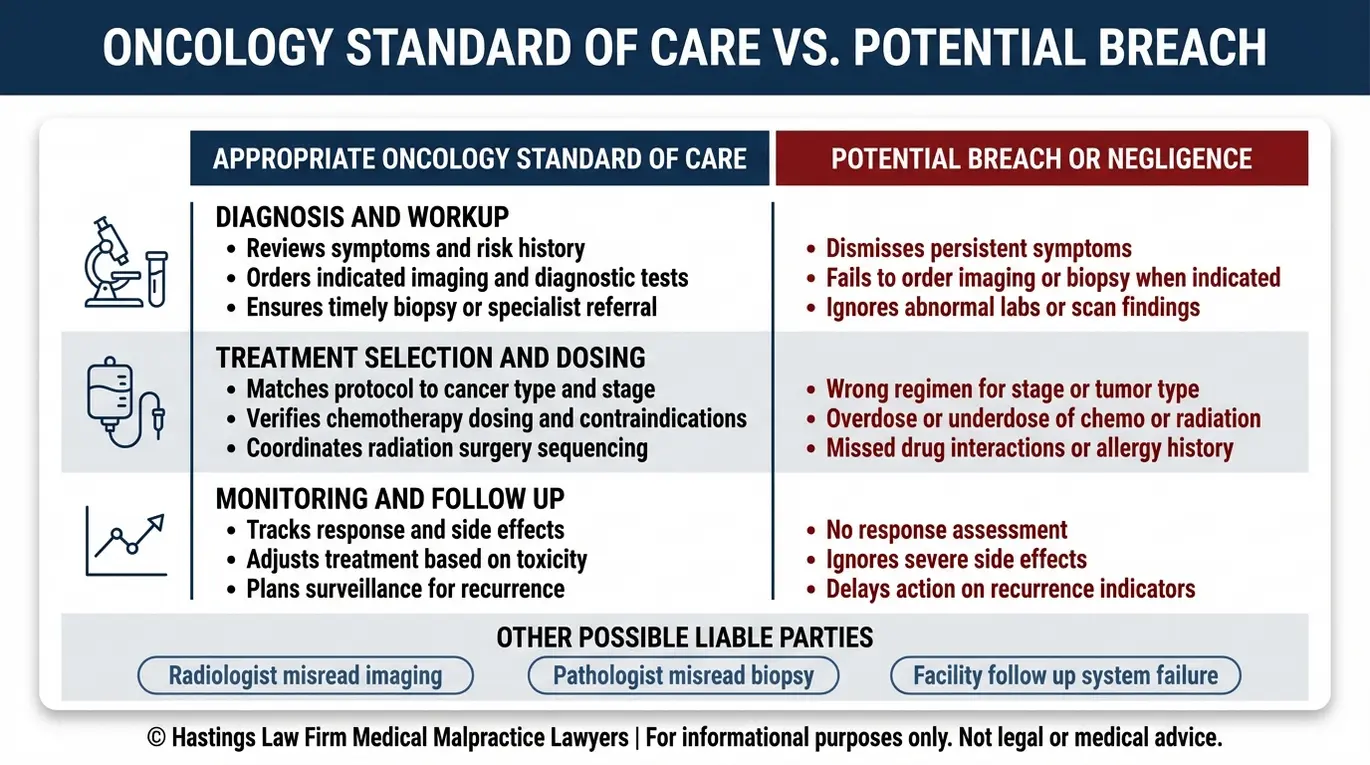
These cases can take many forms, but they generally fall into three categories: diagnostic failures, treatment errors, and monitoring breakdowns.
Diagnostic failures go beyond simply missing a diagnosis. They may include not ordering a biopsy, a procedure where tissue is removed and examined under a microscope, when symptoms or imaging warranted one. They can also involve ignoring a patient’s persistent complaints or failing to follow up on abnormal diagnostic test results. According to the National Academies Press overview of diagnostic error in health care, diagnostic mistakes remain one of the most common and harmful categories of medical error.
Treatment errors involve the wrong chemotherapy regimen, incorrect dosing, or a treatment protocol that does not match the patient’s cancer staging. This classification system, often called TNM staging, describes tumor size, lymph node involvement, and whether the cancer has spread.
Chemotherapy dosing is often calculated using body surface area (BSA), and even small miscalculations can cause serious harm. Overdosing can lead to organ damage, while underdosing may allow the cancer to progress. The National Cancer Institute’s Chemotherapy and You guide outlines how these treatments are expected to be administered and monitored.
Failure to monitor can include missing signs of cancer recurrence on follow-up scans or ignoring severe side effects of radiation or chemotherapy that require a change in the treatment plan.
Common types of cancer doctor negligence include:
- Failure to order appropriate biopsies or imaging when indicated
- Misinterpreting or ignoring abnormal lab or scan results
- Administering the wrong chemotherapy drug or incorrect dosage
- Using a treatment protocol inconsistent with the diagnosed cancer stage, such as in advanced or late-stage cancer
- Failing to adjust treatment when the patient is not responding
- Overlooking signs of recurrence during follow-up care
When we evaluate a potential case as an Arizona malpractice attorney team, we look closely at what the standard of care required at each decision point and whether the treating provider met that standard.
Liability Beyond the Oncologist: Radiologists and Pathologists
The error that harms a patient does not always originate with the oncologist. In many cancer cases, the breakdown starts earlier in the diagnostic chain.
A radiologist, the physician who interprets imaging studies like CT scans, MRIs, and mammograms, may misread a scan and fail to flag a suspicious mass. A pathologist, the specialist who examines tissue samples under a microscope, may misinterpret a biopsy and return an incorrect result. Either of these errors can mean the oncologist never receives accurate information to begin with.
We investigate every provider involved in the chain of care, not just the treating oncologist. If a radiologist missed a visible tumor on imaging or a pathologist misclassified a malignant sample, those providers may share liability for the outcome.
Overcoming the “Outcome Would Be The Same” Defense
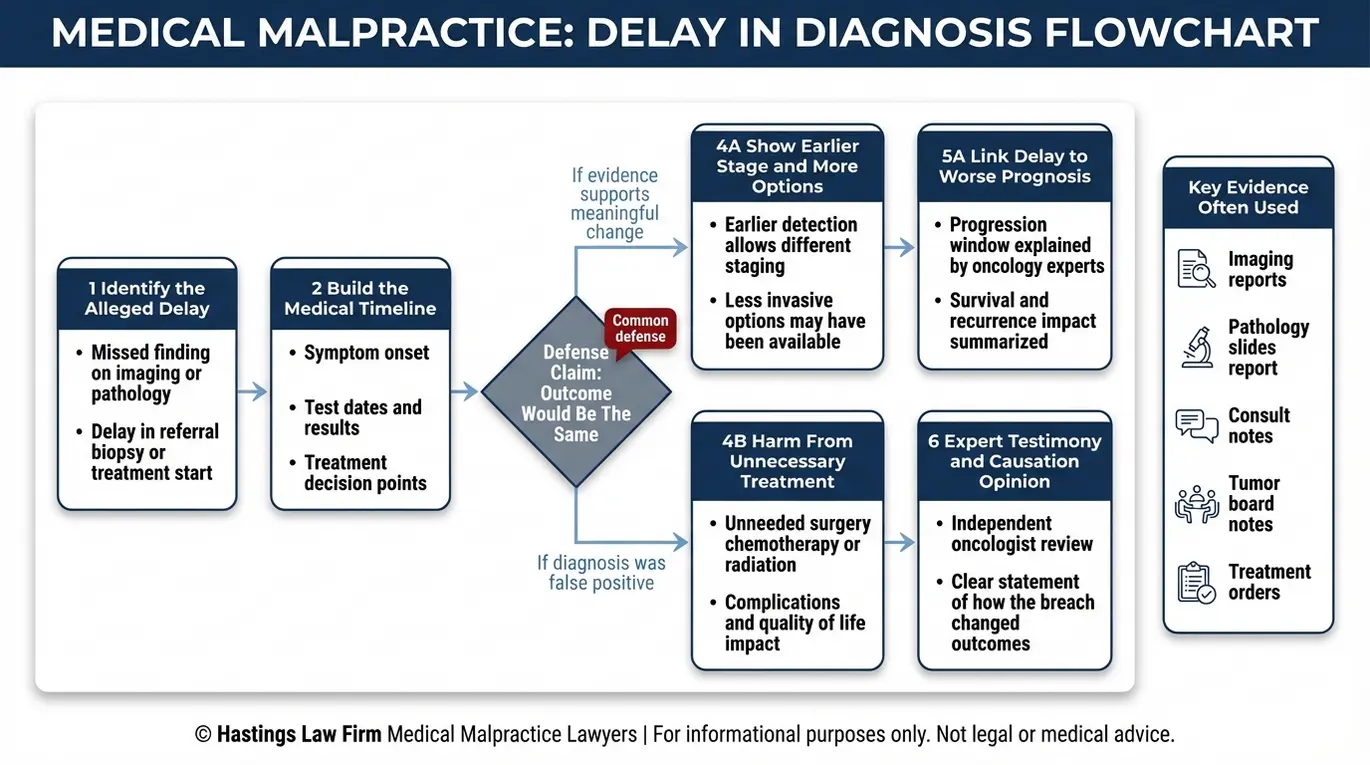
A common defense strategy in cancer cases is to argue that the patient’s prognosis was terminal regardless of the doctor’s error; successfully countering this requires proving that the delay significantly reduced the patient’s chance of survival or life expectancy.
This is often the hardest part of an oncology malpractice case. Defense attorneys will point to the aggressiveness of the cancer and claim the prognosis, the expected course and outcome of the disease, was terminal regardless of the doctor’s error. An experienced oncology malpractice lawyer knows how to challenge that argument with data and qualified expert testimony.
The key is demonstrating what earlier detection would have made possible. In many cancers, the difference between an early-stage and late-stage diagnosis changes everything: less invasive surgery instead of aggressive chemotherapy, a higher five-year survival rate, or more effective treatment options. Survival statistics available through the SEER Explorer Application from the National Cancer Institute show how outcomes shift based on the stage at diagnosis for nearly every cancer type.
Our medical experts reconstruct the timeline to show what the tumor likely looked like at the point when it should have been caught, what treatment options would have been available, and how the delay changed the patient’s prognosis. This evidence-driven approach is how we establish causation, even in cases involving aggressive cancers.
There is also a lesser-known but equally serious issue: false-positive cancer diagnoses. This is where a patient is incorrectly told they have cancer and undergoes unnecessary, harmful treatment such as surgery, chemotherapy, or radiation for a condition that was actually benign. A false-positive diagnosis can mean a patient loses an organ or endures toxic treatment they never needed. We evaluate these cases with the same rigor, using independent pathology review and expert analysis to determine whether the original diagnosis met the standard of care.
The Hastings Law Firm Difference
Results matter, but what truly sets us apart is how we achieve them. Every verdict, every settlement, and every Arizona courtroom victory comes from one guiding promise: To treat each client’s fight for justice as if it were our own.
This balance of skill, experience, and empathy reflects our core philosophy that justice should not only compensate the injured, but also make health care safer nationwide.

Steps to Take After Suspecting Cancer Misdiagnosis in Arizona
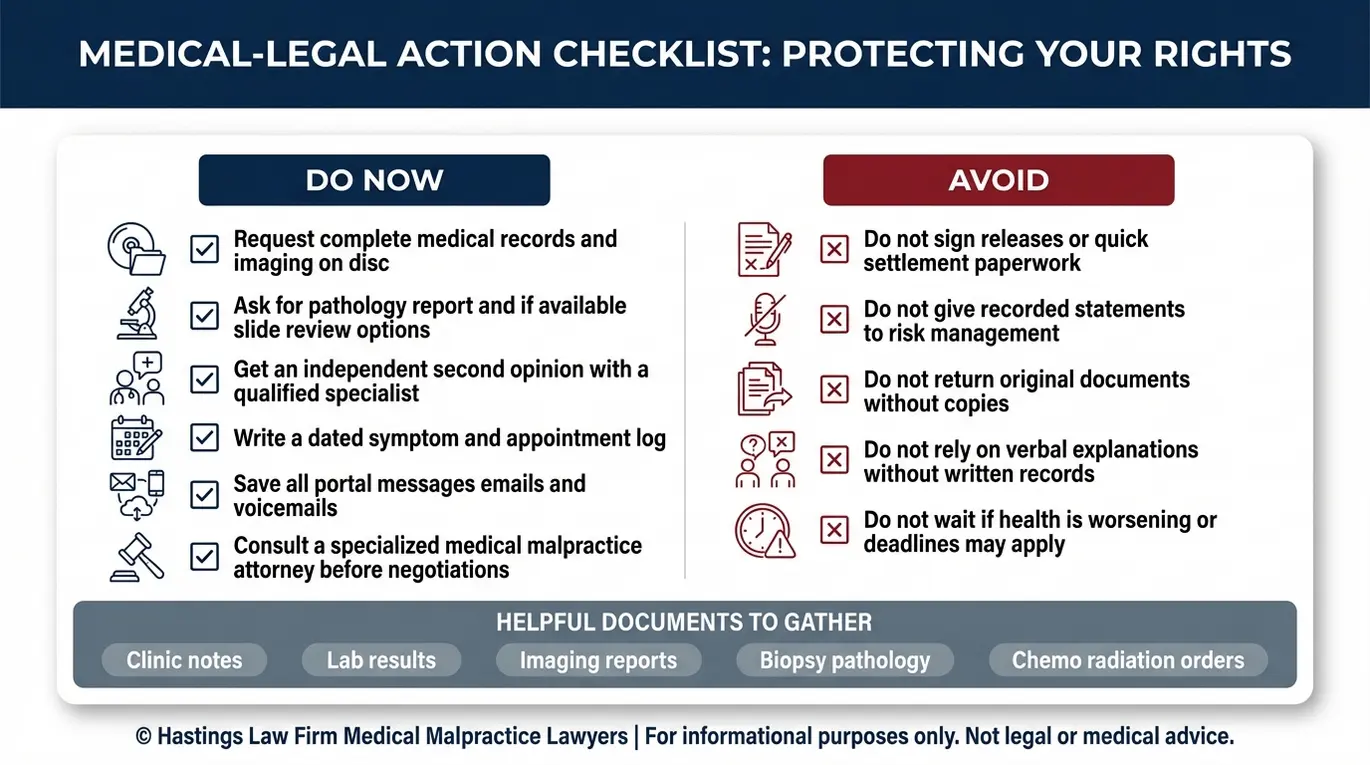
Victims should immediately request a complete copy of their medical records, seek a second opinion from an independent specialist to properly treat the condition, and consult with a specialized malpractice attorney before speaking to hospital risk managers.
- Request your complete medical records. Under federal HIPAA laws, you have a legal right to your records. Submit a written request to every provider involved in your care, including the oncologist, radiologist, pathologist, and any referring physicians. The HHS.gov HIPAA Guidance on Individuals’ Right to Access Health Information outlines your rights and the obligations providers have in responding. Obtaining these records early is helpful before any changes or additions are made to the chart.
- Seek a second opinion from an independent specialist. A second-opinion pathology slide review, where another pathologist re-examines the original biopsy, can reveal whether the initial diagnosis was accurate. A biopsy is a tissue sample removed for testing. An independent oncologist can also assess whether the treatment plan was appropriate for your diagnosis and stage.
- Do not sign anything from the hospital or its risk management team. If a hospital representative contacts you with paperwork or a settlement offer, do not sign it without first speaking to an attorney. These early offers rarely reflect the full scope of your losses, including future medical bills, lost wages, wrongful death damages, and the impact on your quality of life.
- Keep a personal log. Document your symptoms, treatment timeline, and any communications with your medical team. This record can become valuable evidence.
- Consult with specialized Arizona oncologist malpractice lawyers before taking further action. A firm with in-house medical staff and access to qualified experts can evaluate whether the care you received fell below the standard. Hastings Law Firm’s Board Certified Patient Advocates help clients obtain and organize complex oncology records to support claims for settlements and jury verdicts.
Contact the Arizona Doctor Malpractice Attorneys at Hastings Law Firm Today for Help
If you or a loved one has been harmed by a missed cancer diagnosis, a treatment error, or negligent oncology care, you do not have to face this alone. Hastings Law Firm focuses exclusively on medical malpractice, and our team of attorneys, nurse consultants, and medical experts understands the clinical details that make these cases so demanding.
We prepare every case as if it will go to a jury, and that level of preparation gives our clients the strongest possible position whether the case resolves through settlement or trial. Founder Tommy Hastings, a board-certified trial attorney and 2025 inductee into the American Board of Trial Advocates, has spent over two decades holding negligent providers accountable.
There are no fees unless we recover for you. If you are looking for an Arizona oncologist malpractice lawyer who understands both the medicine and the law, contact Hastings Law Firm for a confidential case evaluation. Let us help you find the answers you deserve.
Frequently Asked Questions About Oncologist Malpractice in Arizona


This content was researched and written by the Hastings Law Firm editorial team, which includes attorneys, medical professionals, and experienced researchers. Our writing is informed by internal knowledge and practical experience, and we cross-check critical details against authoritative sources cited throughout. Every piece undergoes human-led fact-checking and legal review. Because legal and medical information can change, if you spot an error, please contact us. Learn more about our content standards and review process on our editorial policy page.

Tommy Hastings, founder of Hastings Law Firm, is a board-certified personal injury trial lawyer dedicated exclusively to healthcare injury cases. Since 2001, he has represented injured patients and families in litigation against major hospital systems, pharmaceutical companies, and negligent healthcare providers nationwide. He has handled numerous high-profile cases that have drawn national media attention and resulted in multi-million dollar recoveries. He draws on that experience in his writing, helping readers understand how these cases work and what options may be available to them.
