


Arizona OB-GYN Malpractice Lawyer
Pregnancy and childbirth can become traumatic when medical care falls below accepted standards. Obstetrical and gynecological malpractice involves preventable errors by an OB GYN or related providers that cause serious harm to a mother or infant. The difference between an unavoidable complication and negligence often turns on whether the care met the standard of care and whether the error directly caused the injury. These situations can leave families facing long term medical needs, emotional distress, and lasting uncertainty. If you or a loved one were harmed or worse due to OB GYN malpractice in Arizona, contact Hastings Law Firm for a free, confidential case review.

Last Updated: July 27, 2026
Trusted Legal Representation for Birth Injuries in Arizona
When something goes wrong during pregnancy or childbirth, the emotional weight can be overwhelming. You trusted your medical team to protect you and your baby, and now you may be dealing with questions that feel impossible to answer on your own. You are not alone, and what you are feeling is valid.
As an Arizona OB-GYN malpractice lawyer, Hastings Law Firm focuses exclusively on medical malpractice. Founded by board-certified trial attorney Tommy Hastings, our firm focuses exclusively on medical malpractice to secure accountability and patient safety. Our team includes experienced trial attorneys, former defense lawyers, and in-house medical professionals who understand both the clinical and legal sides of obstetric injury cases.
If you believe a medical error harmed you or your child during pregnancy or delivery, we can review what happened and explain your options in a free, confidential consultation.

Defining Obstetrical and Gynecological Malpractice Under Arizona Law
Malpractice occurs when an obstetrician or gynecologist deviates from the accepted medical standard of care, directly causing injury or death to the patient or infant. In Arizona law, the standard of care is the legal benchmark for quality treatment. It refers to the level of skill and treatment that a reasonably competent OB-GYN specialist would provide under similar circumstances. It is not measured by perfection; it is measured by what qualified peers in the same field would consider appropriate.
Not every poor outcome in a delivery room is malpractice. Childbirth carries inherent risks, and sometimes complications develop even when the medical team does everything right. The legal question centers on whether a provider’s specific actions or inactions fell below accepted medical standards and whether that breach of duty directly caused the harm.
This distinction matters because under the Arizona Revised Statutes, medical negligence claims require more than showing that something went wrong. You must also establish causation, meaning the provider’s failure was the direct cause of the injury rather than an unavoidable complication. As the Arizona Judicial Branch has clarified in its rulings on medical malpractice standards, the burden rests on the injured party to prove that the care provided fell below accepted benchmarks.
An Arizona malpractice attorney experienced in obstetric cases understands how to work with medical experts to evaluate whether the care you received met those standards or whether a preventable error changed the outcome.

Common Medical Errors Occurring During Pregnancy and Delivery
Frequent errors in OB-GYN cases include failure to diagnose dangerous conditions like preeclampsia, induction errors, surgical mistakes during cesarean sections, and improper use of delivery tools such as forceps or vacuum extractors. These errors can occur at any stage, from early prenatal visits through labor and postpartum recovery.
Prenatal errors may include:
- Failure to identify an ectopic pregnancy, where the embryo implants outside the uterus
- Missing signs of gestational diabetes or other conditions that require close monitoring
- Failing to order appropriate genetic screening or imaging when risk factors are present
- Inadequate follow-up for high-risk pregnancies
Labor and delivery errors often involve time-sensitive decisions where delays can have serious consequences:
- Mismanagement of oxytocin (Pitocin), a synthetic hormone used to induce or strengthen contractions, which can cause uterine hyperstimulation if not carefully monitored. The National Center for Biotechnology Information (NCBI) documents the risks and required monitoring protocols for oxytocin administration.
- C-section delay (delayed cesarean section), when fetal monitoring shows signs of distress
- Failure to obtain informed consent before performing a procedure, meaning the doctor did not adequately explain the risks, benefits, and alternatives
Surgical errors can include anesthesia complications, unintended organ damage during a C-section or hysterectomy, and retained surgical instruments.
An OB-GYN negligence lawyer evaluates the medical records and timeline to determine where, if anywhere, the standard of care was breached. Malpractice in Arizona requires proof that the error directly caused the injury, not simply that a complication occurred.
Sexual Misconduct and Abuse by Medical Providers
In rare but deeply harmful cases, patients experience sexual misconduct or assault by a gynecologist or other medical provider during an examination or procedure. This is a profound violation of trust and patient rights.
If you or someone you know experienced misconduct by a medical provider, this may give rise to both criminal charges and a civil claim for damages. These cases require sensitive, confidential handling, and our team takes every report seriously.
The Hastings Law Firm Difference
Results matter, but what truly sets us apart is how we achieve them. Every verdict, every settlement, and every Arizona courtroom victory comes from one guiding promise: To treat each client’s fight for justice as if it were our own.
This balance of skill, experience, and empathy reflects our core philosophy that justice should not only compensate the injured, but also make health care safer nationwide.

Permanent Injuries Sustained by Infants Due to Negligence
Negligence during delivery can result in life-altering conditions such as cerebral palsy, brachial plexus injuries, and hypoxic-ischemic encephalopathy (HIE). These injuries often require a lifetime of medical care and fundamentally change the trajectory of a child’s life and the family’s future.
Hypoxic-ischemic encephalopathy, commonly known as HIE, is a type of brain damage caused by oxygen deprivation during or near the time of birth. When blood flow or oxygen to the brain is interrupted, even briefly, the resulting injury can range from mild developmental delays to severe cognitive and physical disability. As outlined in research published through PubMed Central, the diagnostic criteria for neonatal encephalopathy continue to be refined, but the link between oxygen deprivation and lasting brain injury is well established. HIE can result from umbilical cord compression, placental abruption, uterine rupture, or failure to recognize and respond to fetal distress on monitoring strips.
Brachial plexus injuries, including Erb’s palsy, affect the network of nerves controlling the arm and hand. These injuries often occur when excessive force is applied during delivery, particularly in cases involving shoulder dystocia, where the baby’s shoulder becomes lodged behind the mother’s pelvic bone. Forceps and vacuum extraction errors can also cause these mechanical injuries.
| Injury | Common Cause | Potential Long-Term Impact |
|---|---|---|
| Cerebral Palsy | Prolonged oxygen deprivation (HIE) | Motor disability, cognitive impairment, lifelong care |
| Erb’s Palsy | Excessive traction during shoulder dystocia | Arm weakness or paralysis, possible surgical repair |
| HIE | Cord compression, delayed C-section, placental abruption | Developmental delays, seizures, organ damage |
Children who sustain these injuries may require neonatal intensive care immediately after birth and ongoing therapies, adaptive equipment, and specialized education for years. A birth injury attorney helps families calculate these long-term costs and pursue the compensation needed to provide proper care.
Maternal Complications and Injuries Caused by Medical Errors
Mothers can suffer severe injuries from undiagnosed preeclampsia, maternal hemorrhage (untreated bleeding), or surgical negligence, conditions that may lead to organ damage, sepsis (infection), sterility, or wrongful death. These are not just delivery risks; they are preventable harms when providers fail to monitor, diagnose, or respond appropriately.
Preeclampsia, a pregnancy condition marked by dangerously high blood pressure and potential organ damage, requires close monitoring of maternal vitals and timely intervention. When providers miss the warning signs or delay treatment, the consequences can escalate rapidly to seizures (eclampsia), stroke, or death. Data from the University of Arizona College of Medicine’s Maternal Mortality Review Program highlights the ongoing challenges Arizona faces in reducing low birth weight births and preventable maternal deaths, particularly in Maricopa County and rural communities.
Postpartum hemorrhage (PPH), excessive bleeding after delivery, is another leading cause of maternal injury when not managed quickly. Delays in recognizing blood loss, failure to have blood products available, or surgical errors during repair can turn a manageable complication into a life-threatening emergency.
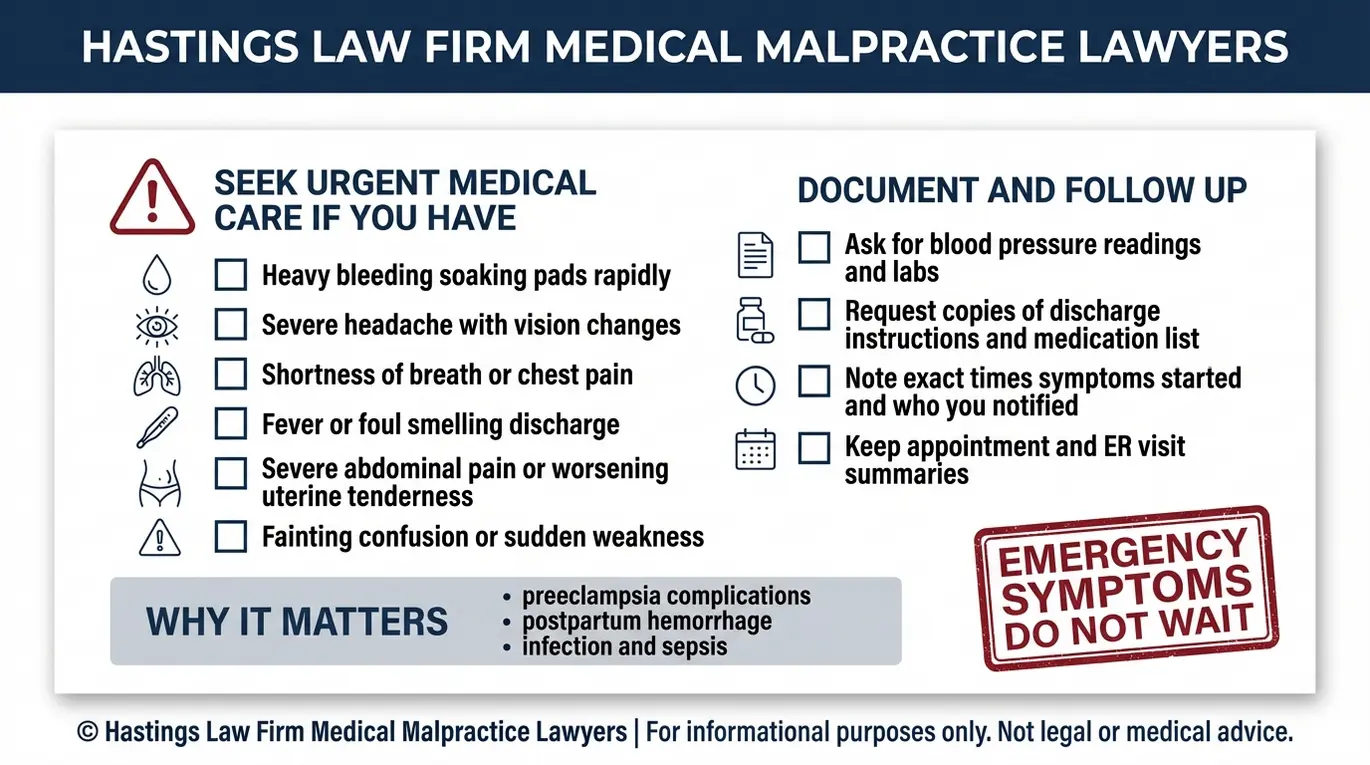
Warning signs that may indicate substandard maternal care include:
- Persistent high blood pressure readings that were not acted upon
- Complaints of severe headaches, vision changes, or upper abdominal pain that were dismissed
- Excessive bleeding after delivery without timely intervention
- Signs of infection (fever, rapid heart rate) that went unmonitored
- Delayed surgical response when uterine rupture or placental abruption was suspected
A maternal injury lawyer reviews the medical records to determine whether providers responded to these warning signs with the urgency the standard of care requires.
Establishing the Standard of Care in Obstetrical Cases
Proving negligence requires expert testimony to define what a prudent OB-GYN would have done under similar circumstances and demonstrating how the defendant failed to meet that benchmark. Effective medical evidence and legal strategy must work together to build a strong case.
The process begins with a thorough review of all medical records, including prenatal charts, labor and delivery notes, nursing logs, and electronic fetal monitoring (EFM) strips. EFM is the continuous recording of the baby’s heart rate during labor, used to detect fetal distress, also known in current medical terminology as nonreassuring fetal status. These strips often tell the story of what the medical team knew, and when they knew it.
Our investigation typically follows these steps:
- Record collection and timeline reconstruction: We gather every relevant medical record and build a minute-by-minute timeline of the care provided, identifying gaps, delays, or deviations from protocol.
- In-house medical review: Our team includes nurse practitioners and Board Certified Patient Advocates who analyze the clinical data and identify areas where the care may have fallen short of the legal threshold for proper treatment.
- Expert witness evaluation: We retain qualified OB-GYN specialists to review the case and provide an opinion on whether the care met or breached the standard. As discussed in the Arizona Law Review’s analysis of expert medical witness qualification, Arizona courts require that experts be qualified to testify about the specific specialty involved.
- Causation analysis: The expert must also establish that the breach directly caused the injury, satisfying the burden of proof by ruling out genetic conditions, pre-existing factors, or unavoidable complications.
This structured approach to proving medical malpractice is central to how we prepare every case. Our preparation signals to the defense that we are ready for trial from day one.

Identifying Liable Parties in Birth Injury Lawsuits
Liability may extend beyond the delivering doctor to include nurses, anesthesiologists, and the hospital or medical facility itself for systemic failures or inadequate staffing. Identifying all responsible parties is a central part of an Arizona medical malpractice claim.
Physicians: The obstetrician who managed the pregnancy and delivery is often the primary focus. Whether the doctor is a hospital employee or an independent contractor in private practice affects how liability is structured. In some cases, on-call physicians or consulting specialists may also bear responsibility.
Nursing and support staff: Labor and delivery nurses are responsible for monitoring patients, communicating changes in condition, and escalating concerns to the physician. If nursing staff failed to report warning signs or did not follow established protocols, they and their employer may share liability.
Hospitals and medical facilities: When suing a hospital in Arizona, claims may be based on vicarious liability for their employees’ actions or on the facility’s own failures. These can include inadequate staffing levels, outdated emergency protocols, lack of necessary equipment, or failure to credential and supervise their medical staff properly. Hospitals in Phoenix, Maricopa County, and across Arizona can be held accountable for hospital negligence and institutional shortcomings that contribute to patient harm.
Pharmaceutical and device manufacturers: If a medication like Pitocin was improperly manufactured, or if a medical device malfunctioned during delivery, the manufacturer may also be a liable party.
Our team, which includes former defense attorneys and nurses who once represented hospitals, understands how these institutions build their defenses. This perspective helps us identify every responsible party early in the case.
Recoverable Compensation for Families in Arizona
Families affected by OB-GYN negligence may recover damages for past and future medical bills, lost wages, pain and suffering, and the lifetime costs associated with caring for a child with a serious disability. Arizona law recognizes both economic and non-economic damages in a medical malpractice settlement or verdict.
Economic damages include quantifiable financial losses:
- Past and future medical costs, including surgeries, therapy, and medications
- Costs of adaptive equipment, home modifications, and specialized education
- Lost wages or earning capacity for a parent who must become a full-time caregiver
- Life care plan costs projecting the total expense of a child’s lifetime needs
Non-economic damages compensate for losses that do not carry a price tag but are no less real:
- Physical pain and suffering
- Emotional distress and mental anguish
- Loss of enjoyment of life
- Loss of parental companionship (in wrongful death cases)
In rare cases involving particularly egregious conduct, Arizona courts may also award punitive damages. Under Arizona law, punitive damages require proof that the defendant acted with “an evil mind,” which is a higher standard than gross negligence alone. These damages are intended to deter similar behavior rather than compensate for a specific loss.
Calculating future care costs often requires collaboration between medical experts, life care planners, and economists to present the full picture of a family’s needs to a jury.
Arizona Statute of Limitations for Birth Injury Claims
The Arizona statute of limitations for medical malpractice claims is generally two years from the date the injury occurred or was discovered. Missing this deadline can permanently bar your right to file a claim, which is why understanding the timeline matters.
There are important exceptions. For minors, Arizona law allows for tolling for minors, which pauses the statute of limitations. Under this rule, minors have two years from their 18th birthday—meaning until age 20—to bring a medical malpractice claim. However, parents often must file claims for medical bills and other damages much sooner to preserve evidence and protect the family’s rights. These timing rules are governed by A.R.S. Title 12.
Even with these exceptions, acting sooner protects your case. Medical records can be altered or lost, witnesses’ memories fade, and electronic monitoring data may not be preserved indefinitely. Consulting with an attorney early helps ensure that critical evidence is secured while it is still available.
Contact the Arizona Birth Injury Attorneys at Hastings Law Firm Today for Help
If your family is living with the consequences of a birth injury or maternal complication that you believe was preventable, you deserve answers. At Hastings Law Firm, we focus exclusively on medical malpractice because families facing these situations need attorneys who understand the medicine as well as the law. Founder Tommy Hastings, a board-certified trial lawyer, has dedicated his career to representing patients silenced by medical error.
Our team of trial attorneys, former defense lawyers, and in-house medical staff will review your records, explain what the evidence shows, and help you understand your legal options. Every case begins with a free, confidential evaluation, and you pay no fees unless we recover compensation on your behalf.
You do not have to carry this alone. Contact Hastings Law Firm today to take the first step toward the answers and accountability your family deserves.
Frequently Asked Questions About OB-GYN Malpractice in Arizona


This content was researched and written by the Hastings Law Firm editorial team, which includes attorneys, medical professionals, and experienced researchers. Our writing is informed by internal knowledge and practical experience, and we cross-check critical details against authoritative sources cited throughout. Every piece undergoes human-led fact-checking and legal review. Because legal and medical information can change, if you spot an error, please contact us. Learn more about our content standards and review process on our editorial policy page.

Tommy Hastings, founder of Hastings Law Firm, is a board-certified personal injury trial lawyer dedicated exclusively to healthcare injury cases. Since 2001, he has represented injured patients and families in litigation against major hospital systems, pharmaceutical companies, and negligent healthcare providers nationwide. He has handled numerous high-profile cases that have drawn national media attention and resulted in multi-million dollar recoveries. He draws on that experience in his writing, helping readers understand how these cases work and what options may be available to them.
