


Arizona Nursing Home Infection Lawyer
Written by: Hastings Law Firm | Reviewed by: Tommy Hastings | Updated: July 27, 2026
Serious nursing home infections can start with subtle changes like confusion or unusual drowsiness, and missed warning signs can allow a treatable problem to escalate into sepsis with life threatening consequences. The risk rises when basic care breaks down, such as poor hygiene, dehydration, malnutrition, or unsafe catheter practices. Clear documentation of symptoms, care plans, hydration tracking, and staff response often shapes what can be proven about preventability and accountability. If you or a loved one were harmed or worse due to nursing home infections in Arizona, contact Hastings Law Firm for a free, confidential case review.
Trusted Arizona Medical Attorneys for Nursing Home Infection Claims
What You Should Know About Nursing Home UTI Negligence Claims in Arizona:
- Harm can escalate quickly when early behavioral changes are dismissed, since older residents may show confusion before classic infection symptoms.
- Life threatening outcomes can follow when a urinary infection is not treated promptly, because progression to kidney infection and sepsis can occur rapidly.
- Preventability can hinge on daily care quality, since understaffing and hygiene breakdowns can allow bacteria to spread.
- Severe infections can be tied to basic needs being missed, since dehydration and malnutrition increase infection risk and weaken immune response.
- Serious injury or death can result from catheter related infections, since prolonged catheter use and poor sterile technique raise CAUTI risk.
- Recovery options can be limited by admission contract terms, since arbitration clauses may restrict access to a jury and reduce transparency.
- Case outcomes can turn on documentation quality, since care plans, hydration logs, nursing notes, and incident reports may show gaps between planned and provided care.
- Disputes often focus on alternative explanations, since facilities may claim infections were inevitable or caused by pre existing conditions.
- Proof can depend on timely access to records, since authorized representatives can request medical records and preserve photos and written notes.
- Compensation can reflect both financial and human losses, since damages may include medical costs, pain and suffering, and punitive damages for willful disregard of safety.

A Healthcare Focused Law Firm
When a loved one develops a serious infection in a nursing home, the experience can feel like a betrayal of the trust you placed in that facility. You may be dealing with mounting medical bills, unanswered questions from staff, and the fear that your family member’s condition could have been prevented. These feelings are valid, and you deserve honest answers about what happened.
Founded by board-certified trial attorney Tommy Hastings, our firm focuses exclusively on medical malpractice, including infections caused by nursing home negligence. Our team of attorneys, nurse consultants, and patient advocates understands both the medicine and the law behind these cases. If you believe your loved one’s infection was the result of substandard care, an experienced Arizona nursing home infection lawyer at our firm can review the facts and explain your legal options at no cost and no obligation.
Identifying Signs of Severe Infections and UTIs in Elderly Residents
Sudden behavioral changes like confusion or delirium are often the first sign of infection in the elderly, even before fever or pain appears. This is what makes infections in nursing home residents so dangerous: they don’t always look the way you’d expect.
A urinary tract infection (UTI), a bacterial infection of the bladder or urinary system, typically causes burning, urgency, and discomfort in younger adults. In elderly residents, those classic symptoms may be absent entirely because the aging immune system often fails to mount a fever or trigger pain receptors in the same way. Instead, the first warning sign might be delirium, a sudden state of confusion, agitation, or disorientation that can easily be mistaken for dementia or a behavioral episode.
This is one reason families often struggle to get answers. Staff may dismiss sudden personality changes as “sundowning” or simply aging, when in reality a treatable infection is already progressing. Experienced infection lawyers in Arizona look closely at how and when these early signs were documented, and whether staff responded appropriately to these subtle cues.
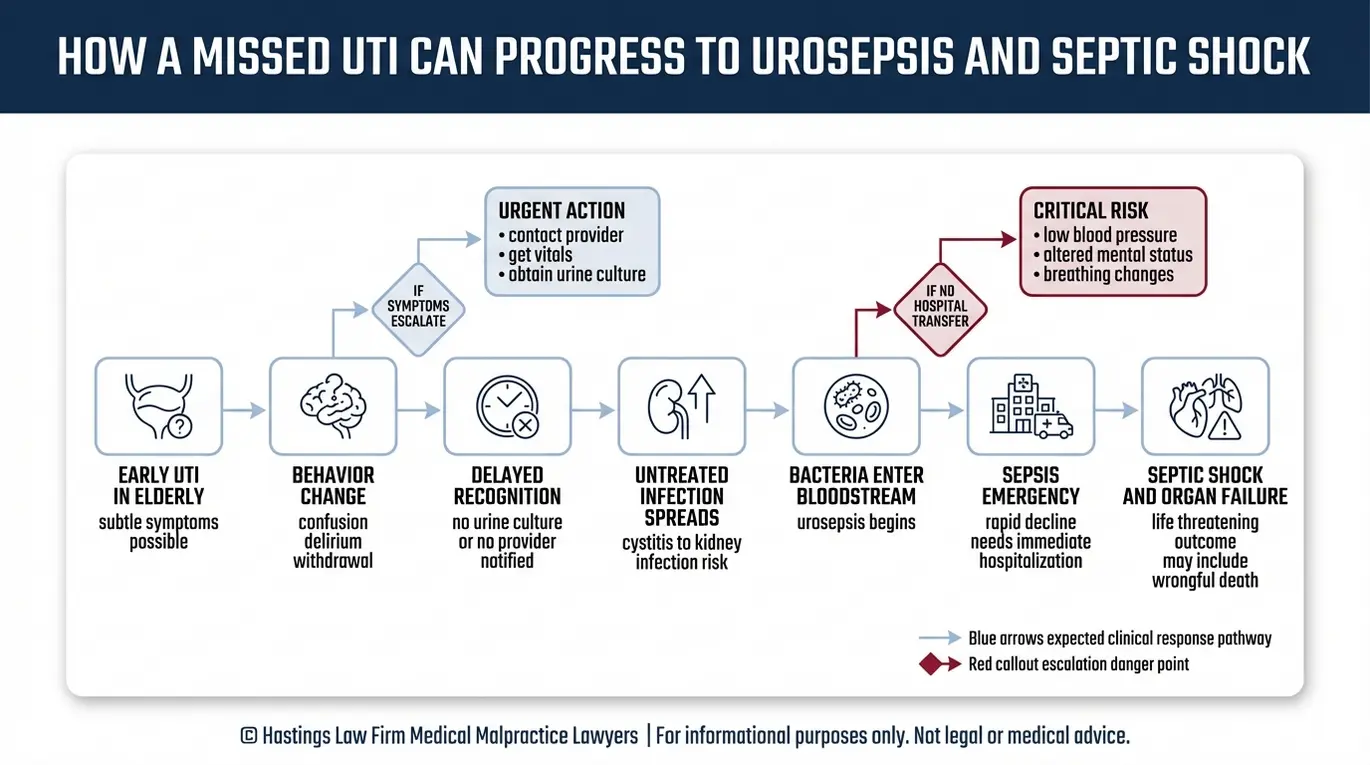
Without timely treatment, a simple bladder infection, known medically as cystitis, can travel to the kidneys and cause pyelonephritis, a far more serious condition involving high fever, back pain, and potential organ damage. From there, bacteria can enter the bloodstream and trigger life-threatening sepsis. Because the timeline for this progression is short, recognizing the non-physical signs of infection is critical for survival.
Knowing the warning signs can help families act early. Here are the symptoms to watch for:
Physical Symptoms:
- Cloudy, dark, or foul-smelling urine
- Fever or chills (though often absent initially)
- Lower abdominal pain or pelvic pressure
- Frequent urination or inability to urinate
- Blood in urine
Behavioral Symptoms:
- Sudden confusion or increased disorientation
- New or worsening agitation or aggression
- Unusual drowsiness or lethargy
- Withdrawal from activities or social interaction
- Loss of appetite
- Increased falls or motor dysfunction
If your loved one has shown any combination of these symptoms, and the facility did not pursue prompt testing or treatment, an Arizona nursing home infection attorney can help determine whether the standard of care was met.
Common Causes of Preventable Nursing Home Infections
Most nursing home infections result from understaffing, poor hygiene protocols, and dehydration, all of which allow bacteria to thrive and spread. These aren’t random events, but rather the predictable consequences of preventable nursing home infections caused by failures in daily care.
Understaffing and Hygiene Breakdowns
When a facility does not have enough staff to provide basic personal care to nursing home residents, they suffer. Incontinent residents, those who cannot control their bladder or bowel function, depend on staff to change soiled briefs regularly and assist with proper cleaning. When staffing falls short, residents may sit in soiled garments for hours, creating a warm, moist environment where bacteria like E. coli can quickly migrate to the urinary tract. A 2024 report from the Office of the Assistant Secretary for Planning and Evaluation (ASPE) highlighted ongoing concerns about nurse staffing levels in U.S. nursing homes, confirming that many facilities continue to operate below recommended thresholds.
Beyond brief changes, rushed staff often skip critical hygiene steps, such as proper handwashing between residents or cleaning a resident from front to back. These seemingly small errors introduce dangerous pathogens into vulnerable systems. As an Arizona nursing home infection lawyer, we examine staffing logs and shift records to determine whether the facility had enough trained personnel on duty to meet residents’ basic hygiene needs.
Dehydration as a Root Cause
Dehydration, a condition where the body loses more fluids than it takes in, is one of the most common and preventable risk factors for UTIs in elderly care. Adequate fluid intake helps flush bacteria from the urinary system. When elderly residents are not offered water regularly, or when their fluid intake is not monitored, bacterial growth accelerates. Facilities that fail to track and encourage hydration are often the same ones where infection rates climb.
Malnutrition compounds the problem. A weakened immune system cannot fight infections effectively, meaning a resident who is both dehydrated and malnourished faces dramatically higher risk. A qualified nursing home infection attorney often finds that weight loss records correlate directly with infection dates, signaling a broader pattern of neglect.
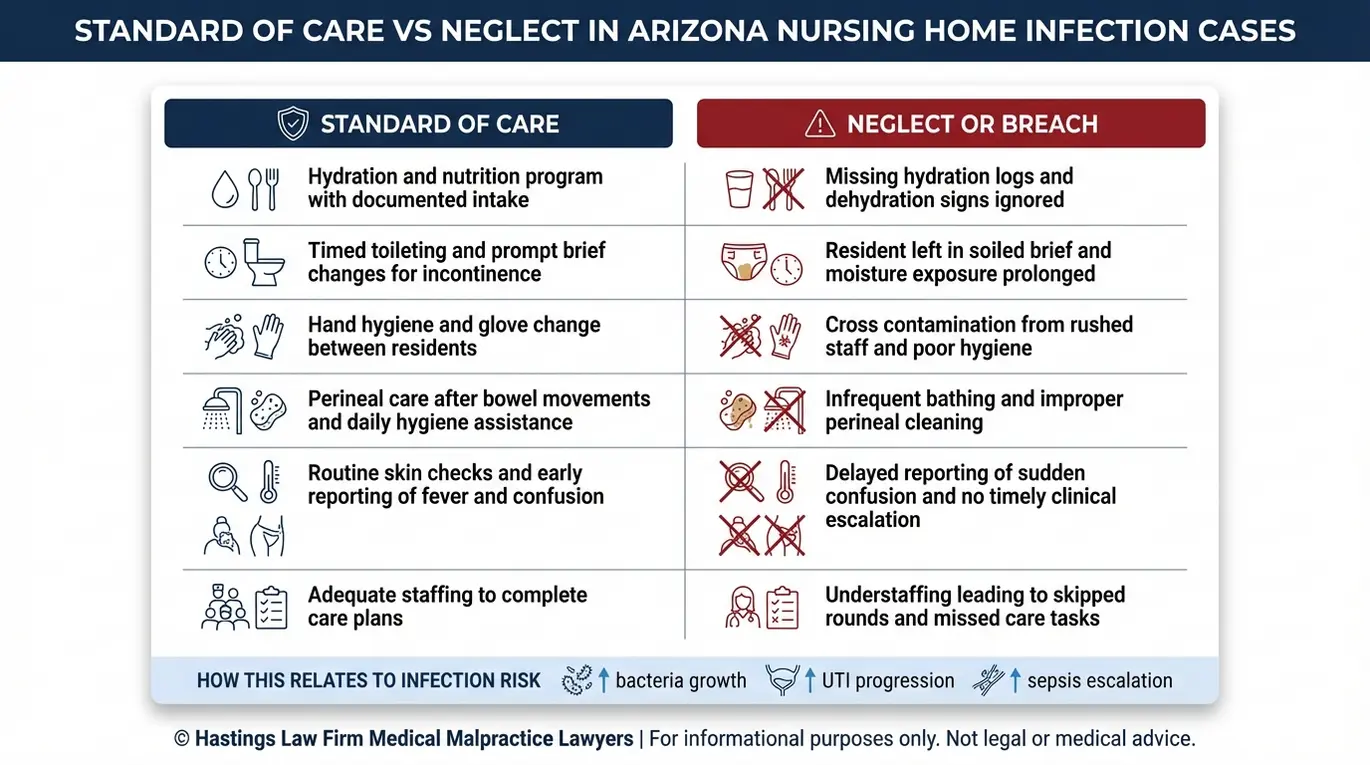
The table below illustrates the difference between what the standard of care requires and what nursing home neglect often looks like in practice:
| Standard of Care | Negligent Action |
|---|---|
| Regular toileting assistance every 2 hours | Leaving residents in soiled briefs for extended periods |
| Monitoring and recording daily fluid intake | No hydration tracking or fluid encouragement |
| Prompt incontinence care with proper cleaning | Infrequent brief changes; inadequate perineal hygiene |
| Routine assessment for signs of infection | Ignoring or failing to document behavioral changes |
| Nutritional planning and meal assistance | Skipping meals or failing to assist residents who need help eating |
A lawyer for nursing home infections can use facility records, staffing data, and expert analysis to show exactly where these breakdowns occurred and how they led to your loved one’s infection.
The Hastings Law Firm Difference
Results matter, but what truly sets us apart is how we achieve them. Every verdict, every settlement, and every Arizona courtroom victory comes from one guiding promise: To treat each client’s fight for justice as if it were our own.
This balance of skill, experience, and empathy reflects our core philosophy that justice should not only compensate the injured, but also make healthcare safer nationwide.

Catheter Associated UTIs and Medical Device Risks
Catheter-associated UTIs (CAUTIs) are highly preventable and often result from leaving a catheter in place too long or failing to maintain sterile technique during insertion and care. When facilities fail to follow strict medical protocols, CAUTIs can lead to severe injury or death in vulnerable patients.
An indwelling urinary catheter, commonly called a Foley catheter, is a flexible tube inserted into the bladder to drain urine. This device carries significant infection risk while sometimes medically necessary. A CAUTI, or catheter-associated urinary tract infection, occurs when bacteria travel along the catheter into the bladder. According to guidelines from the Centers for Disease Control and Prevention (CDC), strict protocols govern when catheters should be used, how they should be maintained, and when they must be removed.
The standard of care requires that catheters be used only when there is a clear medical reason, not for staff convenience. A resident who is incontinent but otherwise able to be toileted should not have a catheter placed simply because the facility is short-staffed. Once inserted, the catheter must be kept clean, the drainage bag must remain below the bladder to prevent backflow, and staff must assess daily whether the device is still necessary.
When these protocols are ignored, bacteria can enter the urinary system within days or even hours. From there, the infection can escalate rapidly to sepsis, especially in elderly residents with weakened immune systems who may require aggressive treatment with antibiotics.
An Arizona infection malpractice lawyer will review medical records to determine whether catheter use was justified, whether maintenance protocols were followed, and whether removal occurred within the recommended timeframe. These records often reveal patterns of prolonged, unnecessary catheter use that directly caused the infection. If the facility failed to follow these rules, a nursing home negligence lawyer can help hold them accountable.
Families should also be aware that they have rights regarding their loved one’s care and financial obligations. The Consumer Financial Protection Bureau provides resources for caregivers about nursing home contracts and debt, which can be helpful when dealing with facility billing after a preventable injury.
From Infection to Sepsis and Wrongful Death
When an infection enters the bloodstream, it causes sepsis or septic shock, a life-threatening emergency that requires immediate hospitalization. For elderly nursing home residents, a systemic bloodstream infection can progress with alarming speed.
Sepsis, the body’s extreme and dangerous response to an infection, occurs when the immune system overreacts and begins attacking the body’s own organs and tissues. This can progress to septic shock, the most severe stage where blood pressure drops to critically low levels and organs begin to fail. The Third International Consensus Definitions for Sepsis and Septic Shock established that sepsis involves life-threatening organ dysfunction caused by a dysregulated host response to infection.
Urosepsis, which is sepsis originating specifically from a urinary tract infection, is one of the most common forms of sepsis in elderly patients. The timeline can be shockingly brief. A UTI that goes undetected or untreated for even a few days can progress to kidney infection and then to bloodstream infection. Once bacteria reach the blood, organ failure can develop within hours.
The mortality rate for sepsis in elderly patients is significantly higher than in younger populations. Residents who are already weakened by dehydration, malnutrition, or chronic illness face the greatest risk. When a facility fails to identify and treat a UTI promptly, the window for effective intervention shrinks rapidly.
Warning signs that an infection may be progressing toward sepsis include:
- Rapid heart rate or breathing
- High fever or abnormally low body temperature
- Extreme confusion or inability to stay awake
- Significant drop in blood pressure
- Reduced urine output
- Mottled or discolored skin
An Arizona nursing home infection lawyer investigates the timeline between the first documented signs of infection and the facility’s response. In wrongful death cases, this timeline often reveals critical gaps where earlier intervention could have changed the outcome. In cases involving egregious conduct, Arizona law may allow punitive damages to punish especially harmful behavior and deter similar misconduct.
Distinguishing Asymptomatic Bacteriuria from Symptomatic Infection
One medical nuance that frequently arises in these cases involves asymptomatic bacteriuria, a condition where bacteria are present in the urine but cause no symptoms and generally do not require treatment. A urine culture, which is a laboratory test that identifies the type and quantity of bacteria in a urine sample, may show bacterial growth even in a healthy elderly person.
This distinction matters legally in nursing home neglect cases because some facilities use the concept of asymptomatic bacteriuria to excuse their failure to act when a resident actually does have symptoms. Finding bacteria in urine alone does not mean a resident is sick. But when that same resident is exhibiting confusion, fever, or changes in behavior, the presence of bacteria should trigger prompt evaluation and treatment with antibiotics. A sepsis lawyer in Arizona can work with medical experts to establish whether the facility inappropriately dismissed symptomatic infection as a benign finding.
Proving Liability and Preserving Evidence in Arizona
Proving negligence requires clear documentation of the facility’s failure to follow care plans, hydration logs, and timely medical intervention standards. Building a strong case depends on identifying the documentation the facility was required to maintain and connecting those failures to your loved one’s harm.
Care Plans and Facility Records
Every nursing home resident should have an individualized care plan that outlines their specific needs, including toileting schedules, hydration goals, and infection monitoring protocols. When infections occur, we examine whether the care plan addressed the resident’s known risk factors, and whether staff actually followed it. Hydration logs, nursing notes, and incident reports often reveal gaps between what was planned and what was provided. Incident reports, which document falls or behavioral outbursts, are particularly telling. If a resident fell due to dizziness from an untreated UTI, that report links the infection to physical injury.
The Role of Expert Testimony
In Arizona, establishing that a facility breached the standard of care in a nursing home infection case typically requires expert testimony from a qualified medical professional. Our firm works with a national network of experts, including physicians, infectious disease specialists, and geriatric nursing professionals, who can review the records and offer opinions about whether the care provided fell below accepted standards. This expert analysis is essential to connecting the facility’s specific failures to your loved one’s infection, sepsis, or death.
Evidence Families Should Preserve
Timing is critical for protecting evidence. An Arizona elder abuse lawyer can take formal legal steps to preserve records, but families can also take immediate action. Under federal law, you have the right to access your loved one’s health information. The U.S. Department of Health and Human Services’ guidance on individuals’ rights under HIPAA (45 CFR § 164.524) confirms that patients and their authorized representatives can request copies of medical records.
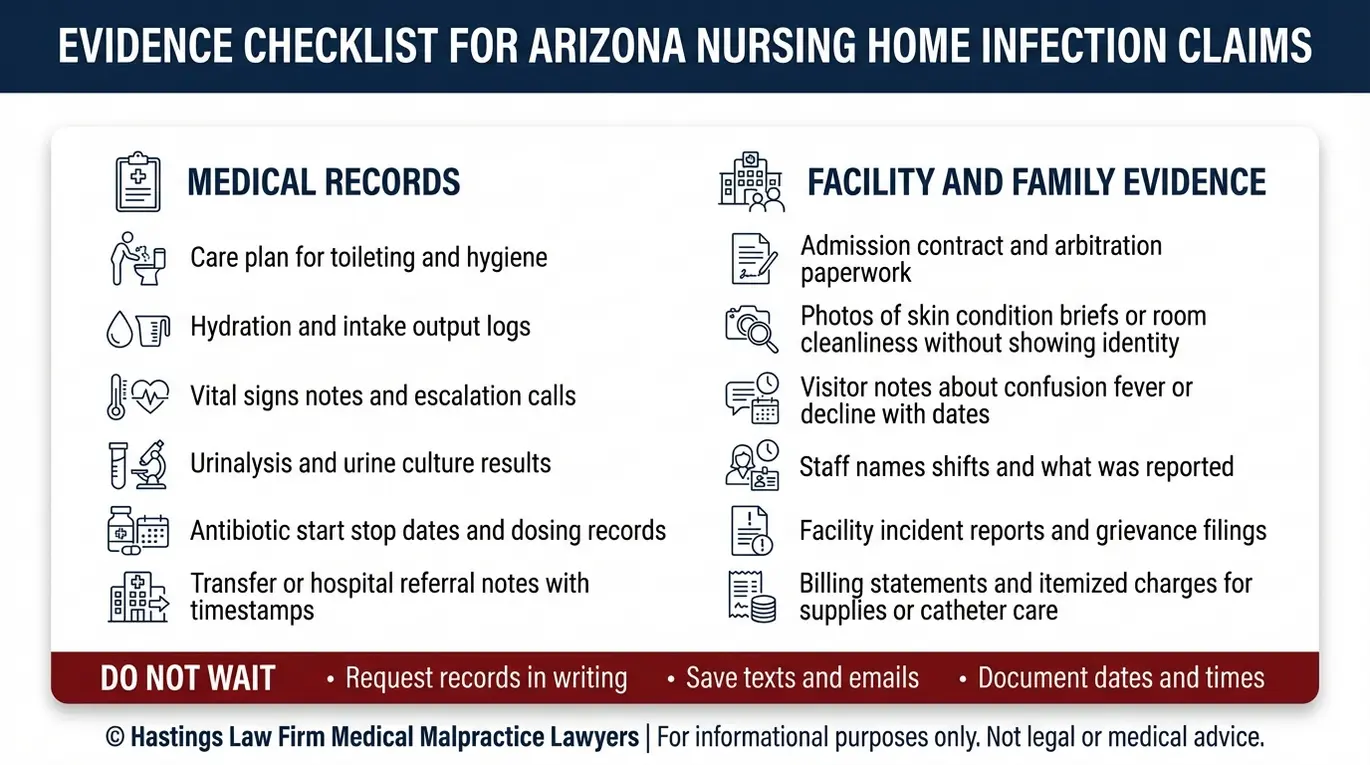
Here is a checklist of evidence families should try to gather or preserve as soon as possible:
- Copies of the admission contract and any signed agreements
- Photos of the resident’s living conditions, skin, or visible injuries
- Written notes about conversations with staff, including dates, times, and names
- Records of any complaints made to the facility
- Urine culture results and lab work
- Discharge or transfer paperwork
- Names and contact information of staff members involved in care
- Personal log of visits, including observations about the resident’s condition
A nursing home infection attorney can use this documentation alongside the facility’s own records to build a clear picture of what happened and who is responsible.
Combating Common Defense Tactics in Infection Cases
Defense attorneys often argue that infections are “inevitable” in the elderly, but a skilled lawyer can prove they were caused by specific failures in hygiene and care. Understanding these arguments in advance helps families know what to expect and why experienced legal representation matters.
The “Inevitable Infection” Defense
One of the most common defense strategies is the claim that UTIs and other infections are simply a natural part of aging. While it is true that elderly individuals face higher infection risk, that does not relieve a facility of its duty to take every reasonable precaution. Saying an infection was inevitable ignores the specific actions, or inactions, that allowed it to develop and progress. An Arizona nursing home infection lawyer can counter this argument by presenting evidence of the facility’s documented care failures alongside expert testimony about what should have been done differently.
The “Comorbidity” Defense
Facilities also frequently blame pre-existing conditions like diabetes, dementia, or immune disorders for the infection of an elderly resident. The argument essentially says, “They were already sick, so this isn’t our fault.” But a resident’s underlying health conditions are exactly why the standard of care requires closer monitoring, not less attention. A resident with diabetes, for example, is known to be at higher risk for infection, which means the facility’s care plan should have included more aggressive preventive measures.
How Our Team Responds
Our legal team includes former defense attorneys who previously represented hospitals and healthcare facilities. This background gives us direct insight into how these defense arguments are constructed and where they break down. We know that when a facility claims an infection was “unavoidable,” they often mean they failed to staff the facility adequately to avoid it. By stripping away these excuses, we reveal the operational choices that impact patient safety. An infection negligence attorney at our firm pairs this strategic knowledge with in-house medical professionals who can identify charting inconsistencies and gaps in documentation that undermine these defenses.
Damages and Compensation for Nursing Home Negligence
Families may recover compensation for medical bills, pain and suffering, and in cases of gross negligence, punitive damages to punish the facility. These economic damages and other losses are determined by the severity of the harm and the specific actions of the care provider.
Economic Damages
These economic damages cover the measurable financial losses your family has experienced due to facility neglect:
- Hospital and emergency treatment costs related to the infection or sepsis
- Ongoing medical care, including rehabilitation or specialized treatment
- Funeral and burial expenses in wrongful death cases
- Any out-of-pocket costs incurred because of the facility’s negligence, such as specialized transport or increased care needs
Future medical costs are also critical; if sepsis resulted in kidney failure requiring lifelong dialysis, those costs must be calculated and included.
Non-Economic Damages
Non-economic damages address the human cost of what happened to your loved one:
- Physical pain and suffering endured by the resident
- Emotional distress experienced by the resident and family members
- Loss of companionship and the ability to enjoy life
- Diminished quality of life during the resident’s remaining time
This includes the lost conversations, the missed holidays, and the guidance that an elderly family member can no longer provide due to their accelerated decline.
Punitive Damages
In cases involving willful disregard for resident safety, Arizona law may allow punitive damages. These are not tied to specific financial losses. Instead, they are intended to punish especially harmful conduct and discourage similar behavior in the future. Situations that may support punitive damages include deliberate understaffing despite known risks, destruction or alteration of medical records, or repeated failure to address known safety violations.
An Arizona nursing home infection lawyer can evaluate whether your case supports a claim for punitive damages in addition to economic and non-economic recovery. An Arizona nursing home settlement or verdict should reflect the full scope of both the financial burden and the human toll of what your family has endured.
Navigating Mandatory Arbitration Clauses in Admission Contracts
Many nursing home contracts include arbitration clauses that limit your right to sue, but these can often be challenged or invalidated with proper legal strategy. Identifying arbitration clauses in the paperwork you signed does not necessarily mean your case is over before it starts.
An arbitration clause is a provision buried in the admission contract that requires disputes to be resolved through a private arbitration process rather than in litigation before a jury. Nursing homes include these clauses because arbitration proceedings are typically less transparent and can limit the damages a family can recover.
However, these clauses are not always enforceable. There are several grounds on which an Arizona nursing home infection lawyer can challenge them. If the resident lacked the mental capacity to understand what they were signing, or if the clause was not clearly explained, it may be deemed invalid as an improper waiver of legal rights. In some cases, a family member who signed on behalf of the resident may not have had the legal authority to waive the resident’s right to a jury trial.
The circumstances surrounding how the contract was signed matter as well. Families are often presented with thick stacks of paperwork during an already stressful admission process. If the arbitration clause was not conspicuously disclosed or was presented in a way that suggested signing was mandatory for admission, a nursing home arbitration lawyer may be able to argue the clause is unconscionable. Courts in Arizona may scrutinize these contracts if they were buried in fine print or if the font size was intentionally small to discourage reading.
If you signed admission paperwork that you believe contained an arbitration clause, bring it to your consultation. Our attorneys will review the specific language and advise you on whether it can be challenged in your case.
Contact the Arizona Nursing Home Attorneys at Hastings Law Firm Today for Help
If your loved one suffered a serious infection while in the care of a nursing home, you deserve to know whether it could have been prevented. Infections like UTIs and sepsis are often symptoms of deeper, systemic problems within a facility, including poor hygiene practices, inadequate staffing, and failures in basic daily care.
At Hastings Law Firm, we prepare every case as if it will go to trial. Our team of attorneys, former defense counsel, and in-house medical professionals works together to uncover the truth about what happened and hold negligent facilities accountable.
There is no fee unless we recover compensation for you. Contact our Phoenix office today to speak with an Arizona nursing home infection lawyer for a free, confidential case evaluation. We can review the facts, explain your options, and help you decide on the right path forward for your family.
Frequently Asked Questions About Nursing Home Infection in Arizona


This content was researched and written by the Hastings Law Firm editorial team, which includes attorneys, medical professionals, and experienced researchers. Our writing is informed by internal knowledge and practical experience, and we cross-check critical details against authoritative sources cited throughout. Every piece undergoes human-led fact-checking and legal review. Because legal and medical information can change, if you spot an error, please contact us. Learn more about our content standards and review process on our editorial policy page.

Tommy Hastings, founder of Hastings Law Firm, is a board-certified personal injury trial lawyer dedicated exclusively to healthcare injury cases. Since 2001, he has represented injured patients and families in litigation against major hospital systems, pharmaceutical companies, and negligent healthcare providers nationwide. He has handled numerous high-profile cases that have drawn national media attention and resulted in multi-million dollar recoveries. He draws on that experience in his writing, helping readers understand how these cases work and what options may be available to them.
