


Arizona Nursing Home Chemical Restraint Lawyer
Chemical restraint abuse in a nursing home can leave families feeling shocked and powerless, especially when medication seems used to sedate rather than treat a real medical need. In Arizona, this issue often turns on medical necessity, informed consent, and whether the facility documented a clear diagnosis, treatment goal, and monitoring. Unnecessary sedation can contribute to serious harm such as falls, bedsores, and loss of dignity, and it may also signal broader neglect like understaffing. If your loved one was harmed or worse due to nursing home chemical restraints in Arizona, contact Hastings Law Firm for a free, confidential case review.

Last Updated: July 27, 2026
Compassionate Arizona Medical Attorneys for Nursing Home Chemical Restraint Claims
When you suspect that a nursing facility is using medication to sedate your loved one rather than treat a genuine medical condition, the confusion and anger can be overwhelming. You may feel uncertain about what you witnessed, or unsure whether you have the right to challenge the facility’s decisions. Those instincts deserve to be taken seriously.
An experienced Arizona Nursing Home Chemical Restraint Lawyer can help you understand what happened and determine whether the care your family member received crossed a legal line. At Hastings Law Firm, our team includes in-house medical professionals and former defense attorneys who know how to analyze medication records and identify patterns that may point to abuse or neglect. If something doesn’t feel right about your loved one’s care, we can review the situation and explain your options in a free, confidential consultation.

What Constitutes Chemical Restraint Abuse in Arizona?
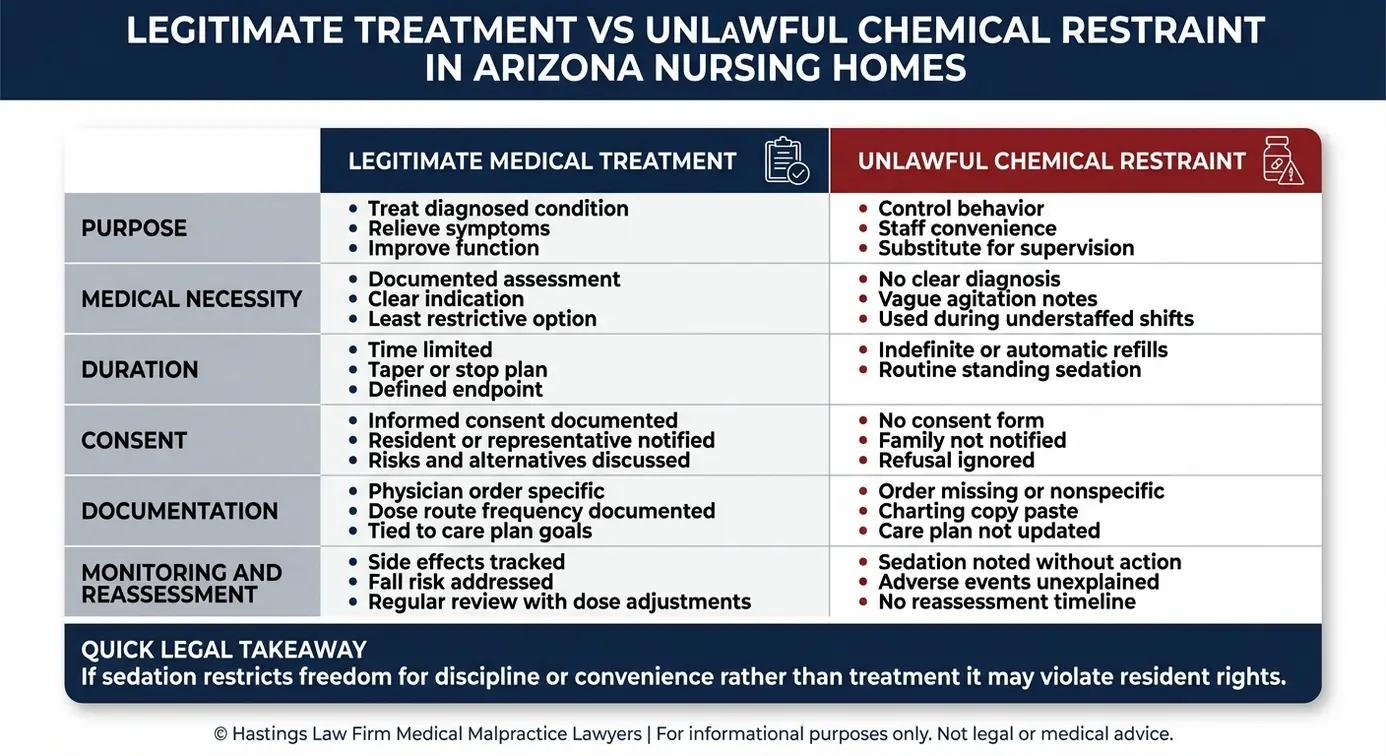
Chemical restraint abuse occurs when a nursing facility administers psychoactive drugs, such as antipsychotic medications or sedatives, to limit a resident’s movement or suppress behavior for staff convenience rather than for a legitimate medical purpose. The distinction between proper treatment and an unlawful chemical restraint comes down to one core question of medical necessity: was the medication given because the patient needed it, or because the staff found the patient easier to manage while sedated?
Chemical restraints, medications used not to treat a diagnosed condition but to subdue a resident, are a tool of control when administered without a clinical foundation. Psychoactive drugs, substances that alter brain function affecting mood, perception, or consciousness, can be a valid part of a resident’s care when prescribed appropriately with a clear diagnosis, a documented treatment goal, and ongoing monitoring.
This issue is sometimes connected to understaffing. When a facility lacks adequate personnel, sedating residents who need hands-on attention can become an unofficial workaround. A chemical restraint attorney in Arizona investigates whether medication decisions were driven by a resident’s health needs or by operational pressures within the facility.
It helps to understand the clear differences between appropriate care and prohibited conduct:
| Factor | Legitimate Medical Treatment | Unlawful Chemical Restraint |
|---|---|---|
| Purpose | Treats a diagnosed medical or psychiatric condition | Controls behavior for staff convenience or as discipline |
| Duration | Temporary, with scheduled reassessment | Indefinite, with no clear plan to reduce or discontinue |
| Documentation | Detailed care plan with specific goals and monitoring | Vague, incomplete, or missing clinical justification |
Physical restraints, such as wrist restraints, ankle restraints, bed rails, vests, hand mitts, and geri chairs, restrict movement through devices applied to the body. Chemical restraints achieve a similar result through medication. Both are subject to strict legal limits under Arizona and federal law.
Recognizing the Signs of Unauthorized Sedation
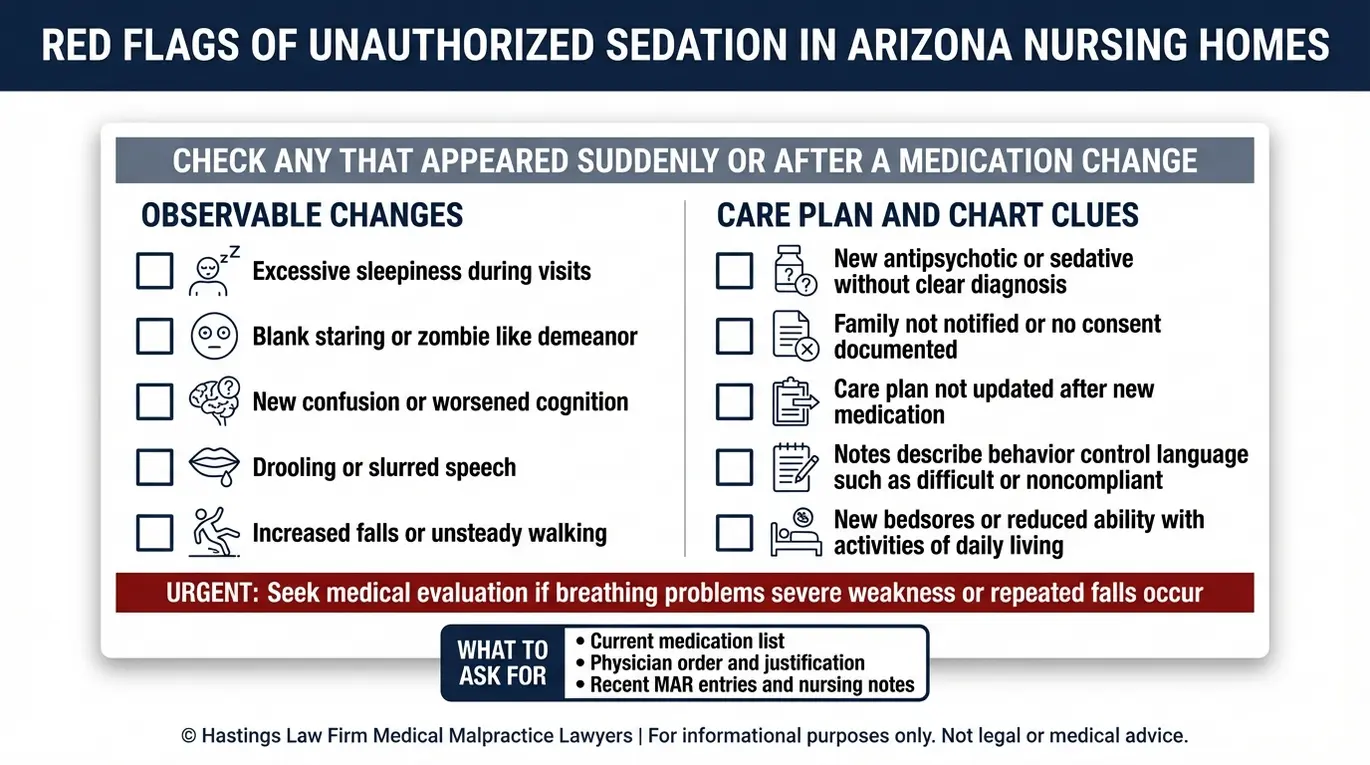
Signs of chemical restraint often include sudden lethargy, cognitive dysfunction, uncharacteristic withdrawal, the development of bedsores from prolonged immobility, or a “zombie-like” demeanor that has no corresponding medical diagnosis. If your loved one seems like a different person during visits, medication changes may be the reason.
One of the clearest red flags is a sudden decline in the ability to perform activities of daily living (ADLs). These are the basic tasks a person does independently, like eating, dressing, bathing, and walking. A resident who was feeding themselves and holding conversations a few weeks ago but is now unable to stay awake during a visit may be experiencing the effects of unnecessary sedation.
Physical symptoms to watch for include:
- Increased fall risk or frequency of falls
- Blank staring, excessive drowsiness, or inability to stay alert
- Drooling or difficulty swallowing
- Shuffling gait, tremors, or unusual muscle stiffness, which are extrapyramidal symptoms (EPS), a category of involuntary movement side effects caused by certain psychoactive drugs
- New or worsening bedsores from extended periods of immobility
- Sudden confusion or disorientation in a resident who was previously lucid
Families should also review their loved one’s plan of care to check whether new medications were added. If antipsychotic or sedative medications appeared on the medication list without a clear explanation or without informed consent from the family or legal representative, that is a serious concern. The Final MDS 3.0 RAI Manual from CMS outlines the assessment and documentation standards that facilities must follow when evaluating residents, including how drug therapy should be tracked and reviewed.
If you are noticing these changes, an Arizona chemical restraint lawyer can help you take the next step toward protecting your family member. These signs often indicate that medication is being used to control behavior rather than treat a condition.
The Hastings Law Firm Difference
Results matter, but what truly sets us apart is how we achieve them. Every verdict, every settlement, and every Arizona courtroom victory comes from one guiding promise: To treat each client’s fight for justice as if it were our own.
This balance of skill, experience, and empathy reflects our core philosophy that justice should not only compensate the injured, but also make health care safer nationwide.

Arizona and Federal Laws Protecting Residents
The Nursing Home Reform Act of 1987 and Arizona state regulations explicitly prohibit the use of physical or chemical restraints for purposes of discipline or convenience, and they guarantee resident rights, including the right to be free from abuse and neglect.
At the federal level, 42 CFR Part 483 sets out the requirements for long-term care facilities that participate in Medicare and Medicaid. These regulations establish that residents have a right to be free from any restraint that is not required to treat a medical symptom. 42 CFR § 483.45 specifically addresses pharmacy services and requires that residents are free from unnecessary drugs, defined as any medication used in excessive dose, for excessive duration, without adequate monitoring, or without adequate indications for its use.
For a chemical restraint to be lawful, a doctor’s order is required, and that order must be time-limited, tied to a specific medical condition, and based on a thorough assessment. Medical necessity, meaning the treatment is clinically required to address a diagnosed health problem, must be documented. The facility also has a general obligation to obtain informed consent, the process of explaining the medication, its risks, and its expected effects to the resident or their legal representative before it is administered.
A nursing home abuse lawyer in Arizona examines whether these requirements were met or whether the facility bypassed the standard of care entirely. Legal standards ensure that residents are only given psychoactive drugs when clinically necessary.
Government Initiatives on Antipsychotic Overuse
This is not a new or isolated problem. CMS and the Office of Inspector General (OIG) have spent years working on antipsychotic reduction in dementia care to curb the unnecessary use of these drugs. Antipsychotic medications, a class of drugs originally developed to treat conditions like schizophrenia, often carry a black box warning, the FDA’s most serious safety label.
This label indicates an increased risk of death when used in elderly patients with dementia. Despite these warnings, overuse of these drugs in nursing homes has been a persistent, well-documented concern at the national level.

Investigating Negligence: How We Prove the Case
Proving chemical restraint claims requires a forensic analysis of the Medication Administration Record (MAR), the log that documents every drug given to a resident, along with a comparison of physician orders against the nursing care plan and identifying staffing shortages that motivated the sedation. Our team compares physician orders against the nursing care plan and looks for charting inconsistencies that suggest sedation was used for convenience rather than treatment.
We also examine PRN orders, “as-needed” prescriptions that give nursing staff discretion over when to administer a drug. When PRN sedatives are given at suspiciously regular intervals or clustered around shift changes, it can suggest a pattern unrelated to the resident’s clinical needs.
Staffing records are another critical piece of the investigation to establish liability. In many cases, understaffed facilities use sedation as a workaround for a lack of available caregivers. Our Arizona nursing home negligence attorney team looks at whether high sedation usage lines up with understaffing. The Five Star Quality Rating System from CMS provides publicly available data on facility staffing levels, inspection results, and quality measures, giving us a baseline for comparison.
If you suspect unauthorized sedation, there are steps you can take now to help protect evidence:
- Request your loved one’s current medication list and medication logs, including all recent changes
- Ask for the physician’s written justification for any psychoactive drug
- Document your observations during visits, including your loved one’s alertness, responsiveness, and physical condition
- Note the dates and times of any conversations with staff about medication
These records can be essential when our medical and legal team begins its review. This review helps determine if the medication was medically necessary.
Liability and Compensation for Chemical Restraint Injuries
Residents who are harmed by chemical restraint abuse may be entitled to compensation for medical expenses, pain and suffering, rehabilitation costs, and in the most tragic cases, wrongful death damages. Liability in these cases arises when medication is used as an unauthorized physical or mental control measure.
Damages in these cases generally fall into two categories, while wrongful death damages provide financial support for families who have lost a loved one. Economic damages cover the measurable financial costs: medical bills for treating side effects like falls, bedsores, or aspiration pneumonia, along with any additional care the resident now requires. Non-economic damages address the less tangible harms, including loss of dignity, emotional distress, and pain and suffering caused by unnecessary sedation. In cases of egregious conduct, punitive damages may also be available.
Liability may extend to multiple parties. The nurse who administered the drug, the physician who prescribed it without a proper assessment, and the facility itself may all share responsibility. When understaffing or inadequate training contributed to the decision to sedate, the facility’s management can be held accountable. According to the CDC’s data on fall-related injuries, falls are a leading cause of injury and death among older adults, and over-sedation significantly increases that risk.
A lawyer for chemical restraint in Arizona nursing homes helps families identify every responsible party and pursue the full scope of available compensation.
Contact the Arizona Nursing Home Attorneys at Hastings Law Firm Today for Help
No elderly resident should be sedated because it makes a facility’s job easier. If you believe your loved one has been subjected to chemical restraints without proper medical justification, you have every right to demand answers.
Hastings Law Firm was founded in 2005 by Tommy Hastings, a trial attorney board-certified in personal injury trial law by the Texas Board of Legal Specialization. Our firm focuses exclusively on medical malpractice cases and brings together attorneys, nurse consultants, and board-certified patient advocates. Our team, which includes former defense attorneys who understand how facilities and insurers respond to these claims, is prepared to conduct a thorough review of your loved one’s medical records and care history.
We work on a contingency fee basis, which means there is no fee unless we secure a recovery for your family. Contact an Arizona Nursing Home Chemical Restraint Lawyer at Hastings Law Firm for a free, confidential case evaluation. Let us help you find the answers your family deserves.
Frequently Asked Questions About Nursing Home Chemical Restraint in Arizona


This content was researched and written by the Hastings Law Firm editorial team, which includes attorneys, medical professionals, and experienced researchers. Our writing is informed by internal knowledge and practical experience, and we cross-check critical details against authoritative sources cited throughout. Every piece undergoes human-led fact-checking and legal review. Because legal and medical information can change, if you spot an error, please contact us. Learn more about our content standards and review process on our editorial policy page.

Tommy Hastings, founder of Hastings Law Firm, is a board-certified personal injury trial lawyer dedicated exclusively to healthcare injury cases. Since 2001, he has represented injured patients and families in litigation against major hospital systems, pharmaceutical companies, and negligent healthcare providers nationwide. He has handled numerous high-profile cases that have drawn national media attention and resulted in multi-million dollar recoveries. He draws on that experience in his writing, helping readers understand how these cases work and what options may be available to them.
