


Phoenix Nursing Home Abuse Lawyer
Elder care abuse in a nursing facility can leave families feeling shocked, angry, and unsure who to trust. Harm often shows up through injuries, neglect of basic needs, medication problems, or unsafe conditions that continue when warning signs are missed. Facilities can also be responsible when poor supervision allows resident on resident harm. Clear documentation and prompt reporting can help protect a vulnerable adult and preserve important information about what occurred. If you or a loved one were harmed or worse due to nursing home abuse in Phoenix, Arizona, contact Hastings Law Firm for a free, confidential case review.

Last Updated: July 27, 2026
Trusted Medical Attorneys for Elder Care Abuse Claims in Phoenix
When someone you love is harmed in a place that was supposed to keep them safe, the sense of betrayal can be overwhelming. You trusted a care facility with your family member’s well-being, and now you’re left with difficult questions and deep concern about what happened. You deserve clear answers, and your loved one deserves to be protected.
At Hastings Law Firm, we focus exclusively on medical negligence and nursing home abuse cases. Our team includes in-house nurses and former defense attorneys who understand how facilities operate from the inside. Our founder, Tommy Hastings, is a board-certified trial lawyer who has dedicated his career to patient safety for over twenty years. He is also a 2025 inductee into the American Board of Trial Advocates (ABOTA).
As a Phoenix nursing home abuse lawyer team, we know how to investigate these claims, identify what went wrong, and hold the responsible parties accountable. If you believe a loved one has been hurt or neglected in a care facility, we’re here to listen. Contact us for a free, confidential consultation to discuss what happened and learn about your options.

Recognizing Common Signs of Neglect in Phoenix Care Facilities
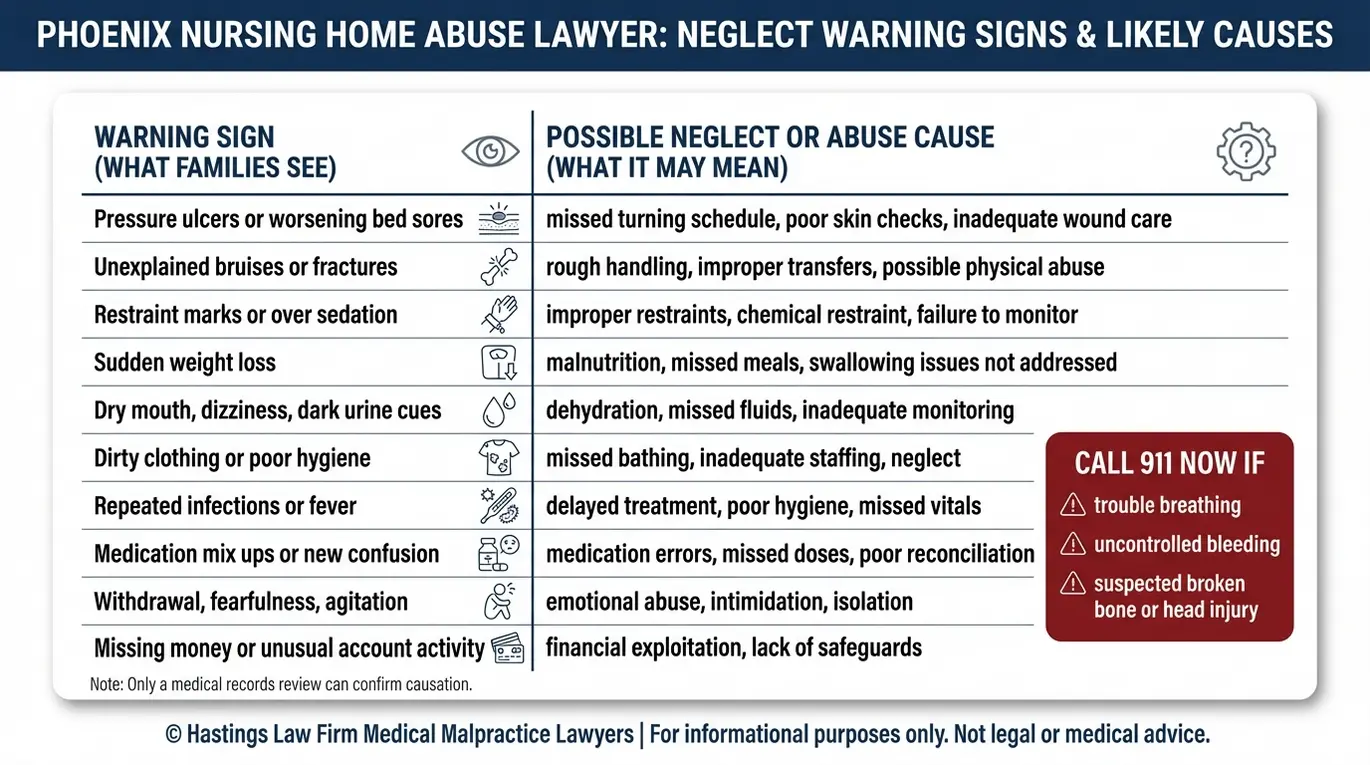
Nursing home abuse can present as physical injuries like unexplained bruises or bed sores, emotional withdrawal, sudden weight loss from malnutrition or dehydration, or unexplained financial discrepancies. Identifying these nursing home abuse signs early is the first step toward protecting a resident from continued harm. Because many residents cannot easily advocate for themselves, families often play a critical role in spotting these warning signs during visits.
Physical Abuse
Physical abuse refers to the intentional use of force that results in bodily injury or pain. This may include unexplained injuries such as bruises, cuts, fractures, or marks consistent with the use of restraints. Some injuries may be dismissed by staff as the result of falls or confusion.
However, repeated or patterned injuries can suggest something more serious. If your loved one seems fearful of certain staff members or flinches at physical contact, those behavioral changes should not be ignored.
Neglect
Neglect occurs when a facility fails to provide the basic care necessary to avoid physical harm or mental anguish. Pressure ulcers, commonly called pressure ulcers, are skin and tissue injuries caused by prolonged pressure on the skin. They are staged from Stage 1, which involves reddened but intact skin, through Stage 4, where the wound extends into muscle or bone. A Stage 3 or Stage 4 pressure ulcer in a care facility is often a sign that staff failed to reposition or monitor the resident properly.
Other indicators of neglect include poor hygiene, soiled bedding, dehydration, and significant unplanned weight loss tied to malnutrition. These conditions rarely develop overnight. They typically reflect a pattern of inadequate attention to basic care needs.
Medical Negligence
Medical negligence in elder care often involves a breach of duty by healthcare providers that results in patient harm. Medication errors, such as missed doses, wrong medications, or over-sedation, can cause serious harm. A chemical restraint, which is the use of medication to control a resident’s behavior rather than to treat the resident’s medical symptoms, raises serious legal and ethical concerns. Failure to treat infections, manage chronic conditions, or follow a physician’s orders also falls under medical negligence in a care setting.
Nursing home abuse attorneys evaluate these patterns by reviewing medical records, medication administration logs, and facility staffing data.
| Warning Sign | Potential Cause |
|---|---|
| Unexplained bruises, fractures, or restraint marks | Physical abuse or improper use of restraints |
| Stage 2-4 pressure ulcers (bed sores) | Failure to reposition; neglect of wound care protocols |
| Sudden weight loss, signs of dehydration | Malnutrition; inadequate hydration assistance |
| Emotional withdrawal, fearfulness, or agitation | Emotional abuse or intimidation |
| Missed medications or unexplained sedation | Medication errors or chemical restraint misuse |
| Unsanitary living conditions or soiled clothing | Systemic neglect; possible understaffing |
| Unexplained financial changes or missing belongings | Financial exploitation |
Liability for Resident-on-Resident Abuse
Not all abuse comes directly from staff. Resident-on-resident abuse, which is when one resident physically or verbally harms another, occurs frequently in poorly managed homes. In these situations, the facility may still bear liability if it failed to properly assess risk, supervise common areas, or separate residents with known behavioral issues.
Understaffing, meaning the facility maintains staff-to-resident ratios too low to ensure adequate supervision, is a frequent contributing factor. Facilities may be liable for negligent hiring if they employ staff or admit residents without proper background checks or risk assessments.
When a facility does not have enough trained personnel to monitor vulnerable adults, the risk of harm between residents increases significantly. A lawyer for elder abuse examines staffing records and incident reports to determine whether the facility met its duty to protect residents. If you have concerns about conditions in a Phoenix facility, reaching out to an experienced Phoenix abuse counsel can help you understand whether the facility’s actions, or lack of action, crossed the line into legal liability.
Immediate Steps to Take If You Suspect Neglect in a Phoenix Facility
If you suspect abuse, the first priority is ensuring your loved one’s immediate safety. Taking action involves ensuring your loved one’s safety by involving medical professionals or law enforcement when necessary. From there, the focus shifts to documentation and reporting so that evidence is preserved and the right agencies are notified.
Here is a checklist of immediate actions to take:
- Ensure safety first. If your loved one needs emergency medical care or is in immediate danger, contact 911. If conditions are unsafe but not emergent, consider whether temporary relocation is necessary to protect them from further harm.
- Document everything. Take clear photographs of any visible injuries, the resident’s room, and general facility conditions like unsanitary bedding or hazards. Write down dates, times, and descriptions of what you observed. Note the names of any staff members present during your visit.
- Request copies of medical records and the resident care plan. A resident care plan, which outlines the specific treatments and monitoring a facility has committed to providing, is important evidence. Ask for copies before records can be altered or go missing. You may also request a copy of any facility incident report, an internal document recording the details of the event, filed about the incident.
- Report to Arizona Adult Protective Services (APS). APS investigates allegations of abuse, neglect, and exploitation involving vulnerable adults. You should also file a formal complaint with the Arizona Dept of Health Services (ADHS), the regulatory body that licenses care facilities. Contact the Arizona Long-Term Care Ombudsman, a state advocate who investigates complaints on behalf of care facility residents. The Arizona Ombudsman Citizens Aide provides information on how to file complaints regarding elder care.
- Contact a Phoenix nursing home abuse lawyer. An experienced abuse attorney can issue legal subpoenas for internal staffing logs, surveillance footage, and other records that facilities may not voluntarily release to families. Early legal counsel helps protect evidence that is essential to your case.
Taking these steps quickly can make a significant difference. Staff turnover, record changes, and fading memories all work against families who wait too long to act.

The Hastings Law Firm Difference
Results matter, but what truly sets us apart is how we achieve them. Every verdict, every settlement, and every Phoenix courtroom victory comes from one guiding promise: To treat each client’s fight for justice as if it were our own.
This balance of skill, experience, and empathy reflects our core philosophy that justice should not only compensate the injured, but also make health care safer nationwide.

Arizona Laws Protecting Vulnerable Adults and Federal Regulations
Arizona residents in care facilities are protected under both the Adult Protective Services Act and the Federal Nursing Home Reform Act, which together establish the right to dignity, freedom from abuse, and proper medical care. These legal protections for residents serve as the standard for how facilities must operate.
Federal Nursing Home Reform Act
The Federal Nursing Home Reform Act, often called the NHRA, applies to nursing facilities that receive Medicare or Medicaid funding, which includes the vast majority of skilled nursing facilities. The NHRA guarantees residents the right to be free from abuse, neglect, and exploitation. According to 42 CFR § 483.12, facilities must establish policies to screen employees, prevent abuse, and investigate any allegations promptly. A nursing home abuse lawyer in Phoenix uses documented violations of these federal standards as strong evidence of negligence.
Arizona Adult Protective Services Act
At the state level, Arizona law defines a vulnerable adult as a person who is unable to protect themselves from abuse, neglect, or exploitation due to a physical or mental impairment. This vulnerable adult protection helps ensure that residents with varying levels of physical or cognitive incapacity receive necessary legal protection. The Arizona Revised Statutes § 46-451 establishes the framework for identifying, investigating, and prosecuting abuse of vulnerable adults within the state.
A.R.S. § 46-455: Abuse and Exploitation of Vulnerable Adults
Under A.R.S. § 46-455, a person employed or appointed to provide care to a vulnerable adult who causes or permits that adult’s life or health to be endangered by neglect commits a criminal offense. This statute carries both criminal penalties and a civil remedy, meaning families can also pursue financial recovery, including statutory damages, in addition to any prosecution by the state. Our legal team and Phoenix elder care attorneys use this statute, combined with federal regulations, to build claims that address both the individual harm and the systemic failures that allowed it to happen.
Arizona also imposes staffing requirements and licensing standards on care facilities. When those requirements are not met, it can create the conditions where neglect and abuse are more likely to occur.
How Our Medical Legal Team Proves Negligence and Liability
Proving negligence in a nursing home abuse case requires demonstrating that the facility breached the accepted standard of care, and that this breach caused harm to the resident. Our team builds that proof through expert medical testimony, analysis of staffing and operational data, and a detailed review of the resident’s records. As a trial-ready firm, we investigate every case from day one as if it will go before a jury. Establishing a breach of the accepted standard of care is the foundation of any successful medical negligence claim.
Staffing Analysis
One of the first things we examine is whether the facility was adequately staffed or engaged in negligent hiring practices. Understaffing is a leading contributor to neglect in care facilities. When a facility operates with too few nurses or aides relative to its resident population, basic care tasks like repositioning, feeding assistance, and medication administration can fall through the cracks. This analysis determines if a facility’s budget-based decisions led to unsafe resident conditions.
Medical Forensics
Our in-house nursing staff reviews clinical records to identify gaps in care that may not be immediately obvious. A thorough clinical record review includes analyzing the Medication Administration Record (MAR), which tracks every dose of medication given to a resident, and wound care logs, the treatment records that document how injuries like pressure ulcers were identified, monitored, and treated. Missing entries, inconsistent documentation, or unexplained delays in treatment can all indicate a breach in the standard of care.
Expert Testimony
As a Phoenix nursing home abuse lawyer team, we work with a national network of qualified medical experts who can evaluate the evidence and provide testimony about what the standard of care required and how the facility fell short. These experts include geriatric physicians, wound care specialists, and nursing professionals.
Evidence we gather in a typical abuse litigation team investigation includes:
- Internal staffing schedules and payroll records
- Medication Administration Records (MARs)
- Wound care and treatment logs
- Facility incident and grievance reports
- State inspection and deficiency reports
- Surveillance footage, when available
- Witness statements from staff and other residents’ families
Each piece of evidence helps our attorney team build a clear, fact-based picture of what happened and who bears liability, whether that is an individual staff member, the facility itself, or a corporate owner.
Compensation Recoverable in Phoenix Nursing Home Abuse Lawsuits
Families affected by nursing home abuse can recover economic damages for medical bills and related costs, non-economic damages for pain and suffering, and potentially punitive damages if the facility’s conduct was especially egregious. Securing a financial recovery helps families cover the high costs of corrective medical treatment and provides a sense of justice for the harm caused.
Economic Damages
Economic damages cover the measurable financial losses caused by the abuse or neglect. This includes the cost of hospitalization, corrective surgeries such as treatment for advanced bed sores, ongoing rehabilitation, and the expense of relocating a loved one to a safe facility. A Phoenix nursing home abuse lawyer works to document every cost tied to the harm so that nothing is overlooked.
Non-Economic Damages
Non-economic damages address the human toll: physical pain, emotional distress, loss of dignity, and diminished quality of life. These losses are harder to quantify but are often the most significant part of a recovery. Our recovery attorneys present testimony from medical experts, family members, and the resident’s own records to demonstrate the full scope of suffering.
Punitive Damages
In cases involving egregious conduct, such as systemic understaffing, deliberate concealment of abuse, or repeated regulatory violations, the court may award punitive damages. These are intended to hold the facility accountable beyond compensatory amounts and to discourage similar conduct. The Arizona Law Review’s analysis of punitive damages explains that Arizona’s constitutional framework generally allows juries broad discretion in awarding these damages.
| Category | What It Covers | Examples |
|---|---|---|
| Economic Damages | Measurable financial losses | Medical bills, corrective surgery, rehab costs, relocation expenses |
| Non-Economic Damages | Pain, suffering, and quality of life | Physical pain, emotional distress, loss of dignity |
| Punitive Damages | Punishment for egregious conduct | Systemic understaffing, concealment of abuse, repeated violations |
If your family has been affected, experienced legal representation can help you negotiate a fair settlement or understand the full range of compensation that may be available in a wrongful death claim or abuse case.

Statute of Limitations for Nursing Home Abuse Claims in Arizona
In Arizona, the statute of limitations for nursing home abuse or wrongful death claims is generally two years from the date of the injury or the date the abuse was discovered.
The Two-Year Rule
This deadline applies to most personal injury claims in Arizona, including those arising from elder abuse and neglect. If a wrongful death claim is involved, the two-year period typically begins on the date of the resident’s death. Missing this filing deadline can permanently bar you from pursuing a claim, regardless of how strong the evidence may be.
The Discovery Rule
In some situations, abuse or neglect is not immediately apparent. Families may not recognize the signs until well after the harm occurred. Arizona’s discovery rule may extend the filing deadline in cases where a delayed recognition of harm occurs. This rule ensures that families who could not have known about the abuse still have access to the legal system.
Why Timing Matters for Evidence
Even within the two-year window, waiting too long can weaken a case. Facility staff turn over frequently, surveillance footage may be recorded over, and medical records can become harder to obtain to preserve the evidence. Filing a claim early helps protect the evidence needed to establish what happened. If you have concerns, speaking with an attorney sooner rather than later protects both your rights and the integrity of your case.
Contact the Phoenix Nursing Home Attorneys at Hastings Law Firm Today for Help
Your loved one deserved safe, compassionate care, and when a facility fails to provide that, the people responsible should be held accountable. At Hastings Law Firm, nursing home abuse and medical negligence are all we do. That singular focus, combined with our in-house medical staff, former defense attorneys, and national expert network, gives us a level of insight that general practice firms simply cannot match.
Our mission is to restore trust for families who feel betrayed by the care system, to uncover what happened, and to make sure it doesn’t happen to someone else. As your Phoenix nursing home abuse lawyer, we are prepared to investigate every detail of your case and, if needed, take it to a jury.
Contact our firm today for a free, confidential consultation with a board-certified specialist. There is no fee unless we recover compensation for you.
Frequently Asked Questions About Nursing Home Abuse in Phoenix


This content was researched and written by the Hastings Law Firm editorial team, which includes attorneys, medical professionals, and experienced researchers. Our writing is informed by internal knowledge and practical experience, and we cross-check critical details against authoritative sources cited throughout. Every piece undergoes human-led fact-checking and legal review. Because legal and medical information can change, if you spot an error, please contact us. Learn more about our content standards and review process on our editorial policy page.

Tommy Hastings, founder of Hastings Law Firm, is a board-certified personal injury trial lawyer dedicated exclusively to healthcare injury cases. Since 2001, he has represented injured patients and families in litigation against major hospital systems, pharmaceutical companies, and negligent healthcare providers nationwide. He has handled numerous high-profile cases that have drawn national media attention and resulted in multi-million dollar recoveries. He draws on that experience in his writing, helping readers understand how these cases work and what options may be available to them.
