


Arizona Infant Opioid Oversedation Lawyer
Written by: Hastings Law Firm | Reviewed by: Tommy Hastings | Updated: July 27, 2026
Neonatal opioid oversedation is a medication error that can happen in a NICU or nursery when a newborn receives too much pain medication or is not properly monitored afterward. The results can be sudden and severe, with breathing suppression that may lead to oxygen deprivation and lasting brain injury. The distinction between oversedation and neonatal withdrawal also matters because the causes and responsible parties are different. If you or a loved one were harmed or worse due to infant opioid oversedation in Arizona, contact Hastings Law Firm for a free, confidential case review.
Top Rated Arizona Legal Representation for Neonatal Medication Errors
What You Should Know About Neonatal Pain Medication Error Claims in Arizona:
- Life changing harm can follow neonatal opioid oversedation because suppressed breathing can cause oxygen deprivation and lasting brain injury.
- Accountability can depend on whether the event was oversedation after birth or neonatal withdrawal from prenatal exposure because the causes and potential defendants differ.
- Options for financial recovery can shrink if responsible parties are not identified because Arizona uses a comparative fault system that allocates responsibility by degree of fault.
- Disputes about the true cause of an infant decline can arise because oversedation signs may be attributed to prematurity or general instability.
- Preventable dosing mistakes can occur when safeguards fail because errors can involve the wrong dose, the wrong drug, or medication intended for another patient.
- Long term needs can be substantial because hypoxic ischemic injury can lead to lifelong developmental delays and ongoing support.
- Liability can extend beyond one clinician because hospitals, nurses, prescribing physicians, and pharmacists may share responsibility.
- Clarity about what happened can hinge on documentation because gaps in vital sign checks or charting inconsistencies may indicate a failure to monitor.
- Key records can shape the outcome because electronic health records, medication administration records, pharmacy logs, and nursing notes can show what was ordered and what was given.
- Legal options can be limited by strict time limits because Arizona medical malpractice claims are subject to a statute of limitations that can affect families differently when a child is a minor.

A Healthcare Focused Law Firm
When your newborn is harmed by a medication error in the NICU (Neonatal Intensive Care Unit) or nursery, the shock can be overwhelming. You trusted the medical team to protect your baby. Learning that an opioid dosing mistake may have caused serious injury can leave you unsure of where to turn.
At Hastings Law Firm, we focus exclusively on medical malpractice. Our legal team includes in-house nurses and former defense attorneys who know how to examine hospital records, identify dosing failures, and build cases against the providers responsible. As an Arizona infant opioid oversedation lawyer, we are prepared to help your family understand what happened and pursue accountability.
If your infant was harmed by a medication error, we can review the medical records and explain your options in a free, confidential case evaluation. You pay nothing unless we recover compensation on your behalf.
Distinguishing Neonatal Opioid Oversedation from Withdrawal
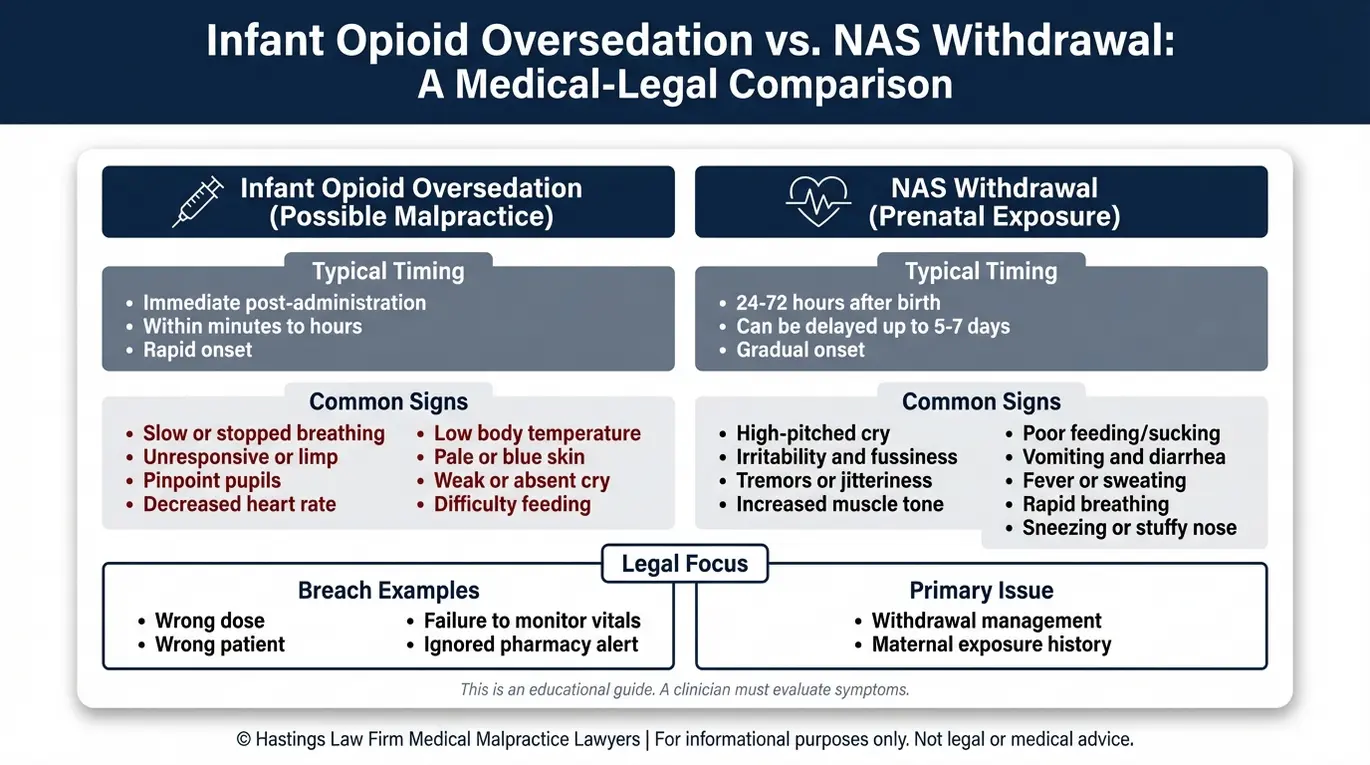
Infant opioid oversedation occurs when medical staff administer an excessive dose of pain medication to a newborn, whereas Neonatal Abstinence Syndrome (NAS), a condition where a baby experiences newborn opioid withdrawal symptoms after prenatal opioid exposure, results from the mother’s use during pregnancy. These are fundamentally different situations, both medically and legally, and understanding the distinction matters when considering your family’s options.
Oversedation is an active medical error. It happens inside the NICU or hospital when a nurse or doctor gives the wrong dose, selects the wrong drug, administers medication intended for another patient, or fails to properly monitor the infant afterward. Prescription opioids commonly involved in hospital dosing errors include fentanyl, morphine, and methadone. Each of these drugs requires precise weight-based calculations for neonatal patients, and even a small miscalculation can be dangerous. A neonatal medication error lawyer can help families determine whether the standard of care was met during treatment.
Clinical pharmacist oversight is one of the primary safeguards against these errors. Pharmacists are trained to verify dosing calculations, flag potential drug interactions, and catch orders that fall outside safe parameters for an infant’s weight and age. When this layer of protection breaks down, whether through staffing gaps, system failures, or bypassed safety checks, the risk of oversedation increases significantly. An infant opioid oversedation attorney examines whether these safeguards were in place and properly followed.
NAS is a passive condition. It develops because opioids crossed the placenta during pregnancy, resulting in neonatal opioid exposure, and the baby’s nervous system adapted to the drug’s presence. After birth, the infant experiences withdrawal. NAS cases may involve claims against opioid manufacturers or prescribers through mass tort litigation, but they are legally distinct from direct hospital negligence. The Newborn Critical Care Center Clinical Guidelines from UNC Pediatrics outline standardized approaches for managing neonatal withdrawal, and deviations from these protocols can be relevant in either type of case.
For families working with an Arizona opioid malpractice counsel, this distinction shapes the entire legal strategy. An oversedation case targets the hospital and the specific providers who made the error, while a NAS-related claim may involve pharmaceutical companies and prescribing physicians.
| Feature | Oversedation (Malpractice) | NAS / Withdrawal |
|---|---|---|
| Cause | Dosing error by hospital staff after birth | Prenatal opioid exposure during pregnancy |
| Timing | Occurs during or after hospital treatment | Symptoms appear within days of birth |
| Key Signs | Respiratory depression, limpness, unresponsiveness | Tremors, irritability, excessive crying, feeding difficulty |
| Legal Pathway | Individual medical malpractice claim | Mass tort, product liability, or prescriber negligence |
| Primary Defendants | Hospital, nurses, doctors, pharmacists | Opioid manufacturers, distributors, prescribing providers |
If you are unsure which situation applies, an oversedation lawyer in Arizona can review the records and help you understand what type of claim may be appropriate. Our team provides infant overdose legal help by analyzing exactly what medications were given, when, and by whom. As an Arizona medical negligence attorney experienced in neonatal cases, we know where to look for the answers.
Recognizing Signs of Opioid Toxicity in Infants
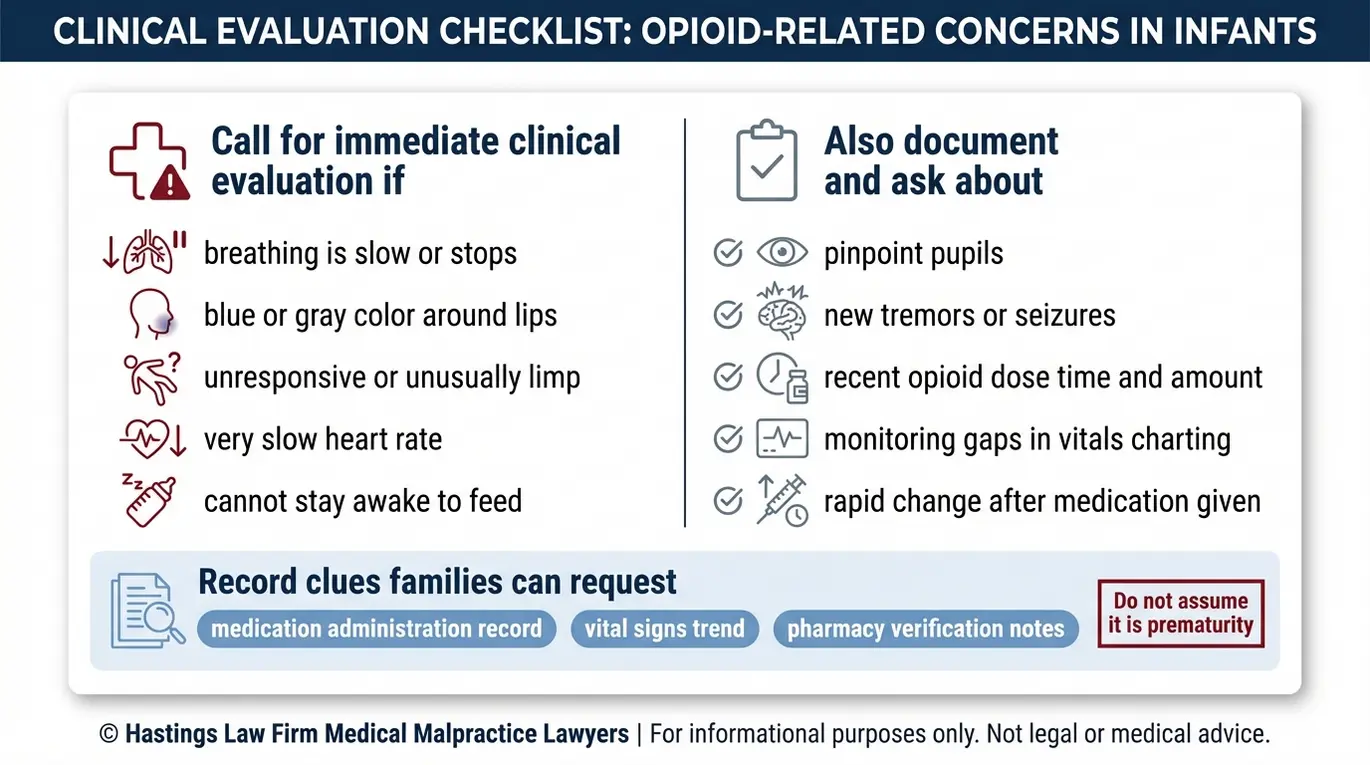
Signs of opioid toxicity in newborns include severe respiratory depression, dangerously slowed or stopped breathing, pinpoint pupils, bradycardia, an abnormally slow heart rate, and unresponsiveness or limpness. Recognizing these symptoms early is critical because delays in treatment can lead to oxygen deprivation and lasting brain injury.
Opioid toxicity in neonates is a dangerous response to receiving more medication than the body can safely process. An Arizona infant opioid oversedation lawyer looks closely at the clinical timeline between when medication was administered and when these symptoms first appeared. That timeline often tells the story of what went wrong.
Symptoms parents and providers should watch for include:
- Respiratory depression or apnea (pauses in breathing that may require intubation or mechanical ventilation)
- Extreme limpness or inability to maintain muscle tone
- Failure to feed or weak sucking reflex
- Pinpoint (constricted) pupils
- Bradycardia or drops in oxygen saturation
- Excessive sedation or inability to be roused
- Seizures or tremors
These signs can develop rapidly after a dosing error. In cases of premature birth or low birth weight, the margin for error is even smaller because their bodies metabolize drugs differently. While distinct from a product liability failure to warn claim, medical staff have a duty to recognize these signs immediately.
One concern our team investigates is whether hospital staff attributed these symptoms to other causes rather than recognizing a medication error. In some cases, signs of oversedation may be documented as related to prematurity, an underlying condition, or general instability. A pediatric malpractice lawyer in Arizona understands how this can obscure the true cause of an infant’s decline.
Gaps in medical records often highlight charting inconsistencies. Our in-house nurses, who previously worked in hospital settings, know how to identify these discrepancies. According to Medication Dispensing Errors and Prevention research published on NCBI Bookshelf, dispensing errors are a well-documented source of patient harm. A newborn overdose attorney reviews whether doses were recorded accurately and whether any pharmacy alerts were overridden.
As an infant medication injury lawyer, we pay particular attention to the medication administration record. If a dose was given but corresponding vital sign checks are missing, that gap may indicate a failure to monitor. An Arizona birth injury counsel experienced in these cases knows that what is not in the chart can be just as telling as what is. Our opioid toxicity lawyer team reconstructs the full clinical picture to determine whether negligent prescribing or administration occurred.
Understanding the Role of Chain of Command in Dosing Errors
In a hospital setting, nurses are expected to do more than follow orders. They have an independent duty to question medication orders that appear unsafe. This clinical escalation process, often called the chain of command, requires nurses to raise concerns about a potentially harmful order with a supervisor, the prescribing physician, or a clinical pharmacist before administering the drug.
If a nurse receives an order for an opioid dose that seems too high for an infant’s weight, the standard of care generally requires that nurse to stop and verify the order. Clinical pharmacist oversight provides another checkpoint, as pharmacists are trained to catch dosing errors before medication reaches the patient. When these systems fail, and a nurse administers a dose without proper verification, liability can extend to both the individual provider and the hospital.
Our team investigates whether the chain of command was followed. We examine whether concerns were raised, whether they were documented, and whether the hospital had protocols in place to support staff who question a physician’s orders. These details can be central to establishing medical negligence.
The Hastings Law Firm Difference
Results matter, but what truly sets us apart is how we achieve them. Every verdict, every settlement, and every Arizona courtroom victory comes from one guiding promise: To treat each client’s fight for justice as if it were our own.
This balance of skill, experience, and empathy reflects our core philosophy that justice should not only compensate the injured, but also make healthcare safer nationwide.

Long-Term Consequences of Pediatric Medication Errors
Severe opioid oversedation can cause hypoxic-ischemic encephalopathy (HIE), a type of brain injury resulting from medical errors. HIE occurs when the brain is deprived of adequate oxygen and blood flow. It can lead to cerebral palsy, birth defects, cognitive deficits, and lifelong developmental delays that require years of intensive therapy and support.
The mechanism is direct. When an opioid overdose suppresses an infant’s breathing, the resulting respiratory depression starves the brain of oxygen. Even brief periods of oxygen deprivation can cause permanent damage to developing brain tissue. A long-term injury lawyer in Arizona understands that the full scope of these injuries often does not become apparent for years.
Some consequences of neonatal brain injury may not surface until a child reaches school age. Developmental delays, learning disabilities, behavioral problems, and conditions like Attention Deficit Disorder (ADD/ADHD) can all be linked to a hypoxic event in infancy. An infant brain damage attorney recognizes that early medical records documenting the oversedation event become essential evidence when these diagnoses emerge later.
This is why life care planning is such an important part of these cases. An Arizona opioid oversedation lawyer works with medical experts and economists to project the full cost of a child’s future needs. This comprehensive plan also accounts for necessary medical equipment, home modifications, and in-home nursing services that the child may require as they grow. Medication error compensation must account not only for what has already happened, but for the decades of care and support the child will require.
As a pediatric injury law firm, we approach these cases knowing that the settlement or verdict needs to protect the child’s future. Every therapy session, every specialist appointment, and every educational accommodation should be accounted for in the damages calculation.
Establishing Liability for Infant Opioid Oversedation
Liability is established by proving the medical provider breached the standard of care through improper dosing, failure to monitor vitals, or ignoring pharmacy alerts. As an Arizona infant opioid oversedation lawyer, we investigate every link in the chain of care to identify who is responsible.
Potential defendants in these cases can include the hospital itself, individual nurses, the prescribing physician, or the pharmacist who prepared the dose. When suing a hospital for overdose, multiple parties may share responsibility, and untangling this web requires experience. Founded by board-certified trial attorney Tommy Hastings, we have spent two decades holding medical providers accountable for neonatal errors. Arizona follows a comparative fault system, meaning each defendant is generally responsible only for their proportionate degree of fault under Arizona Revised Statutes § 12-2506.
This makes identifying all liable parties in infant injury cases especially important. If responsibility is divided among several providers, each must be properly named and their specific failures documented. Missing a single responsible party could reduce the total compensation available for the child’s care.
Distinguish this type of claim from mass tort or multidistrict litigation (MDL) targeting opioid manufacturers like Purdue Pharma or distributors like Mallinckrodt. Those cases focus on the pharmaceutical supply chain. A medical malpractice lawyer in Phoenix handling oversedation claims focuses on the specific providers who failed your child inside the hospital.
Our investigation begins with a detailed review of the electronic health records, including the medication administration record (MAR/eMAR) and weight-based dosing calculations. We also examine pharmacy system logs, nursing notes, and vital sign records. These logs determine the safe amount of medication (measured in mg/kg or mcg/kg) for the infant’s size.
As an Arizona oversedation attorney, we anticipate the defenses hospitals typically raise, such as arguing that the infant’s condition was caused by something other than the medication. Our team includes former defense attorneys who understand these strategies. As an infant injury law firm, we prepare every case from day one as if it will go before a jury.
Contact the Arizona Birth Injury Attorneys at Hastings Law Firm Today for Help
If your baby was harmed by a medication error, you deserve to know what happened. As an Arizona infant opioid oversedation lawyer, Hastings Law Firm is committed to restoring trust for families who have been failed by the medical system and working to prevent the same mistakes from happening to other children.
Our infant injury attorneys are ready to listen to your story, review your child’s medical records, and give you honest answers about your legal options. We provide help for oversedated infants and their families through a thorough, compassionate approach built on medical and legal experience.
Contact our medical law firm today for a free, confidential case evaluation. You pay no fees or costs unless we secure a recovery for your family. Let us help you find the answers your family deserves.
Frequently Asked Questions About Infant Opioid Oversedation in Arizona


This content was researched and written by the Hastings Law Firm editorial team, which includes attorneys, medical professionals, and experienced researchers. Our writing is informed by internal knowledge and practical experience, and we cross-check critical details against authoritative sources cited throughout. Every piece undergoes human-led fact-checking and legal review. Because legal and medical information can change, if you spot an error, please contact us. Learn more about our content standards and review process on our editorial policy page.

Tommy Hastings, founder of Hastings Law Firm, is a board-certified personal injury trial lawyer dedicated exclusively to healthcare injury cases. Since 2001, he has represented injured patients and families in litigation against major hospital systems, pharmaceutical companies, and negligent healthcare providers nationwide. He has handled numerous high-profile cases that have drawn national media attention and resulted in multi-million dollar recoveries. He draws on that experience in his writing, helping readers understand how these cases work and what options may be available to them.
