


Arizona Meningitis Misdiagnosis Lawyer
A missed or delayed meningitis diagnosis can escalate quickly and leave lasting harm, especially when early warning signs are mistaken for a routine illness. The most serious cases involve rapid progression, delayed testing, and delayed antibiotics, which can turn a treatable infection into catastrophic injury or fatal outcomes. Children can face added risk because symptoms may look different and be harder to describe. Clear documentation of symptoms, testing decisions, and timing often shapes what happened and why. If you or a loved one were harmed or worse due to meningitis misdiagnosis in Arizona, contact Hastings Law Firm for a free, confidential case review.

Last Updated: July 27, 2026
Trusted Arizona Medical Attorneys for Failure to Diagnose Meningitis Claims
When a doctor fails to recognize meningitis, the consequences can be devastating and irreversible. If you or a loved one suffered serious harm because a healthcare provider in Arizona missed or delayed a meningitis diagnosis, you may be dealing with fear, confusion, and a sense of betrayal. These feelings are common, and you deserve answers about what went wrong.
As an Arizona meningitis misdiagnosis lawyer, Hastings Law Firm focuses exclusively on medical malpractice claims. Founded by board-certified trial attorney Tommy Hastings, our firm includes in-house medical professionals and former defense attorneys who know how to investigate these cases from the inside out.
We can review what happened, help you understand your legal options, and explain the path forward at no cost and with no obligation. Contact us for a free, confidential case evaluation.

Identifying Meningitis Symptoms That Arizona Doctors Often Miss
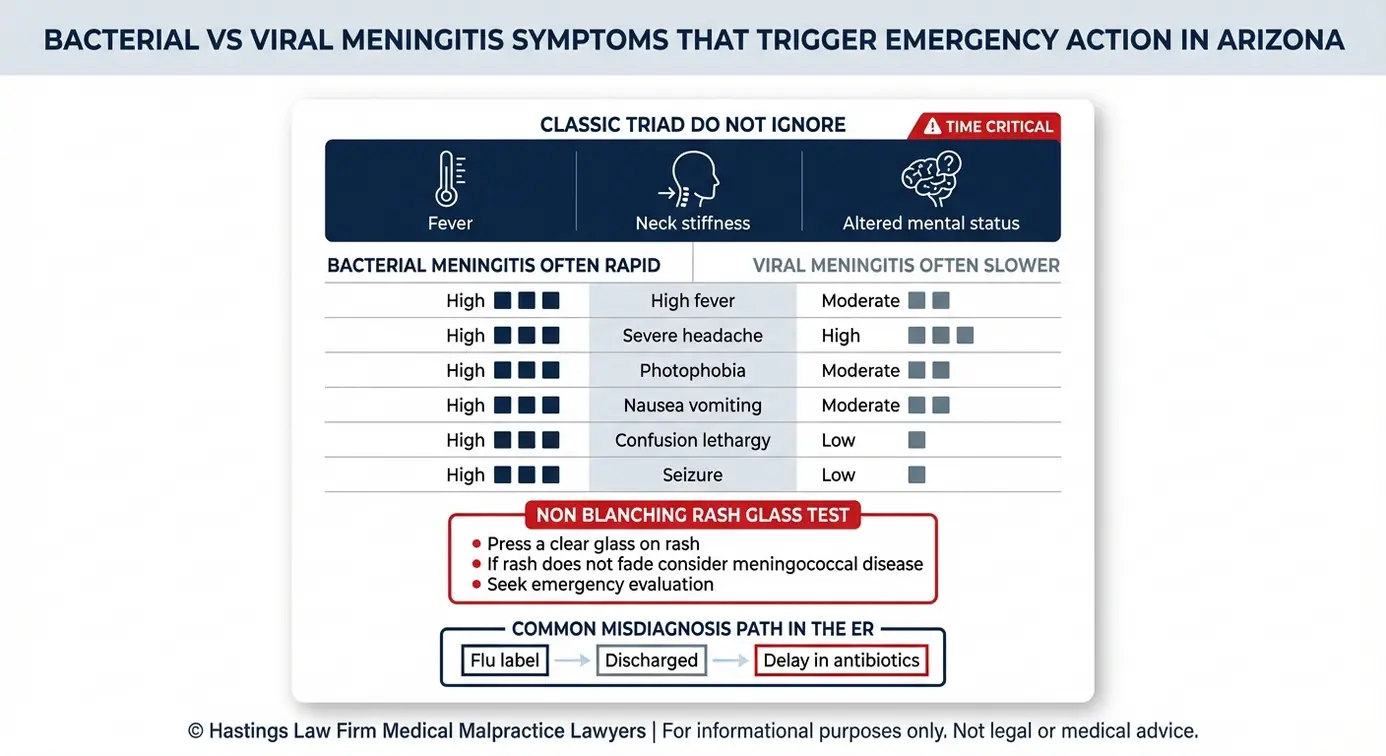
Doctors must immediately recognize the classic triad of symptoms—fever, neck stiffness, and altered mental status—but often dismiss them as the flu, leading to critical delays in treatment.
The classic triad is significant because it signals potential inflammation of the membranes surrounding the brain and spinal cord, a condition known as meningitis. When a patient presents with a high fever, a stiff neck that resists flexion, and confusion or decreased consciousness, meningitis should be near the top of the differential diagnosis.
According to the National Center for Biotechnology Information (NCBI), bacterial meningitis can progress rapidly and become fatal within hours if untreated. Mistaking these symptoms for a common illness is a failure that can cost a patient their life, a reality an Arizona meningitis misdiagnosis lawyer sees too often.
Understanding the difference between viral and bacterial meningitis is important for both medical and legal purposes:
- Bacterial meningitis progresses rapidly, often over hours. Symptoms include high fever, severe neck stiffness, altered mental status, photophobia (sensitivity to light), seizures, and a characteristic non-blanching rash. Without treatment, it can be fatal or cause permanent damage.
- Viral meningitis typically develops over days and is generally less severe. Symptoms may include headache, fever, and fatigue, but altered mental status and rapid deterioration are less common. Most patients recover without specific treatment, though monitoring is still necessary.
One physical sign that carries particular weight in malpractice cases is the non-blanching rash, a skin finding that does not fade when pressed with a glass (often called the glass test). According to the Cleveland Clinic, this type of rash can indicate meningococcal infection and requires urgent evaluation. Missing this finding in the emergency room, especially when other symptoms are present, is a frequent example of emergency room errors that create significant liability.
The Danger of Misinterpreting Early Warning Signs in Children
Meningitis in infants and young children can look very different from the adult presentation. Instead of complaining of neck stiffness or light sensitivity, a baby may show a bulging fontanelle (the soft spot on the skull), irritability, a high-pitched cry, or refusal to feed. Older children may experience seizures or become unusually lethargic.
These symptoms are frequently misdiagnosed as an ear infection, stomach virus, or common flu. The risk of a delayed diagnosis in pediatric cases is especially high because young children cannot articulate their symptoms. When a physician fails to consider bacterial meningitis in a child with behavioral changes and a fever, the condition can worsen. This delay often forms the basis of a medical malpractice claim.
Medical Standard of Care for Diagnosing Meningitis
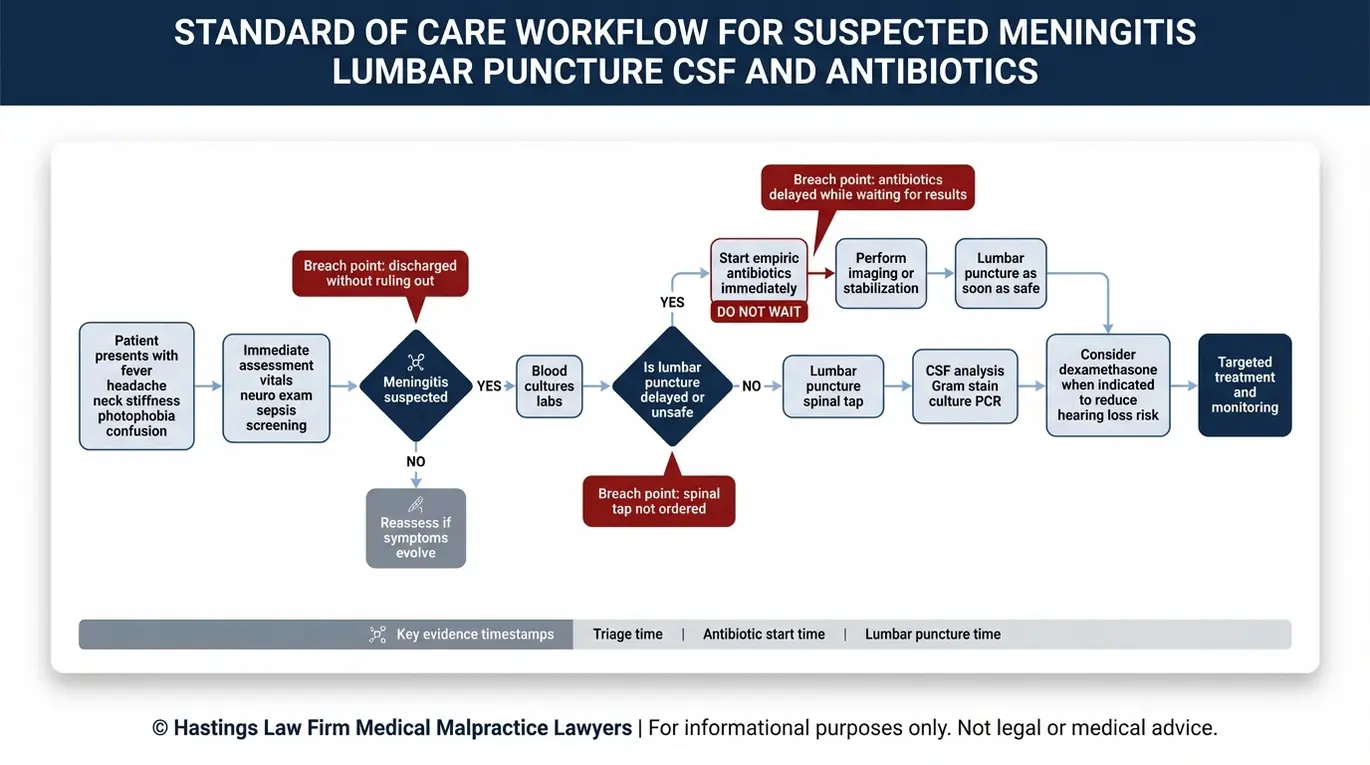
The standard of care for suspected meningitis requires an immediate lumbar puncture (spinal tap) and CSF analysis; failure to perform this test when symptoms are present is often considered negligence.
A lumbar puncture (commonly called a spinal tap) is the definitive diagnostic tool for meningitis. It involves inserting a needle into the lower back to collect cerebrospinal fluid (CSF), the clear liquid surrounding the brain and spinal cord. CSF analysis can reveal elevated white blood cells, abnormal protein levels, or the presence of bacteria to confirm the diagnosis. There is no adequate substitute for this test when the clinical picture suggests meningitis.
When evaluating whether a healthcare provider met the standard of care, we often use expert testimony to determine if these diagnostic steps were followed:
| Diagnostic Step | What It Involves | Why It Matters |
|---|---|---|
| Patient history and physical exam | Assessment of symptoms including fever, neck stiffness, and mental status | Identifies clinical suspicion for meningitis |
| Lumbar puncture (spinal tap) | Collection and analysis of cerebrospinal fluid | The definitive test for confirming meningitis |
| Blood cultures | Drawing blood to identify bacteria | Helps identify the specific organism causing infection |
| Empiric antibiotics | Starting antibiotics before lab results return | Prevents disease progression when bacterial meningitis is likely |
| Adjunctive corticosteroid therapy | Administration of dexamethasone alongside antibiotics | Research published in Oxford Academic’s Open Forum Infectious Diseases suggests it may help reduce the risk of hearing loss and other complications |
The concept of “time is tissue” applies directly to meningitis cases. When bacterial meningitis is suspected, the CDC’s clinical guidance for meningococcal disease emphasizes that antibiotics should be administered as quickly as possible. If there is any delay in performing the lumbar puncture, the standard of care typically requires starting antibiotics before lab results come back. Waiting hours for test confirmation while a patient deteriorates can turn a treatable infection into a catastrophic injury.
An Arizona meningitis misdiagnosis lawyer can work with qualified medical experts to evaluate whether the treating physicians followed these diagnostic protocols. Under Arizona Revised Statutes § 12-542, patients generally have two years to file a claim, which makes early investigation essential.
The Hastings Law Firm Difference
Results matter, but what truly sets us apart is how we achieve them. Every verdict, every settlement, and every Arizona courtroom victory comes from one guiding promise: To treat each client’s fight for justice as if it were our own.
This balance of skill, experience, and empathy reflects our core philosophy that justice should not only compensate the injured, but also make health care safer nationwide.

Liability for Failure to Diagnose Meningitis in Adults and Children
Liability often falls on emergency room physicians, pediatricians, or urgent care staff who fail to order necessary tests or misinterpret lab results, resulting in a preventable progression of the disease.
When evaluating liability for a missed meningitis diagnosis, the parties who may bear legal responsibility include:
- Emergency room physicians who discharged a patient presenting with meningitis symptoms after diagnosing “flu-like illness” without ordering a lumbar puncture or blood cultures
- Pediatricians who attributed a child’s fever, irritability, and lethargy to an ear infection or virus without considering meningitis
- Urgent care providers who lacked the resources or training to recognize the signs and failed to refer the patient to an emergency department
- Hospitals and medical facilities that failed to maintain adequate staffing, enforce diagnostic protocols, or ensure timely communication between care teams
- Nurses or triage staff who did not escalate concerning symptoms, such as neck stiffness or altered mental status, to the attending physician
One less common but important liability pathway involves hospital-acquired meningitis. In rare cases, meningitis can develop after neurosurgical procedures or from infections introduced through hospital hygiene failures or lapses in sterilization protocols. When this occurs, the facility itself may be liable for failing to prevent the infection.
Delayed administration of empiric antibiotics (or empiric antibiotic therapy), meaning antibiotics given based on clinical suspicion before a confirmed diagnosis, is another frequent source of liability. If a doctor suspected meningitis but waited hours for lab confirmation before starting treatment, that gap can be the direct cause of permanent injury. Similarly, the failure to administer dexamethasone, an adjunctive corticosteroid therapy shown to reduce inflammation and protect against hearing loss, may also support a claim of medical negligence.
Proving these failures often requires establishing causation, showing that the delay directly altered the outcome. An Arizona meningitis misdiagnosis lawyer investigates whether emergency room errors or systemic malpractice turned a treatable condition into a tragedy.
Proving Medical Negligence in Meningitis Misdiagnosis Cases
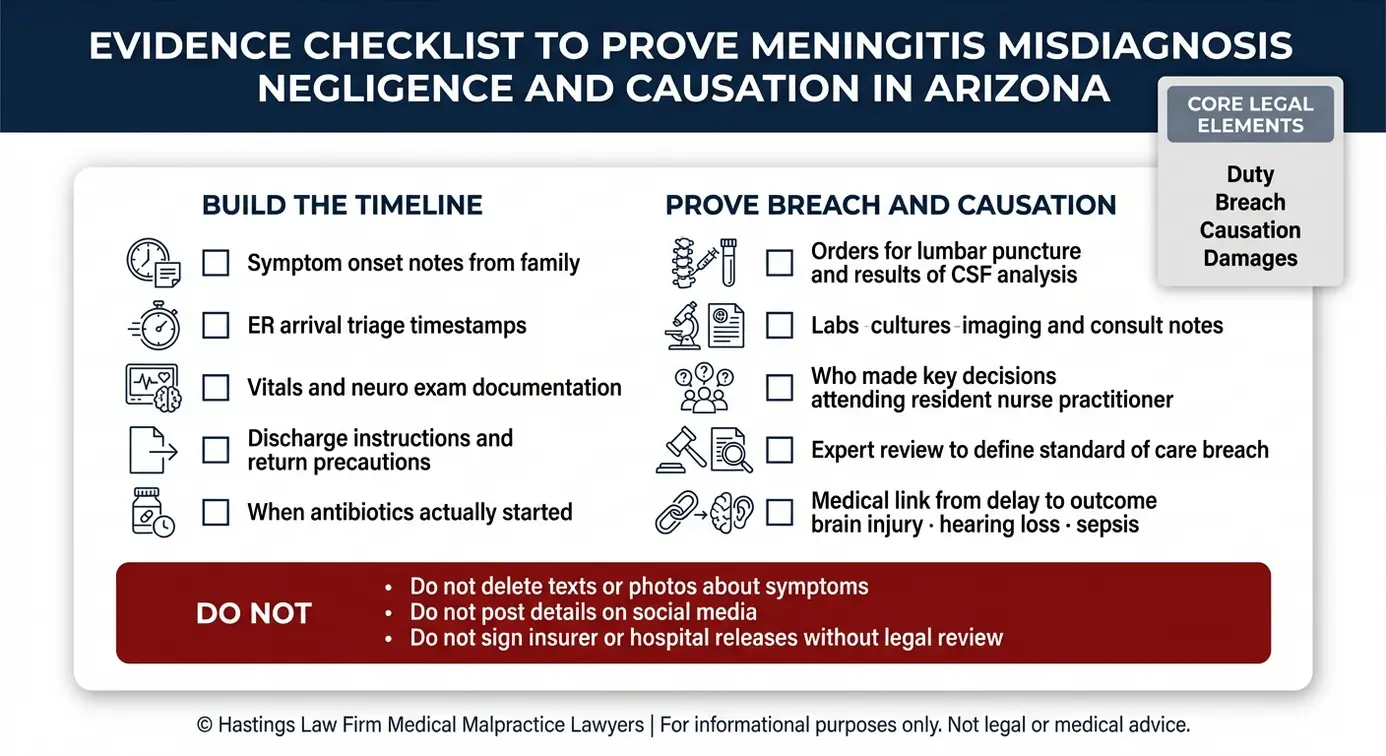
Proving negligence requires clear evidence that a competent doctor would have diagnosed the condition earlier and that this delay directly caused the patient’s catastrophic injury or death. As an Arizona meningitis misdiagnosis lawyer, our job is to build that evidence methodically.
When proving a meningitis malpractice claim, our investigation process follows a structured approach:
- Obtain and analyze all medical records. We request emergency room records, triage notes, lab results, physician orders, nursing charts, and discharge summaries. These records allow us to build a minute-by-minute timeline showing when symptoms first appeared and what tests were ordered.
- Identify the breach in the standard of care. Working with our in-house nursing staff and outside medical experts, we compare the treatment the patient received against what a reasonably competent physician should have done. Securing an Affidavit of Merit from a qualified professional is often a necessary step to validate the claim.
- Establish causation. This is often the most contested element. We must demonstrate that earlier diagnosis and treatment would have led to a better outcome. Medical experts review the clinical timeline to determine whether the patient would have recovered fully or avoided the worst injuries by catching the condition sooner.
- Document the full extent of harm. We work with specialists to assess the long-term medical, financial, and personal impact of the injury, from ongoing rehabilitation costs to the effect on the patient’s daily life.
Preserving evidence early is critical. If you suspect malpractice, request copies of your records as soon as possible. Avoid discussing the details of your care on social media or directly with the providers involved. These steps protect the integrity of your potential claim and prevent important information from being altered or lost.
Catastrophic Injuries Caused by Delayed Meningitis Treatment
When meningitis is left untreated due to misdiagnosis, it can lead to permanent brain damage, hearing loss, limb amputation, or wrongful death within a matter of hours.
The life-altering injuries we see in cases involving delayed meningitis treatment often include:
- Neurological damage and cognitive impairment. Meningitis-related brain inflammation can destroy neural tissue, leaving patients with memory loss, difficulty concentrating, personality changes, or permanent intellectual disability.
- Hearing loss and blindness. Inflammation can damage the auditory and optic nerves. Partial or total hearing loss is a common long-term complication of bacterial meningitis, and blindness or severe vision impairment may also result.
- Limb amputation. When bacterial meningitis triggers meningococcemia, it can cause tissue death in the extremities. This sometimes requires amputation of fingers, toes, or entire limbs to save the patient’s life.
- Wrongful death. In the most tragic cases, the delay proves fatal. Families left behind face not only grief but also the financial burden of medical bills and lost income.
Each of these outcomes may have been preventable with timely diagnosis and treatment. That is why an Arizona meningitis misdiagnosis lawyer examines every hour of the clinical timeline to determine whether earlier action would have changed the result.
Recoverable Damages for Meningitis Injuries Under Arizona Law
Victims of meningitis malpractice in Arizona can recover uncapped economic and non-economic damages, including lifetime medical care costs, lost earning capacity, and compensation for pain and suffering. Article 2, Section 31 of the Arizona Constitution expressly prohibits any legislative limit on the damages a jury can award in personal injury or wrongful death cases.
The types of damages available in an Arizona medical malpractice claim generally fall into two categories:
| Economic Damages | Non-Economic Damages |
|---|---|
| Past and future medical expenses | Physical pain and suffering |
| Rehabilitation and therapy costs | Emotional distress and mental anguish |
| Life care plans for patients with permanent disabilities | Loss of enjoyment of life |
| Lost wages and lost earning capacity | Loss of companionship (in wrongful death claims) |
| Home modifications, assistive devices, and ongoing nursing care | Disfigurement and permanent disability |
Economic damages are calculated based on documented costs and projected future expenses. For a child who suffered brain damage from delayed meningitis treatment, this may include a life care plan covering decades of medical care, special education, and assisted living.
Non-economic damages address the human cost that cannot be measured with a receipt. The suffering of a parent watching their child relearn basic skills, or the isolation of a teenager who lost their hearing because of an emergency room error, carries real legal weight.
An Arizona meningitis misdiagnosis lawyer at Hastings Law Firm works with medical and financial experts to calculate the full scope of these losses, ensuring that nothing is overlooked.
Contact the Arizona Misdiagnosis Attorneys at Hastings Law Firm Today for Help
Arizona law gives you a limited window to file a medical malpractice claim, so reaching out early helps ensure we can preserve evidence and build your case. Hastings Law Firm works on a contingency fee basis, which means you pay no attorney fees or costs unless we recover compensation for you.
Our team includes in-house medical professionals, former defense attorneys, and a national network of experts who focus entirely on medical malpractice. We understand how overwhelming this time can be, and we are here to help you find clarity.
If you believe your family was harmed by a missed or delayed meningitis diagnosis, contact us today for a free, confidential case evaluation. Let us review the facts, explain your options, and help you take the first step toward getting the answers you deserve.
Frequently Asked Questions About Meningitis Misdiagnosis in Arizona


This content was researched and written by the Hastings Law Firm editorial team, which includes attorneys, medical professionals, and experienced researchers. Our writing is informed by internal knowledge and practical experience, and we cross-check critical details against authoritative sources cited throughout. Every piece undergoes human-led fact-checking and legal review. Because legal and medical information can change, if you spot an error, please contact us. Learn more about our content standards and review process on our editorial policy page.

Tommy Hastings, founder of Hastings Law Firm, is a board-certified personal injury trial lawyer dedicated exclusively to healthcare injury cases. Since 2001, he has represented injured patients and families in litigation against major hospital systems, pharmaceutical companies, and negligent healthcare providers nationwide. He has handled numerous high-profile cases that have drawn national media attention and resulted in multi-million dollar recoveries. He draws on that experience in his writing, helping readers understand how these cases work and what options may be available to them.
