


Arizona Medication Overdose in Hospital Lawyer
Written by: Hastings Law Firm | Reviewed by: Tommy Hastings | Updated: July 27, 2026
Hospital medication overdoses can cause sudden, severe harm, especially when high potency drugs are given intravenously and errors take effect quickly. These events are often tied to preventable breakdowns such as wrong dosing, missed allergy warnings, drug interaction oversights, or infusion pump problems, and responsibility may involve multiple clinicians and the hospital system. Understanding whether the outcome reflects negligence or an anticipated side effect can shape what happens next. If you or a loved one were harmed or worse due to a medication overdose in an Arizona hospital in Arizona, contact Hastings Law Firm for a free, confidential case review.
Trusted Arizona Medical Attorneys for Hospital Medication Error Claims
What You Should Know About Hospital Medication Error Claims in Arizona:
- Outcomes can be severe when a hospital overdose involves high alert medications with a narrow margin between a helpful dose and a harmful dose.
- Accountability can extend beyond one clinician because prescribing, verification, administration, and hospital protocols can each contribute to an overdose.
- Recovery options can be lost if the filing deadline is missed because Arizona medical malpractice claims are generally subject to a statute of limitations.
- Compensation can include economic losses and non economic harms because Arizona does not allow caps on personal injury or wrongful death damages.
- Wrongful death claims may be available to surviving family members when an overdose results in death.
- Disputes often turn on whether the event was preventable negligence or a known side effect that was properly disclosed and monitored.
- Harm can occur quickly in bedside IV administration because pump programming errors or free flow malfunctions can deliver uncontrolled doses.
- Preventable errors may be linked to ignored allergy warnings or drug interaction alerts when EHR alert fatigue leads staff to dismiss critical notices.
- Case outcomes can depend on expert support because Arizona requires a preliminary expert opinion affidavit early in the litigation process.
- Evidence can become harder to obtain with delay because pump logs can be overwritten and staff turnover can disrupt the factual record.

A Healthcare Focused Law Firm
When someone you love is harmed by the very medication meant to help them, the shock can be overwhelming. A hospital is supposed to be a place of healing, and discovering that a preventable overdose caused serious injury or death can leave you searching for answers no one at the facility seems willing to give.
You are not wrong for questioning what happened. And you do not need to figure it out alone.
Led by Tommy Hastings, a board-certified trial lawyer and member of the American Board of Trial Advocates, our firm focuses exclusively on medical malpractice, including cases involving medication overdoses in Arizona hospitals. Our team includes in-house nurse consultants and former defense attorneys who understand how hospitals document, defend, and sometimes obscure drug administration errors. If you or a loved one suffered harm from a medication overdose during a hospital stay, an Arizona medication overdose in hospital lawyer at our firm can review what happened and explain your options in a free, confidential consultation.
What Constitutes a Medication Overdose in a Hospital Setting
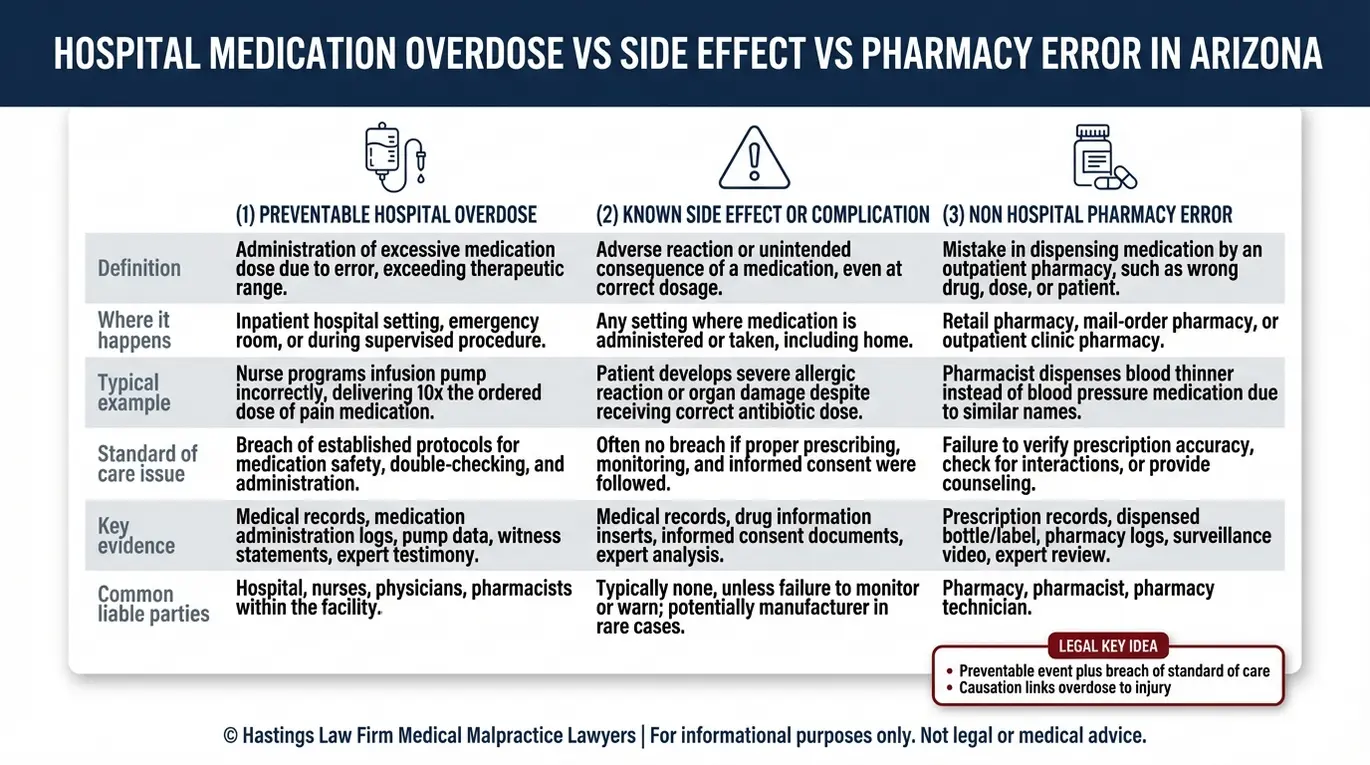
A hospital medication overdose occurs when a healthcare provider administers a drug in a quantity that exceeds the safe therapeutic range, the window of dosing where a medication treats the condition without causing toxicity, resulting in harmful physiological effects. Not every bad reaction qualifies as medical negligence. The legal question centers on whether the overdose was a preventable event caused by a breach of duty, or a known side effect that was properly disclosed and monitored.
This distinction matters. A known side effect, such as mild nausea from a chemotherapy drug, is an anticipated risk. An adverse drug event (ADE), which is any injury resulting from the use of a medication, may or may not involve negligence. But when a nurse programs an IV pump with the wrong concentration, or a physician prescribes a dose ten times higher than the patient’s weight supports, that crosses into a preventable error. Healthcare providers owe a duty of care to patients to ensure these safety protocols are strictly followed.
The NCCMERP Definition The National Coordinating Council for Medication Error Reporting and Prevention defines a medication error as any preventable event that may cause or lead to inappropriate medication use or patient harm. This applies while the medication is in the control of the health care professional, patient, or consumer.
Hospital administration errors differ from retail pharmacy mistakes in important ways. While a retail error might involve dispensing the wrong pills to a patient at home, a hospital error often involves high-potency drugs delivered intravenously at the bedside. In these acute settings, errors can take effect within seconds and escalate before anyone intervenes, leaving no time for the patient to realize a mistake was made. The standard of care in a clinical setting requires that a reasonably prudent healthcare professional verify the correct drug, dose, route, time, and patient identity before administration.
When that standard is not met, an Arizona hospital overdose attorney can investigate whether the resulting injury was avoidable. A medication error lawyer evaluates the clinical record to determine if the care provided fell below what the medical community would expect. Medical negligence in these cases often involves a failure to follow the established bedside safety checks designed to protect patients.
Common High-Risk Drugs and Causes of Hospital Overdoses
High-alert medications such as insulin, opioids, and anticoagulants are among the most commonly implicated drug classes in serious hospital adverse drug events due to the significant harm they can cause when used in error. These drugs often have a narrow therapeutic index, meaning the difference between a dose that helps and a dose that harms is dangerously small.
Three drug classes account for a disproportionate share of overdose injuries in hospitals:
| Drug Class | Primary Risk of Overdose | Common Mechanism of Error |
|---|---|---|
| Insulin | Severe hypoglycemia (dangerously low blood sugar), seizures, brain damage | Incorrect unit calculation, confusion between insulin types, failure to adjust for food intake |
| Opioids (morphine, fentanyl, hydromorphone) | Respiratory depression, cardiac arrest, death | Pump programming errors, failure to monitor sedation level, duplicate dosing during shift changes |
| Heparin / Anticoagulants | Uncontrolled hemorrhage, internal bleeding | Wrong concentration selected, failure to account for patient weight, missed lab monitoring |
The Institute for Safe Medication Practices maintains an updated list of high-alert medications for acute care settings, and these three categories consistently appear at the top.
Errors involving these drugs often stem from system-level breakdowns, not just individual mistakes. Staffing shortages and nurse fatigue can lead to missed safety checks. A related concern identified in the AHRQ Patient Safety Indicators gap analysis is the growing challenge of tracking adverse drug events across fragmented hospital systems.
When hospitals fail to address drug interactions or ignore documented drug allergies in a patient’s chart, the consequences can be severe. A medication overdose lawyer examines whether the facility had adequate safeguards in place and whether staff followed them. Investigating the root cause of these errors is a central part of a hospital overdose malpractice case.
Technology and Equipment Failures in Overdose Cases
Not every overdose results from a human calculation error. Infusion pumps, the medication pumps and IV delivery system components that control the rate and volume of IV medications, can malfunction or be misprogrammed. One well-documented risk is “free flow,” a condition where an infusion pump fails to regulate delivery, allowing medication to flood into the patient’s bloodstream at an uncontrolled rate.
Electronic health records (EHRs) introduce their own risks. Alert fatigue, a phenomenon where clinicians become desensitized to the constant stream of pop-up warnings in the EHR system, can cause staff to dismiss legitimate drug interaction alerts. When a critical allergy warning is clicked past without review, a preventable wrong dosage or overdose can follow in minutes.
The Hastings Law Firm Difference
Results matter, but what truly sets us apart is how we achieve them. Every verdict, every settlement, and every Arizona courtroom victory comes from one guiding promise: To treat each client’s fight for justice as if it were our own.
This balance of skill, experience, and empathy reflects our core philosophy that justice should not only compensate the injured, but also make healthcare safer nationwide.

Liability for Overdoses Involving Nurses, Doctors, and Pharmacists
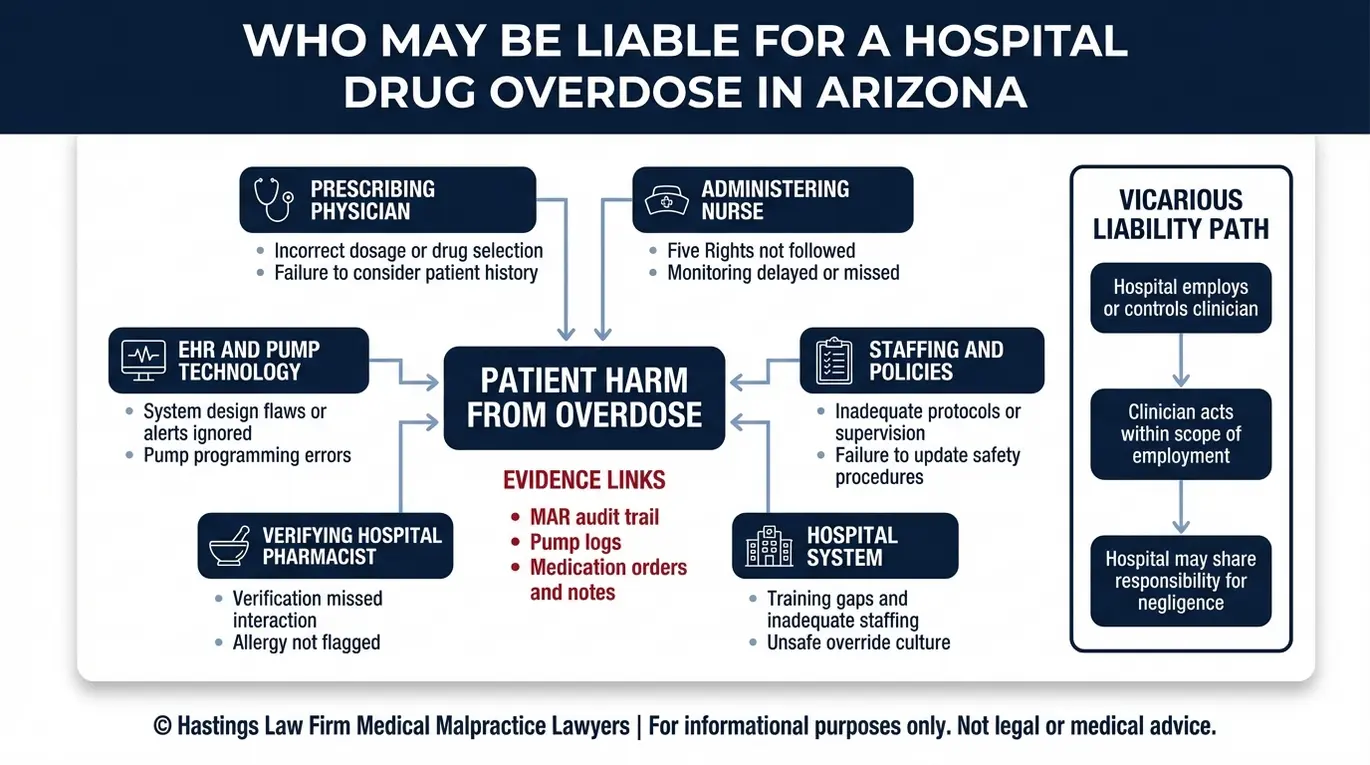
Liability for a hospital overdose often extends beyond the individual nurse administering the drug to include the prescribing physician, the verifying pharmacist, and the hospital system itself for inadequate protocols. A lawyer for hospital drug overdose claims investigates the full chain of decisions that led to the error, because multiple parties may share responsibility. Causation must be established to link these errors directly to the patient’s injury. Causation means proving that the specific medical error was the direct cause of the harm suffered by the patient.
The parties who can be held accountable include:
- The administering nurse: Nurses are expected to follow the “Five Rights” of medication administration, a safety framework requiring verification of the right patient, right drug, right dose, right route, and right time. A failure at any step, as outlined by the National Center for Biotechnology Information, can constitute nurse negligence.
- The prescribing physician: If the doctor ordered an incorrect dosage, prescribed a medication contraindicated by the patient’s existing conditions, or failed to catch a known drug interaction, they may bear direct liability.
- The hospital pharmacist: Hospital pharmacists perform clinical verification before medications are dispensed. Pharmacist liability arises when a pharmacist approves a dangerous dose, or when automated dispensing cabinet (ADC) override protocols, the system allowing nurses to bypass pharmacy review in urgent situations, are too loosely controlled.
- The hospital itself: Under vicarious liability, a hospital may be responsible for the negligent acts of its employees. Hospital liability may result from systemic failures like chronic understaffing, inadequate training, or missing safety protocols.
Our team, which includes former defense attorneys and in-house nursing professionals, examines staffing records, policy manuals, and medication administration records to determine where the breakdown occurred and who is accountable. A hospital medication overdose lawyer reviews clinical records to identify exactly where the safety protocol failed.
Proving Negligence and the Arizona Affidavit Requirement
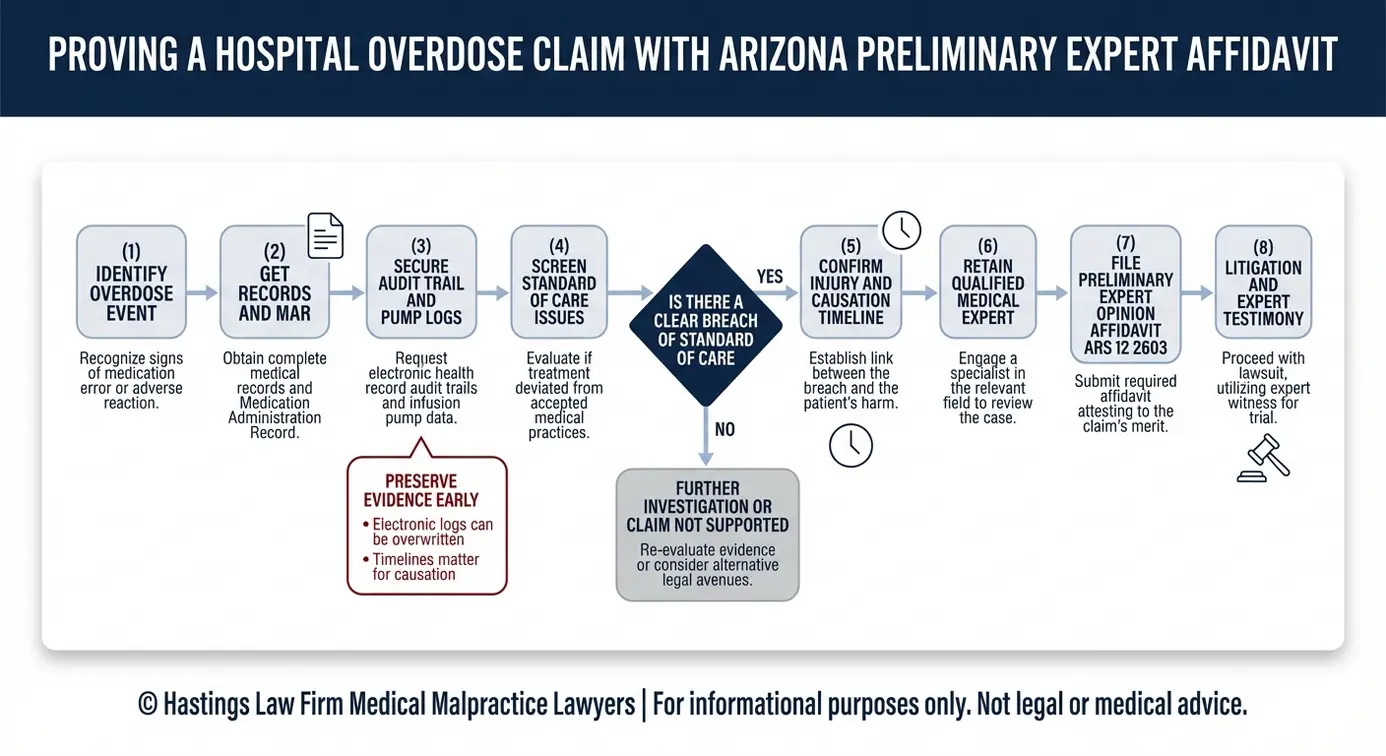
Arizona law requires claimants in medical malpractice cases to support their claims with qualified expert analysis, beginning with a preliminary expert opinion affidavit filed early in the litigation process. To succeed, the patient must meet the burden of proof by demonstrating negligence. Under ARS § 12-2603, a plaintiff must provide a sworn statement from a qualified medical expert certifying that the claim has merit. This law acts as a safeguard to ensure that only meritorious medical claims proceed in the court system.
An Arizona medication error attorney must secure this affidavit from a credentialed professional, typically a physician, pharmacologist, or toxicologist, who can confirm that the standard of care was breached. Proving medical negligence requires demonstrating that a healthcare provider breached the accepted standard of care through these specific expert insights.
The proof-building process generally follows these steps:
- Secure medical records and audit trails. The electronic health record (EHR) audit trail, a digital log that records every user action, timestamp, and modification within the patient’s chart, is often the most important piece of evidence. Under 45 CFR § 164.524, patients have a federal right to access their protected health information, including these records.
- Analyze toxicology data. Toxicology reports showing serum drug levels, the measured concentration of medication in the patient’s blood at relevant times, help establish whether the dose administered was above the safe therapeutic range.
- Retain qualified experts. Expert witness testimony from toxicologists, pharmacologists, and nursing standards experts is used to review the evidence to determine whether the dosage caused the injury and whether it was preventable.
- File the preliminary expert opinion affidavit as required under Arizona law, serving it with the initial disclosures within the statutory timeframe.
At Hastings Law Firm, we begin this investigation from day one, preparing every case as though it will go before a jury.
Damages and Compensation for Overdose Injuries in Arizona
Victims of hospital overdoses in Arizona may recover economic damages for medical bills and lost wages, as well as uncapped non-economic damages for pain, suffering, and loss of quality of life. Economic damages cover measurable financial losses, such as the cost of an ICU stay or ongoing rehabilitation.
Non-economic damages compensate for pain, suffering, emotional distress, and loss of quality of life. Arizona provides strong protection here. Under the Arizona Constitution, Article 2, Section 31, the legislature is prohibited from placing caps on personal injury or wrongful death damages. This means juries can award compensation that fully reflects the harm done, without arbitrary limits.
When a medication overdose results in death, surviving family members may pursue a wrongful death claim. These cases carry their own categories of loss, including loss of companionship, funeral costs, and the financial support the deceased would have provided. A hospital negligence lawyer can help families understand what categories of recovery apply to their specific situation.
Arizona Statute of Limitations for Medical Injury Claims
Under the Arizona Revised Statutes (ARS) § 12-542, medical malpractice claims in Arizona must generally be filed within two years from the date of injury. Missing this statute of limitations almost always means losing the right to pursue the case entirely.
Arizona does recognize a “discovery rule” in limited circumstances. If the overdose injury was not immediately apparent, or if the patient could not reasonably have known about the error at the time it occurred, the two-year clock may begin running from the date the injury was discovered or should have been discovered.
Waiting carries real risks beyond the legal deadline. Electronic pump logs can be overwritten. Staff members leave or transfer. Surveillance footage may be deleted on a routine schedule. A medication overdose attorney in Arizona can take immediate steps to preserve this time-sensitive evidence and ensure that the legal timeline for filing a claim is met.
Do not wait to explore your legal options. Evidence tied to hospital medication errors can disappear quickly, and Arizona’s two-year filing deadline is strictly enforced.
Contact the Arizona Healthcare Malpractice Attorneys at Hastings Law Firm Today for Help
If someone you love was harmed by a medication overdose in an Arizona hospital, the most important step you can take right now is finding out what actually happened. That is what drives our work at Hastings Law Firm: uncovering the truth, holding the responsible parties accountable, and helping prevent the same mistake from hurting another family.
Our team of attorneys, nurse consultants, and patient advocates is ready to review your case at no cost and no obligation. As an Arizona medication overdose in hospital lawyer team, we handle every case on a contingency fee basis, meaning you pay no attorney fees or costs unless we secure a recovery on your behalf.
Contact Hastings Law Firm today for a free, confidential case evaluation. Let us help you find the answers you deserve.
Frequently Asked Questions About Medication Overdose in Hospital in Arizona


This content was researched and written by the Hastings Law Firm editorial team, which includes attorneys, medical professionals, and experienced researchers. Our writing is informed by internal knowledge and practical experience, and we cross-check critical details against authoritative sources cited throughout. Every piece undergoes human-led fact-checking and legal review. Because legal and medical information can change, if you spot an error, please contact us. Learn more about our content standards and review process on our editorial policy page.

Tommy Hastings, founder of Hastings Law Firm, is a board-certified personal injury trial lawyer dedicated exclusively to healthcare injury cases. Since 2001, he has represented injured patients and families in litigation against major hospital systems, pharmaceutical companies, and negligent healthcare providers nationwide. He has handled numerous high-profile cases that have drawn national media attention and resulted in multi-million dollar recoveries. He draws on that experience in his writing, helping readers understand how these cases work and what options may be available to them.
