


Arizona Medical Amputation Lawyer
An unnecessary amputation can leave a person facing permanent physical limits, ongoing medical needs, and profound emotional strain. Many preventable limb losses stem from breakdowns in monitoring, diagnosis, or surgical safety practices that allow blood flow problems or infection to progress beyond recovery. These cases often turn on whether accepted standards of care were followed and whether earlier intervention could have preserved the limb. If you or a loved one were harmed or worse due to unnecessary limb loss from medical negligence in Arizona, contact Hastings Law Firm for a free, confidential case review.
Last Updated: July 27, 2026
Trusted Arizona Medical Lawyers for Unnecessary Limb Loss Claims
Losing a limb to a preventable amputation changes every part of your life. This often happens when proper medical care could have avoided the loss through timely limb salvage, which is the surgical effort to save a threatened limb. If you believe a medical provider’s negligence led to the loss of your arm or leg, you may have grounds to pursue a malpractice claim.
At Hastings Law Firm, founded by board-certified trial attorney Tommy Hastings, our team of attorneys, in-house nurse consultants, and medical experts focuses exclusively on medical malpractice. As experienced Arizona medical amputation lawyers, we understand both the clinical details and the legal strategy these cases demand. Our team focuses exclusively on medical malpractice litigation, which allows us to provide specialized insight into complex surgical and vascular cases. We prepare every case from day one as if it will go to trial, using detailed medical reconstruction to build the strongest possible evidence.
We work on a contingency fee basis, so you pay nothing unless we recover compensation for you. If you or a loved one has suffered an unnecessary loss of limb, we can review what happened and explain your options. Contact us for a free, confidential case evaluation.

Common Medical Errors Leading to Preventable Amputation
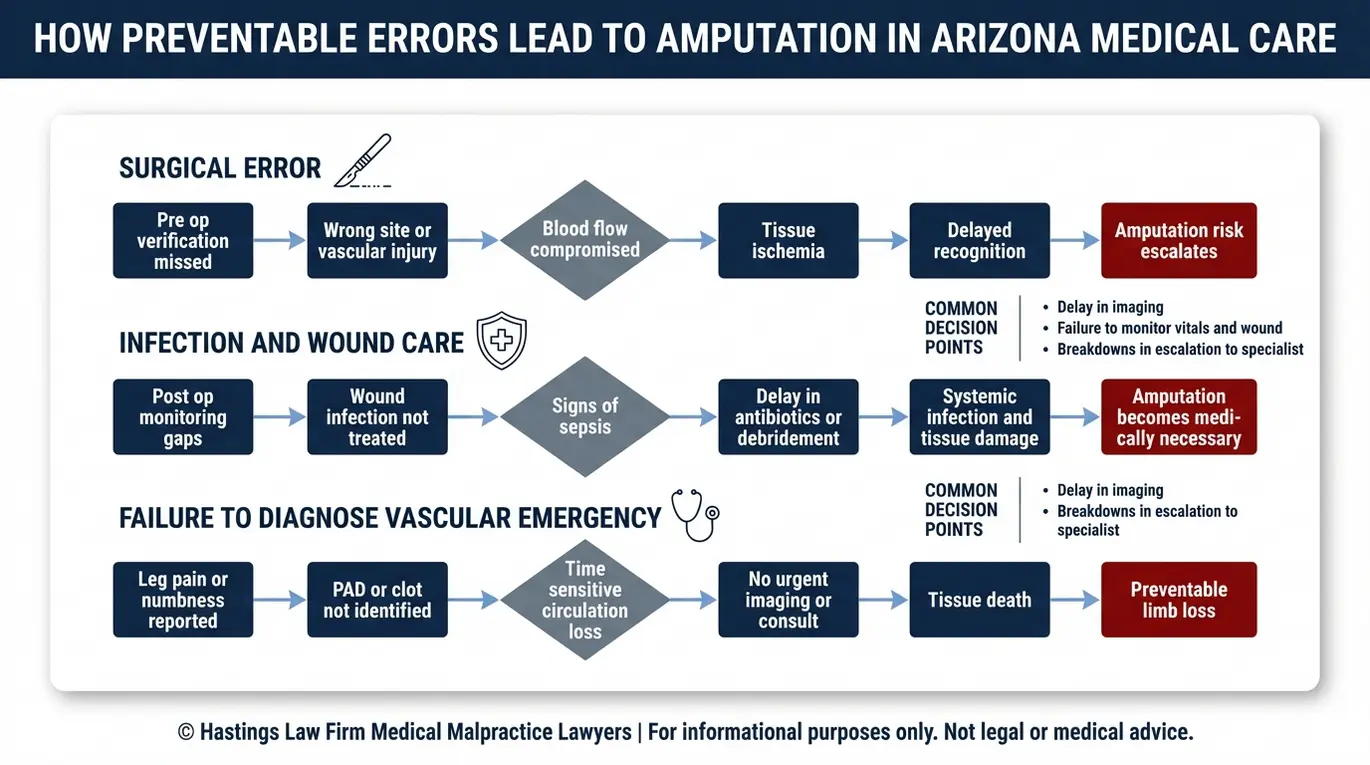
Preventable amputations often result from surgical negligence, unnecessary surgery, failure to treat post-operative infections, or misdiagnosis of vascular conditions, all of which constitute medical negligence and a breach of the standard of care. Medical negligence occurs when a healthcare provider deviates from accepted medical protocols. When a doctor or hospital fails to act within the accepted boundaries of medical practice, the consequences can be irreversible. Medical errors in these cases often involve a failure to maintain blood flow to the extremities.
As Arizona amputation attorneys, we see patterns in the types of errors that lead to limb loss. The most common include:
- Surgical errors: A surgeon may damage blood vessels during an unrelated procedure or operate on the wrong limb, cutting off circulation and causing tissue to die.
- Untreated infections and poor wound care: Infections that go unmonitored after surgery can progress to sepsis, the body’s dangerous response to infection. Once sepsis sets in and blood flow to a limb is compromised, amputation may become the only option. The Centers for Disease Control and Prevention (CDC) emphasizes early recognition and rapid treatment as keys to preventing sepsis-related complications.
- Failure to diagnose vascular conditions: Delayed diagnosis of peripheral artery disease (PAD), a condition where narrowed arteries reduce blood flow to the limbs, or undetected blood clots can lead to tissue death. By the time a correct diagnosis is made, the window for limb salvage may have already closed.
Each of these errors points back to a medical provider’s failure to monitor, diagnose, or treat a condition that was within their ability to manage. For limb loss lawyers in Arizona, the focus is on tracing the clinical timeline to identify exactly where the standard of care broke down. Limb loss occurs when tissue dies due to lack of blood flow or infection.
Universal Protocol Failures and Wrong-Site Surgery
Wrong-site surgery, an error where a procedure is performed on the incorrect body part, is classified as a “Never Event,” meaning it should never occur under any circumstances. This protocol establishes the baseline for patient safety in the operating room. These safety checks are required in all surgical facilities.
The Joint Commission’s Universal Protocol, a national safety standard designed to prevent surgical errors, requires specific safety steps before any procedure begins: a pre-procedure verification, marking of the surgical site, and a final “time-out” in the operating room where the entire team confirms the correct patient, correct procedure, and correct site. When a hospital or surgical team skips or rushes through any part of this protocol, they violate the standard of care and liability is typically clear. These are system-level failures with established prevention standards, and they form some of the strongest cases we handle.
Proving Negligence in Unnecessary Limb Loss Cases
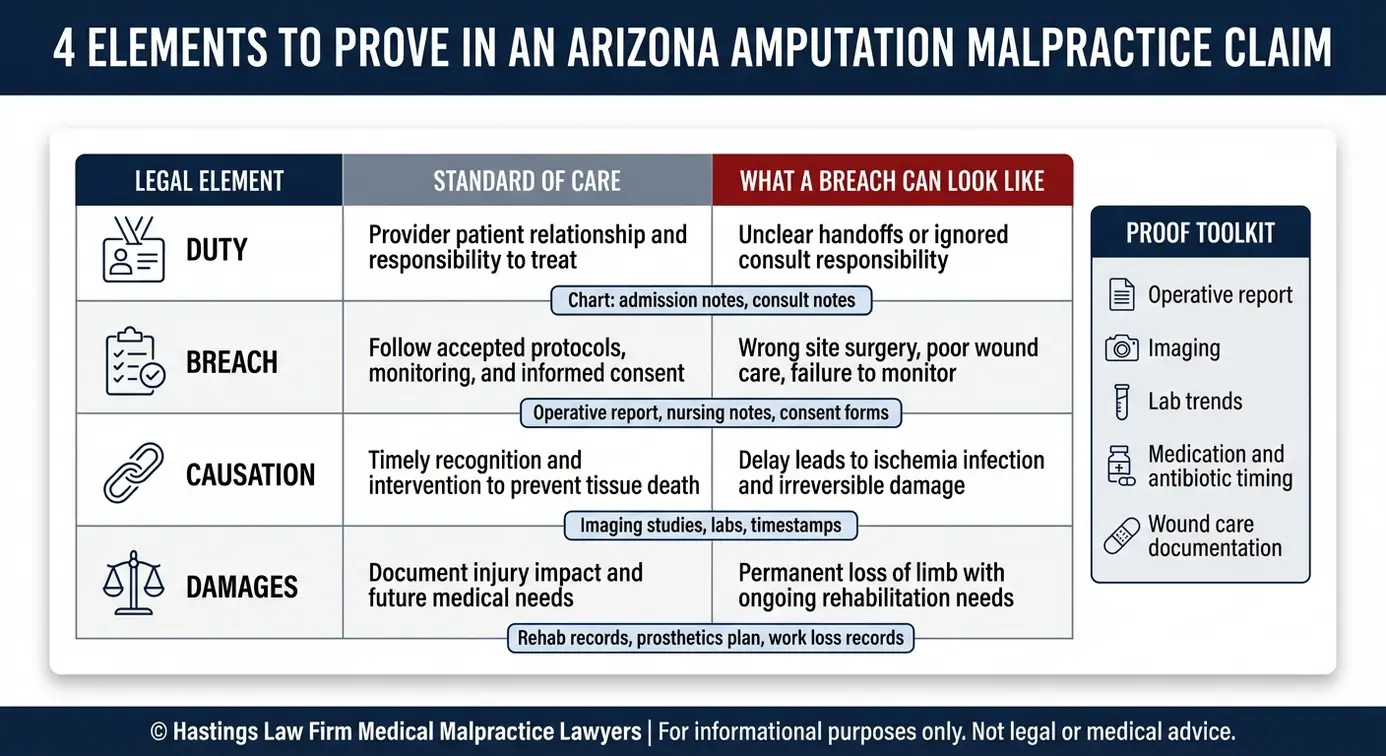
Proving liability for malpractice requires demonstrating that the medical provider deviated from the accepted standard of care, directly causing an amputation that otherwise would have been unnecessary. The standard of care is the level of treatment a prudent professional would provide in a similar situation. As medical amputation counsel, we build each case around four legal elements: duty, breach, causation, and damages.
Establishing duty is usually straightforward. If a doctor-patient relationship existed, the provider owed a duty of care. Breach of duty is where the case becomes technical. We retain qualified medical experts who can review the records and testify that the provider’s actions fell below what a competent professional would have done in the same situation.
Causation is often the most contested element. The defense will argue the amputation was medically necessary regardless of any error. Our team examines whether an iatrogenic vascular injury, meaning a blood vessel damaged by the provider during a procedure, or a period of acute limb ischemia, a sudden loss of blood flow to the limb, directly led to the loss. We also evaluate whether informed consent was properly obtained before the procedure.
To support each element, our firm preserves and analyzes key evidence, including:
- Operative reports and surgical notes
- Pre- and post-operative imaging studies
- Pathology and lab results
- Nursing flow sheets and monitoring logs
- Communication records between providers
Our firm uses this evidence to reconstruct the clinical timeline and identify the specific failure that caused the harm.
The Hastings Law Firm Difference
Results matter, but what truly sets us apart is how we achieve them. Every verdict, every settlement, and every Arizona courtroom victory comes from one guiding promise: To treat each client’s fight for justice as if it were our own.
This balance of skill, experience, and empathy reflects our core philosophy that justice should not only compensate the injured, but also make health care safer nationwide.

Compensation for Wrongful Amputation Victims in Arizona
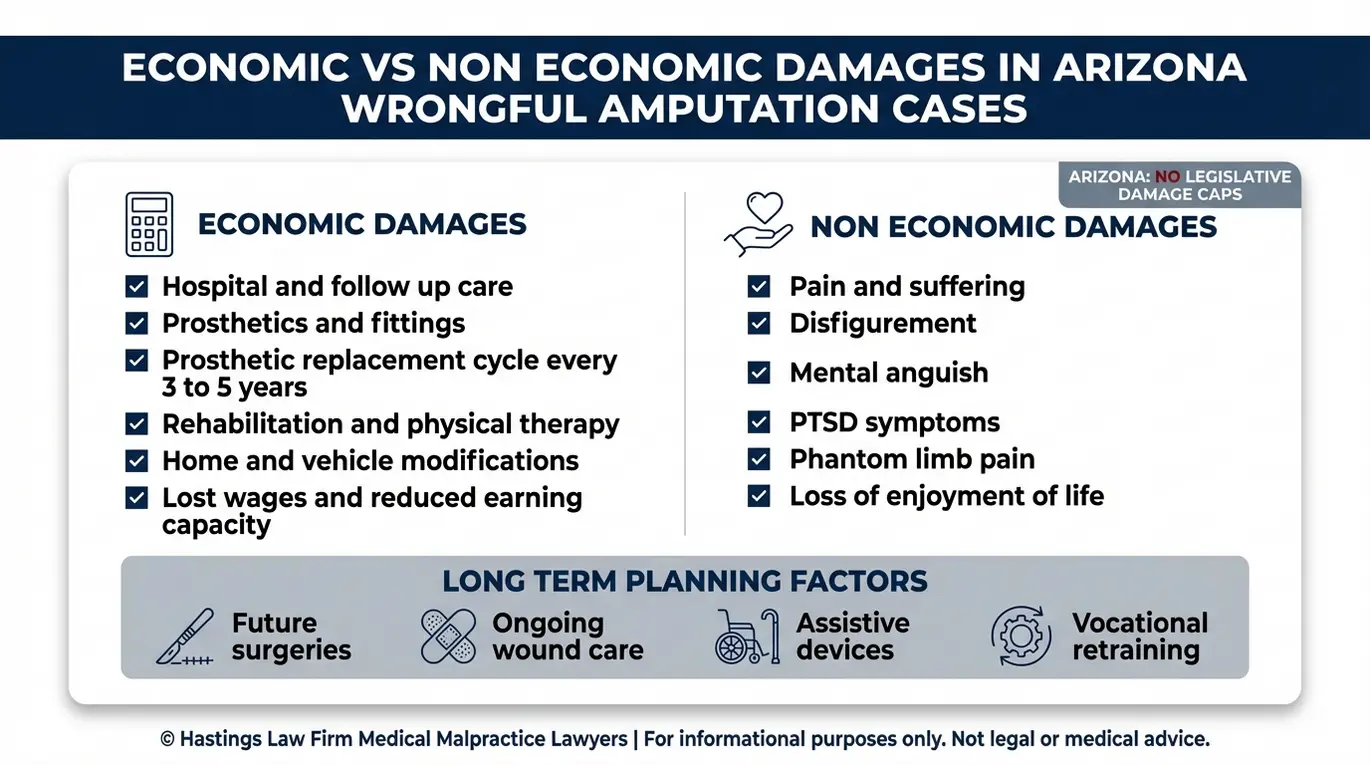
Arizona law allows patients to recover economic damages for medical costs and prosthetics, as well as non-economic damages for pain, suffering, and disfigurement, with no legislative caps on the amount awarded. These damages help cover the extensive costs of life after limb loss.
The financial burden of an amputation extends far beyond the initial surgery. A prosthesis, or prosthetic limb, typically needs to be replaced every three to five years, according to prosthetic rehabilitation research. Add in rehabilitation, physical therapy, home modifications, and lost earning capacity, and the lifetime economic impact can be substantial.
| Economic Damages | Non-Economic Damages |
|---|---|
| Past and future medical bills | Pain and suffering |
| Prosthetics and replacement cycles | Mental anguish and PTSD |
| Rehabilitation and physical therapy | Disfigurement and loss of enjoyment of life |
| Lost wages and reduced earning capacity | Phantom limb pain and related treatment |
| Home and vehicle modifications | Loss of consortium (for spouses) |
Phantom limb pain, the sensation of pain in a limb that is no longer there, is a well-documented condition that can persist for years. The psychological toll, including PTSD and mental anguish, often requires ongoing therapy and pain management.
Arizona’s Constitution protects the right to full recovery in personal injury cases. As the Arizona Constitution (Center for American Civics) makes clear, there are no legislative caps on malpractice damages. This means our Arizona limb loss counsel can pursue the full scope of what was taken from you, not an amount artificially reduced by statute. We can help calculate the true long-term cost of your injury and present it effectively to a jury or in settlement negotiations.
Contact the Arizona Surgical Error Attorneys at Hastings Law Firm Today for Help
You do not have to figure this out alone. If a medical provider’s error cost you or a loved one a limb, our team is ready to investigate what happened and determine whether negligence was involved.
At Hastings Law Firm, we prepare every case as if it is going to trial. Our legal team includes former defense attorneys who know how hospitals and insurers build their cases, and in-house medical professionals who can interpret clinical records and identify where the standard of care was breached. As an Arizona medical amputation lawyer, we bring both the medical knowledge and legal strategy that these cases require.
There is no fee unless we win. Contact us today for a free, confidential consultation to understand your options and take the first step toward answers.
Frequently Asked Questions About Medical Amputation in Arizona


This content was researched and written by the Hastings Law Firm editorial team, which includes attorneys, medical professionals, and experienced researchers. Our writing is informed by internal knowledge and practical experience, and we cross-check critical details against authoritative sources cited throughout. Every piece undergoes human-led fact-checking and legal review. Because legal and medical information can change, if you spot an error, please contact us. Learn more about our content standards and review process on our editorial policy page.

Tommy Hastings, founder of Hastings Law Firm, is a board-certified personal injury trial lawyer dedicated exclusively to healthcare injury cases. Since 2001, he has represented injured patients and families in litigation against major hospital systems, pharmaceutical companies, and negligent healthcare providers nationwide. He has handled numerous high-profile cases that have drawn national media attention and resulted in multi-million dollar recoveries. He draws on that experience in his writing, helping readers understand how these cases work and what options may be available to them.
