


Arizona Meconium Aspiration Syndrome Lawyer
Meconium aspiration syndrome can leave a newborn struggling to breathe and can lead to lasting lung injury or brain injury when warning signs of fetal distress are missed or care is delayed. The condition is tied to how labor is monitored, how quickly delivery decisions are made, and how effectively the airway is managed right after birth. Families often need clear answers about what happened and whether the outcome was preventable. If you or a loved one were harmed or worse due to meconium aspiration syndrome malpractice in Arizona, contact Hastings Law Firm for a free, confidential case review.

Last Updated: July 27, 2026
Trial-Ready Arizona Birth Injury Attorneys for Infant Lung Injuries
When your newborn is fighting to breathe in a NICU, the last thing you should have to worry about is whether the medical team did everything they were supposed to do. But if your child was diagnosed with meconium aspiration syndrome after a difficult delivery, you may have questions that no one at the hospital is willing to answer.
An experienced Arizona Meconium Aspiration Syndrome Lawyer can help you find those answers. At Hastings Law Firm, our team of trial attorneys, nurse consultants, and former defense lawyers focuses exclusively on medical malpractice. We understand both the medicine and the law behind these cases, and we are here to help your family understand what happened and what options are available.
If your child suffered a lung or brain injury related to meconium aspiration, contact us for a free, confidential case evaluation. You pay nothing unless we recover compensation on your behalf.

Understanding Meconium Aspiration Syndrome and Medical Liability
Meconium Aspiration Syndrome (MAS), a condition in which a newborn inhales a mixture of meconium and amniotic fluid into the lungs, often develops when fetal distress goes unmanaged during labor and delivery. Meconium aspiration involves a newborn inhaling stool and amniotic fluid during or before birth. While meconium passage alone is not always a sign of a problem, the failure to recognize and respond to the warning signs that lead to aspiration can be a serious medical error.
Meconium is the thick, dark-green substance that makes up a baby’s first stool. It is normally passed after birth. However, when a baby experiences fetal distress, a condition marked by abnormal heart rate patterns and oxygen deprivation, the baby may release meconium into the amniotic fluid before or during delivery. This creates what is called meconium-stained amniotic fluid (MSAF), which is amniotic fluid visibly discolored by the presence of meconium.
The danger increases when a distressed baby begins gasping while still in the womb or during delivery. When a fetus experiences significant oxygen deprivation, the anal sphincter relaxes, allowing meconium to pass. Simultaneously, the lack of oxygen triggers a primitive gasping reflex. This combination is dangerous because the baby is not just swallowing the fluid but actively inhaling it into the bronchial tree. These reflexive breaths can pull the meconium-stained fluid deep into the airways, coating the lungs and triggering respiratory distress almost immediately after birth.
The passage of meconium can be a normal physiological event, especially in post-term pregnancies. But the *aspiration* of that meconium, and the injury that follows, is frequently tied to a failure to intervene when signs of distress were present. A MAS malpractice attorney examines whether providers recognized the warning signs and acted in time to prevent aspiration.
The timing is critical. If the medical team identifies the distress patterns on the fetal monitor before this gasping reflex sets in, an expedited delivery can often prevent the aspiration entirely. As an Arizona birth injury lawyer experienced in these cases, our team reviews the full labor and delivery timeline to determine whether providers met the standard of care.
For parents, understanding this timeline is essential. Proving a case requires more than showing that meconium was present; a successful claim must demonstrate that the medical team had ample warning to intervene before the fluid was inhaled deep into the lungs. If an infant suffered lung damage because a medical team failed to act on clear indicators of fetal distress, an infant lung damage lawyer can help the family pursue accountability.
Identifying Negligence and Preventable Causes of MAS
Medical negligence in MAS cases often involves failure to monitor fetal heart rate patterns, delaying a necessary C-section when distress is evident, or failing to properly manage the infant’s airway immediately after delivery. Medical negligence in MAS cases can significantly worsen a newborn’s prognosis. Each of these failures can independently cause or worsen meconium aspiration.
Delayed Delivery
One of the most common errors we investigate is the failure to perform an emergency C-section when fetal monitoring shows the baby is in distress. When a baby’s heart rate shows persistent late decelerations or prolonged bradycardia, these patterns indicate oxygen deprivation, also known as hypoxia. Continuing labor under these conditions increases the risk that the baby will aspirate meconium. Every minute of delay can matter.
Monitoring Failures
Fetal monitoring strips are the primary tool for identifying a baby in trouble. When providers ignore, misinterpret, or fail to respond to non-reassuring patterns on the monitor, they may miss the window to intervene safely. A medical negligence attorney will work with obstetric experts to reconstruct what the monitoring showed and when providers should have acted.
Post-Birth Airway Management Errors
What happens in the first minutes after delivery is just as important as the decisions made during labor. Current protocols reflect the findings in the Impact of Change in Neonatal Resuscitation Program Guidelines for Infants Born Through Meconium Stained Amniotic Fluid. The focus is now on assessing whether the newborn is vigorous or non-vigorous.
A non-vigorous baby shows poor muscle tone, weak or absent breathing effort, or a heart rate below 100 beats per minute. Failure to properly assess and resuscitate a non-vigorous infant can allow meconium to remain in the airway, worsening the aspiration injury. A hospital negligence lawyer will evaluate whether the delivery team followed current NRP standards and whether any deviation contributed to the baby’s condition.
The table below outlines common provider errors alongside the expected standard of care:
| Provider Error | Expected Standard of Care |
|---|---|
| Ignoring non-reassuring fetal heart rate tracings | Continuous monitoring with timely escalation when patterns indicate distress |
| Delaying C-section despite signs of fetal hypoxia | Expedited delivery when monitoring confirms the baby is not tolerating labor |
| Failing to assess infant vigor at birth | Immediate evaluation of tone, breathing effort, and heart rate per NRP guidelines |
| No suctioning or intubation for a non-vigorous infant | Appropriate airway management based on the infant’s clinical presentation |
| Delayed NICU transfer after respiratory distress begins | Prompt escalation to neonatal intensive care when breathing difficulty is observed |
If your child’s injury resulted from one or more of these failures, our Phoenix malpractice firm can provide the birth injury legal help your family needs to determine what went wrong.

The Hastings Law Firm Difference
Results matter, but what truly sets us apart is how we achieve them. Every verdict, every settlement, and every Arizona courtroom victory comes from one guiding promise: To treat each client’s fight for justice as if it were our own.
This balance of skill, experience, and empathy reflects our core philosophy that justice should not only compensate the injured, but also make health care safer nationwide.

The Pathophysiology of MAS Injuries and Long Term Risks
MAS causes injury through several overlapping mechanisms: airway obstruction, chemical irritation of lung tissue (pneumonitis), and inactivation of surfactant. The pathophysiology of MAS involves complex interactions between inhaled matter and delicate lung tissue. These processes can lead to severe complications, including persistent pulmonary hypertension of the newborn (PPHN) or brain damage caused by prolonged oxygen deprivation.
Understanding how these injuries develop is essential for families working with a MAS injury lawyer. The severity and type of damage directly affects both the medical prognosis and the legal value of the case.
Chemical Pneumonitis
Meconium is not a sterile substance. It contains bile acids and enzymes that trigger an intense inflammatory response when they contact the delicate tissue lining the lungs. This chemical pneumonitis causes the airways to swell and fill with fluid, making it progressively harder for the baby to exchange oxygen and carbon dioxide.
The chemical composition of meconium causes inflammation beyond the mechanical blockage. This inflammation can persist long after the initial obstruction is cleared. This ongoing pneumonitis makes the lungs stiff and difficult to ventilate.
This forces the medical team to use higher pressures on the ventilator, which increases the risk of lung rupture. This cycle of injury, obstruction, inflammation, and pressure-related damage creates a complex clinical picture that requires precise management to avoid permanent harm.
Airway Obstruction and Air Leak Syndrome
Thick meconium can partially block smaller airways, creating what is sometimes described as a “ball-valve” effect. Air can enter the tiny air sacs during inhalation but becomes trapped during exhalation. This trapped air builds pressure and can lead to air leak syndrome (pneumothorax), a condition in which air escapes from the lung into the chest cavity, potentially causing the lung to collapse.
Mechanisms of Entry and Lung Damage
Aspiration does not always happen at the moment of delivery. Babies begin making in-utero practice breaths in the womb during normal development. If meconium is present in the amniotic fluid, these practice breaths can draw contaminated fluid into the airways well before the baby is born. In some cases, the aspiration is severe enough to cause a complete blockage, leading to immediate respiratory failure in the delivery room.
Once meconium reaches the lower airways, it disrupts the function of surfactant. Surfactant inactivation, the process by which meconium neutralizes the substance that keeps air sacs open, causes the air sacs to become stiff and collapse (atelectasis), significantly reducing the lungs’ ability to absorb oxygen.
During evaluation after birth, clinicians may perform a laryngoscopy, a procedure to visually examine the airway. The presence of vocal cord staining, where meconium has visibly coated the vocal cords, provides important clinical evidence that aspiration occurred and can be a key finding in the medical record.
As detailed on the Meconium Aspiration entry on the NCBI Bookshelf, these combined mechanisms can produce a cascade of complications:
- Respiratory failure requiring mechanical ventilation
- Persistent pulmonary hypertension of the newborn (PPHN), a condition in which blood pressure in the baby’s lung arteries remains dangerously high, preventing adequate oxygen exchange
- Systemic hypoxia leading to multi-organ stress
- Hypoxic ischemic encephalopathy (HIE) and permanent brain damage
- Long-term developmental delays or cerebral palsy
A severe birth injury attorney or infant hypoxia lawyer evaluates the full chain of causation, from the initial aspiration event to the long-term consequences, to build a case that reflects the true scope of your child’s injuries.
Diagnosis and Immediate Medical Interventions in the NICU
Diagnosis of MAS is typically confirmed through chest X-rays showing characteristic patchy infiltrates and blood gas analysis revealing low oxygen levels and acidosis. A NICU negligence lawyer examines how these diagnostic tools were used to manage the newborn’s care. Treatment can range from simple supplemental oxygen to advanced life-support therapies, including surfactant replacement, inhaled nitric oxide, or ECMO, depending on the severity of the lung and heart failure.
What happens in the first minutes and hours after birth follows a general clinical pathway that a NICU negligence lawyer examines closely for gaps or delays.
The First Minutes: Assessment and Resuscitation
Immediately after delivery, the medical team assigns an APGAR score, a standardized rating at one and five minutes of life that evaluates the baby’s heart rate, breathing, muscle tone, reflexes, and skin color. A low APGAR score, especially at the five-minute mark, signals that the infant needs aggressive intervention.
For infants born through meconium-stained fluid who are non-vigorous, the team should begin neonatal resuscitation protocols immediately. This may include positioning the airway, providing positive-pressure ventilation, and, when indicated, inserting a tube into the trachea to clear meconium from the airway through suctioning. These first few minutes are often referred to as the “Golden Hour” in neonatology.
Decisions made during this brief window can determine the severity of the brain and lung injury. This timing includes how quickly to intubate or how effectively to oxygenate. A delay in establishing a secure airway or a failure to provide adequate oxygenation can turn a manageable case of MAS into a catastrophic injury involving permanent neurological deficits.
Escalation of Respiratory Support
When initial resuscitation is not enough, care escalates through increasingly intensive interventions:
- Supplemental oxygen or CPAP (continuous positive airway pressure) to keep the airways open
- Mechanical ventilation to take over the work of breathing for the baby
- Surfactant replacement therapy administered directly into the lungs to restore the ability of collapsed air sacs to expand
- Inhaled nitric oxide (iNO), a gas therapy that relaxes blood vessels in the lungs and is used to treat persistent pulmonary hypertension
- Extracorporeal membrane oxygenation (ECMO), an advanced form of life support that functions as an external heart-lung machine. According to MedlinePlus’s overview of Extracorporeal Membrane Oxygenation, ECMO is reserved for the most critical cases where other therapies have failed.
Drug Therapies
Alongside respiratory support, babies with MAS often receive broad-spectrum antibiotics to prevent secondary bacterial infection in the damaged lung tissue. Sedation may also be necessary to reduce the baby’s oxygen demand while the lungs heal.
As an Arizona medical malpractice attorney, our birth injury law firm reviews this entire timeline, from the initial APGAR assessment through each escalation decision, to identify whether delays, omissions, or errors in the NICU worsened your child’s outcome.

Recoverable Damages for MAS Injuries in Arizona
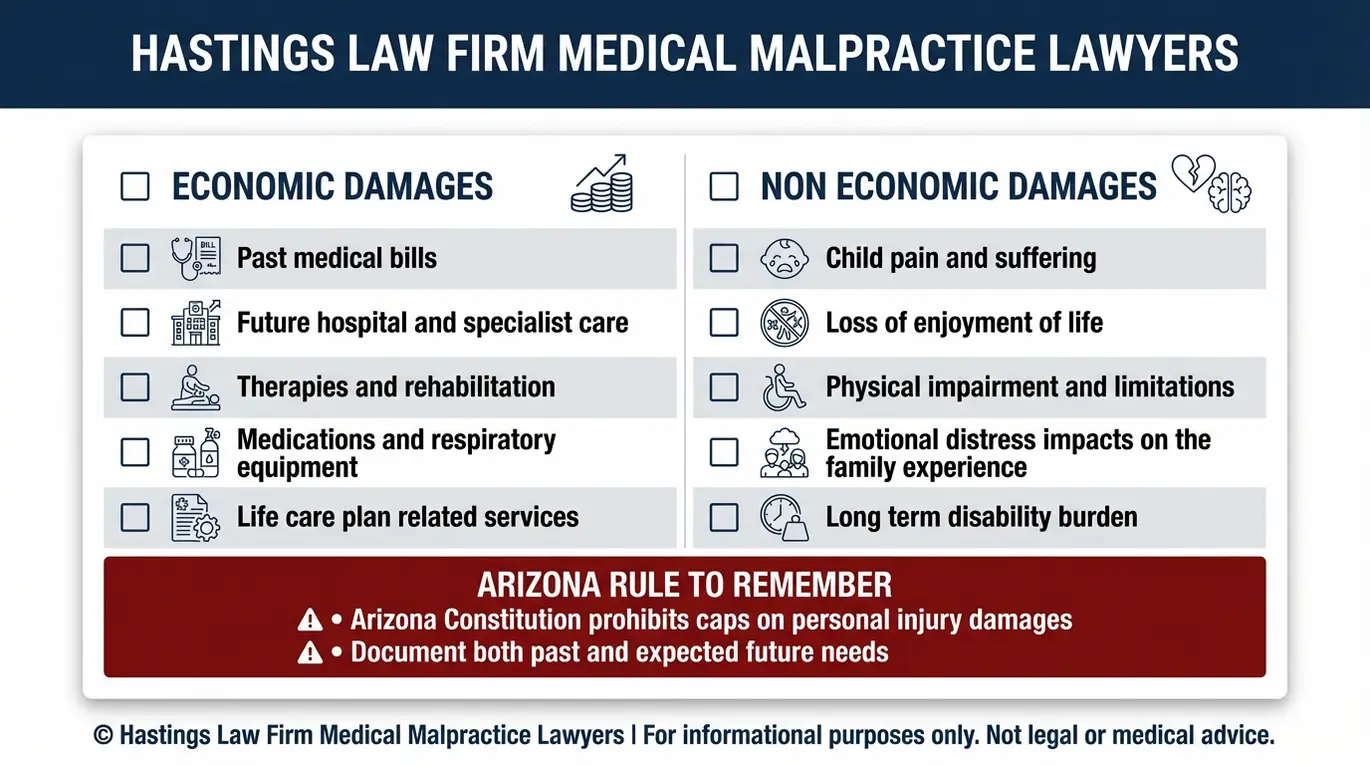
Arizona law allows families to recover economic damages for medical bills and future care, as well as non-economic damages for pain, suffering, and loss of enjoyment of life, with no constitutional cap on the amount. Damages in a legal claim are the financial and personal costs meant to compensate a family for an injury.
This last point deserves emphasis. Unlike many states that have imposed arbitrary limits on what injured patients can receive, the Arizona Constitution directly prohibits such restrictions. Article 2, Section 31 of the Arizona Constitution states that the right to recover damages for injuries shall not be subject to any limitation. For families of children with catastrophic birth injuries, this constitutional protection means a jury can award whatever amount it determines is fair based on the evidence. Families have no constitutional cap on the amount they can recover in these cases.
Economic Damages
Economic damages represent the objective financial losses a family incurs after a birth injury. For a child with MAS-related injuries, these costs can be staggering and lifelong:
- Past and future medical expenses, including surgeries, hospitalizations, and NICU costs
- Ongoing therapy, such as physical, occupational, and speech therapy
- Specialized medical equipment, adaptive devices, and home modifications
- In-home nursing care or attendant care services
- Lost earning capacity if the child’s injuries prevent future employment
- A life care plan developed by medical and economic experts that projects the full cost of care over the child’s lifetime
Because birth injuries often result in disabilities that last a lifetime, calculating these damages requires projecting costs 70 or 80 years into the future. We collaborate with economic experts who account for medical inflation and the replacement costs of adaptive technology. They also look at the changing needs of the child as they grow into adulthood. This ensures that the settlement or verdict obtained today will still be sufficient to provide high-quality care decades from now, protecting the family from financial ruin.
Non-Economic Damages
Non-economic damages address the losses that cannot be reduced to a receipt or a bill. These include physical pain and suffering the child has endured and will continue to endure, as well as mental anguish experienced by both the child and the parents.
Families may also pursue compensation for physical impairment, loss of bodily function, loss of enjoyment of life, and disfigurement. Documenting these damages thoroughly is one of the most important parts of building a strong Arizona birth injury compensation case. Our team works with life care planners, medical experts, and economists to build a complete picture of what your family needs, both now and for decades to come.
Whether you are exploring a potential settlement for MAS or preparing for trial, understanding the full scope of medical malpractice damages available to your family ensures that no category of harm goes unaddressed. Families seeking compensation for a birth injury should know that every element of loss, from the tangible bills to the intangible suffering, has legal value in Arizona.
Hypoxic Ischemic Encephalopathy and Brain Injury Links
Severe MAS can lead to Hypoxic Ischemic Encephalopathy (HIE), a form of brain damage caused by a combination of oxygen deprivation (hypoxia) and restricted blood flow (ischemia) to the brain. HIE may result in permanent neurological conditions, including cerebral palsy, cognitive disabilities, and seizure disorders.
The Connection Between MAS and Brain Injury
The link between lung failure and brain damage is direct. When MAS prevents the lungs from adequately oxygenating the blood, the brain is one of the first organs affected. Even a few minutes of severe oxygen deprivation during or after birth can cause irreversible damage to brain cells. The longer the deprivation lasts, the more widespread the injury becomes.
Timely intervention matters because the window to protect the brain may close if providers fail to recognize worsening respiratory failure or delay escalation to ECMO. They must also initiate cooling therapy (therapeutic hypothermia) within the critical six-hour window after birth.
The timeline of the injury is critical in HIE cases. Since brain cells begin to die within minutes of total oxygen deprivation, the window for effective intervention is incredibly narrow. Our legal team scrutinizes the fetal monitoring strips to pinpoint exactly when the hypoxic insult began and whether the medical team responded with the urgency required to minimize the duration of ischemia. Proving that an earlier intervention would have spared the brain is often the crux of a successful HIE claim.
Understanding Hypoxia vs. Ischemia
Hypoxia and ischemia represent different ways a baby’s brain can lose access to necessary oxygen. In HIE causation analysis, the distinction between hypoxia and ischemia is medically and legally significant:
| Term | Definition | Mechanism of Injury |
|---|---|---|
| Hypoxia | Reduced oxygen levels in the blood and tissues | The lungs cannot absorb enough oxygen due to MAS, leading to dangerously low oxygen levels throughout the body |
| Ischemia | Reduced blood flow to the brain | Low blood pressure or cardiac compromise restricts the delivery of whatever oxygen is available to brain tissue |
Most HIE cases involve both processes occurring together. The combination is more destructive than either one alone because the brain is simultaneously starved of oxygen and deprived of the blood flow needed to remove toxic metabolic waste.
Long-Term Impact
In the context of meconium aspiration syndrome, long-term impact refers to the permanent challenges and health outcomes for the child. Children who develop HIE secondary to MAS may face a range of issues:
- Cerebral palsy affecting motor control and mobility
- Cognitive and intellectual disabilities
- Seizure disorders requiring lifelong medication
- Vision or hearing impairment
- Feeding difficulties and failure to thrive
- Speech and language delays
An HIE lawyer Arizona families trust can help determine whether the brain injury was preventable. A cerebral palsy attorney or brain injury malpractice lawyer examines the full medical timeline to identify where intervention could have broken the chain between lung failure and neurological damage.
Why Choose Hastings Law Firm for Your Arizona Case
Hastings Law Firm offers families a no-fee-unless-we-win guarantee, a specialized medical-legal team that includes nurses and former defense attorneys, and a track record of securing significant verdicts and settlements for victims of medical negligence.
Our founder, Tommy Hastings, is Board Certified in Personal Injury Trial Law by the Texas Board of Legal Specialization and was selected to serve on the Board of the American Board of Trial Advocates (ABOTA) in 2025. He founded this firm to represent families exclusively in medical malpractice litigation.
You Pay Nothing Unless We Recover Compensation
We handle every case on a contingency fee basis. That means there are no upfront costs, no hourly billing, and no financial risk to your family. Our fees and costs are only collected if we obtain a recovery on your behalf. This structure allows families to access experienced legal representation regardless of their financial situation.
A Team Built to Handle Medical Cases
Our firm focuses only on these types of cases because medical malpractice is all we do. Our legal team includes:
- Board-certified trial attorneys with decades of experience taking cases to verdict
- In-house nurse consultants and Board Certified Patient Advocates who review medical records and translate clinical data into evidence
- Former defense counsel who previously represented hospitals and know the strategies the other side will use
- A national network of medical experts across every relevant specialty, including obstetrics, neonatology, and pediatric neurology
This combination of legal skill and medical knowledge is what sets our firm apart. When we review fetal monitoring strips, NICU records, and delivery timelines, we understand what we are looking at. We also know what questions to ask.
Internal medical capability means we do not have to wait weeks for outside experts to tell us if a case has merit. Our nurses can spot the signs of negligence almost immediately. This efficiency allows us to move faster than general practice firms, preserving critical evidence and building a robust theory of liability from day one. We know the medicine as well as the doctors do, and that knowledge is your greatest advantage in the courtroom.
Restoring Trust and Enforcing Accountability
Many families come to us feeling dismissed or ignored by the system that was supposed to protect them. Tommy Hastings built this firm on the belief that holding negligent providers accountable is about enforcing accountability to make healthcare safer.
As a Meconium Aspiration Syndrome Lawyer, we approach every case with that dual purpose: securing your family’s financial future while demanding the accountability that makes healthcare safer. If you are looking for the best malpractice attorney in Phoenix for a birth injury case, we welcome the opportunity to review your situation.
Contact the Arizona Birth Injury Attorneys at Hastings Law Firm Today for Help
Evidence in birth injury cases can be time-sensitive. Fetal monitoring strips, nursing notes, and delivery logs all need to be preserved and analyzed before records are altered, lost, or destroyed. The sooner your family reaches out, the sooner we can begin protecting your child’s case.
We invite you to contact Hastings Law Firm for a free, confidential case evaluation. Our team will review your child’s medical records, explain whether you have a viable claim, and outline the next steps, all at no cost and no obligation.
You focus on your child. We will handle the rest.
Call us today or fill out our online contact form to get started.
Frequently Asked Questions About Meconium Aspiration Syndrome in Arizona


This content was researched and written by the Hastings Law Firm editorial team, which includes attorneys, medical professionals, and experienced researchers. Our writing is informed by internal knowledge and practical experience, and we cross-check critical details against authoritative sources cited throughout. Every piece undergoes human-led fact-checking and legal review. Because legal and medical information can change, if you spot an error, please contact us. Learn more about our content standards and review process on our editorial policy page.

Tommy Hastings, founder of Hastings Law Firm, is a board-certified personal injury trial lawyer dedicated exclusively to healthcare injury cases. Since 2001, he has represented injured patients and families in litigation against major hospital systems, pharmaceutical companies, and negligent healthcare providers nationwide. He has handled numerous high-profile cases that have drawn national media attention and resulted in multi-million dollar recoveries. He draws on that experience in his writing, helping readers understand how these cases work and what options may be available to them.
