


Arizona Maternal Listeria Infection Lawyer
Maternal listeria infection during pregnancy can be devastating when warning signs are missed and treatment is delayed. The infection can progress while a mother feels only mildly ill, and the fetus can be harmed before the severity is recognized. The discussion focuses on how providers should respond to flu like symptoms, dietary risk factors, and suspected listeriosis, including timely testing and antibiotic treatment. It also addresses how families evaluate responsibility and losses after preventable birth injuries. If you or a loved one were harmed or worse due to a missed maternal listeria infection diagnosis in Arizona, contact Hastings Law Firm for a free, confidential case review.

Last Updated: July 27, 2026
Specialized Legal Representation for Listeriosis Birth Injuries in Arizona
When a pregnancy is affected by an undiagnosed infection, the emotional and physical toll can be significant. Listeriosis, a serious bacterial infection, can cause life-altering harm to both mother and baby. In many cases, this damage can be prevented with timely medical care. If a medical provider may have overlooked the warning signs or delayed critical treatment, you may have grounds for a medical malpractice claim.
At Hastings Law Firm, our legal and medical team focuses exclusively on medical negligence cases. Our founder, Tommy Hastings, is a board-certified trial lawyer who has dedicated his career to representing patients affected by medical errors. If you or a loved one experienced a birth injury connected to a missed listeria diagnosis, our team can help. An Arizona maternal listeria infection lawyer will review what happened and explain your legal options at no cost.

Understanding the Severe Risks of Listeriosis for Arizona Mothers
Listeriosis, a serious foodborne illness caused by the bacterium Listeria monocytogenes, carries catastrophic risks during pregnancy, including miscarriage, stillbirth, premature birth, and severe neurological damage in newborns. For families facing these outcomes, an Arizona maternal listeria infection lawyer can help determine whether a medical provider failed to act in time.
Pregnant women are roughly ten times more likely to develop listeriosis than the general population, according to the CDC’s guidance on people at increased risk for Listeria infection. This biological vulnerability exists because pregnancy naturally suppresses certain immune responses, making it easier for the bacteria to take hold.
*Listeria monocytogenes* is dangerous because it can evade the immune system through intracellular spread. This process allows the bacteria to move directly from cell to cell without exposing themselves to immune defenses. Using specialized proteins, Listeria can cross the placental barrier, a process known as transplacental transmission, and directly infect the fetus. Early medical detection and treatment are essential. Without prompt intervention, the infection can cause irreversible fetal harm before the mother realizes the severity of her illness.
Listeria is a resilient bacterium that can survive and even grow in cold environments. Food contamination has been traced to sources that many people would not suspect, including:
- Unpasteurized soft cheeses (such as queso fresco and brie)
- Pre-packaged deli meats and hot dogs not reheated to safe temperatures
- Ready-to-eat refrigerated foods, including smoked seafood
- Pre-washed bagged salads and fresh produce
- Prepared meal products, as highlighted in the U.S. Food and Drug Administration’s outbreak investigation of Listeria monocytogenes in prepared pasta meals
In Arizona, outbreaks have been linked to unpasteurized dairy products and contaminated produce. We can investigate whether providers in your case adequately assessed dietary risk factors and responded appropriately.

Recognizing Symptoms and the Duty of Doctors to Screen
When a pregnant patient presents with flu-like symptoms, medical providers have a responsibility to consider listeriosis as a potential cause. We investigate whether a failure to test for this infection indicates medical negligence or misdiagnosis.
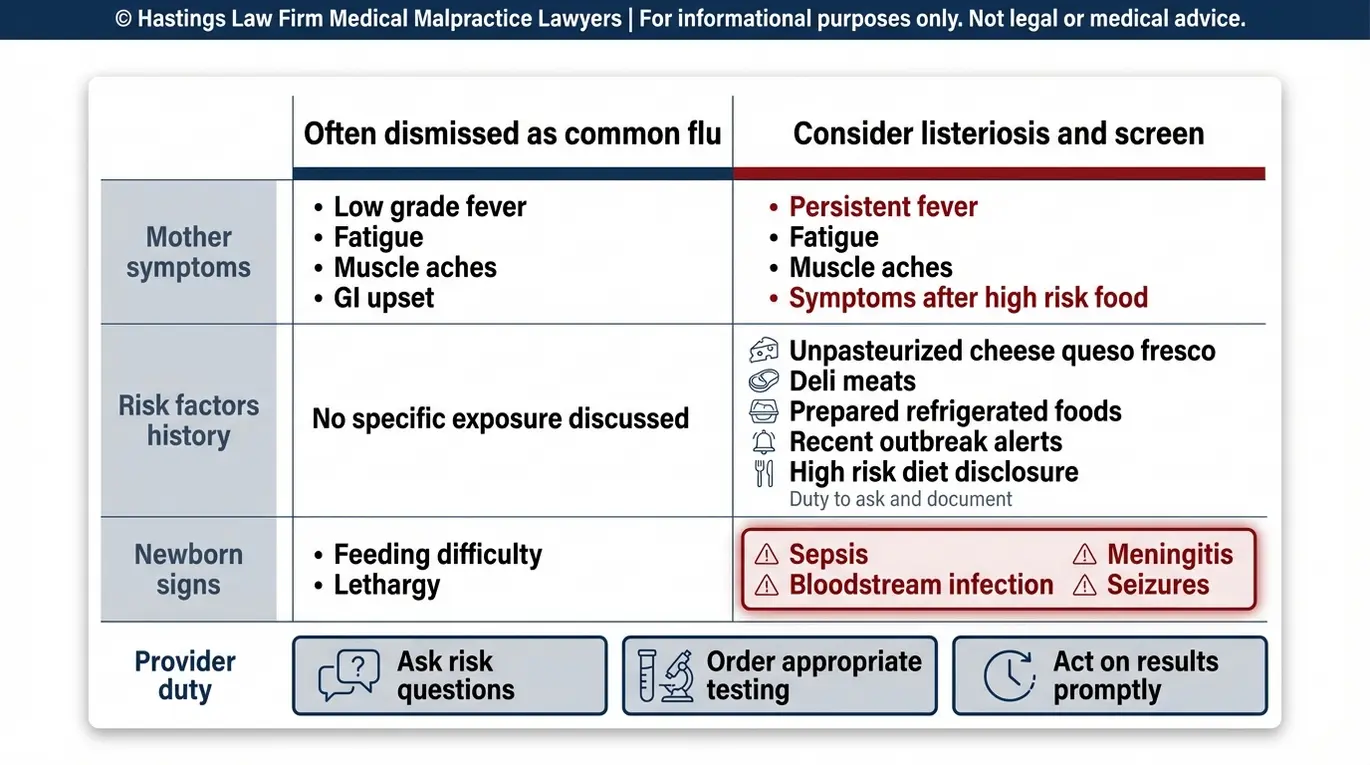
The challenge with pregnancy-associated listeriosis, a listeria infection occurring during pregnancy, is that its early symptoms closely mimic a common cold or flu. A mother may experience fever, muscle aches, fatigue, and mild gastrointestinal discomfort. We examine cases where these complaints may be mistaken for routine pregnancy discomfort, causing critical time to be lost before a more serious diagnosis is considered.
The CDC’s overview of symptoms of Listeria infection explains that pregnant women may appear only mildly ill while the bacteria is already threatening the fetus. A clinical comparison illustrates why suspicion matters:
| Feature | Common Pregnancy Flu | Possible Listeriosis |
|---|---|---|
| Fever | Low-grade, resolves quickly | Persistent or recurring |
| Muscle aches | General, mild | Can be severe and progressive |
| GI symptoms | Occasional nausea | Diarrhea, nausea, or cramping preceding fever |
| Onset timeline | Rapid (1–3 days) | Gradual (1–4 weeks after exposure) |
| Fetal impact | Typically none | Preterm labor, decreased movement, stillbirth |
When the infection reaches a newborn, the consequences can be severe. Infants born with listeriosis may develop sepsis, a dangerous bloodstream infection, or meningitis, which is inflammation of the membranes surrounding the brain. Families often contact us after such a diagnosis reveals that earlier care was missed.
We focus on cultural dietary risk factors common in the local community. Unpasteurized dairy products, such as queso fresco and other soft cheeses common in traditional Mexican cuisine, are well-documented sources of Listeria contamination. In a state with a large Hispanic population, physicians have a duty to screen for these dietary exposures and counsel patients about food safety during pregnancy. We investigate whether a provider met their duty to screen for these factors when assessing a potential malpractice claim.
The Hastings Law Firm Difference
Results matter, but what truly sets us apart is how we achieve them. Every verdict, every settlement, and every Arizona courtroom victory comes from one guiding promise: To treat each client’s fight for justice as if it were our own.
This balance of skill, experience, and empathy reflects our core philosophy that justice should not only compensate the injured, but also make health care safer nationwide.

Standard of Care Regarding Diagnosis and Antibiotic Treatment
The standard of care, the accepted level of treatment a reasonably competent physician would provide under similar circumstances, requires immediate blood cultures and the administration of IV antibiotics when listeriosis is suspected in a pregnant patient. An experienced Arizona maternal listeria infection lawyer will examine every step of the diagnostic and treatment timeline for errors.
The standard of care typically refers to the degree of care and skill that a physician of the same medical specialty would use under similar circumstances. The proper medical protocol generally involves the following steps:
- Recognize the clinical picture: A pregnant woman presenting with unexplained fever, especially combined with GI symptoms or known dietary risk factors, should prompt suspicion for listeriosis.
- Order blood cultures immediately: Listeria is diagnosed through blood culture testing, a laboratory process where a blood sample is incubated to detect bacterial growth. Routine urine tests and standard bloodwork alone will not identify this infection.
- Begin IV antibiotics without waiting for results: Because blood cultures can take 24 to 48 hours, the standard typically calls for starting high-dose Ampicillin, an intravenous antibiotic effective against Listeria, as soon as the infection is clinically suspected. We check if therapy began promptly, as noted in PubMed Central’s review on Listeria infection in pregnancy, because prompt antibiotic therapy can significantly reduce the risk of fetal transmission and death.
- Monitor fetal status continuously: Fetal heart rate monitoring and assessment of fetal movement should accompany treatment to detect early signs of distress.
- Coordinate neonatal care if delivery occurs: If the baby is delivered during or after the infection, neonatal teams should be prepared for potential sepsis, meningitis, or respiratory complications.
Medical negligence in this context can take several forms. We evaluate whether a provider dismissed the mother’s concerns as normal pregnancy symptoms. Each of these failures represents a potential deviation from the standard of care.
We review the medical records, lab orders, nursing notes, and clinical timelines to determine whether a delayed diagnosis occurred. Our team includes in-house nurse consultants and former defense attorneys who previously worked for the systems we now challenge. This background allows us to identify charting inconsistencies and identify whether clinical protocols were followed.

Establishing Liability and Damages for Listeria Birth Injuries
Families may recover compensation for medical costs, pain and suffering, and wrongful death if an Arizona maternal listeria infection lawyer can demonstrate that a provider’s failure to diagnose the infection directly caused the infant’s injury or death.
We help you distinguish the legal claims involved. An Arizona maternal listeria infection lawyer clarifies whether a product liability case targets the food manufacturer or if the medical malpractice claim is against a provider who failed to detect the infection. Our firm concentrates on medical negligence, examining whether the provider met the standard of care during the critical treatment window.
We identify several types of recoverable damages that we will quantify, including:
- Past and future medical expenses, including NICU stays, surgeries, and rehabilitation
- Long-term costs for children with permanent neurologic injury such as cerebral palsy
- Pain and suffering endured by both the mother and child
- Loss of earning capacity for a child with lasting disabilities
- Wrongful death claims in cases involving stillbirth or neonatal death
We work with medical experts and life care planners to calculate the full scope of these losses. This ensures that families are not left covering the long-term financial burden of preventable harm.
Contact the Arizona Birth Injury Attorneys at Hastings Law Firm Today for Help
Listeria birth injuries are often preventable. When a medical team fails to follow protocols or order appropriate tests, the consequences for families can be life-altering. You deserve to know what happened and whether your medical team met the standard of care.
Hastings Law Firm has dedicated its practice to medical malpractice for two decades, focusing exclusively on representing patients affected by medical negligence. Our team of attorneys, nurse consultants, and medical experts prepares every case as if it will go to trial. We understand how hospitals and their insurers respond to these claims, and we build our cases accordingly.
If you or a loved one experienced a pregnancy loss or birth injury connected to an undiagnosed listeria infection, we are ready to listen. Consultations are free and confidential. We work on a contingency fee basis, meaning you pay no attorney fees unless we recover compensation for you.
Contact us today. Let us help you find the answers you deserve.
Frequently Asked Questions About Maternal Listeria Infection in Arizona


This content was researched and written by the Hastings Law Firm editorial team, which includes attorneys, medical professionals, and experienced researchers. Our writing is informed by internal knowledge and practical experience, and we cross-check critical details against authoritative sources cited throughout. Every piece undergoes human-led fact-checking and legal review. Because legal and medical information can change, if you spot an error, please contact us. Learn more about our content standards and review process on our editorial policy page.

Tommy Hastings, founder of Hastings Law Firm, is a board-certified personal injury trial lawyer dedicated exclusively to healthcare injury cases. Since 2001, he has represented injured patients and families in litigation against major hospital systems, pharmaceutical companies, and negligent healthcare providers nationwide. He has handled numerous high-profile cases that have drawn national media attention and resulted in multi-million dollar recoveries. He draws on that experience in his writing, helping readers understand how these cases work and what options may be available to them.
