


Arizona Maternal Cardiac Arrest Lawyer
Maternal cardiac arrest and heart failure during childbirth can follow missed warning signs that were mistaken for normal pregnancy discomforts. When symptoms are not taken seriously, delays in testing and treatment can narrow the chance for recovery and lead to catastrophic injury or fatal outcomes. The topic often involves peripartum cardiomyopathy, where the heart weakens around delivery, and the timing of an echocardiogram can be central to what happens next. If you lost a loved one due to maternal cardiac arrest in Arizona, contact Hastings Law Firm for a free, confidential case review.

Last Updated: July 27, 2026
Compassionate Arizona Medical Attorneys for Heart Failure During Childbirth Claims
Losing a loved one during or after childbirth, or watching a mother fight for her life because of a preventable cardiac event, is a devastating experience. Maternal cardiac arrest is a sudden loss of heart function during pregnancy or the postpartum period. Heart failure occurs when the heart can no longer pump blood effectively. These conditions can often be prevented or treated when medical teams respond to warning signs promptly and appropriately.
If you or a loved one are facing a tragedy caused by medical negligence, you are not alone, and you do not have to face the healthcare system by yourself. As a dedicated Arizona Maternal Cardiac Arrest Lawyer, Hastings Law Firm focuses exclusively on medical malpractice and has the medical and legal resources to investigate what happened. Our firm was founded by board-certified trial attorney Tommy Hastings to help families handle the details of these complex cases and explain their legal options.

Understanding Maternal Cardiac Arrest and Peripartum Cardiomyopathy (PPCM)
Maternal cardiac arrest is often precipitated by peripartum cardiomyopathy (PPCM), a form of heart failure where the heart muscle weakens during the last month of pregnancy or within months following delivery, reducing its ability to pump blood effectively. This heart failure condition can be life-threatening if it is not caught early.
One of the most dangerous aspects of PPCM is how closely its symptoms resemble normal pregnancy discomforts. Shortness of breath, swelling (edema), fatigue, and a faster heartbeat (tachycardia) are common in healthy pregnancies. This diagnostic overlap means providers may overlook these same symptoms when they signal something far more serious. According to the National Center for Biotechnology Information’s clinical overview of Peripartum Cardiomyopathy, this places a heightened responsibility on providers to distinguish between benign discomfort and true cardiac compromise.
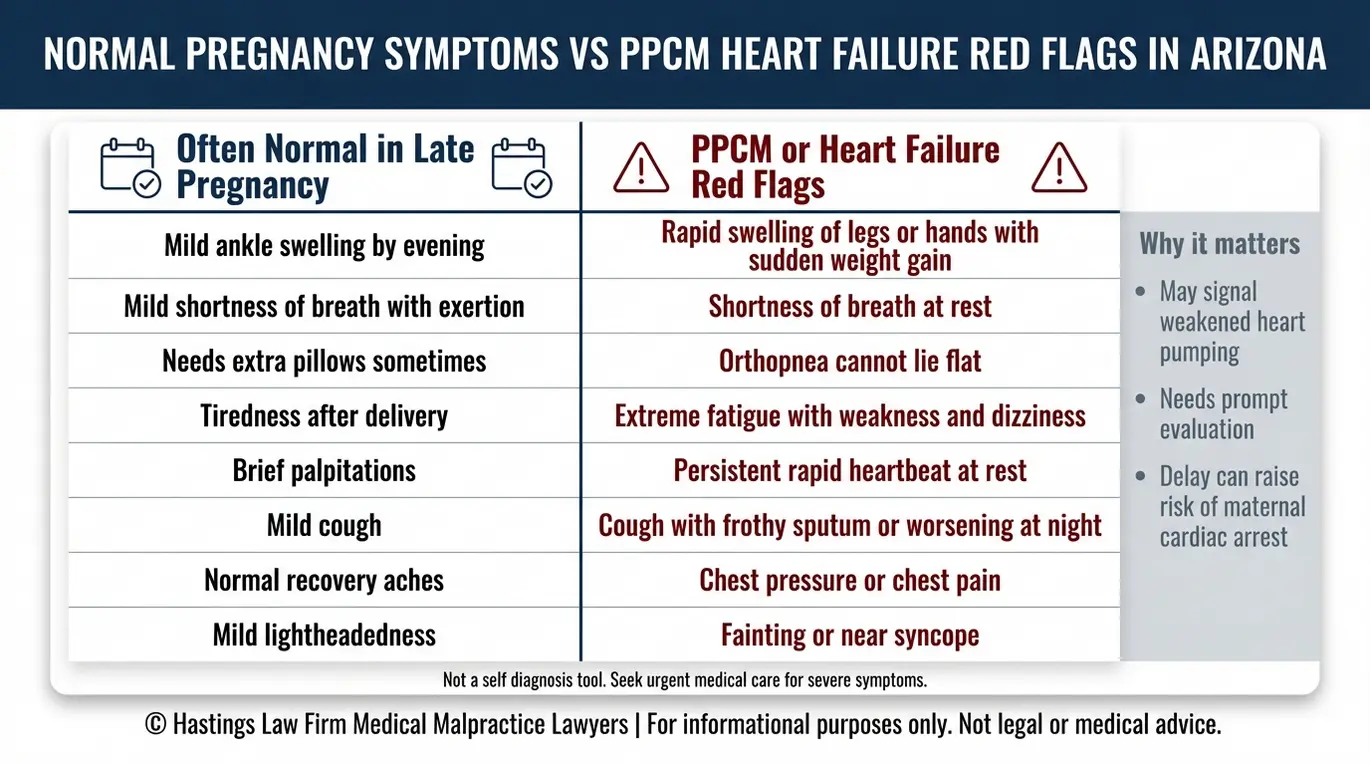
The difference between a normal pregnancy symptom and a red flag often comes down to severity, timing, and context. The table below illustrates some of those distinctions:
| Symptom | Normal Pregnancy | Heart Failure Red Flag |
|---|---|---|
| Swelling (Edema) | Mild ankle/foot swelling, especially late in day | Rapid weight gain, swelling in face and hands that worsens quickly |
| Shortness of Breath | Mild breathlessness with physical exertion | Breathlessness at rest or orthopnea, the inability to breathe comfortably while lying flat |
| Heart Rate | Slight increase during activity | Resting tachycardia (rapid heart rate even while sitting still) |
| Fatigue | General tiredness that improves with rest | Profound exhaustion unrelieved by rest |
| Palpitations | Occasional fluttering during exertion | Persistent or worsening palpitations at rest |
When a provider dismisses these red flags, the window for effective intervention narrows. A maternal heart failure lawyer can investigate whether the medical team failed to recognize these distinctions and act accordingly.
Key Concept: The Role of Ejection Fraction (LVEF) in Diagnosis
The primary diagnostic tool for confirming PPCM, a pregnancy-related heart condition, is an echocardiogram. This is an ultrasound of the heart that shows how well it is pumping. The key measurement from this test is the left ventricular ejection fraction (LVEF), a percentage that reflects how much blood the heart’s main pumping chamber pushes out with each beat.
A healthy LVEF is typically 55% or higher. In PPCM, the LVEF often drops below 45%, and in severe cases it falls well below that threshold. This single metric can confirm a diagnosis, guide the diagnostic pathway, and establish the severity of the condition. When an Arizona cardiac arrest attorney reviews a maternal cardiac case, the timing of when an echocardiogram was or was not ordered is often a central issue. A delay in obtaining this test can mean a delay in diagnosis, and that delay can be the difference between recovery and catastrophic injury.
Common Medical Errors Leading to Heart Failure During Childbirth
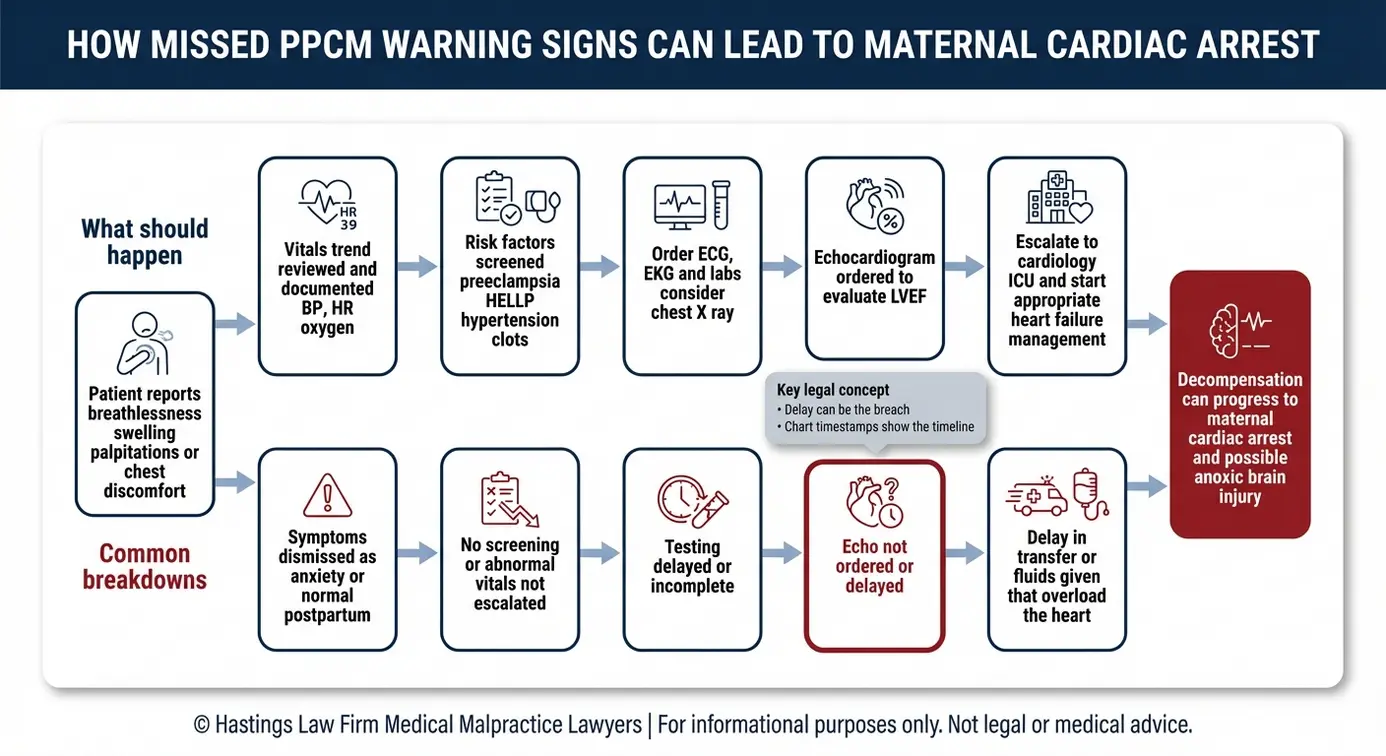
Negligence in maternal cardiac cases often involves the failure to screen for risk factors like preeclampsia, ignoring patient complaints of chest pain or breathlessness, or failing to order a timely echocardiogram to evaluate heart function. Issues like misdiagnosis or failure to diagnose cardiac conditions are not just unfortunate oversights. They can represent a departure from the standard of care, which is the level of treatment a reasonably competent provider would deliver under similar circumstances.
As documented in a clinical review published by PubMed Central on maternal cardiac arrest, many cardiac events during or after childbirth involve identifiable warning signs that preceded the emergency. The question in a malpractice case is whether the medical team recognized and responded to those signs appropriately. This section outlines how medical mistakes can lead to maternal heart failure.
Common errors we investigate as a lawyer for maternal cardiac arrest include:
- Failure to monitor vital signs for hypertensive disorders. Blood pressure spikes can indicate preeclampsia, a dangerous pregnancy complication involving hypertension and organ damage, or HELLP syndrome, a severe variant that affects the liver and blood clotting. Both conditions can trigger cardiac events if unmanaged.
- Dismissing symptoms as anxiety or normal recovery. Complaints of chest tightness, racing heartbeat, or worsening breathlessness may be attributed to postpartum stress rather than evaluated as potential cardiac distress.
- Delayed diagnostic testing. Failing to order an echocardiogram, EKG, or chest X-ray when symptoms suggest cardiac involvement can allow a treatable condition to escalate.
- Medication and fluid management errors. Improper administration of IV fluids can overload an already weakened heart, pushing a patient toward cardiac arrest.
- Delayed emergency intervention. When maternal cardiac distress becomes apparent, delays in performing an emergency C-section or activating a rapid response team can result in anoxic brain injury, which is brain damage caused by oxygen deprivation.
An Arizona birth injury attorney evaluates medical records, clinical timelines, and provider documentation to determine whether these types of failures occurred and whether they caused the resulting harm.
The Hastings Law Firm Difference
Results matter, but what truly sets us apart is how we achieve them. Every verdict, every settlement, and every Arizona courtroom victory comes from one guiding promise: To treat each client’s fight for justice as if it were our own.
This balance of skill, experience, and empathy reflects our core philosophy that justice should not only compensate the injured, but also make health care safer nationwide.

Liability: Who Is Responsible for Maternal Heart Failure?
Liability in maternal cardiac arrest cases may extend beyond the OBGYN to include hospital nurses for failure to monitor, emergency room physicians for misdiagnosis after discharge, or the hospital itself for inadequate staffing or protocols. Liability refers to who is legally responsible for the harm caused by medical mistakes. Identifying every party responsible for hospital negligence or obstetrical malpractice is essential to building a strong case.
The OBGYN holds primary responsibility for prenatal and peripartum care, including recognizing risk factors. But they are not the only provider in the chain of care.
Nursing staff have a duty to observe, document, and report changes in vital signs. When a nurse notices deteriorating vitals but fails to escalate the concern through the chain of command, that failure can constitute independent negligence. Home health or visiting nurses who conduct postpartum check-ins also carry a responsibility to identify signs of postpartum negligence or distress and ensure the patient receives emergency evaluation.
Hospital systems can bear liability when systemic failures contribute to a patient’s injury. Examples include the absence of functioning emergency equipment, failure to implement emergency response protocols like those outlined in the USF Health Obstetric Hemorrhage Initiative 2.0 Toolbox, or delays in calling a Code Blue. A Code Blue is the hospital-wide emergency alert activated when a patient experiences cardiac or respiratory arrest.
As a Phoenix maternal malpractice lawyer, Hastings Law Firm has former defense attorneys on staff who understand how hospitals and their insurers assign and deflect responsibility. That insight allows us to anticipate defense strategies and hold every accountable party to the same standard. Under Arizona Revised Statutes § 12-542, families generally have two years to file a claim for injury or wrongful death. Acting promptly helps preserve evidence and protect your legal rights.

Securing Compensation for Maternal Injuries in Arizona
Families affected by maternal cardiac arrest can seek recoverable damages for medical bills, lost wages, and lost earning capacity, as well as non-economic damages for pain, suffering, and loss of consortium in wrongful death cases. These damages are meant to address the financial and emotional impact of a birth injury. The goal of compensation is to address both the immediate financial crisis and the future financial security of the family.
Immediate costs often include ICU stays, emergency surgery, cardiac rehabilitation, and ongoing specialist care. For mothers who survive but sustain an anoxic brain injury, long-term expenses can be staggering, encompassing around-the-clock nursing care, physical therapy, cognitive rehabilitation, and adaptive equipment. A life care plan prepared by medical experts can project these future needs to ensure a settlement or verdict accounts for every anticipated cost.
When a mother does not survive, the family may pursue a wrongful death claim. These cases seek compensation for funeral expenses, the loss of the mother’s future income, and the profound emotional loss experienced by the surviving spouse and children.
At Hastings Law Firm, our trial-ready approach means we prepare every maternal injury case as if it will go before a jury. This level of preparation, including medical reconstruction, expert analysis, and detailed damage modeling, signals to defense teams and insurers that we will not accept less than fair value. As an Arizona medical negligence lawyer, we have seen how thorough preparation directly impacts the compensation families receive.
Contact the Arizona Birth Injury Attorneys at Hastings Law Firm Today for Help
No amount of money can undo what your family has been through. Our firm helps families handle the legal process so they can focus on recovery. Compensation can provide the financial security needed to care for a surviving mother’s long-term medical needs or to protect the future of children who have lost theirs. Equally important, holding negligent providers accountable can help prevent the same failure from happening to another family.
Hastings Law Firm is built for cases like these. Our team of attorneys, nurse consultants, and medical experts focuses exclusively on medical malpractice, and we bring the insider knowledge and trial preparation that complex maternal cardiac cases demand. As an Arizona maternal malpractice lawyer, we are here to listen, investigate, and stand beside you.
We work on a contingency fee basis. This means you pay no attorney fees or costs unless we secure a recovery for you. Contact us today for a free, confidential case evaluation. Let us help you find the answers you deserve.
Frequently Asked Questions About Maternal Cardiac Arrest in Arizona


This content was researched and written by the Hastings Law Firm editorial team, which includes attorneys, medical professionals, and experienced researchers. Our writing is informed by internal knowledge and practical experience, and we cross-check critical details against authoritative sources cited throughout. Every piece undergoes human-led fact-checking and legal review. Because legal and medical information can change, if you spot an error, please contact us. Learn more about our content standards and review process on our editorial policy page.

Tommy Hastings, founder of Hastings Law Firm, is a board-certified personal injury trial lawyer dedicated exclusively to healthcare injury cases. Since 2001, he has represented injured patients and families in litigation against major hospital systems, pharmaceutical companies, and negligent healthcare providers nationwide. He has handled numerous high-profile cases that have drawn national media attention and resulted in multi-million dollar recoveries. He draws on that experience in his writing, helping readers understand how these cases work and what options may be available to them.
