


Arizona Maternal Anesthesia Complications Lawyer
Written by: Hastings Law Firm | Reviewed by: Tommy Hastings | Updated: July 27, 2026
Anesthesia mistakes during labor and delivery can leave a mother and baby facing serious complications, lasting pain, and emotional trauma, especially when monitoring is missed or risks are not clearly explained. Epidural and spinal anesthesia require careful placement, accurate dosing, sterile technique, and close attention to vital signs and fetal heart rate. When providers fail to meet these responsibilities, the results can include nerve injury, infection, severe headaches, oxygen deprivation, or worse. If you or a loved one were harmed or worse due to maternal anesthesia complications in Arizona, contact Hastings Law Firm for a free, confidential case review.

Compassionate Arizona Medical Attorneys for Epidural Malpractice Claims
What You Should Know About Epidural Malpractice During Delivery Claims in Arizona:
- Long term harm can follow childbirth anesthesia errors when needle placement, dosing, or monitoring is done incorrectly.
- Severe outcomes can occur when maternal blood pressure and fetal heart rate changes are not recognized and treated promptly.
- Recovery options can expand when hospital responsibility applies even if an anesthesia provider is labeled an independent contractor.
- Accountability can involve multiple parties when anesthesiologists, nurse anesthetists, obstetricians, and facilities share duties.
- A lack of meaningful informed consent can matter when key risks and alternatives were not explained before an epidural or spinal injection.
- Preventable injury risk can increase when Pitocin is used with an epidural and fetal distress signs are not closely monitored.
- Psychological trauma can be lasting when anesthesia awareness occurs during a cesarean section under general anesthesia.
- Options can be lost if filing time limits are missed, including situations where an injury is discovered later or involves a minor.
- Case clarity can depend on anesthesia logs and fetal monitoring strips when sedation or labor intensity limits memory of events.

A Healthcare Focused Law Firm
When something goes wrong with anesthesia during childbirth, the experience can leave lasting physical pain and deep emotional uncertainty. You may be dealing with unexplained nerve damage, debilitating headaches, or complications that no one on your medical team adequately warned you about. These are not minor inconveniences. They can change the course of your recovery and your family’s daily life.
At Hastings Law Firm, we focus exclusively on medical malpractice cases, and our team includes in-house nurse consultants and former defense attorneys who understand how hospitals and anesthesia providers operate from the inside. If you or a loved one suffered harm from an anesthesia error during labor or delivery in Arizona, an experienced Arizona maternal anesthesia complications lawyer at our firm can review your records, explain what may have gone wrong, and help you understand your legal options.
Reach out for a free, confidential case evaluation. There is no fee unless we recover compensation for you.
Common Maternal Anesthesia Errors During Labor and Delivery
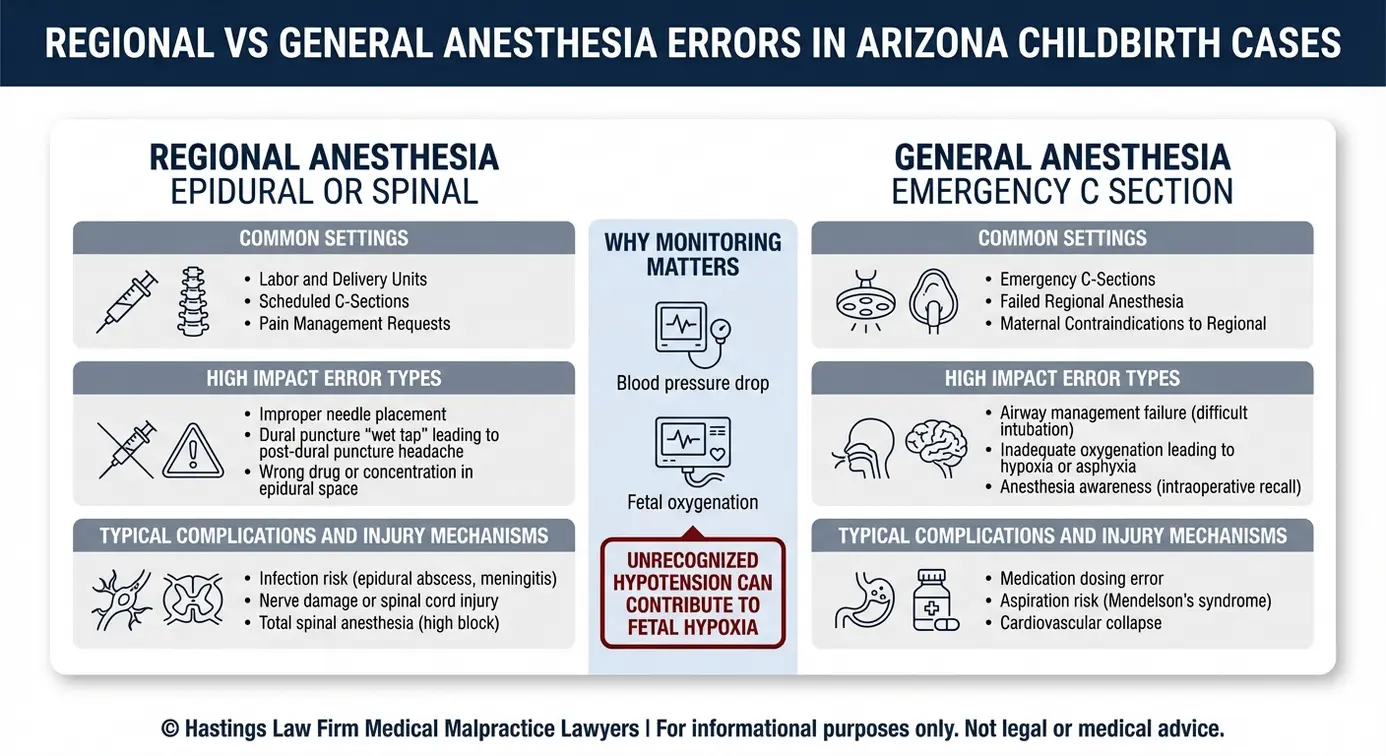
Anesthesia errors during labor often involve improper needle placement, dosage miscalculations, or failure to monitor vital signs, and these mistakes can lead to nerve damage, spinal hematomas, or even maternal cardiac arrest. Understanding where errors commonly occur is the first step toward determining whether negligence may have caused your injury.
Most women in labor receive some form of regional anesthesia, either an epidural or a spinal injection. Epidural anesthesia, a method of delivering pain relief through a catheter placed in the epidural space of the lower back, is the most common approach for vaginal deliveries. Spinal injections deliver medication directly into the cerebrospinal fluid for faster-acting relief and are frequently used during cesarean sections. As outlined in a Cochrane review published through PubMed Central on epidural versus nonepidural analgesia in labour, epidurals are widely effective but carry specific risks that providers must carefully manage. General anesthesia, which renders the mother fully unconscious, is typically reserved for emergency C-sections when regional methods are not feasible or have failed.
Errors can occur at multiple points across these approaches. Common complications from anesthesia negligence during labor include:
- Improper needle placement causing spinal cord injury, nerve root compression, or epidural hematoma
- Wet tap (unintentional dural puncture), where the needle punctures the membrane surrounding the spinal cord, resulting in severe post-dural puncture headaches that can persist for weeks or longer
- Medication errors, such as injecting the wrong drug or an incorrect concentration into the epidural space
- Infection at the injection site, including epidural abscess formation from inadequate sterile technique
- Failure to monitor maternal blood pressure, which can cause dangerously low blood pressure and reduce oxygen delivery to the baby
Research published through PubMed Central on post-dural puncture headache incidence shows that dural puncture during spinal anesthesia remains a recognized complication, and the failure to properly manage it can indicate a departure from accepted medical practice.
The Danger of Pitocin and Epidural Interaction
One of the less discussed risks involves the concurrent use of Pitocin, a synthetic form of oxytocin used to induce labor or accelerate labor progression, alongside epidural anesthesia. Pitocin intensifies contractions, which can affect fetal oxygenation and stress the uterine wall. At the same time, an epidural can mask the pain signals a mother would normally feel if contractions become dangerously strong or if uterine rupture begins to develop.
This combination creates a monitoring challenge. When a mother cannot feel the severity of her contractions, the medical team must rely closely on electronic fetal monitoring strips and maternal vital signs. If the anesthesia provider or nursing team fails to watch for signs of fetal hypoxia, a condition where the baby is deprived of adequate oxygen, the delay in recognizing distress can result in serious and preventable harm. A maternal anesthesia complications attorney can examine the monitoring records to determine whether these warning signs were missed.
Liability for Epidural and Spinal Block Malpractice in Arizona
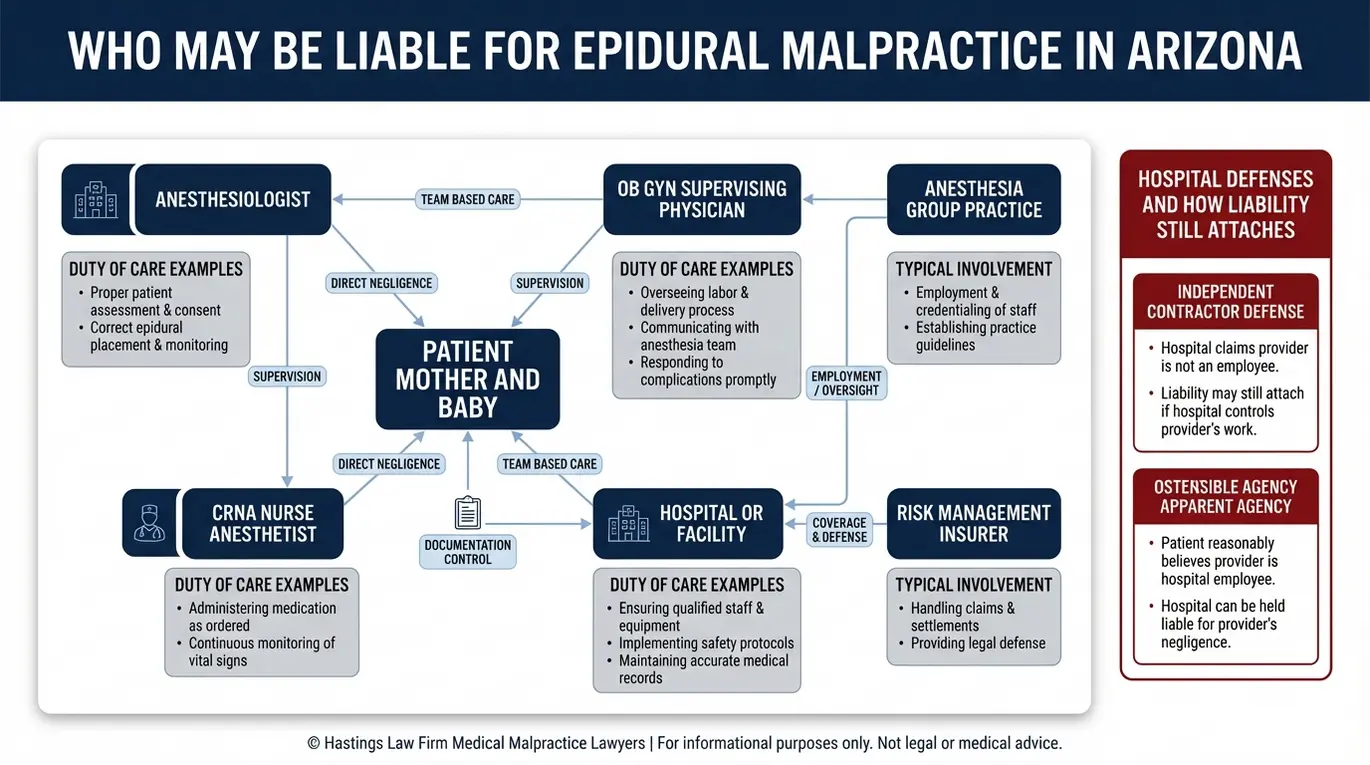
Liability for anesthesia errors may extend beyond the individual anesthesiologist to include nurse anesthetists, the supervising obstetrician, or the hospital itself under specific agency theories. When families contact an Arizona maternal anesthesia complications lawyer, one of the first questions we investigate is: who owed a duty of care and is legally responsible?
In many hospitals, anesthesia is administered not by a physician anesthesiologist but by a Certified Registered Nurse Anesthetist (CRNA), an advanced practice nurse licensed to provide anesthesia under varying levels of physician supervision. When a CRNA causes harm, the question of who bears liability depends on the supervisory relationship and how the anesthesia team is structured within that facility.
Hospitals frequently attempt to shield themselves by classifying anesthesia providers as independent contractors rather than employees. Under this defense, the hospital argues it should not be held liable because it did not directly control the provider’s clinical decisions. However, Arizona law recognizes a doctrine that can overcome this barrier.
Key parties that may share liability in an anesthesia negligence case include:
- The anesthesiologist who directly performed the procedure or supervised the CRNA
- The CRNA who administered the epidural or spinal block, also known as spinal anesthesia, a single injection of medication into the spinal fluid for rapid pain relief
- The hospital or birth center under theories of direct negligence or agency liability
- The supervising obstetrician if monitoring duties were shared or if labor management decisions contributed to the injury
Ostensible Agency and Hospital Vicarious Liability
Arizona courts allow patients to hold hospitals liable for the actions of independent contractors through a legal theory called ostensible agency, sometimes referred to as apparent authority. The core question is whether the patient reasonably believed the anesthesia provider was a hospital employee.
If the hospital did not clearly disclose the provider’s independent contractor status before your procedure, it may still be held vicariously liable for any negligence that occurred. Most laboring mothers do not choose their anesthesiologist and have no reason to believe that provider works for anyone other than the hospital. Our team evaluates admission paperwork, consent forms, and staffing records to determine whether a viable vicarious liability claim exists. A lawyer for epidural malpractice will build this evidence carefully, because hospital liability can significantly affect the scope of a potential recovery.
The Hastings Law Firm Difference
Results matter, but what truly sets us apart is how we achieve them. Every verdict, every settlement, and every Arizona courtroom victory comes from one guiding promise: To treat each client’s fight for justice as if it were our own.
This balance of skill, experience, and empathy reflects our core philosophy that justice should not only compensate the injured, but also make healthcare safer nationwide.

The Standard of Care for Obstetric Anesthesiologists
The standard of care requires anesthesia providers to obtain informed consent, continuously monitor maternal vitals and fetal heart rates, and respond immediately to signs of distress or complications such as high spinal blocks. In the context of an Arizona delivery room, this standard reflects the level of skill, attention, and treatment that a reasonably competent anesthesia provider would deliver under similar circumstances.
Before any epidural or spinal injection, the provider has a duty to discuss the risks, benefits, and alternatives with the mother. Informed consent means the patient was given enough information to make a meaningful decision about the procedure. If the anesthesiologist failed to explain risks like nerve damage, post-dural puncture headache, or the possibility of a high spinal block, that failure may itself constitute a breach of duty. A high spinal block is a condition where anesthesia rises too high and can suppress breathing or cause cardiac instability.
Continuous monitoring during and after administration is equally required. Blood pressure, oxygen saturation, and fetal heart rate must be tracked closely via monitoring strips. A sudden drop in maternal blood pressure can rapidly reduce oxygen delivery to the baby, leading to hypoxia. When providers fail to recognize and treat these changes promptly, the consequences can be severe for both mother and child.
There is also the issue of anesthesia awareness, sometimes called intraoperative awareness, where a patient regains consciousness during a cesarean section performed under general anesthesia. Though rare, this experience can cause lasting psychological trauma, including post-traumatic stress disorder. An obstetric anesthesia malpractice lawyer can evaluate whether proper anesthetic depth monitoring was used and whether the provider met the expected standard during the procedure.
Immediate Steps After a Maternal Anesthesia Injury
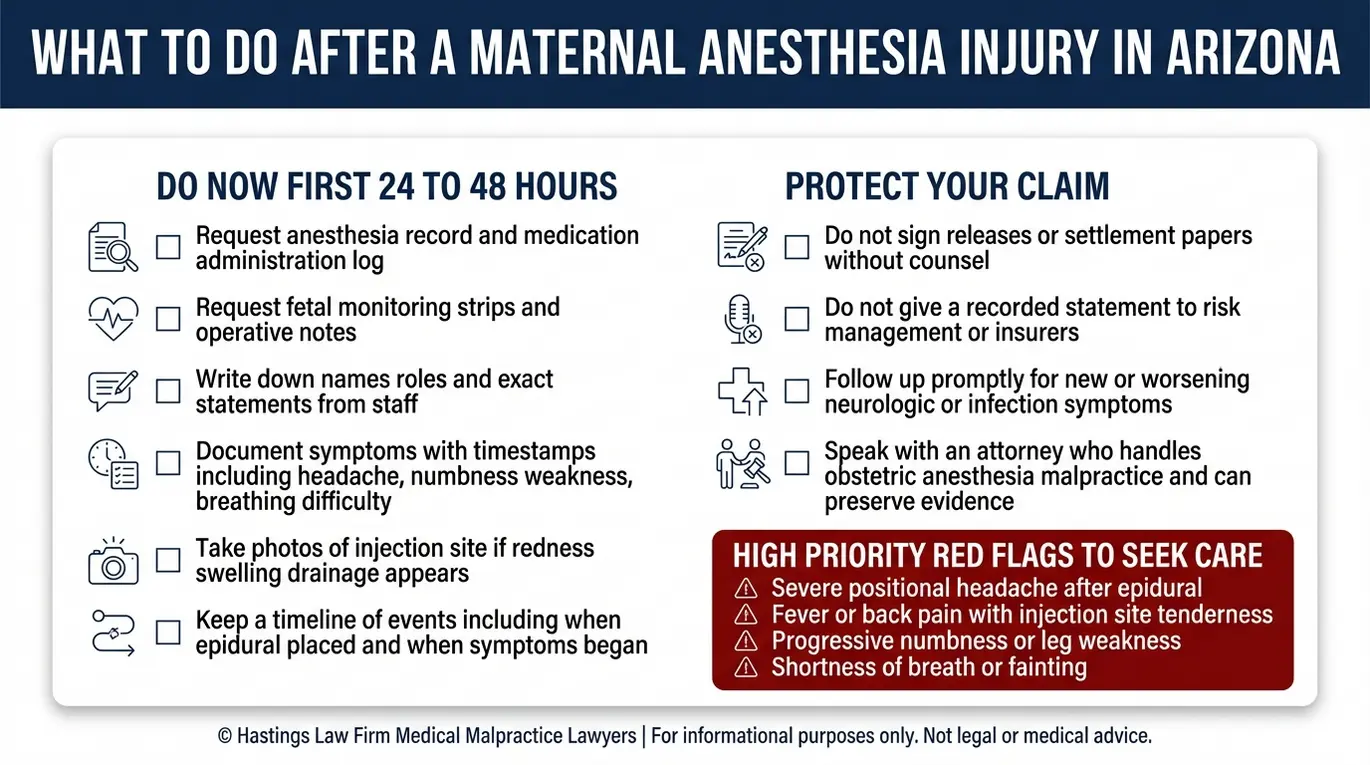
Victims should immediately request a copy of their medical records including anesthesia logs, document all symptoms and conversations with staff, and consult with a specialized attorney before speaking to hospital risk management. The following actions can help preserve critical evidence before it is altered, lost, or restricted.
- Request your anesthesia record immediately. These anesthesia logs, also called the anesthesia record, are detailed documents that track every medication administered, dosage amounts, timing, and your vital signs throughout the procedure. Ask for a copy before discharge if possible.
- Request your electronic fetal monitoring (EFM) strips. These continuous tracings of the baby’s heart rate and your contraction patterns can show whether signs of fetal distress were present and whether the medical team responded appropriately.
- Document everything you can remember. Write down the names of every provider involved, specific comments made by staff during or after the procedure, and a timeline of your symptoms. Even brief notes made in the first few days can be valuable later.
- Do not sign anything from the hospital’s risk management department or an insurance adjuster. Under Arizona Revised Statute § 12-2294, you have rights regarding the release of your medical records. Do not authorize the release of records to any third party or accept a settlement offer without first speaking with an attorney.
- Consult with a specialized Arizona maternal anesthesia complications lawyer before giving recorded statements. Anything you say to hospital representatives or insurers can be used to minimize your claim.
Evidentiary Challenges Due to Sedation
One of the unique challenges in maternal anesthesia cases is that the person most affected, the mother, may have limited memory of what occurred. Sedation, pain medication, and the physical intensity of labor can create memory loss that makes firsthand testimony difficult.
This is why the medical records matter so much. Our team, which includes in-house nurse consultants, uses medical reconstruction to build a minute-by-minute timeline using the anesthesia log, nursing notes, fetal monitoring data, and medication administration records. When memory is incomplete, the documentation often tells the full story. A medical malpractice attorney experienced in these cases knows how to identify inconsistencies, gaps, and charting errors that may point to a breach in the standard of care.
Compensation for Maternal and Fetal Anesthesia Injuries
Recoverable damages in anesthesia cases cover both the financial burdens your family has already shouldered and the ongoing harm that may continue for years. An Arizona maternal anesthesia complications lawyer will evaluate the full scope of recoverable damages in your case to pursue a recovery that reflects the true impact of the injury.
Arizona law recognizes two broad categories of recoverable damages:
| Economic Damages | Non-Economic Damages |
|---|---|
| Past and future medical bills, including corrective surgeries | Physical pain and suffering |
| Long-term care costs for hypoxic brain injury (child) | Emotional distress and PTSD from traumatic birth |
| Rehabilitation and physical therapy for nerve damage (mother) | Loss of enjoyment of life |
| Lost wages and diminished earning capacity | Loss of consortium (impact on spousal relationship) |
| Assistive devices, home modifications, or in-home care | Mental anguish related to anesthesia awareness |
Economic damages are calculated based on documented expenses and projected costs for future medical care, often supported by medical economists and life care planners. Non-economic damages account for the pain, emotional toll, and diminished quality of life that numbers alone cannot capture.
In the most tragic cases, where an anesthesia error leads to the death of the mother or child, surviving family members may pursue a wrongful death claim. These cases carry their own legal requirements and damage considerations, and they deserve the careful, respectful attention of attorneys who handle this specific type of loss.
Arizona Filing Deadlines for Birth-Related Anesthesia Claims
The standard statute of limitations for medical malpractice in Arizona is two years from the date of injury, though exceptions exist for minors and for injuries that were not immediately discoverable. Under Arizona Revised Statute § 12-542, failing to file within this window generally means losing the right to bring a claim, regardless of its merit.
Arizona also recognizes the discovery rule, which may extend the filing deadline when the injury was not and could not have been reasonably discovered at the time it occurred. For example, nerve damage from an improperly placed epidural may not become apparent until weeks or months after delivery.
For injuries to the baby, minor tolling rules apply. A minor’s statute of limitations may be paused until the child reaches a certain age, giving families additional time to file. However, the rules differ depending on whether the claim involves injury to the mother or to the child, and waiting too long still carries serious risks. If you have questions about your timeline, consulting an Arizona maternal anesthesia complications lawyer promptly can help ensure your rights are preserved.
Contact the Arizona Birth Injury Attorneys at Hastings Law Firm Today for Help
Anesthesia errors during childbirth can alter the course of a family’s life in an instant. If you are living with unexplained complications, chronic pain, or the loss of a loved one after a delivery involving anesthesia, you deserve clear answers about what happened and whether negligence was involved.
Hastings Law Firm represents families across Arizona from our Phoenix office, and our entire team is dedicated to one area of law: medical malpractice litigation. Led by founder Tommy Hastings, a board-certified trial lawyer, our firm has focused exclusively on medical negligence since 2005. Our in-house medical staff reviews your records, our attorneys build the legal strategy, and our national network of experts provides the testimony needed to hold negligent providers accountable.
We offer a no-cost, no-obligation case evaluation, and you pay no attorney fees unless we recover compensation on your behalf. Contact us today to speak with a member of our team. Let us help you find the answers you deserve.
Frequently Asked Questions About Maternal Anesthesia Complications in Arizona


This content was researched and written by the Hastings Law Firm editorial team, which includes attorneys, medical professionals, and experienced researchers. Our writing is informed by internal knowledge and practical experience, and we cross-check critical details against authoritative sources cited throughout. Every piece undergoes human-led fact-checking and legal review. Because legal and medical information can change, if you spot an error, please contact us. Learn more about our content standards and review process on our editorial policy page.

Tommy Hastings, founder of Hastings Law Firm, is a board-certified personal injury trial lawyer dedicated exclusively to healthcare injury cases. Since 2001, he has represented injured patients and families in litigation against major hospital systems, pharmaceutical companies, and negligent healthcare providers nationwide. He has handled numerous high-profile cases that have drawn national media attention and resulted in multi-million dollar recoveries. He draws on that experience in his writing, helping readers understand how these cases work and what options may be available to them.
