


Arizona Fetal Macrosomia Misdiagnosis Lawyer
Written by: Hastings Law Firm | Reviewed by: Tommy Hastings | Updated: July 27, 2026
Fetal macrosomia can raise delivery risks when a baby is larger than average, and careful prenatal monitoring and delivery planning are meant to reduce preventable harm. When warning signs are missed or risks are not managed, a difficult delivery can lead to serious injuries that affect a child long term and may require extensive care. Common concerns involve growth tracking, diabetes screening and management, and safe decision making during emergencies in the delivery room. If you or a loved one were harmed or worse due to fetal macrosomia misdiagnosis in Arizona, contact Hastings Law Firm for a free, confidential case review.

Protecting Arizona Families After Preventable Birth Injuries
What You Should Know About Large Baby Birth Injury Claims in Arizona:
- Long term disability and lifelong care needs can follow when fetal macrosomia is not recognized or managed and delivery decisions are unsafe.
- Permanent nerve injury or brain injury can result when shoulder dystocia is not handled competently during a vaginal delivery.
- Options for financial recovery can be limited when the link between the medical error and the injury is not clearly established.
- A preventable injury risk can increase when gestational diabetes is not screened for or properly managed.
- Serious delivery trauma concerns can arise when excessive traction is used during an emergency.
- Additional complications can occur when forceps or vacuum extractors are used on a large baby without proper indication or technique.
- The ability to pursue a claim in Arizona can be lost if the applicable statute of limitations is missed.
- Medical records about fetal growth tracking can be central when care is questioned, including ultrasound estimates and fundal height documentation.
- Expert testimony can be central in disputes about whether the standard of care was met in monitoring and delivery planning.
- Compensation can include economic and non economic damages tied to medical care needs and long term impacts.

A Healthcare Focused Law Firm
When your child is injured during delivery, the confusion and grief can be overwhelming. You trusted your medical team to monitor your pregnancy and make safe decisions. If that trust was broken by a failure to recognize or respond to your baby’s size, you deserve answers about what went wrong and what options you have.
Fetal macrosomia, or having a larger-than-average baby, creates delivery risks that obstetricians are trained to identify and manage. When they fail to do so, the consequences can be devastating: nerve injuries, brain damage, and conditions that may require lifelong care.
At Hastings Law Firm, led by board-certified trial lawyer Tommy Hastings, an Arizona Macrosomia Birth Injury Lawyer from our team combines legal experience with in-house medical expertise to investigate these cases thoroughly. We work with families across Arizona who are looking for clarity after a preventable birth injury. If you believe your child was harmed because of missed warning signs or poor delivery decisions, we can review your records and explain your options in a free, confidential consultation.
Understanding Fetal Macrosomia and the Duty to Monitor
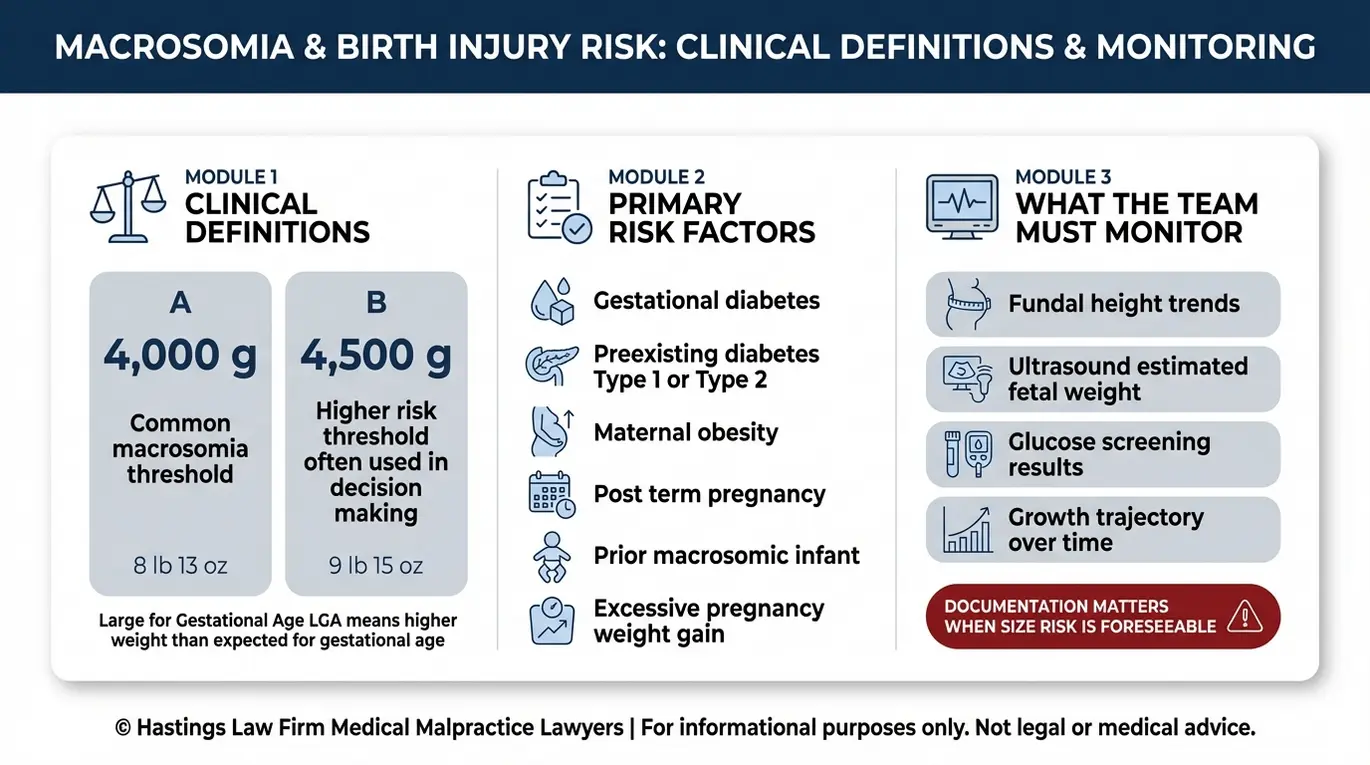
Fetal macrosomia, a medical condition where a newborn weighs significantly more than average—typically defined as exceeding 4,000 grams (8 pounds, 13 ounces) or 4,500 grams (9 pounds, 15 ounces)—requires diligent prenatal monitoring by obstetricians to prevent delivery trauma. Babies who are large for gestational age (LGA), a classification for infants with weight above the 90th percentile for their gestational week, face elevated risks during vaginal delivery.
According to the NCBI Bookshelf, macrosomia affects approximately 1-10% of pregnancies and is a recognized risk factor for traumatic birth injuries. The condition does not develop suddenly. It progresses throughout pregnancy, which means obstetricians have multiple opportunities to identify it through routine monitoring. An experienced macrosomia birth injury attorney knows that early detection is key to preventing harm.
Doctors are expected to track fetal growth using ultrasound measurements and fundal height assessments, which involve measuring the distance from the pubic bone to the top of the uterus. When these measurements suggest a larger-than-expected baby, the standard of care requires further evaluation and a discussion about delivery options. Trusted Arizona birth injury counsel can investigate whether these protocols were followed.
Gestational diabetes is one of the primary drivers of macrosomia. The Mayo Clinic recommends glucose screening between 24 and 28 weeks of pregnancy. Under the Arizona Revised Statutes § 12-561, medical malpractice occurs when a healthcare provider fails to meet the accepted standard of care. Failing to screen for or manage gestational diabetes can constitute such a breach if it leads to uncontrolled fetal growth and a preventable injury.
Risk Factors for Fetal Macrosomia:
- Gestational diabetes or pre-existing Type 1 or Type 2 diabetes
- Maternal obesity (BMI of 30 or higher)
- Post-term pregnancy (beyond 40 weeks)
- Previous delivery of a macrosomic infant
- Excessive maternal weight gain during pregnancy
- Advanced maternal age
If your prenatal care failed to identify or respond to these risk factors, a lawyer for large baby birth injuries can help determine whether the standard of care was met.
Birth Injuries Caused by Macrosomia and Delivery Room Negligence
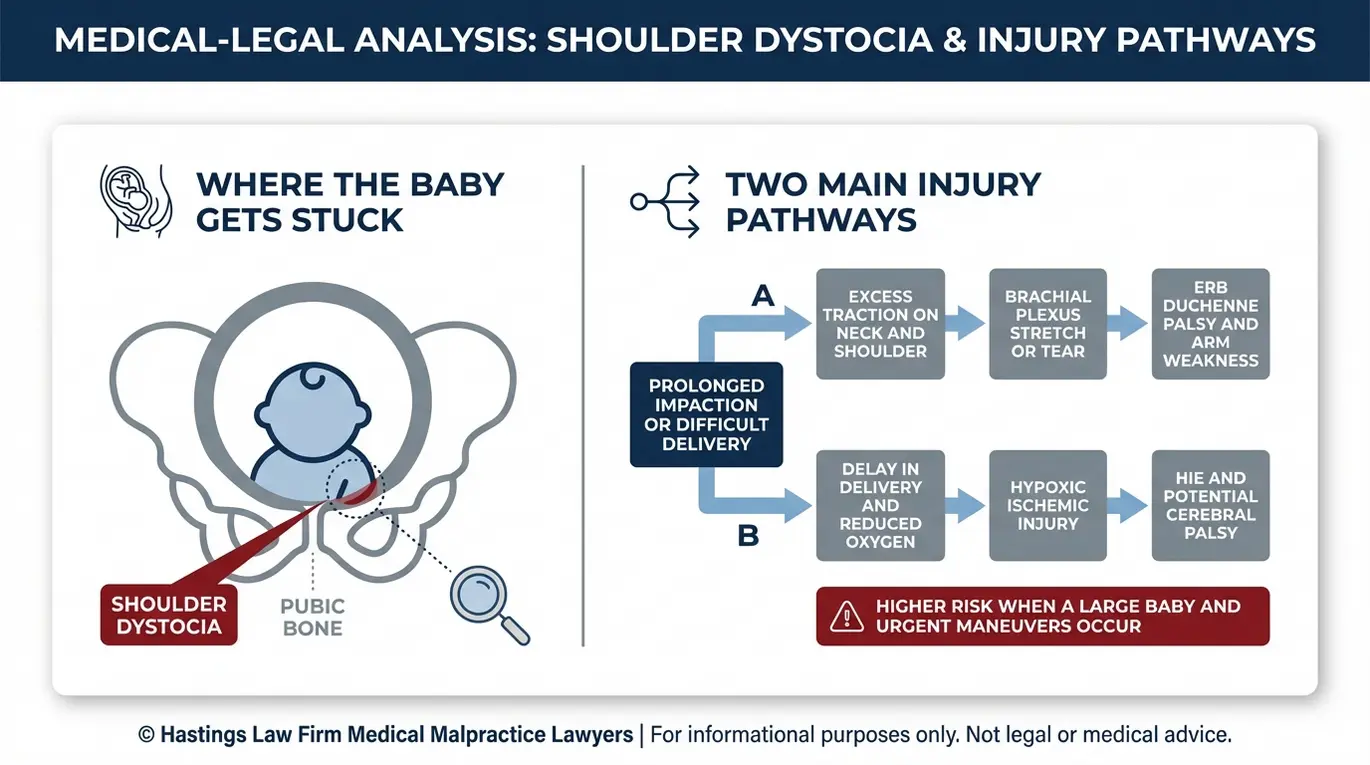
When a physician fails to recommend a Cesarean section for a macrosomic infant, the vaginal delivery can result in severe complications such as shoulder dystocia, where the baby’s shoulders become trapped behind the mother’s pelvic bone after the head has been delivered, leading to nerve damage or oxygen deprivation. This emergency creates an immediate need for competent action.
Research published in PubMed Central confirms that shoulder dystocia is strongly associated with fetal macrosomia and carries significant risks of permanent injury when not managed correctly. Families seeking legal help for birth trauma often find that proper management could have prevented the outcome.
The most common nerve injury is brachial plexus palsy, sometimes called Erb-Duchenne palsy or Erb’s palsy. This occurs when excessive traction, or pulling, on the baby’s head stretches or tears the network of nerves controlling the arm and hand. According to research from PubMed Central, some children recover fully, while others face permanent weakness or paralysis.
If the baby remains stuck in the birth canal too long, oxygen deprivation can occur. This may lead to hypoxic-ischemic encephalopathy (HIE), a type of brain damage caused by reduced blood flow and oxygen to the brain. HIE can result in cerebral palsy, developmental delays, and cognitive impairments.
| Injury | Mechanism | Potential Long-Term Impact |
|---|---|---|
| Brachial plexus injury (Erb’s palsy) | Excessive pulling during delivery | Arm weakness, limited mobility, or permanent paralysis |
| Hypoxic-ischemic encephalopathy (HIE) | Prolonged oxygen deprivation | Cerebral palsy, developmental delays, seizures |
| Fractured clavicle | Pressure during shoulder impaction | Usually heals, but may indicate traumatic delivery |
| Respiratory distress | Birth trauma or delayed delivery | May require NICU care, potential lung complications |
A birth injury lawyer in Arizona can help families understand whether these injuries resulted from preventable errors during delivery. A malpractice attorney for large infants can review the specific techniques used during your delivery.
Risks of Assisted Delivery Tools
The decision to use operative vaginal delivery tools on a large baby requires careful judgment. When shoulder dystocia occurs, some physicians turn to an intervention using forceps or vacuum extractors. These instruments, when applied to a macrosomic baby, carry additional risks and can lead to severe birth complications.
Excessive traction, or too much pulling force, can worsen nerve injuries or cause skull fractures and bleeding. If a Phoenix macrosomia lawyer reviews your records and finds that assisted delivery was attempted without proper indication or technique, this may support a claim of medical negligence.
The Hastings Law Firm Difference
Results matter, but what truly sets us apart is how we achieve them. Every verdict, every settlement, and every Arizona courtroom victory comes from one guiding promise: To treat each client’s fight for justice as if it were our own.
This balance of skill, experience, and empathy reflects our core philosophy that justice should not only compensate the injured, but also make healthcare safer nationwide.

Proving Medical Malpractice in Arizona Large Baby Cases
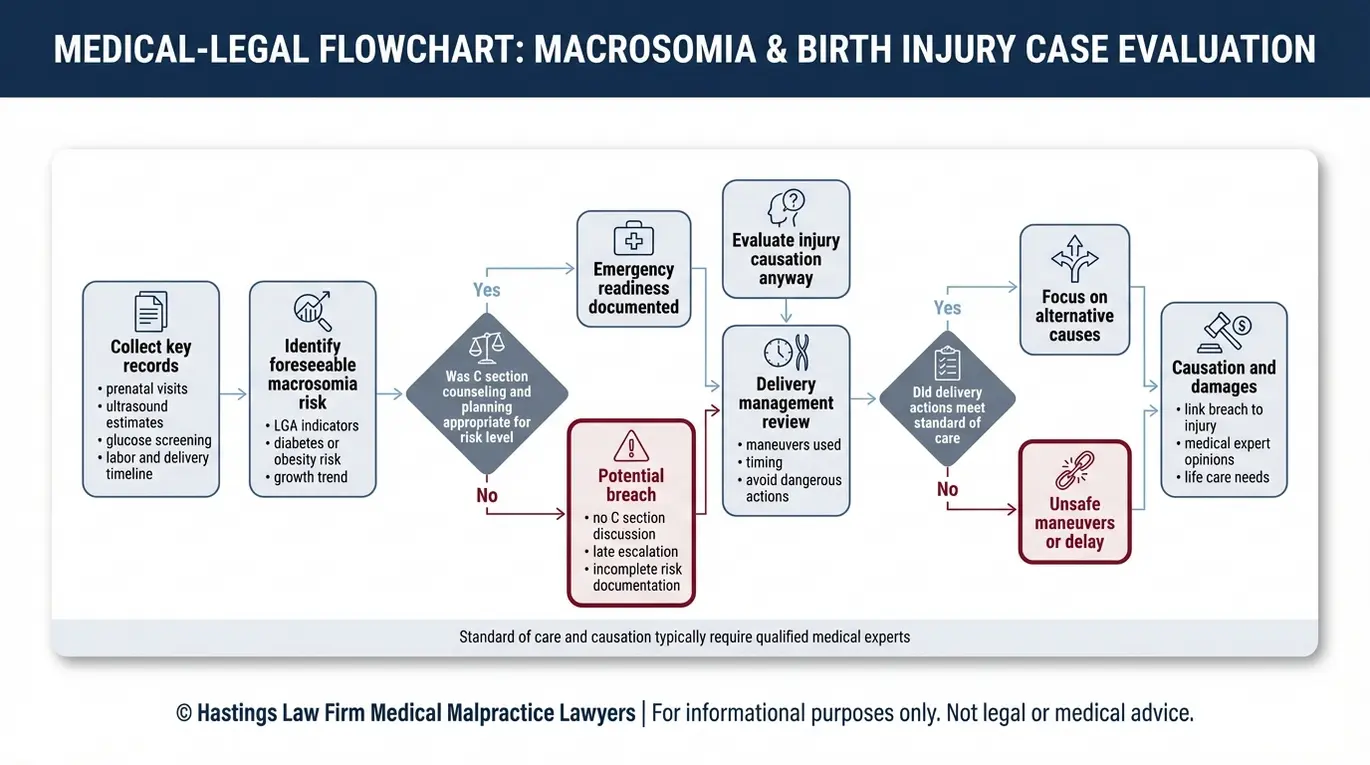
Proving malpractice involves demonstrating that the obstetrician deviated from the accepted medical standard of care, such as failing to offer an elective C-section for a baby weighing over 4,500 grams or improperly managing a shoulder dystocia emergency. A skilled medical malpractice lawyer is essential for establishing these complex elements of liability.
The American College of Obstetricians and Gynecologists (ACOG) provides clinical guidelines that obstetricians are expected to follow. For diabetic mothers with suspected macrosomia, ACOG recommends discussing elective Cesarean delivery when the estimated fetal weight exceeds 4,500 grams. For non-diabetic mothers, the threshold is 5,000 grams.
When doctors fail to have these conversations or ignore the risks, families may have grounds for a medical malpractice lawsuit. Parents suing for birth injuries must show that a timely C-section would have avoided the harm entirely.
Common Breaches of the Standard of Care:
- Failing to order glucose screening or manage gestational diabetes
- Not performing ultrasounds to estimate fetal weight in high-risk pregnancies
- Proceeding with vaginal delivery despite known macrosomia risk factors
- Applying excessive traction during a shoulder dystocia emergency
- Using fundal pressure, a dangerous technique involving pushing on the mother’s abdomen during delivery
- Failing to perform the McRoberts maneuver, a positioning technique where the mother’s legs are flexed toward her abdomen to widen the pelvic opening
Causation is another required element. Your Arizona macrosomia injury lawsuit must demonstrate that the medical negligence directly caused your child’s injuries. This typically requires expert witness testimony from obstetricians who can explain what should have been done differently and how that would have prevented the harm. Without this link, recovering fair compensation for lifelong care is difficult.
How Our Arizona Team Investigates Your Claim
Our firm utilizes a specialized team of nurse consultants and trial attorneys to calculate the full lifetime cost of your child’s injury, ensuring that settlements cover future medical care, therapy, and loss of earning capacity.
Our team includes former defense counsel and experienced hospital nurses, providing us with insight into hospital protocols and how providers document care. We examine estimated fetal weight (EFW), the measurement obtained through ultrasound to predict a baby’s size before delivery, to identify negligence. Fundal height measurement, the external assessment of uterine growth, should also appear in your prenatal records. We examine these closely to determine whether your providers tracked fetal growth appropriately.
Our trial-ready philosophy means we prepare every case as if it will go before a jury. This approach signals to insurance companies that we will not accept unfair offers. By building strong evidence from the start, including expert opinions, medical record analysis, and damage calculations, we put your family in the best position to recover fair compensation. If you need to hire a macrosomia malpractice attorney or need legal representation for birth trauma, our team offers free case evaluations with no upfront costs.
Contact the Arizona Birth Injury Attorneys at Hastings Law Firm Today for Help
If your child suffered a birth injury that may have been caused by a failure to diagnose or manage fetal macrosomia, you do not have to face this alone. Our mission is to restore trust for families who feel betrayed by the healthcare system and to prevent the same mistakes from happening to others.
Led by board-certified trial lawyer Tommy Hastings, our firm focuses on these complex cases on a contingency fee basis. This means there are no upfront fees or costs, and you pay nothing unless we recover compensation for your family. Our priority is securing your child’s financial future so they can access the care and support they need.
Contact us today for a free, confidential evaluation with a patient advocate. We will review your records, answer your questions, and explain your legal options. Let us help you find the answers you deserve.
Frequently Asked Questions About Fetal Macrosomia Misdiagnosis in Arizona


This content was researched and written by the Hastings Law Firm editorial team, which includes attorneys, medical professionals, and experienced researchers. Our writing is informed by internal knowledge and practical experience, and we cross-check critical details against authoritative sources cited throughout. Every piece undergoes human-led fact-checking and legal review. Because legal and medical information can change, if you spot an error, please contact us. Learn more about our content standards and review process on our editorial policy page.

Tommy Hastings, founder of Hastings Law Firm, is a board-certified personal injury trial lawyer dedicated exclusively to healthcare injury cases. Since 2001, he has represented injured patients and families in litigation against major hospital systems, pharmaceutical companies, and negligent healthcare providers nationwide. He has handled numerous high-profile cases that have drawn national media attention and resulted in multi-million dollar recoveries. He draws on that experience in his writing, helping readers understand how these cases work and what options may be available to them.
