


Phoenix Laparoscopic Surgery Error Lawyer
Laparoscopic surgery is often presented as routine, but errors during these procedures can leave patients facing unexpected pain, additional operations, and serious complications such as infection or sepsis. Some injuries stem from preventable mistakes like organ misidentification, blind instrument entry, or missed signs of internal damage before the patient is closed. Consent forms do not excuse careless care, and the difference between a known complication and negligence can be central. If you or a loved one were harmed or worse due to laparoscopic surgery errors in Phoenix, Arizona, contact Hastings Law Firm for a free, confidential case review.

Last Updated: July 27, 2026
Trusted Phoenix Medical Attorneys for Surgical Negligence Claims
Laparoscopic procedures are marketed as routine, low-risk, and minimally invasive. When something goes wrong during one of these surgeries, it can feel confusing and isolating. You may be dealing with unexpected pain, follow-up procedures, or complications that nobody warned you about, and you may not be sure whether what happened was preventable.
As a Phoenix laparoscopic surgery error lawyer team, we focus exclusively on medical malpractice. Our attorneys, in-house nurses, and patient advocates work together to determine whether a surgical error caused your injury and what your legal options may be. If you or a loved one suffered harm during a laparoscopic procedure in Phoenix, we welcome you to contact us for a free, confidential case evaluation. There is no fee unless we recover compensation on your behalf.

Common Laparoscopic Surgery Mistakes in Phoenix Hospitals
Laparoscopic surgery mistakes often involve accidental perforation of internal organs, nicking of the bile duct or bowel, and failure to convert to open surgery when complications arise, which can lead to serious infection or sepsis.
During a laparoscopic procedure, sometimes called keyhole surgery, the surgeon makes small incisions in the abdomen and inserts a laparoscope, a thin tube equipped with a camera and light, to view the abdominal cavity on a monitor. Specialized instruments are passed through additional small incisions to perform the operation. While this approach typically results in shorter recovery times compared to open surgery, it also introduces specific risks tied to limited visibility and indirect instrument control.
One significant danger occurs during what is known as blind trocar entry, the initial insertion of a sharp surgical instrument into the abdomen before the camera is in place. During this step, the surgeon cannot directly see the organs, which increases the risk of accidental puncture. A case study published by the Agency for Healthcare Research and Quality (PSNet) details how a routine laparoscopic operation resulted in fecal contamination of the peritoneum after a trocar injury to the bowel.
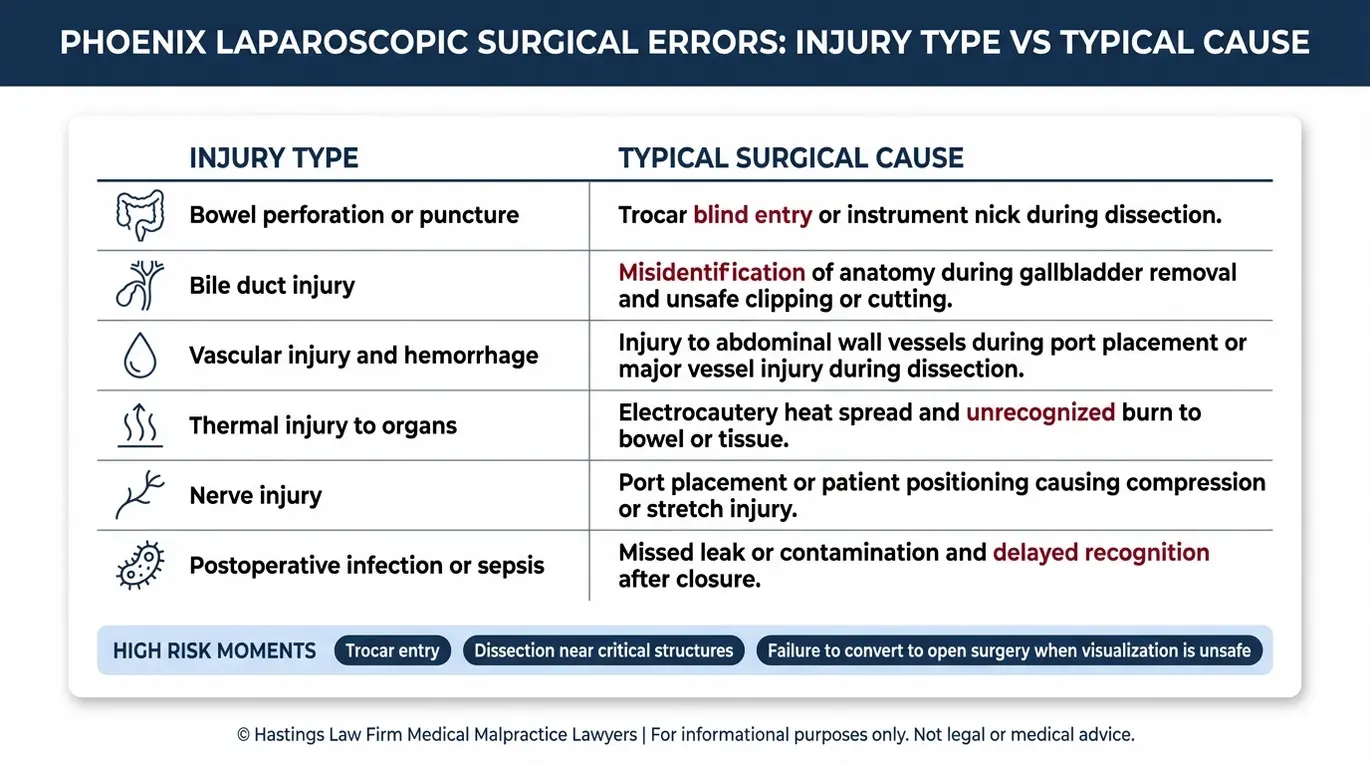
Common laparoscopic surgical errors include:
| Injury Type | Typical Cause |
|---|---|
| Bowel perforation | Trocar insertion or instrument contact nicks the intestine, potentially causing leakage and sepsis, a life-threatening response to infection |
| Biliary injury (bile duct damage) | The common bile duct is accidentally cut or clipped during gallbladder removal |
| Vascular injury (hemorrhage) | A major blood vessel is nicked during instrument insertion or dissection |
Research published in JAMA Network Open examined bile duct injuries during cholecystectomy, underscoring the frequency and seriousness of biliary damage in these procedures. If a surgical error lawyer can show these injuries resulted from a deviation in surgical technique rather than a recognized complication, there may be a viable claim. Verify that any action is taken within the timeframes set by Arizona Revised Statutes § 12-542.
Misidentification of Organs During Surgery
One of the most preventable errors during laparoscopic procedures is misidentification of anatomical structures. A surgeon may confuse the common bile duct for the cystic duct, or mistake an artery for another vessel. This type of error can lead to a biliary injury, which is damage to the duct system that may require multiple corrective surgeries.
The standard of care in laparoscopic gallbladder removal generally calls for achieving the critical view of safety (CVS), a surgical technique that requires the surgeon to clearly identify two specific structures before cutting anything. When a surgeon fails to obtain this view and misidentifies an organ, it may constitute negligence. We examine operative reports and surgical video, when available, to evaluate whether proper identification protocols were followed.
Defining Medical Malpractice in Minimally Invasive Procedures
Medical malpractice in laparoscopic procedures occurs when a surgeon deviates from the accepted standard of care, such as failing to identify an accidental cut before closing the patient or neglecting to monitor for signs of post-operative infection. Laparoscopic surgery is a minimally invasive technique that uses small incisions and specialized cameras to perform internal operations.
Under Arizona Revised Statutes § 12-563, a medical malpractice claim requires proving that the healthcare provider failed to meet the standard of care expected of a reasonably competent professional in the same field and that this failure directly caused harm. The standard of care is not perfection. It is the level of treatment a qualified surgeon with similar training and experience would provide under the same circumstances.
The distinction between a known complication and preventable negligence is central to every case. Surgery always carries risk, and patients are informed of potential complications beforehand. But when harm results from a specific error, such as failing to notice a bowel leak, the issue shifts to potential negligence. This also applies when providers ignore signs of complications like infection, hemorrhage, or embolism.
Pneumoperitoneum, the inflation of the abdominal cavity with CO₂ gas to create working space, can also mask symptoms if not properly managed after surgery.
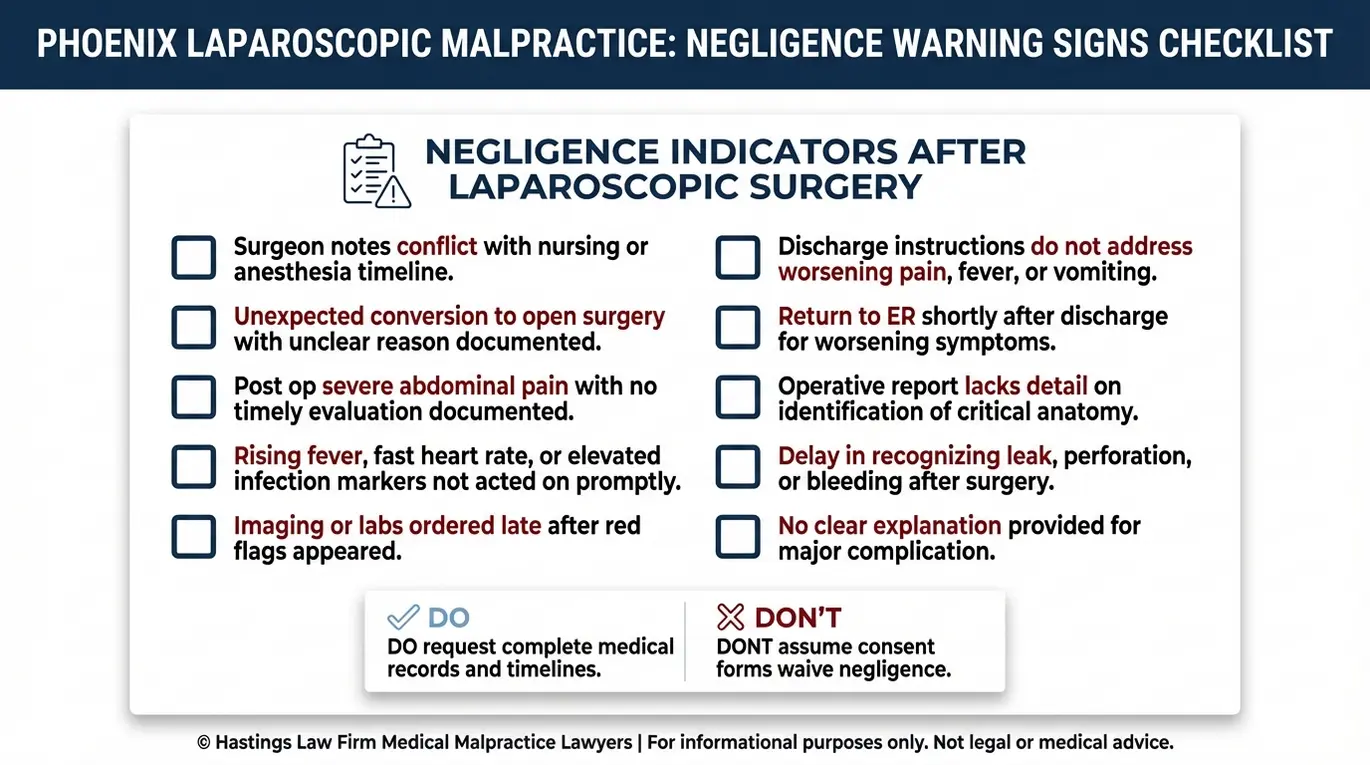
Signs that may indicate negligence in a laparoscopic procedure include:
- An unplanned return to the operating room shortly after the initial surgery
- Delayed diagnosis of a post-operative leak, perforation, or internal bleeding
- Failure to convert to open surgery, a switch from a laparoscopic to a traditional open approach when complications required better visibility
- Unexplained infection or sepsis, a life-threatening response to infection, within days of the procedure
- Missing or inconsistent documentation in the operative report
A medical malpractice lawyer experienced in surgical cases can review these indicators and determine whether the care fell below the accepted standard. As a Phoenix surgical error lawyer team with a dedicated medical malpractice attorney, we know how to read between the lines of operative notes and post-surgical records.
Waivers Do Not Excuse Surgical Negligence
Many patients worry that the consent forms they signed before surgery eliminate their legal rights to pursue a medical malpractice claim. That is not how consent works under the law.
Informed consent acknowledges the known risks of surgical procedures. It does not give a surgeon permission to be careless or to deviate from accepted medical malpractice standards. If a surgical error caused your injury, the consent form does not shield the provider from accountability.
The Hastings Law Firm Difference
Results matter, but what truly sets us apart is how we achieve them. Every verdict, every settlement, and every Phoenix courtroom victory comes from one guiding promise: To treat each client’s fight for justice as if it were our own.
This balance of skill, experience, and empathy reflects our core philosophy that justice should not only compensate the injured, but also make health care safer nationwide.

Proving Negligence in Your Surgical Injury Case
Proving negligence requires clear evidence that the surgeon’s actions fell below the medical standard, directly causing injury. This is established through surgical records, expert medical testimony, and a forensic review of the operative report related to the laparoscopic procedure. These cases depend on showing that a provider’s conduct deviated from what a reasonably prudent surgeon would do in the same situation.
Arizona law under A.R.S. § 12-2603 requires a preliminary expert opinion affidavit in medical malpractice cases, meaning a qualified medical expert must confirm that the claim has merit early in the litigation process. This requirement makes a thorough investigation essential from the start.
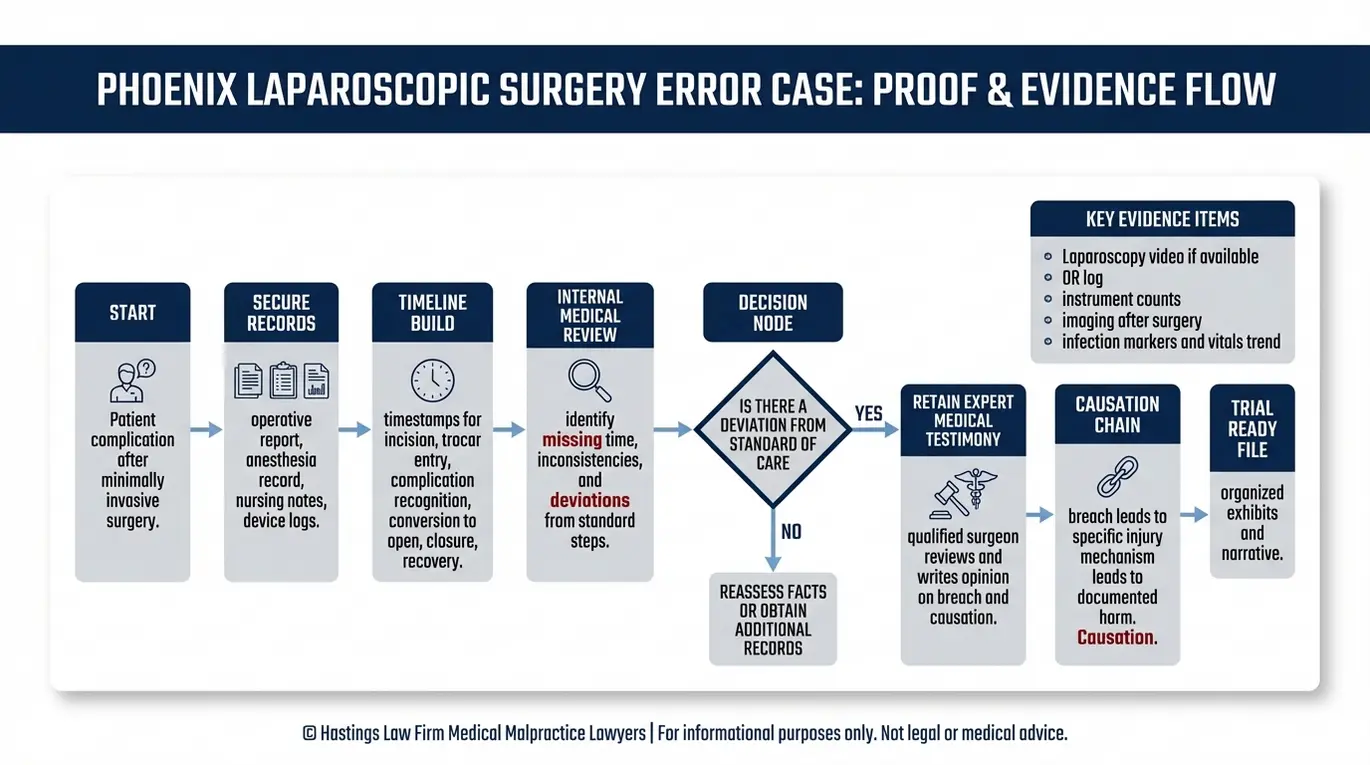
Here is how our medical malpractice lawyer team builds these cases:
- Step 1: Secure the complete medical records. We obtain the full, unaltered operative logs, nursing notes, anesthesia records, and post-operative documentation. Our team reviews these records for gaps, inconsistencies, or missing time entries that may indicate incomplete documentation.
- Step 2: In-house medical review. Our nursing staff and patient advocates analyze the clinical timeline. They look for evidence of a bowel perforation, which is a tear or hole in the intestinal wall, or a vascular injury, damage to a blood vessel, and assess whether the surgical team’s response aligned with accepted protocols.
- Step 3: Retain a qualified expert. We work with specialist surgeons from our national expert network who can evaluate what should have happened and provide testimony on the specific deviation from the standard of care. This expert medical testimony ties the surgeon’s error directly to the patient’s injury, establishing causation and damages.
Each step builds on the last, creating a case supported by medical evidence rather than speculation.
Arizona Statute of Limitations for Surgical Error Lawsuits
In Arizona, the statute of limitations for medical malpractice claims is generally two years from the date the injury occurred or two years from the date the injury was discovered, as outlined in A.R.S. § 12-542. Arizona medical malpractice law also recognizes the discovery rule, which can adjust the deadline if the injury was not immediately apparent. For example, a slow internal leak from a bile duct injury may not produce symptoms for weeks or months after surgery.
Understanding these time limits is essential. Once this deadline passes, the option of filing suit is permanently lost. If you suspect a surgical error may have caused your injury, speaking with an attorney sooner rather than later protects your ability to meet this legal deadline.
Contact the Phoenix Surgical Error Attorneys at Hastings Law Firm Today for Help
Hastings Law Firm was founded with a clear purpose: to restore trust for patients who have been let down by the healthcare system and to enforce accountability that makes care safer for everyone. Our founder, Tommy Hastings, is board-certified in personal injury trial law and has dedicated his career to medical malpractice litigation. Our team of attorneys, former defense lawyers, and in-house hospital nurses brings a perspective that most firms simply cannot match.
We prepare every case as if it will go to trial because that preparation is what drives fair results, whether through settlement or a jury verdict. We work on a contingency fee basis, which means you pay no attorney fees or costs unless we secure a recovery for you.
If you or a loved one suffered an injury during a laparoscopic surgery in Phoenix, we encourage you to contact us today. Speak with a patient advocate who can review what happened and help you understand your options. The consultation is free and confidential.
Frequently Asked Questions About Laparoscopic Surgery Error in Phoenix


This content was researched and written by the Hastings Law Firm editorial team, which includes attorneys, medical professionals, and experienced researchers. Our writing is informed by internal knowledge and practical experience, and we cross-check critical details against authoritative sources cited throughout. Every piece undergoes human-led fact-checking and legal review. Because legal and medical information can change, if you spot an error, please contact us. Learn more about our content standards and review process on our editorial policy page.

Tommy Hastings, founder of Hastings Law Firm, is a board-certified personal injury trial lawyer dedicated exclusively to healthcare injury cases. Since 2001, he has represented injured patients and families in litigation against major hospital systems, pharmaceutical companies, and negligent healthcare providers nationwide. He has handled numerous high-profile cases that have drawn national media attention and resulted in multi-million dollar recoveries. He draws on that experience in his writing, helping readers understand how these cases work and what options may be available to them.
