


Arizona Infant Resuscitation Error Lawyer
Written by: Hastings Law Firm | Reviewed by: Tommy Hastings | Updated: July 27, 2026
Infant resuscitation errors during or right after delivery can leave families facing overwhelming uncertainty and long term medical needs. The article describes when neonatal resuscitation is required, why rapid action matters, and how delays or technique mistakes can lead to oxygen deprivation and permanent brain injury. It also outlines how staffing, training, and equipment readiness affect safety, and how responsibility may extend to individual clinicians and the hospital. If you or a loved one were harmed or worse due to infant resuscitation errors in Arizona, contact Hastings Law Firm for a free, confidential case review.
Top-Rated Legal Representation for Birth Injury Victims in Arizona
What You Should Know About Neonatal CPR Negligence Claims in Arizona:
- Lifelong harm can follow when neonatal resuscitation is delayed or performed incorrectly because oxygen deprivation can permanently damage a newborn brain.
- Severe outcomes can include hypoxic ischemic encephalopathy, cerebral palsy, developmental disabilities, and neonatal death.
- Accountability can extend beyond one clinician because liability may involve physicians, nurses, hospitals, and staffing agencies tied to the delivery.
- Options can narrow if action is delayed because Arizona time limits and special rules for public hospitals can permanently bar a claim.
- Recovery can be shaped by long term care needs because damages may cover future medical care, therapy, assistive care, and lost earning capacity.
- Non economic losses can be part of a claim because pain and suffering and loss of family companionship are described as compensable harms.
- Preventable injury risk can rise when delivery teams are unprepared because equipment readiness and trained personnel are expected at every delivery.
- Disputes often focus on whether the NRP sequence was followed because delayed escalation and missed calls for additional support are highlighted as dangerous failures.
- Case clarity can depend on early evidence preservation because records can be lost and witnesses can become harder to locate over time.
- Key records can be central because fetal monitoring strips, resuscitation logs, and umbilical cord blood gas results are used to reconstruct what happened.

A Healthcare Focused Law Firm
When a newborn suffers harm because of mistakes made during resuscitation, the emotional weight on a family is enormous. You trusted your medical team to be prepared for the most critical moments of your child’s life, and something went wrong. At Hastings Law Firm, we focus exclusively on medical malpractice, and our team of attorneys, nurse consultants, and board-certified medical experts understands both the medicine and the law behind infant resuscitation failures.
If your child was injured during or immediately after delivery due to errors in neonatal resuscitation, an experienced Arizona infant resuscitation error lawyer can help you understand what happened and why. We invite you to contact us for a free, confidential case evaluation so we can review the details and explain your options.
Conditions Requiring Immediate Neonatal Resuscitation
Resuscitation is required when a newborn fails to breathe on their own or cannot maintain a stable heart rate after delivery, often due to complications like meconium aspiration, premature birth, or compression of the umbilical cord. Neonatal resuscitation is the medical process of helping a newborn breathe and establishing a stable heart rate immediately after birth. Understanding the conditions that demand immediate intervention matters because, in many cases, the medical team should have anticipated the need for resuscitation long before the baby arrived.
One of the key concepts in neonatal medicine is the “Golden Minute,” the first 60 seconds after birth during which a baby must be assessed, dried, stimulated, and, if necessary, started on assisted breathing. Every second of delay during this window increases the risk of oxygen deprivation and lasting injury. When a medical team is not prepared to act within this timeframe, the consequences can be severe.
Several maternal conditions should alert the care team well before delivery that resuscitation may be needed. These are known risk factors for respiratory distress and fetal distress:
- Pre-eclampsia, a dangerous pregnancy complication involving high blood pressure, that can restrict blood flow to the baby
- Gestational diabetes, which can lead to larger babies and more difficult deliveries
- High-risk pregnancy involving multiples, advanced maternal age, or prior complicated births
- Umbilical cord complications such as a prolapsed or compressed cord
- Meconium aspiration syndrome (MAS), a condition where the baby inhales a mixture of meconium (the baby’s first stool) and amniotic fluid, which can block the airways and cause serious breathing problems
Complications that arise during labor itself, including shoulder dystocia, placental abruption, or a prolonged second stage, also signal that resuscitation equipment and trained personnel must be immediately available. An infant resuscitation attorney examines whether the medical team recognized these warning signs and prepared accordingly. When they did not, a lawyer for resuscitation errors can help your family pursue accountability.
The Standard of Care: Neonatal Resuscitation Program (NRP) Guidelines
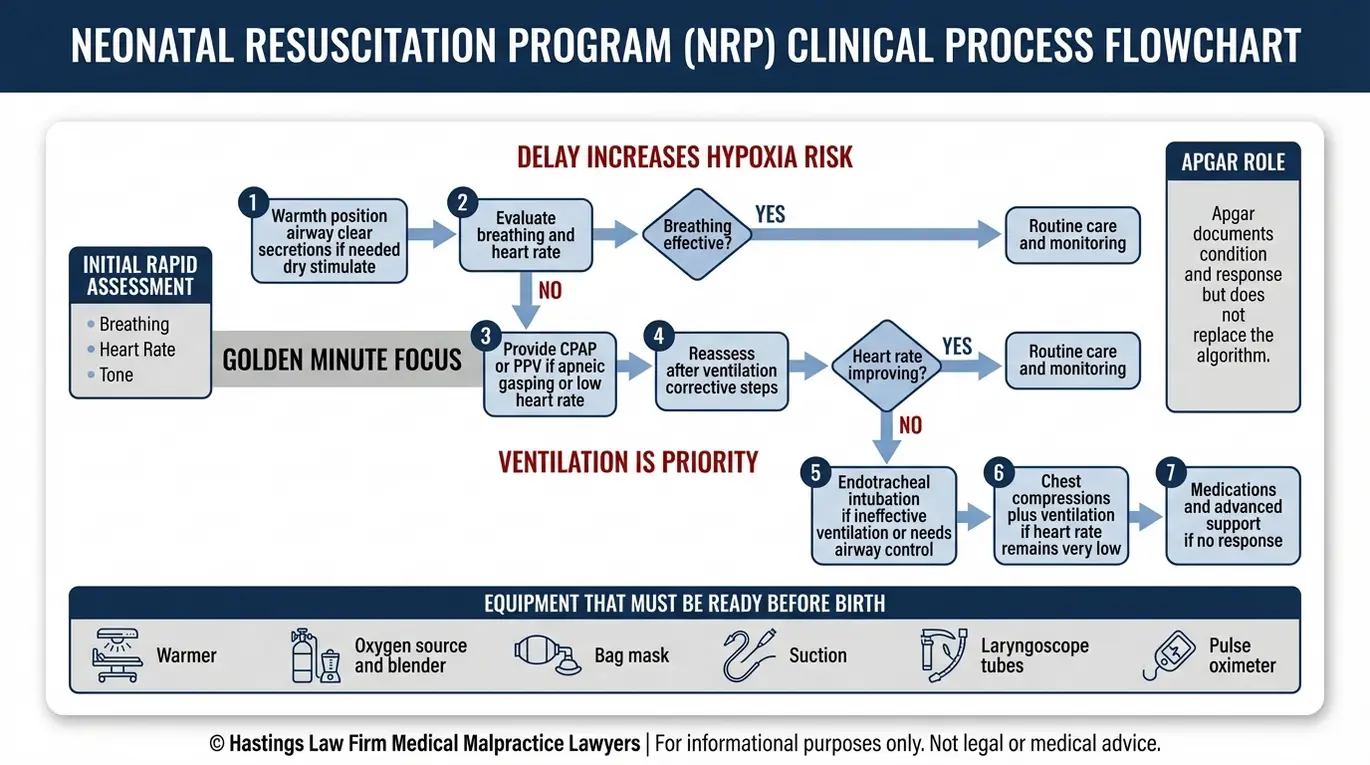
The standard of care, meaning the level of treatment a competent medical professional would provide under similar circumstances, requires that delivery room staff be trained and competent in the Neonatal Resuscitation Program (NRP) and follow a specific sequence of interventions. The standard of care represents the clinical requirements medical teams must meet to ensure the safety of both the mother and the infant. The NRP is a nationally recognized training and certification program developed by the American Academy of Pediatrics that teaches healthcare providers how to evaluate and resuscitate newborns in distress. This protocol begins with basic stimulation and escalates to advanced airway management and cardiac support if the baby’s condition does not improve.
The Apgar score, a quick assessment of a newborn’s heart rate, breathing, muscle tone, reflexes, and skin color given at one and five minutes after birth, guides the team’s response. A low Apgar score signals that the baby needs immediate help and triggers the next level of intervention. Healthcare providers who attend deliveries are expected to be certified in the Neonatal Resuscitation Program (NRP) to properly manage these events.
The NRP algorithm follows a clear hierarchy:
| Step | Intervention | When It Is Used |
|---|---|---|
| 1 | Drying, warming, and stimulation | Immediately after birth for all newborns |
| 2 | Continuous positive airway pressure (CPAP), a method of delivering steady air pressure to keep the baby’s lungs open, or positive-pressure ventilation (PPV), which uses a mask and bag to push air into the lungs | If the baby is not breathing or has a heart rate below 100 bpm after initial steps |
| 3 | Endotracheal intubation, the placement of a breathing tube directly into the airway | If PPV is ineffective or prolonged ventilation is needed |
| 4 | Chest compressions and emergency medications | If heart rate remains below 60 bpm despite adequate ventilation |
Each step builds on the last. The team must move quickly and decisively through this sequence. A resuscitation malpractice lawyer evaluates whether providers followed this protocol or deviated from it in ways that harmed the baby.
What is the NRP Certification Requirement?
The standard of care requires that hospitals have NRP-certified personnel available at every delivery. Neonatal resuscitation requires specialized training, and when a facility fails to ensure that qualified staff are available, it may amount to institutional negligence.
The equipment must also be checked and functional before the baby is born. This includes a pre-heated radiant warmer, oxygen supply, a properly sized bag-mask device, and a working laryngoscope. The Apgar score and continuous positive airway pressure (CPAP), which provides a steady stream of pressurized air to keep a newborn’s airways open, are tools that only work when trained hands are ready to use them. Arizona birth injury counsel can investigate whether staffing and preparation failures contributed to the harm your child suffered.
The Hastings Law Firm Difference
Results matter, but what truly sets us apart is how we achieve them. Every verdict, every settlement, and every Arizona courtroom victory comes from one guiding promise: To treat each client’s fight for justice as if it were our own.
This balance of skill, experience, and empathy reflects our core philosophy that justice should not only compensate the injured, but also make healthcare safer nationwide.

Common Resuscitation Errors Committed by Medical Professionals
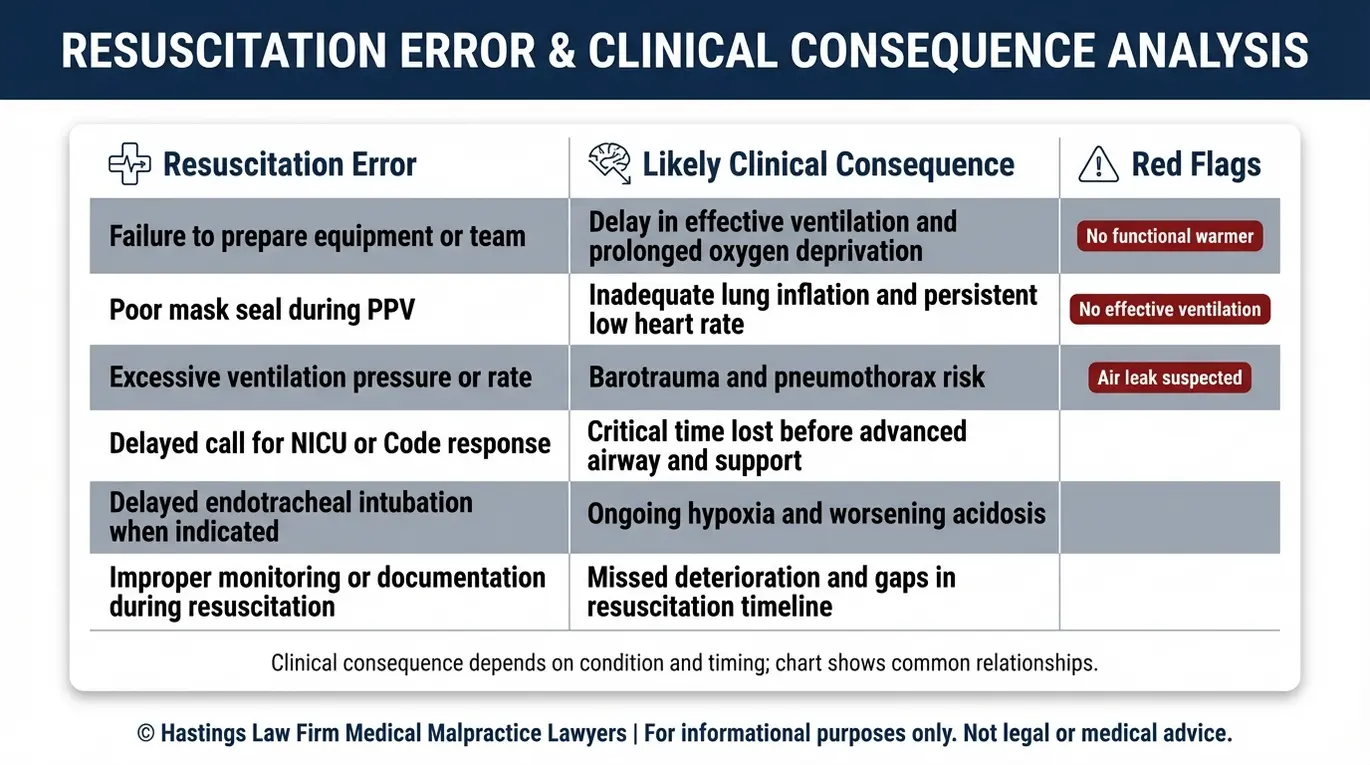
Malpractice in neonatal resuscitation often occurs when medical staff fail to recognize signs of distress, use equipment improperly, or demonstrate a delayed response to critical interventions, leading to prolonged oxygen deprivation and preventable injury. These errors can happen even in well-equipped hospitals, and the consequences are measured in minutes of lost oxygen to a newborn’s brain.
Failure to Prepare. Research published through PubMed Central on equipment preparedness for neonatal resuscitation highlights how failures in equipment readiness directly affect outcomes. When a radiant warmer is not turned on, oxygen is not connected, or a laryngoscope has a dead bulb, the team loses precious seconds scrambling to assemble what should have already been in place. These are preventable lapses.
Technique Errors. Positive-pressure ventilation is the single most important intervention in neonatal resuscitation, but it only works with a proper mask seal. An improperly fitted mask leaks air and delivers no real ventilation to the baby’s lungs. On the other end of the spectrum, overly aggressive ventilation can cause barotrauma, which is lung injury caused by excessive air pressure, potentially resulting in a pneumothorax (collapsed lung). Endotracheal intubation, the insertion of a tube directly into the baby’s trachea to secure the airway, can also cause injury if performed incorrectly or with improper equipment.
Decision Errors. Delayed escalation is one of the most dangerous failures. If a baby is not responding to initial interventions, the NRP protocol requires the team to move to the next step without hesitation. Failing to call a Code or summon the NICU team wastes time that the baby does not have.
| Resuscitation Error | Potential Consequence |
|---|---|
| Equipment not checked or ready before delivery | Delayed start of resuscitation; prolonged oxygen deprivation |
| Improper mask seal during PPV | Ineffective ventilation; baby receives no meaningful air support |
| Overly aggressive ventilation | Barotrauma, pneumothorax (collapsed lung) |
| Failed or delayed endotracheal intubation | Extended period without a secure airway |
| Failure to call a Code or summon NICU team | Loss of important intervention time |
As an Arizona infant resuscitation error lawyer, we examine these specific types of errors through medical records, equipment logs, and expert analysis. According to the NCBI Bookshelf resource on Neonatal Therapeutic Hypothermia, the window for certain rescue therapies after oxygen deprivation is extremely narrow, making timely and correct resuscitation even more critical. A malpractice attorney in Phoenix can determine whether the failures in your child’s case fell below the accepted standard.
Consequences of Failed Resuscitation: HIE and Cerebral Palsy
When resuscitation is delayed or performed incorrectly, the newborn’s brain is deprived of oxygen and blood flow, a condition known as hypoxic-ischemic encephalopathy (HIE). These long-term conditions often result from oxygen deprivation during the birthing process. HIE causes direct, often permanent damage to brain tissue and is one of the leading causes of cerebral palsy, developmental disabilities, and neonatal death, often requiring long-term care. The severity of the outcome depends largely on how long the brain went without adequate oxygen, a concept known as perinatal asphyxia.
Here is what happens at the cellular level: when oxygen supply drops, brain cells begin to die within minutes. Even after circulation is restored, a secondary wave of injury, called reperfusion injury, can continue to destroy tissue for hours. This is why the timing of both the resuscitation itself and the treatments that follow are so critical.
One of the most time-sensitive rescue treatments is therapeutic hypothermia, or cooling therapy, a procedure involving lowering the baby’s body temperature, to slow brain metabolism and reduce the extent of secondary injury. Cooling therapy must typically be started within six hours of the oxygen-depriving event to be effective. If this treatment window is missed because the team did not recognize the severity of the injury or failed to initiate a transfer to a facility with cooling capability, that delay can form the basis of a separate malpractice claim.
The most devastating outcome is wrongful death. Some infants who experience severe oxygen deprivation during failed resuscitation cannot be stabilized and die within the first hours or days of life. For families facing this loss, legal help for HIE and related injuries can provide both answers and a path toward accountability. An infant wrongful death attorney can help determine whether the harm was preventable and what legal options are available.
Liability: Who is Responsible for the Resuscitation Error?
Liability in a resuscitation injury case may extend to the obstetrician who failed to anticipate known risks, the nursing staff who did not follow NRP protocols, or the hospital itself for inadequate staffing, training, or equipment policies. Establishing liability involves identifying all medical professionals and institutions responsible for the child’s care during the resuscitation event. Identifying who is responsible requires a careful review of what each person and institution did, or failed to do, during the critical moments surrounding delivery. Our legal team includes former defense attorneys and experienced hospital nurses who previously worked for the systems we now challenge, providing a strategic advantage in identifying hospital errors.
The Hospital. A hospital can be held directly liable under a theory of corporate negligence or hospital negligence for systemic failures. This includes not having NRP-certified personnel available at every delivery, failing to maintain functional resuscitation equipment, or understaffing the labor and delivery unit. According to the Arizona Department of Health Services 32nd Annual Report, child fatality data in Arizona underscores the need for continued scrutiny of institutional readiness. Hospitals may also be liable through vicarious liability, a legal principle that holds an employer responsible for the negligent acts of its employees performed within the scope of their job.
The Nursing Staff. Nurses are often the first responders in a neonatal emergency. If a nurse failed to alert the physician to worsening fetal heart tracings, did not initiate resuscitation promptly, or executed orders incorrectly, they may bear individual liability for nursing malpractice. Their employer, typically the hospital, can also be held responsible for those actions.
The Physician. The attending obstetrician or neonatologist is expected to lead the resuscitation effort. If the physician failed to be present when risk factors demanded it, made poor clinical decisions under pressure, or did not escalate care appropriately, they may face doctor liability for physician negligence.
Potential defendants in a resuscitation injury case can include:
- The delivering obstetrician or midwife
- Attending nurses and labor and delivery staff
- The neonatologist or pediatrician on call
- The hospital or birthing center as an entity
- Contract staffing agencies providing temporary medical personnel
An Arizona infant resuscitation error lawyer identifies every potentially liable party so that no responsible actor is overlooked. Suing a hospital for resuscitation errors often involves untangling the relationships between employed staff, independent contractors, and the institution itself.
Calculating Damages in an Arizona Birth Injury Case
Damages in birth injury cases cover both the tangible financial costs and the profound personal losses a family endures. These awards provide for the lifelong needs of a child injured by medical error. Economic damages account for past and future medical care costs, life care planning, and lost earning capacity. Non-economic damages address the child’s pain and suffering and the parents’ loss of consortium, or the loss of family companionship.
Economic Damages. The financial burden of caring for a child with a permanent brain injury is staggering and often spans a lifetime. Compensation for birth injuries may include:
- NICU hospitalization and emergency treatment costs
- Ongoing physical, occupational, and speech therapy
- 24-hour home nursing or assisted living care
- Wheelchairs, adaptive equipment, and home modifications
- Special education and developmental services
- Lost future earning capacity if the child will never be able to work
Non-Economic Damages. These damages recognize the human cost of the injury:
- The child’s physical pain and suffering
- Mental anguish experienced by the child and parents
- Loss of enjoyment of life
- Loss of parental consortium
Life Care Plans. To accurately project the cost of caring for an injured child over a full lifetime, our firm works with economists and certified life care planners. These professionals assess every anticipated medical need, therapy session, equipment replacement, and support service the child will require. In cases involving permanent conditions like cerebral palsy, these costs are detailed in a life care plan that can reach into the millions of dollars. A settlement for resuscitation negligence must account for every one of these future needs to protect the child’s quality of life.
Statute of Limitations for Infant Injury Cases in Arizona
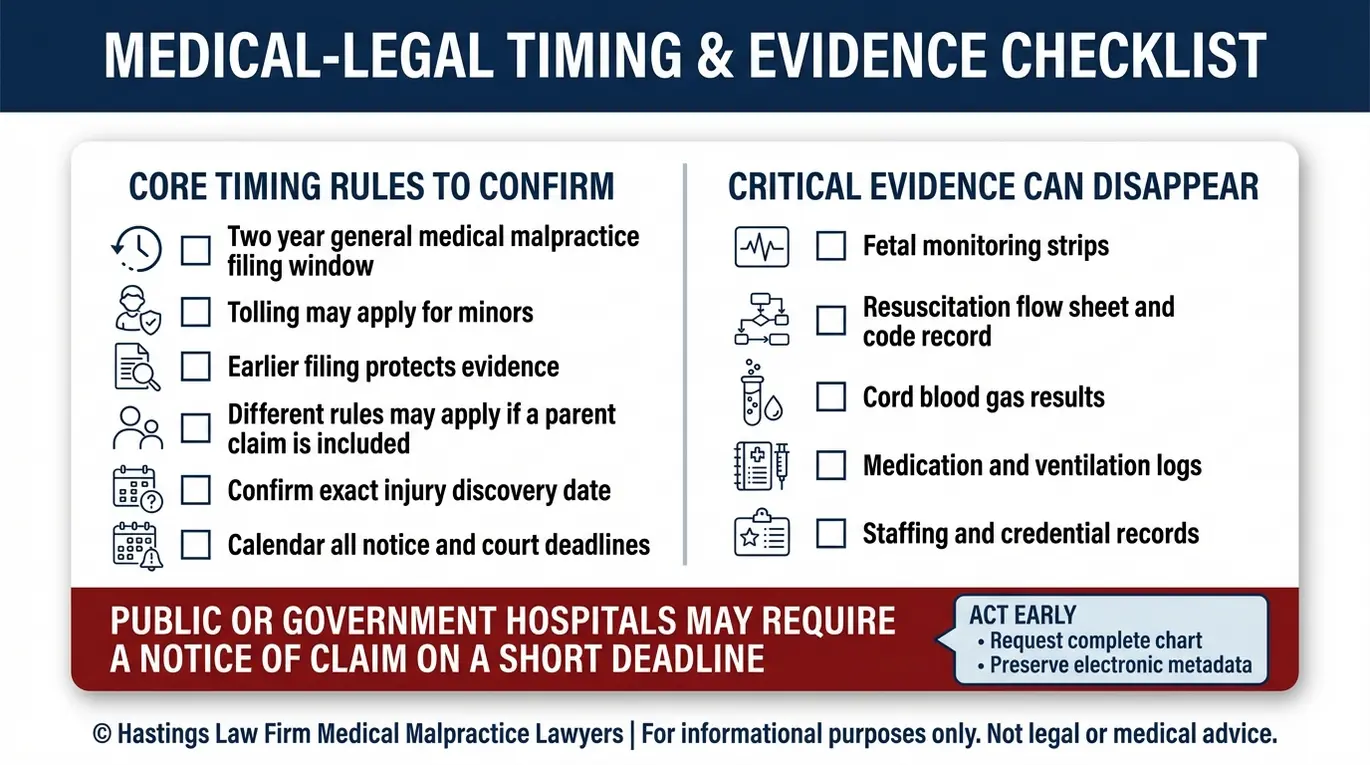
Arizona law generally allows two years from the date of injury to file a medical malpractice lawsuit, but for minors, this deadline is typically tolled, meaning it is paused, until the child turns 18. This legal timeframe determines how long a family has to file a birth injury claim in Arizona. Even with this extended window, parents should act much sooner to protect their case.
The Standard Two-Year Rule
Under A.R.S. § 12-542, the general statute of limitations for personal injury claims in Arizona, including medical malpractice, is two years. For an adult, the clock starts on the date the injury occurs or is discovered.
Tolling for Minors
Because children cannot file lawsuits on their own behalf, Arizona law pauses the statute of limitations for minors. This tolling of statute generally gives the child until age 20 to bring a claim. However, relying on this extended deadline is risky and not recommended.
Why Waiting Is Dangerous
Evidence deteriorates over time. Medical records can be lost or destroyed after retention periods expire. Electronic fetal monitoring strips may be overwritten.
Witnesses, including nurses and residents, move to other facilities and become harder to locate. Their memories fade. The strongest birth injury cases are built with the preservation of evidence gathered early, while records are intact and details are fresh.
⚠️ Critical Deadline Warning for Public Hospital Claims: If your child was born at a government-operated hospital in Arizona (such as a county or tribal facility), you may be required to file a Notice of Claim within 180 days, far shorter than the standard two-year period. Missing this deadline can permanently bar your claim. Contact an Arizona infant resuscitation error lawyer immediately if a public facility was involved.
The Arizona statute of limitations birth injury rules have exceptions and variables that depend on the specific facts. The deadline to file a medical lawsuit should be confirmed by an attorney as early as possible.
The Investigation: How Hastings Law Firm Proves Malpractice
We conduct a detailed forensic investigation using board-certified medical experts who analyze fetal monitoring strips, resuscitation logs, and blood gas results to reconstruct a minute-by-minute timeline of what happened during your child’s delivery and resuscitation. Our founder, Tommy Hastings, is a board-certified trial lawyer with over 20 years of experience who has dedicated his career to representing families and patients in medical negligence cases.
Our process follows a structured path designed to determine whether malpractice occurred and to build the strongest possible case:
- Step 1: Obtaining the Complete Medical Record. We secure the full chart, including electronic metadata, nursing notes, physician orders, and time-stamped entries. Under federal law, as outlined by the Assistant Secretary for Technology Policy’s guidance on Your Health Information Rights, you have the right to access your medical records. We act quickly to ensure evidence preservation before any records are altered, archived, or lost.
- Step 2: Expert Medical Review. Our in-house nurse consultants and outside board-certified medical expert witness team review every detail of the records to identify the specific departure from the standard of care. This includes analyzing electronic fetal monitoring strips for signs of distress that should have prompted earlier intervention, reviewing the NRP flow sheet for gaps or delays, and examining umbilical cord blood gas analysis results that reveal the baby’s acid-base status at birth.
- Step 3: Establishing Causation. Identifying a medical error is only half the equation. Our experts must also connect that error directly to the injury your child suffered. This means demonstrating that, had the resuscitation been performed correctly and on time, the outcome would have been different. We use medical literature, clinical data, and expert testimony to establish this link.
As an Arizona infant resuscitation error lawyer, we handle investigating birth injury claims from start to finish. Our team includes former defense attorneys who know how hospitals and insurers build their cases, giving us a strategic advantage in anticipating their arguments. There are no upfront costs; we work on a contingency fee basis, meaning you pay no attorney fees unless we secure a recovery for your family.
Contact the Arizona Birth Injury Attorneys at Hastings Law Firm Today for Help
If your child suffered a brain injury, was diagnosed with HIE or cerebral palsy, or did not survive due to errors during resuscitation, you deserve answers. Our firm provides professional support to families working through the challenges of a birth injury case. The hospital may not offer them willingly, but the medical records hold the truth, and we know how to find it.
At Hastings Law Firm, our team of medical malpractice attorneys, nurse consultants, and medical experts is dedicated to helping Arizona families understand what went wrong and pursue the accountability their child deserves. We serve families in Phoenix, Scottsdale, and throughout Arizona from our Phoenix office, with the resources of a national litigation firm behind every case.
Contact us today for a free, confidential case evaluation. There are no fees unless we win. Let us review what happened and help you take the first step toward answers and justice for your family.
Frequently Asked Questions About Infant Resuscitation Error in Arizona


This content was researched and written by the Hastings Law Firm editorial team, which includes attorneys, medical professionals, and experienced researchers. Our writing is informed by internal knowledge and practical experience, and we cross-check critical details against authoritative sources cited throughout. Every piece undergoes human-led fact-checking and legal review. Because legal and medical information can change, if you spot an error, please contact us. Learn more about our content standards and review process on our editorial policy page.

Tommy Hastings, founder of Hastings Law Firm, is a board-certified personal injury trial lawyer dedicated exclusively to healthcare injury cases. Since 2001, he has represented injured patients and families in litigation against major hospital systems, pharmaceutical companies, and negligent healthcare providers nationwide. He has handled numerous high-profile cases that have drawn national media attention and resulted in multi-million dollar recoveries. He draws on that experience in his writing, helping readers understand how these cases work and what options may be available to them.
