


Phoenix Hysterectomy Malpractice Lawyer
A hysterectomy is a common gynecological surgery, and most patients expect a safe recovery. Preventable surgical errors can cause serious physical harm, lasting emotional distress, and in severe cases life threatening consequences. The difference between an accepted risk and actionable negligence often depends on whether injuries were recognized and properly addressed during or after the procedure. Understanding the procedure type, the standard of care, and the resulting damages can help clarify what went wrong. If you or a loved one were harmed or worse due to hysterectomy malpractice in Phoenix, Arizona, contact Hastings Law Firm for a free, confidential case review.

Last Updated: July 27, 2026
Trusted Phoenix Medical Attorneys for Negligent Surgical Errors
A hysterectomy is one of the most common gynecological surgeries performed in the United States, and most patients expect to recover without serious complications. When something goes wrong during or after surgery because of a preventable medical error, the physical and emotional consequences can be devastating.
If you or a loved one suffered a serious injury during a hysterectomy, you deserve honest answers about what happened and whether negligence played a role. As a Phoenix hysterectomy malpractice lawyer team that focuses exclusively on medical malpractice, Hastings Law Firm has the medical knowledge and litigation experience to evaluate your case thoroughly. Our team includes in-house nurse consultants and former defense attorneys who know how to identify exactly where the standard of care broke down.
You can reach us for a free, confidential case evaluation. We can review what happened and explain your legal options with no obligation and no fee unless we recover for you.

Common Hysterectomy Complications and Surgical Errors
Surgical errors during a hysterectomy often involve accidental damage to nearby organs such as the bladder, ureters, or bowels which can lead to life-threatening infections or permanent damage if not immediately recognized and repaired. Understanding what went wrong during your surgery is the first step in determining whether you have a valid medical malpractice claim.
A bladder injury is also called a cystotomy, which is a cut to the bladder wall. A ureter injury involves damage to the tubes that carry urine from the kidneys. These are frequently reported complications according to a study published in PubMed on complications of hysterectomy. Other injuries our hysterectomy malpractice lawyers investigate include intestinal or small bowel perforation, excessive bleeding, and postoperative infections.
One category of error is a retained surgical item (RSI), where a sponge or tool is left inside the patient’s body. These are classified as “never events.” The Agency for Healthcare Research and Quality (AHRQ) Patient Safety Network (PSNet) defines never events as clearly identifiable and preventable errors.
Inherent Risks vs. Actionable Medical Negligence
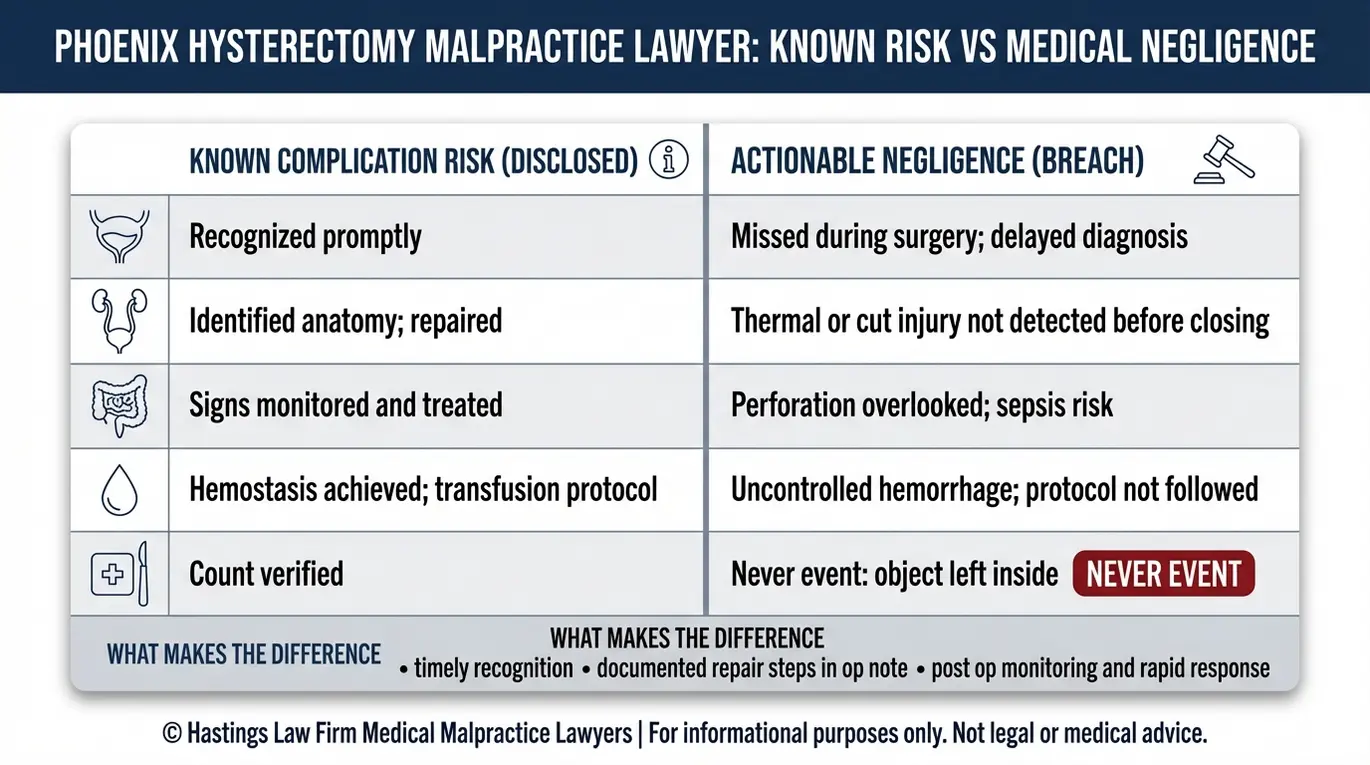
Informed consent, the process where your doctor explains risks, covers known complications. The legal question is whether the surgeon’s actions fell below the accepted medical standard of care, the level of treatment a reasonably competent surgeon would provide. In these cases, we evaluate whether medical negligence occurred by comparing the care received against professional standards.
Here is how a Phoenix hysterectomy malpractice attorney evaluates that distinction:
| Known Surgical Risk | Potential Negligence |
|---|---|
| A small bladder nick that is identified and repaired during surgery | A bladder injury that goes unnoticed, causing sepsis days later |
| Minor bleeding controlled intraoperatively | Uncontrolled hemorrhage due to failure to identify a severed vessel |
| Postoperative discomfort and routine recovery pain | A retained surgical item, or RSI, discovered weeks after the procedure |
| Scar tissue formation after proper technique | Thermal injury from an electrosurgical tool caused by improper use |
The distinction often comes down to recognition and response. Cutting near a structure may be an accepted risk; failing to notice the damage and repair it before closing is when negligence begins.
Types of Hysterectomy Procedures Performed in Arizona
Hysterectomies are classified by how much of the uterus is removed (total, partial, or radical) and the surgical method used (vaginal, laparoscopic, robotic, or open abdominal), with each method carrying unique risks for patient injury. Procedures performed for conditions like uterine fibroids or endometriosis vary in scope and technique.
By scope of removal:
- Total hysterectomy removes the entire uterus and cervix.
- Subtotal (partial) hysterectomy removes the upper portion of the uterus, leaving the cervix intact.
- Radical hysterectomy, a more extensive procedure typically performed for gynecological cancers, removes the uterus, cervix, surrounding tissue, and often the upper portion of the vagina.
By surgical method:
- Vaginal hysterectomy is performed entirely through the vaginal canal with no abdominal incision.
- Laparoscopic hysterectomy uses small incisions and a camera to guide the surgery.
- Robotic-assisted hysterectomy, where the surgeon controls robotic arms from a console, offers precision but relies on the surgeon’s skill in managing the technology.
- Open (abdominal) hysterectomy involves a larger incision and is often used for more complex cases.
As a malpractice lawyer for hysterectomy cases, our team pays close attention to the method used. Robotic and laparoscopic surgeries, while less invasive, carry distinct risks for specific injuries like ureter or bladder damage that differ from those associated with open or vaginal approaches. WebMD provides an overview of the different types of hysterectomy and their respective benefits and risks. Your Phoenix hysterectomy attorney needs to understand these technical differences to build an effective case.
The Hastings Law Firm Difference
Results matter, but what truly sets us apart is how we achieve them. Every verdict, every settlement, and every Phoenix courtroom victory comes from one guiding promise: To treat each client’s fight for justice as if it were our own.
This balance of skill, experience, and empathy reflects our core philosophy that justice should not only compensate the injured, but also make health care safer nationwide.

Establishing Liability for Gynecological Surgical Errors
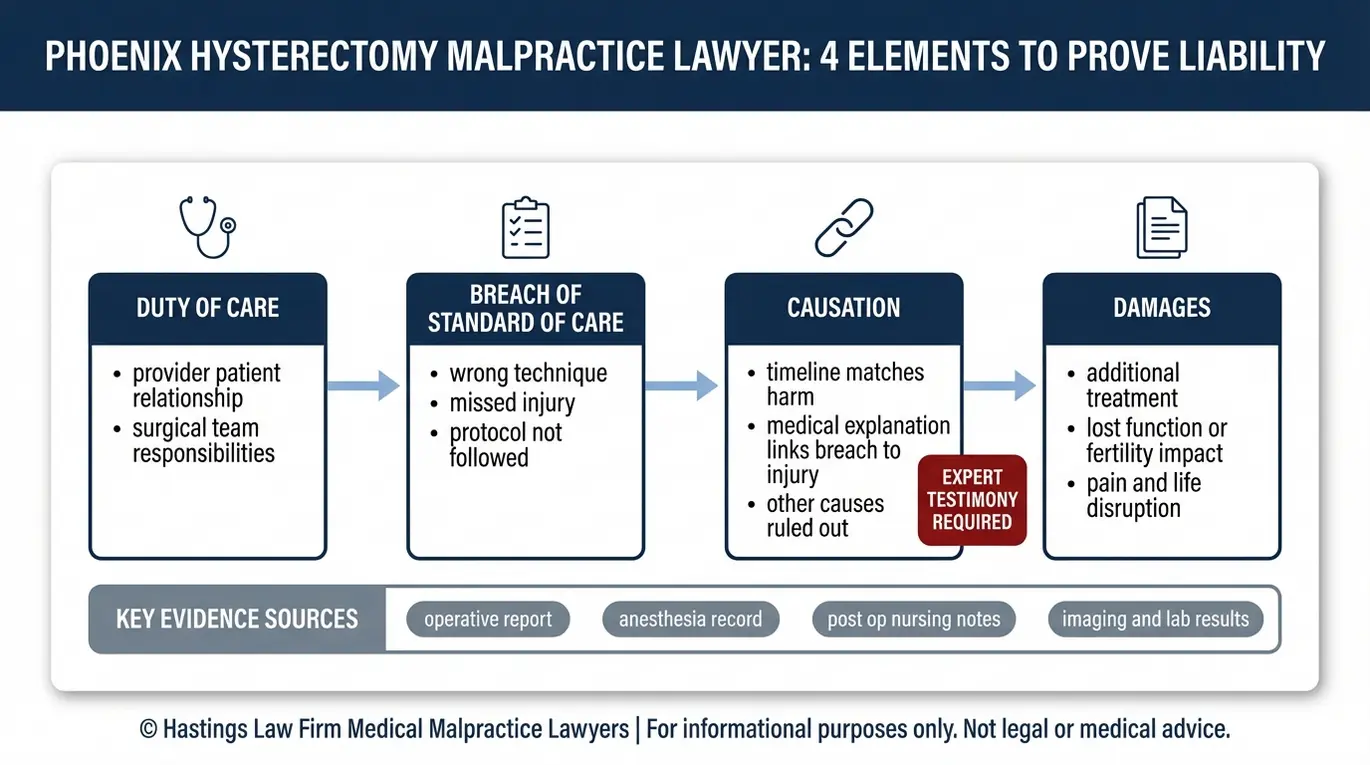
To win a hysterectomy malpractice case in Arizona, the plaintiff must prove that the surgeon deviated from the accepted medical standard of care and that this deviation directly caused significant injury or damages beyond the known risks of the surgery. This is the legal burden that separates a disappointing outcome from actionable negligence.
Under Arizona Revised Statutes § 12-563, a medical malpractice claim requires proof of two necessary elements:
- Breach of the standard of care: The health care provider failed to exercise the degree of care, skill, and learning expected of a reasonable, prudent provider in the same profession acting in the same or similar circumstances—whether through failure to follow hospital protocols, neglecting to perform intraoperative cystoscopy, a camera inspection of the bladder used to check for damage, or causing a thermal injury, an electrosurgical burn to nearby tissue.
- Causation: Such failure was a proximate cause of the patient’s injury.
The evidence our Phoenix hysterectomy malpractice lawyer team examines includes operative reports and the complete medical record. Our founder, Tommy Hastings, is a board-certified trial lawyer who has handled complex surgical negligence cases for over 20 years. A qualified lawyer for hysterectomy malpractice knows that expert testimony is required in Arizona to validate the claim and explain to a jury exactly where the care fell short.
Compensation for Hysterectomy Injuries
Victims of hysterectomy malpractice may be entitled to economic damages for medical bills and lost wages as well as non-economic damages for pain, suffering, loss of consortium, and the emotional trauma associated with loss of fertility or physical intimacy. The Arizona Constitution, Article 2, Section 31, protects a person’s right to recover damages for personal injuries, and Arizona law places no cap on these awards.
Economic damages cover the measurable financial losses: corrective surgeries to repair a damaged bladder or bowel, extended hospital stays, and medical bills. For patients who require ongoing care, future medical costs are also included.
Non-economic damages address the less tangible but equally real consequences. These can include chronic pain, permanent incontinence, and the loss of fertility or ability to carry a future pregnancy. As a Phoenix hysterectomy malpractice lawyer and hysterectomy lawsuit attorney, we work with medical experts to calculate the full scope of damages.
How Hastings Law Firm Investigates Surgical Errors
Hastings Law Firm utilizes a unique team of former defense attorneys, nurse consultants, and trial lawyers to conduct a rigorous investigation into hysterectomy errors ensuring that negligent surgeons are held accountable and victims receive maximum compensation. Our staff reviews operative reports and nursing documentation to identify where the standard of care was breached during a hysterectomy. Under Arizona Revised Statutes § 12-2293, patients have the right to obtain copies of their medical records.
As a Phoenix hysterectomy malpractice lawyer, our mission goes beyond compensation. We believe that holding negligent providers accountable helps prevent the same errors from harming another patient. Every case evaluation begins with a free confidential evaluation led by a patient advocate, and we handle all cases on a contingency fee basis.
Contact the Phoenix Surgical Error Attorneys at Hastings Law Firm Today for Help
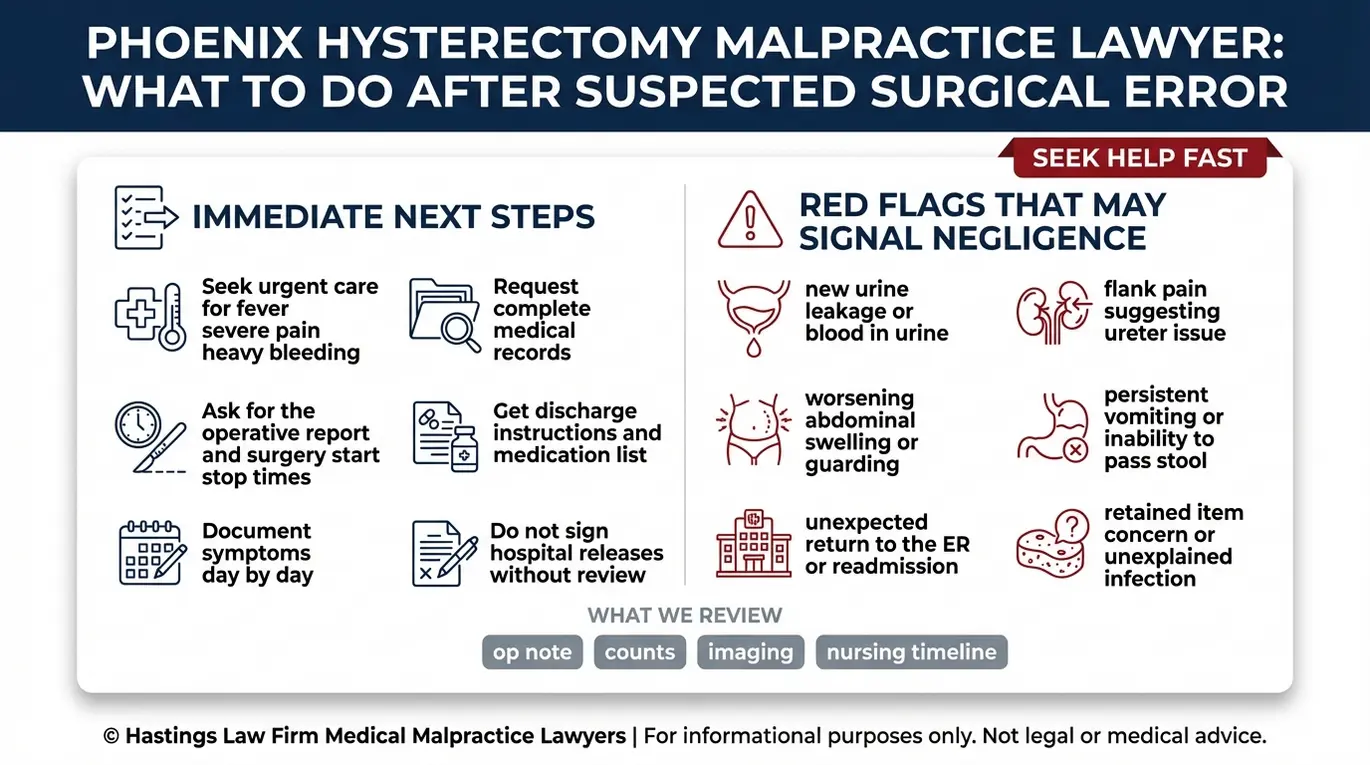
You do not have to face a hospital’s legal team alone. If you suspect that a surgical error during your hysterectomy caused a serious injury, you have the right to find out what happened in that operating room.
Time matters. Arizona law limits how long you have to file a medical malpractice claim. Acting sooner protects your ability to pursue the answers and accountability you deserve.
Hastings Law Firm is a Phoenix medical malpractice law firm built to handle these cases. Our founder, Tommy Hastings, is a 2025 inductee into the American Board of Trial Advocates. This elite group recognizes the nation’s top trial lawyers.
Contact us today for a free, confidential evaluation. There is no cost and no obligation. We only get paid if you do.
Frequently Asked Questions About Hysterectomy Malpractice in Phoenix


This content was researched and written by the Hastings Law Firm editorial team, which includes attorneys, medical professionals, and experienced researchers. Our writing is informed by internal knowledge and practical experience, and we cross-check critical details against authoritative sources cited throughout. Every piece undergoes human-led fact-checking and legal review. Because legal and medical information can change, if you spot an error, please contact us. Learn more about our content standards and review process on our editorial policy page.

Tommy Hastings, founder of Hastings Law Firm, is a board-certified personal injury trial lawyer dedicated exclusively to healthcare injury cases. Since 2001, he has represented injured patients and families in litigation against major hospital systems, pharmaceutical companies, and negligent healthcare providers nationwide. He has handled numerous high-profile cases that have drawn national media attention and resulted in multi-million dollar recoveries. He draws on that experience in his writing, helping readers understand how these cases work and what options may be available to them.
