


Arizona Hypoxic-Ischemic Encephalopathy Lawyer
Written by: Hastings Law Firm | Reviewed by: Tommy Hastings | Updated: July 27, 2026
Hypoxic Ischemic Encephalopathy is a newborn brain injury linked to oxygen deprivation and reduced blood flow around labor and delivery. Families often face uncertainty about whether preventable medical errors played a role and what the diagnosis means for long term care. The condition can range from mild effects to permanent neurological disability, and early recognition and timely treatment can shape outcomes. Medical records, imaging, and delivery timelines often become central when evaluating what happened. If you or a loved one were harmed or worse due to Hypoxic Ischemic Encephalopathy in Arizona, contact Hastings Law Firm for a free, confidential case review.

Top-Rated Arizona Birth Injury Attorneys for HIE Cases
What You Should Know About HIE Birth Injury Claims in Arizona:
- Long term disability can follow Hypoxic Ischemic Encephalopathy, and severity can range from minimal lasting effects to permanent neurological impairment.
- Missed or delayed cooling therapy can worsen outcomes, because therapeutic hypothermia is described as the standard of care for moderate to severe cases.
- Preventable labor and delivery breakdowns can be central to disputes, including ignored fetal distress and delayed emergency C section decisions.
- Later emerging developmental problems can affect legal options, because some HIE related conditions may not become apparent until years after birth.
- Recovery for future needs can be shaped by projected lifetime costs, because compensation is described as relying on life care plans and economic projections.
- Available time to pursue a claim can narrow unexpectedly in Arizona, because limitations rules and special rules for public hospitals are described as stricter.
- Objective severity grading can influence prognosis and claim value, because Sarnat staging is presented as graded evidence tied to lifetime care needs.
- Key evidence can become harder to obtain over time, because fetal monitor strips and delivery records are described as degrading or becoming less available.
- Imaging findings can be pivotal for documenting harm, because MRI and CT results are described as central clinical evidence in HIE cases.
- Early clinical indicators can shape treatment and documentation, including low APGAR scores and seizures soon after birth.

A Healthcare Focused Law Firm
When your child has been diagnosed with Hypoxic-Ischemic Encephalopathy, the weight of that moment is difficult to describe. You may be facing a future you never expected, filled with questions about what went wrong and whether your baby’s brain injury could have been prevented. You are not alone in feeling this way, and you deserve honest answers.
An experienced Arizona Hypoxic-Ischemic Encephalopathy lawyer can help you understand whether medical negligence contributed to your child’s condition and what legal options may be available to your family. At Hastings Law Firm, our medical-legal team focuses exclusively on medical malpractice. Founded by Tommy Hastings, a board-certified trial lawyer with over 20 years of experience, we focus on helping families secure the care they need to move forward.
If you believe your child’s injury was preventable, contact us for a free, confidential case evaluation. There is no fee unless we recover compensation for your family.
Why Choose Hastings Law Firm for Your Arizona HIE Claim
Hastings Law Firm offers a unique advantage in HIE litigation by combining board-certified legal expertise with an in-house medical team comprising former hospital nurses and defense attorneys who understand exactly how medical negligence occurs. That perspective allows us to identify where the standard of care broke down and build a medical malpractice case grounded in clinical evidence, not speculation.
As your Arizona Hypoxic-Ischemic Encephalopathy lawyer, we approach every birth injury case with one goal: holding negligent providers accountable while securing the resources your child will need for a lifetime of care. Our Arizona HIE attorneys prepare each case as though it will go before a jury, because that level of preparation is what drives meaningful results at every stage of the process.
The Hastings Advantage:
- Trial-ready from day one. We investigate and build every HIE case for trial immediately. This preparation signals to hospitals and insurers that we will not accept less than fair value for your child’s injuries.
- Insider medical insight. Our in-house nurse consultants review your medical records alongside our attorneys, identifying charting gaps and protocol failures that general practice firms often miss. Former defense counsel on our team anticipate the arguments hospitals will raise and help us counter them before they gain traction.
- No fee unless we win. We work on a contingency fee basis. You pay nothing upfront, and we only collect a fee if we recover compensation for your family. The financial risk is on us.
Understanding Hypoxic-Ischemic Encephalopathy and Brain Damage
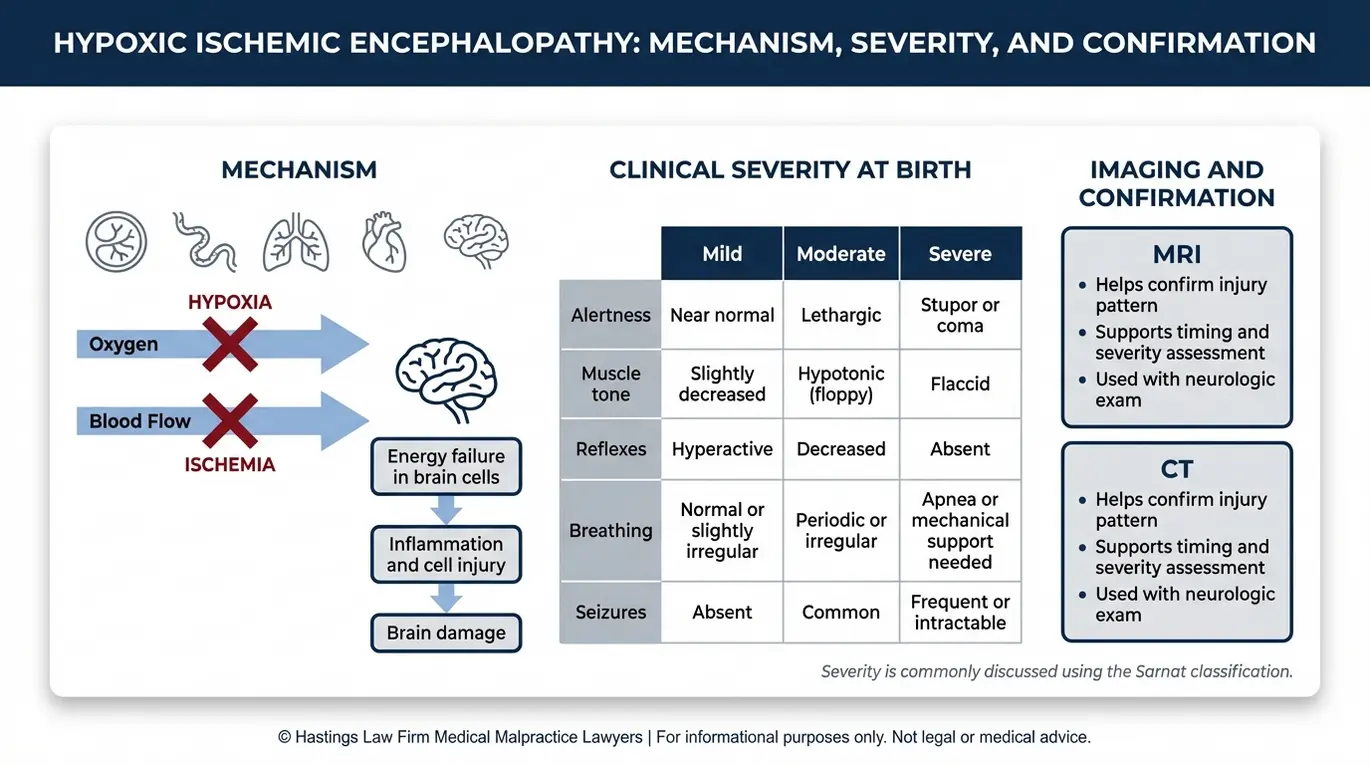
Hypoxic-Ischemic Encephalopathy (HIE) is a type of brain damage caused by oxygen deprivation (hypoxia) and limited blood flow (ischemia) to a baby’s brain, often occurring during labor or delivery due to preventable medical errors. This type of injury, sometimes referred to as perinatal asphyxia (oxygen deprivation around the time of birth), can result from complications that were not properly managed by the medical team.
The severity of HIE varies widely. Some children recover with minimal long-term effects, while others face permanent neurological disabilities including cerebral palsy, cognitive impairment, and seizure disorders. Early diagnostic imaging, particularly MRI and CT scans, helps clinicians assess the extent of the brain injury and guide treatment decisions. For families considering a legal claim, these imaging results often become central pieces of evidence that an Arizona Hypoxic-Ischemic Encephalopathy lawyer will use to document the scope of harm.
Sarnat Classification System and Prognosis
Doctors classify HIE severity using the Sarnat classification system, which is a standardized staging tool used to evaluate a newborn’s brain function after oxygen deprivation. Sarnat staging evaluates a newborn’s neurological function across categories including alertness, muscle tone, reflexes, and seizure activity. The classification is based on the Modified Sarnat Exam for Neonatal Encephalopathy at Stanford Medicine 25.
| Sarnat Stage | Clinical Presentation | Typical Neurological Outcome |
|---|---|---|
| Stage I (Mild) | Hyperalertness, jitteriness, normal muscle tone | Generally favorable; most infants recover fully |
| Stage II (Moderate) | Lethargy, decreased tone, possible seizures | Variable; significant risk of long-term impairment |
| Stage III (Severe) | Coma, flaccid tone, suppressed reflexes, recurrent seizures | High risk of severe disability or death |
The Sarnat classification does more than guide clinical treatment. In an HIE legal claim, it provides objective, graded evidence of injury severity that strengthens the connection between the medical error and the child’s prognosis. Higher Sarnat staging often correlates directly with greater lifetime care needs, which affects the value of the claim.
The Hastings Law Firm Difference
Results matter, but what truly sets us apart is how we achieve them. Every verdict, every settlement, and every Arizona courtroom victory comes from one guiding promise: To treat each client’s fight for justice as if it were our own.
This balance of skill, experience, and empathy reflects our core philosophy that justice should not only compensate the injured, but also make healthcare safer nationwide.

Common Medical Errors Leading to HIE in Arizona Hospitals
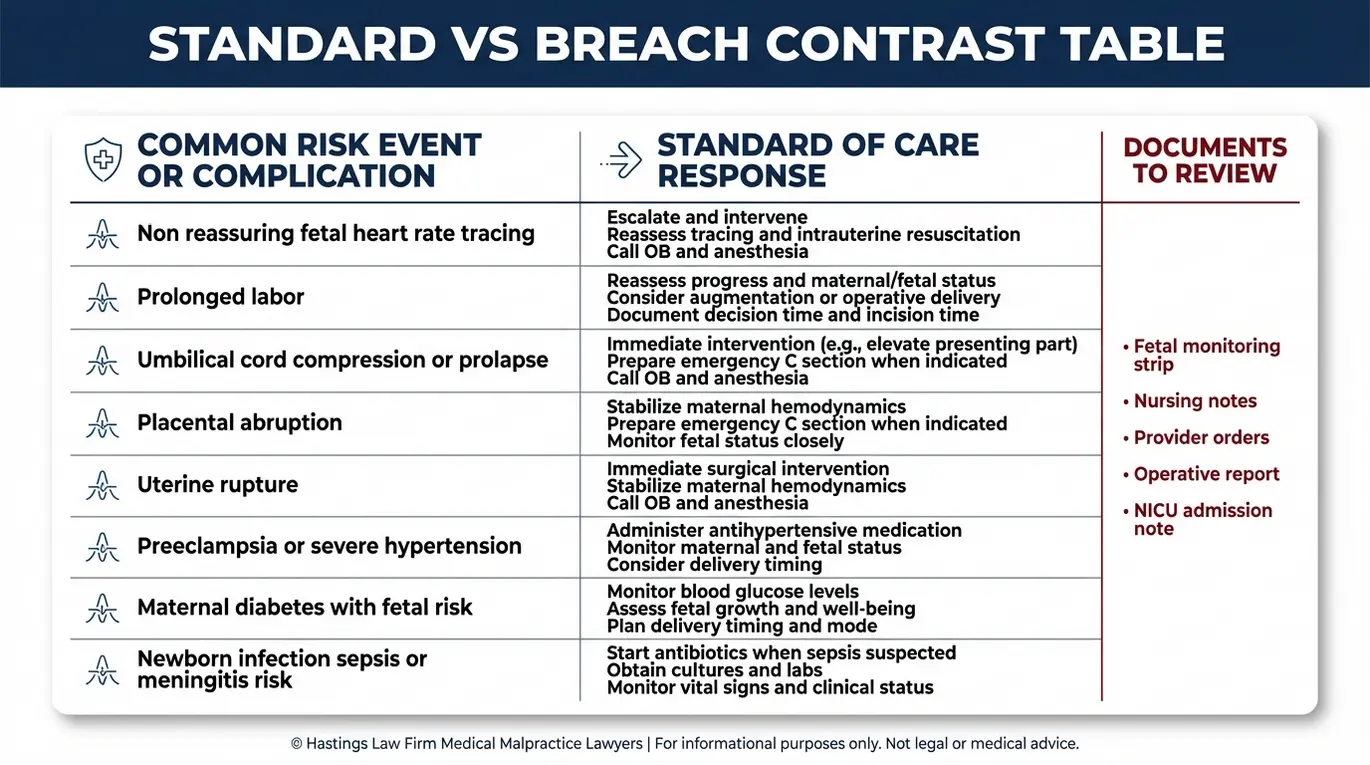
Medical malpractice leads to HIE when healthcare providers fail to monitor fetal distress, delay emergency C-sections, or mismanage labor complications like placental abruption or umbilical cord compression.
HIE-related medical errors can occur at any stage. An Arizona Hypoxic-Ischemic Encephalopathy lawyer evaluates the clinical timeline to determine where the standard of care was breached during pregnancy, labor, or postnatal care.
Prenatal errors may include failure to manage preeclampsia or maternal diabetes, which increase oxygen deprivation risks if untreated.
Labor and delivery errors are common. Fetal heart rate monitoring, also called cardiotocography (CTG), detects distress. When providers ignore non-reassuring strips, misuse Pitocin during prolonged labor, or delay a C-section, brain injury becomes likely. According to the Patient Safety Indicators Benchmark Data Tables published by the Agency for Healthcare Research and Quality, obstetric complications remain a measurable area of concern in patient safety tracking.
Postnatal errors like failing to treat neonatal infection, sepsis, or meningitis can also cause brain damage.
| Complication | Expected Standard of Care Response |
|---|---|
| Non-reassuring fetal heart rate patterns | Continuous monitoring, repositioning, and timely C-section if distress persists |
| Umbilical cord compression (reduced blood flow through a compressed cord) | Immediate intervention, possible emergency delivery |
| Placental abruption | Rapid assessment and emergency C-section when indicated |
| Uterine rupture | Immediate surgical delivery |
| Preeclampsia / Maternal diabetes | Ongoing monitoring, medication management, and early delivery planning if needed |
| Neonatal infection / Sepsis | Prompt identification, antibiotic treatment, and NICU transfer |
Missed Windows for Therapeutic Hypothermia
Therapeutic hypothermia, commonly called cooling therapy, is the current standard of care for treating newborns diagnosed with moderate to severe HIE. The treatment involves carefully lowering the baby’s body temperature to slow brain cell damage. This process must be initiated within a six-hour window after birth to be effective.
Newborns often require transfer to a neonatal intensive care unit (NICU) equipped for cooling therapy. When a medical team fails to recognize HIE symptoms promptly, or delays transfer to a facility capable of providing treatment, that missed six-hour therapeutic window can mean the difference between recovery and permanent brain damage. As your Arizona HIE lawyer, we examine the delivery timeline, transfer records, and NICU admission notes to determine whether this standard was met.
Recognizing Signs and Symptoms of HIE in Newborns
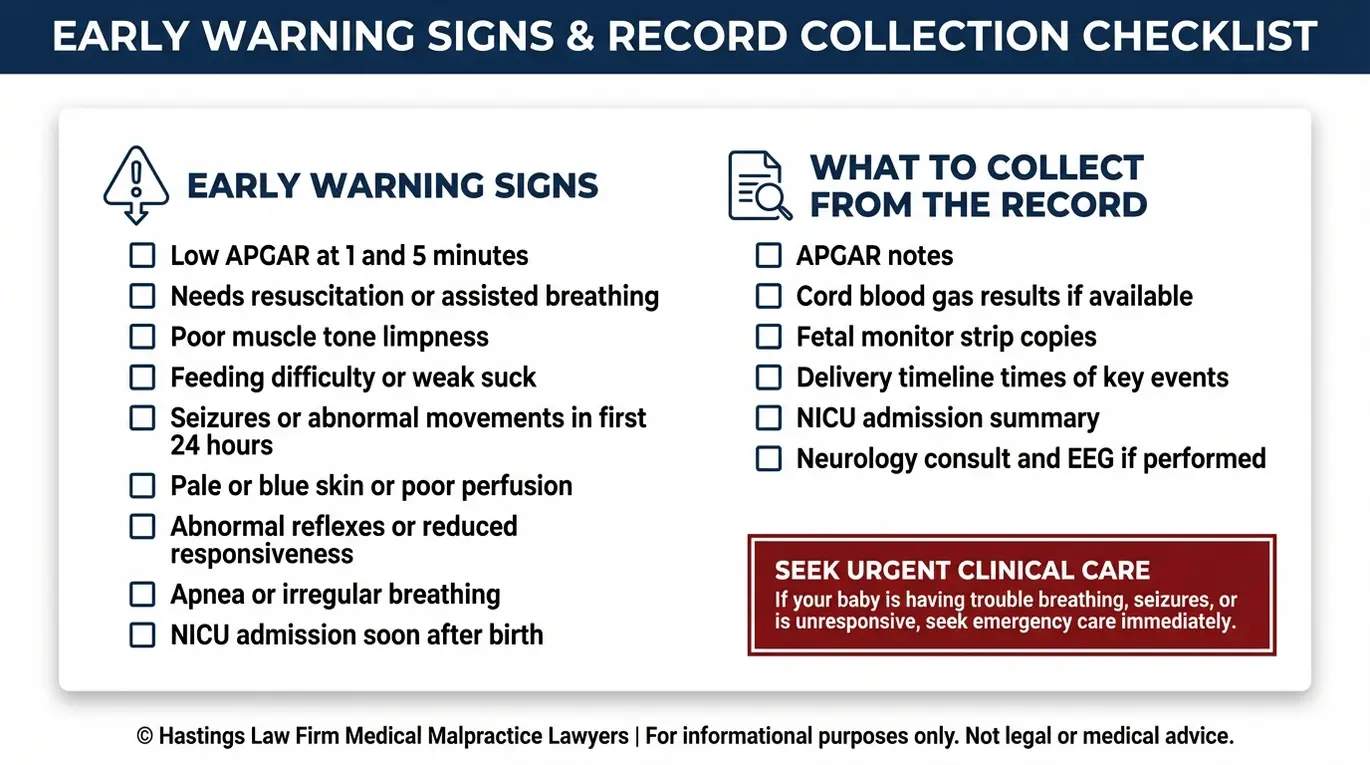
Immediate signs of HIE in a newborn often include low APGAR scores, seizures within the first 24 hours, difficulty feeding, limpness or poor muscle tone, and the need for resuscitation or NICU admission immediately after birth. Recognizing these indicators early is critical for both treatment and for preserving evidence that may support a future legal claim.
The APGAR scores are a quick assessment performed at 1, 5, and sometimes 10 minutes after birth. It rates a newborn’s heart rate, breathing, muscle tone, reflexes, and skin color on a scale of 0 to 10. Persistently low scores, especially at the 5- and 10-minute marks, can signal significant oxygen deprivation and may be among the first documented signs of HIE.
If your child experienced any of the following after delivery, an Arizona Hypoxic-Ischemic Encephalopathy lawyer can review the medical records:
- Low APGAR scores at 1, 5, or 10 minutes after birth
- Seizures or abnormal movements within the first 24 to 48 hours
- Pale or bluish skin color (cyanosis)
- Weak or absent reflexes
- Limpness, poor muscle tone, or inability to maintain posture
- Difficulty breathing, apnea, or need for assisted ventilation
- Problems with feeding or swallowing
- Need for immediate resuscitation after birth
- Emergency transfer to the NICU, a specialized hospital unit equipped to care for critically ill newborns
Not every symptom on this list confirms HIE, and some children with HIE may not show obvious signs right away. That is exactly why a thorough review of the delivery records, fetal monitoring data, and postnatal documentation matters.
Calculating Compensation for Lifetime Care Costs
Compensation in HIE cases is calculated using Life Care Plans that account for future medical care, specialized therapy, home modifications, loss of earning capacity, and non-economic damages like pain and suffering. Arizona HIE attorneys work alongside medical experts and economists to build these plans so that no future cost is overlooked.
The financial reality of raising a child with severe brain damage from HIE can be staggering. According to the NHE Fact Sheet published by the Centers for Medicare & Medicaid Services, healthcare costs in the United States continue to rise year over year, which makes accurate long-term projections essential.
Recoverable damages in an Arizona HIE claim may include:
- Lifetime medical care: Surgeries, hospitalizations, medications, and ongoing physician visits
- Rehabilitative therapy: Physical, occupational, and speech therapy over the child’s lifetime
- Specialized equipment: Wheelchairs, adaptive devices, communication aids, and home modifications
- In-home nursing and attendant care: Around-the-clock or part-time professional caregiving
- Lost earning capacity: The income the child would have earned over a lifetime, and wages lost by parents providing care
- Pain and suffering: The physical discomfort and emotional distress experienced by the child
- Loss of enjoyment of life: The diminished ability to participate in normal childhood and adult activities
- Loss of companionship: Impact on the parent-child relationship
Economists and life care planners work together to project these costs across the child’s expected lifespan, accounting for inflation and rising care expenses. As your Arizona Hypoxic-Ischemic Encephalopathy lawyer, we make sure these projections reflect reality, not estimates designed to minimize what your family is owed.
Arizona Statute of Limitations for Birth Injury Claims
In Arizona, the statute of limitations for medical malpractice is generally two years from the date of injury; however, for birth injuries involving minors, the time limit may be tolled (paused) or extended, making it critical to consult a lawyer immediately to preserve your rights.
Arizona law does provide certain protections for children, but relying on these extensions without legal guidance is risky. Medical evidence, including fetal monitor strips and delivery room records, can degrade or become harder to obtain over time. An Arizona Hypoxic-Ischemic Encephalopathy lawyer can evaluate your timeline and ensure that all statute of limitations deadlines are met.
The Discovery Rule and Delayed Diagnosis
Many HIE-related conditions, such as cerebral palsy and developmental delays, do not become apparent until a child reaches age 3 or 4. The discovery rule is a legal principle that may adjust the filing deadline to begin when the injury was reasonably discovered rather than when it occurred. This distinction is especially relevant in HIE cases where early symptoms were subtle or where an initial diagnosis was missed.
Because these timelines are case-specific, consulting with an attorney early helps protect your claim even if years have passed since the delivery. The discovery rule helps when symptoms like developmental delays do not appear until later.
Contact the Arizona Birth Injury Attorneys at Hastings Law Firm Today for Help
Your child’s diagnosis may have changed everything, but it does not have to define your family’s future without support. At Hastings Law Firm, we are committed to helping families find the truth about what happened during delivery and securing the financial resources needed to provide the best possible care for their child.
Tommy Hastings, a 2025 inductee into the American Board of Trial Advocates (ABOTA), and our team of nurse consultants and medical experts will review your records, identify whether the standard of care was met, and explain your legal options clearly and honestly. There is no cost for the initial consultation, and we do not collect a fee unless we recover compensation for your family.
Contact the Hastings Law Firm medical-legal team today for a free, confidential case evaluation. Let us help you get the answers and accountability your family deserves.
Frequently Asked Questions About Hypoxic-Ischemic Encephalopathy in Arizona


This content was researched and written by the Hastings Law Firm editorial team, which includes attorneys, medical professionals, and experienced researchers. Our writing is informed by internal knowledge and practical experience, and we cross-check critical details against authoritative sources cited throughout. Every piece undergoes human-led fact-checking and legal review. Because legal and medical information can change, if you spot an error, please contact us. Learn more about our content standards and review process on our editorial policy page.

Tommy Hastings, founder of Hastings Law Firm, is a board-certified personal injury trial lawyer dedicated exclusively to healthcare injury cases. Since 2001, he has represented injured patients and families in litigation against major hospital systems, pharmaceutical companies, and negligent healthcare providers nationwide. He has handled numerous high-profile cases that have drawn national media attention and resulted in multi-million dollar recoveries. He draws on that experience in his writing, helping readers understand how these cases work and what options may be available to them.
