


Arizona Hepatologist Malpractice Lawyer
Hepatologist malpractice involves a liver specialist falling below the accepted standard of care and causing patient harm. The results can be severe, with worsening illness, irreversible complications, and in some situations fatal outcomes. Common concerns include missed or delayed diagnosis, failure to monitor changing lab results, and medication decisions that are unsafe for compromised liver function. These cases often turn on whether a qualified specialist would have acted differently and whether the lapse directly caused measurable losses. If you or a loved one were harmed or worse due to hepatologist malpractice in Arizona, contact Hastings Law Firm for a free, confidential case review.

Last Updated: July 27, 2026
Trusted Legal Representation for Healthcare Negligence in Arizona
When a liver specialist’s care falls short, the consequences can be severe and life-altering. You may be dealing with a worsening diagnosis, unanswered questions, and a growing sense that something went wrong that should not have. That feeling deserves to be taken seriously.
Founded in 2005, Hastings Law Firm focuses exclusively on medical malpractice. Our legal team, which includes in-house nurse consultants and former defense attorneys, understands both the medicine and the legal strategy these cases demand. As an experienced Arizona hepatologist malpractice lawyer, we know how to identify where a liver specialist’s care deviated from what you had a right to expect.
If you believe negligent treatment caused harm to you or someone you love, we can review what happened and explain your options in a free, confidential consultation.

What Constitutes Malpractice by a Liver Specialist
Hepatologist malpractice occurs when a liver specialist deviates from the accepted standard of care, resulting in patient harm such as advanced liver failure, cirrhosis, or death. The standard of care refers to the level of care and skill that a reasonably competent health care professional would provide under similar circumstances. Not every poor outcome is malpractice, but when a doctor’s decisions fall below what a competent peer would have done under the same circumstances, the law provides a path to accountability for negligence by a liver doctor.
Hepatology, the branch of medicine focused on diseases of the liver, gallbladder, and biliary system, is a highly specialized field. Because of that specialization, the standard of care for a hepatologist is measured against what other qualified hepatologists would do. This distinction matters. A negligence claim against a liver doctor requires showing that the specialist failed to meet the expectations of their own discipline.
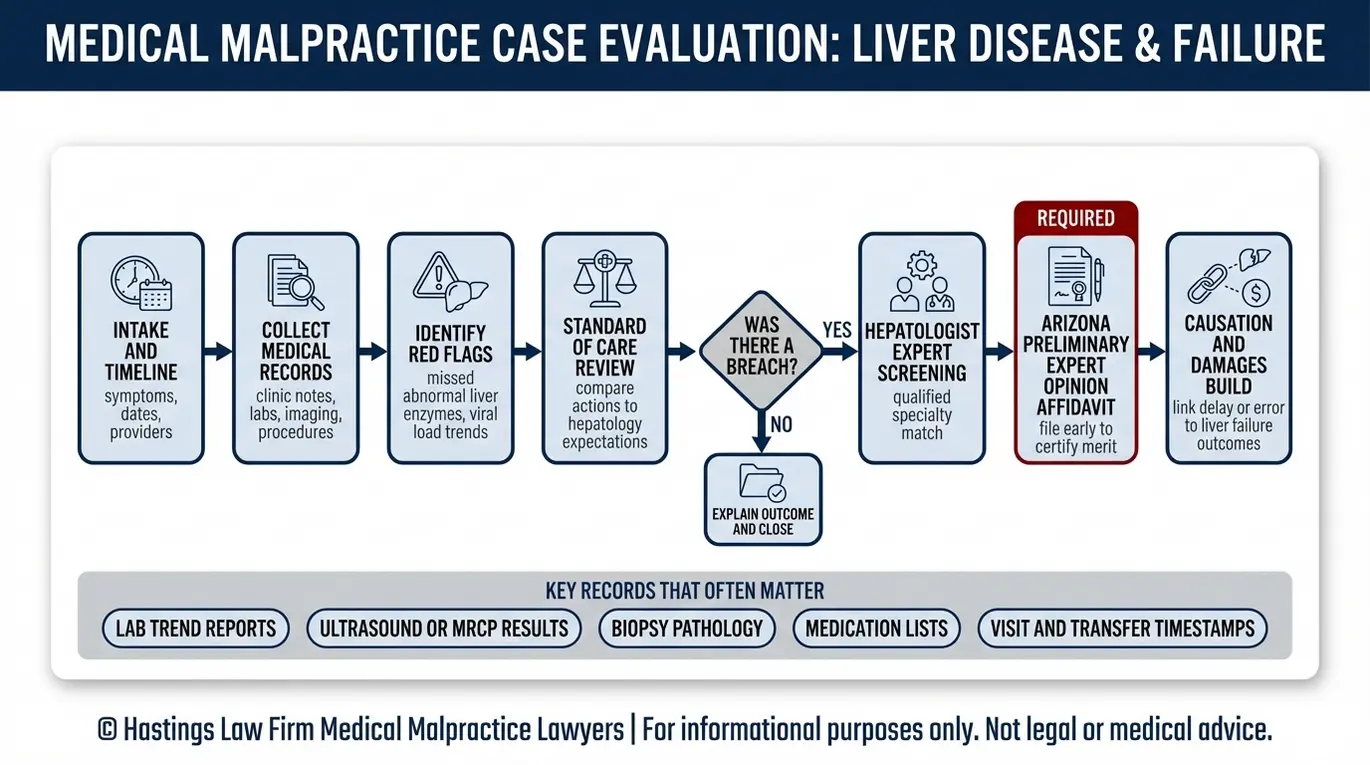
To build a viable claim, an Arizona hepatologist malpractice lawyer must establish four legal elements. First is duty: the doctor had a professional obligation to provide competent care. Second is breach: the doctor’s actions or inactions fell below the accepted standard. Third is causation: the breach directly led to the patient’s injury. Fourth is damages: the patient suffered measurable harm, whether physical, financial, or both.
One important distinction is the difference between a known complication and actionable negligence. A known complication is a recognized risk that can occur even when care is performed correctly. Negligence, by contrast, involves a failure to act as a reasonably skilled hepatologist would have.
Research published in a scoping review on diagnostic error in the *Journal of Patient Safety* highlights how diagnostic failures across specialties are often linked to breakdowns in the diagnostic process, not simply unavoidable outcomes. When a hepatologist misses something that their peers would have caught, that gap may cross the line from complication into medical negligence.
If you suspect that a liver specialist’s error contributed to your condition, consulting a hepatologist malpractice attorney can help clarify the process of suing a hepatologist in Arizona and whether the facts support a claim.

Common Hepatology Errors and Misdiagnosis Types
Common errors in hepatology include failing to diagnose hepatitis or liver cancer, ignoring abnormal liver enzymes, and medication errors that worsen liver failure. These are not abstract risks. They represent real patterns we see when reviewing cases involving liver doctor negligence.
Misdiagnosis is one of the most frequent issues. Symptoms of progressive liver disease, such as jaundice, fatigue, and abdominal swelling, can overlap with other conditions. When a hepatologist attributes these signs to a less serious cause without adequate testing, a patient may lose important time, leading to a delayed diagnosis. Failure to diagnose liver cancer or advanced cirrhosis at a stage when treatment could still be effective is a recurring basis for malpractice claims.
Failure to monitor is another common pattern. Patients with known hepatitis require ongoing surveillance of their viral load, the measurable amount of virus circulating in the blood, along with regular tracking of liver enzymes like AST and ALT. These lab values reflect how well the liver is functioning.
When rising numbers are documented in the chart but no follow-up action is taken, it may indicate a breach of the standard of care. An Arizona hepatologist malpractice lawyer will examine these records closely to identify gaps in monitoring.
Medication errors can be equally devastating. Some drugs are hepatotoxic, meaning they are capable of damaging the liver. Prescribing these medications to a patient with compromised liver function can accelerate organ failure. The FDA-approved labeling for riluzole on DailyMed is one example of a drug that carries explicit liver-related warnings and monitoring requirements.
| Area of Concern | Clinical Red Flag | Potentially Negligent Action |
|---|---|---|
| Hepatitis screening | Elevated liver enzymes, risk factors present | Failing to order viral hepatitis panel |
| Liver cancer surveillance | Cirrhosis diagnosis, rising AFP levels | Not scheduling regular ultrasound imaging |
| Viral load monitoring | Known hepatitis B or C infection | Ignoring rising viral load results |
| Medication management | Pre-existing liver damage documented | Prescribing hepatotoxic drugs without monitoring |
| Symptom evaluation | Jaundice, confusion, unexplained bruising | Attributing symptoms to non-hepatic causes |
Conservative vs. Aggressive Treatment Delays
There is a recognized place in medicine for watchful waiting, a clinical strategy where a doctor monitors a condition rather than intervening immediately. But when conservative management continues despite worsening liver enzymes (AST/ALT), which are blood markers indicating liver cell damage, the line between medical judgment and negligence becomes difficult to defend. If disease progression was documented in the records and no escalation occurred, we evaluate whether the treating hepatologist’s inaction fell below the standard of care.
The Hastings Law Firm Difference
Results matter, but what truly sets us apart is how we achieve them. Every verdict, every settlement, and every Arizona courtroom victory comes from one guiding promise: To treat each client’s fight for justice as if it were our own.
This balance of skill, experience, and empathy reflects our core philosophy that justice should not only compensate the injured, but also make health care safer nationwide.

The Consequences of Negligence including Liver Failure and Coma
Negligence in hepatology can lead to catastrophic outcomes, including unmanaged internal bleeding, hepatic encephalopathy, and the need for an urgent liver transplant. When a treatable condition is allowed to progress because of delayed diagnosis or inadequate monitoring, the consequences often become irreversible. When this occurs, a liver failure lawsuit may be necessary.
Coagulopathy is one of the most dangerous complications. The liver produces proteins essential to blood clotting. When liver function deteriorates, clotting ability drops, and the risk of life-threatening hemorrhage rises. Coagulation studies such as PT/INR, lab tests measuring how quickly blood clots, are standard tools for tracking this risk. Failure to order or act on these results can lead to uncontrolled bleeding.
Hepatic encephalopathy occurs when a failing liver can no longer filter toxins from the blood, allowing them to accumulate in the brain. According to the U.S. Department of Veterans Affairs resource on encephalopathy, this can cause confusion, personality changes, and in severe cases, coma. Early identification and treatment of encephalopathy are part of the expected standard of care for any hepatologist managing a patient with advanced liver disease.
When these failures prove fatal, surviving family members may have grounds for a wrongful death claim. An Arizona hepatologist malpractice lawyer can assess whether the progression from treatable condition to organ failure was the result of a preventable injury caused by a liver doctor’s negligence. We can help establish causation and pursue damages.
Complications we commonly evaluate in liver failure lawsuits include:
- Hemorrhage from portal hypertension or variceal bleeding: Increased pressure in liver veins can cause severe internal bleeding.
- Hepatic encephalopathy progressing to coma: Toxin buildup in the brain can lead to severe confusion or loss of consciousness.
- Kidney failure secondary to liver decompensation: A failing liver often puts extreme stress on the kidneys.
- Need for emergency liver transplant evaluation: This is the formal medical assessment to determine if a patient qualifies for organ replacement.
- Sepsis from untreated infections in immunocompromised liver patients: A damaged liver leaves the body highly vulnerable to dangerous blood infections.
- Wrongful death resulting from cascading organ failure: Preventable injuries can lead to the total collapse of the body’s systems.

Proving Negligence via Expert Testimony and Records
Proving a hepatologist malpractice claim requires expert testimony from a qualified hepatologist who can establish that the treating physician violated the standard of care. In Arizona, this requirement is built directly into the litigation process. When proving hepatologist negligence, expert testimony is essential.
Under Arizona Revised Statutes § 12-2603, a patient filing a medical malpractice case must provide a Preliminary Expert Opinion Affidavit. This certification, often referred to as an affidavit of merit and submitted early in litigation, confirms that a qualified medical expert has reviewed the case and believes the standard of care was breached. Without it, the case cannot move forward. The expert must practice in the same specialty as the defendant, which means hepatology cases typically require a hepatologist’s opinion.
Our legal team, which includes former defense attorneys and hospital nurses who previously worked for the systems they now challenge, begins by conducting a detailed review of medical records. We look for charting inconsistencies, gaps in documentation, and diagnostic tests, such as ultrasound and biopsy, that were either delayed or never ordered. Imaging records are important for proving hepatologist negligence. This includes FibroScan results, a non-invasive test that measures liver scarring, and MRCP scans used to visualize the bile ducts.
At Hastings Law Firm, our in-house medical staff, including nurse practitioners and Board Certified Patient Advocates, assists in interpreting clinical data before we ever engage outside experts. This process allows our Arizona hepatologist malpractice lawyer team to identify the strongest evidence early and build a trial-ready case. Our former defense attorneys know how the other side will try to explain away gaps in the record, and we prepare to counter those arguments before they are raised.
The Arizona Physician Consent to Settle Hurdle
Many malpractice insurance policies include a consent-to-settle clause, giving the doctor the contractual right to refuse any proposed settlement. This legal provision can significantly impact how a case is resolved, sometimes forcing a trial even when the evidence is strong. This is one reason our medical malpractice lawyer for liver cases team prepares every case as if it will go before a jury. A firm negotiation posture only works when the other side knows you are genuinely prepared to try the case.
Liability and Suing a Specialist or Hospital
When suing a liver specialist, liability in a hepatology malpractice case may extend beyond the individual doctor to include the hospital, clinic, or medical group where the care was provided. If institutional failures contributed to the harm, those entities can also be held accountable.
Individual liability applies when the hepatologist personally failed to meet the standard of care, whether through a missed diagnosis, a monitoring failure, or a medication error. Vicarious liability is a legal doctrine that holds an employer responsible for the negligent acts of its employees. This means a hospital may be responsible for a doctor’s mistakes if the hepatologist was employed by or contracted through that hospital system.
Hospitals and medical groups may also face direct claims for negligent credentialing, inadequate staffing, or administrative failures that affected patient care, effectively acting as a hospital negligence claim. An experienced hospital negligence lawyer will evaluate the full chain of responsibility, not just the doctor in the room.
Informed consent failures are another basis for liability. Before performing a liver biopsy, a procedure in which a needle is used to extract a small tissue sample from the liver for analysis, a physician must explain the risks, alternatives, and potential complications. Proper informed consent generally requires that patients be told about the nature of the procedure, the expected risks and benefits, and any reasonable alternatives. If a patient was not adequately warned before a procedure and suffered harm, that failure may support a separate claim.
Parties we evaluate for potential liability include:
- The treating hepatologist: They are responsible for clinical decisions and patient management.
- The referring physician: General practitioners must identify when a case requires specialist intervention.
- The hospital or medical facility: Institutions are responsible for maintaining safe protocols and staffing levels to ensure patient safety.
- The medical group or practice entity: Organizations may be vicariously liable for the actions of their doctors.
- Laboratory or imaging providers who delivered inaccurate results: Diagnostic errors can stem from faulty equipment or technical mistakes.
Recoverable Damages in Arizona Liver Injury Cases
Patients harmed by hepatologist negligence may recover economic damages for medical bills and lost wages, as well as non-economic damages for pain, suffering, and loss of enjoyment of life. Arizona law allows injured patients and their families to seek compensation for liver malpractice that reflects the full scope of the harm.
Economic damages cover the measurable financial losses tied to the injury. These include current and future medical expenses, which in liver injury cases can be substantial, especially when a transplant is required. We often use a life care plan to project these long-term needs. Lost wages and diminished earning capacity are also recoverable if the injury affects the patient’s ability to work.
Non-economic damages address the personal toll: chronic pain, emotional distress, loss of independence, and the disruption to daily life that often accompanies serious liver disease. The Arizona Constitution, Article 2, Section 31 prohibits the legislature from placing caps on damages for personal injury or wrongful death. This means Arizona juries have the authority to award full compensation based on the evidence presented.
Categories of damages an Arizona hepatologist malpractice lawyer may pursue include:
- Past and future medical costs, including transplant-related expenses
- Lost income and reduced earning capacity
- Pain and suffering
- Loss of enjoyment of life
- Loss of consortium for spouses and family members
- Funeral and burial costs in wrongful death cases
Contact the Arizona Doctor Malpractice Attorneys at Hastings Law Firm Today for Help
Arizona law sets time limits on when a malpractice claim can be filed, so it is important to begin the process sooner rather than later. Hastings Law Firm offers a free, confidential case evaluation where our medical and legal team can review your records, explain whether you may have a claim, and outline the steps ahead.
Our firm was founded by Tommy Hastings, a board-certified trial lawyer who has focused on medical negligence for over 20 years. Tommy Hastings is Board Certified in Personal Injury Trial Law, an honor held by fewer than 2% of practitioners. We work on a contingency fee basis, which means you pay no attorney fees or costs unless we recover compensation on your behalf. Our team of attorneys, nurse consultants, and patient advocates is dedicated exclusively to medical malpractice, and we bring the resources needed to hold negligent providers accountable.
If you or a loved one suffered harm because of a liver specialist’s error, an Arizona hepatologist malpractice lawyer at Hastings Law Firm is ready to listen. Contact us today to take the first step toward getting answers and protecting your future.
Frequently Asked Questions About Hepatologist Malpractice in Arizona


This content was researched and written by the Hastings Law Firm editorial team, which includes attorneys, medical professionals, and experienced researchers. Our writing is informed by internal knowledge and practical experience, and we cross-check critical details against authoritative sources cited throughout. Every piece undergoes human-led fact-checking and legal review. Because legal and medical information can change, if you spot an error, please contact us. Learn more about our content standards and review process on our editorial policy page.

Tommy Hastings, founder of Hastings Law Firm, is a board-certified personal injury trial lawyer dedicated exclusively to healthcare injury cases. Since 2001, he has represented injured patients and families in litigation against major hospital systems, pharmaceutical companies, and negligent healthcare providers nationwide. He has handled numerous high-profile cases that have drawn national media attention and resulted in multi-million dollar recoveries. He draws on that experience in his writing, helping readers understand how these cases work and what options may be available to them.
