


Arizona HELLP Syndrome Malpractice Lawyer
HELLP syndrome is a life threatening pregnancy complication that can progress quickly and requires urgent medical attention. When providers miss warning signs, delay testing, or fail to act on abnormal lab results, mothers and babies can face severe injuries or worse. This topic often involves questions about whether the standard of care was met during pregnancy, delivery, or the postpartum period, and how delayed decisions can affect outcomes and accountability. If you or a loved one were harmed or worse due to HELLP syndrome malpractice in Arizona, contact Hastings Law Firm for a free, confidential case review.

Last Updated: September 24, 2026
Experienced Maternal Injury Attorneys Serving Arizona
When something goes wrong during pregnancy or delivery, the confusion and fear can be overwhelming. If you or someone you love suffered serious harm from HELLP syndrome that was missed or mismanaged, you are not alone in questioning what happened.
At Hastings Law Firm, we focus exclusively on medical malpractice cases. Our team includes former defense attorneys who once represented hospitals, as well as in-house medical professionals who help us understand clinical records from the inside out. We know how to identify where care fell short and build cases that hold providers accountable.
If you believe a delay in diagnosis or treatment caused lasting harm, an Arizona HELLP Syndrome Malpractice Lawyer at our firm can review your situation and explain your legal options. Contact our Phoenix office for a free, confidential case evaluation.

Understanding HELLP Syndrome and Medical Liability
HELLP syndrome is a life-threatening pregnancy complication defined by Hemolysis, Elevated Liver enzymes, and Low Platelet count that requires immediate medical intervention to prevent maternal or fetal death. The condition often develops as a severe variant of preeclampsia, a disorder marked by high blood pressure during pregnancy, and can progress rapidly without warning.
The acronym breaks down as follows:
| Letter | Meaning | What It Indicates |
|---|---|---|
| H | Hemolysis | Red blood cells are breaking down abnormally |
| EL | Elevated Liver enzymes | Liver damage is occurring |
| LP | Low Platelet count | Blood clotting ability is compromised |
Physicians identify HELLP syndrome through blood tests that measure specific markers to assess organ function. Alanine aminotransferase (ALT) and aspartate aminotransferase (AST) are enzymes released when the liver is damaged. These are key indicators of hepatic distress, a sign of liver damage.
Thrombocytopenia, or low platelet count, signals that the body’s clotting system is failing, increasing the risk of hemorrhage. According to the NCBI Bookshelf overview of HELLP Syndrome, these lab abnormalities require urgent action to stabilize the patient.
The standard of care requires providers to order these tests promptly when a pregnant patient presents with concerning symptoms, such as high blood pressure or abdominal pain. Medical professionals must act immediately upon receiving concerning lab values, as the window for effective intervention is narrow.
A failure to recognize abnormal results or act on them quickly can create medical liability for the healthcare provider. Under Arizona Revised Statutes § 12-612, surviving family members may pursue legal claims when medical errors result in serious injury or death.
A HELLP syndrome malpractice attorney can help determine whether the medical team responded appropriately to the clinical signs in your case.

Warning Signs of HELLP Syndrome That Providers Ignore
Doctors may commit malpractice by dismissing critical symptoms such as upper right abdominal pain, severe headaches, or visual disturbances as normal pregnancy discomforts. These warning signs often indicate a dangerous progression that demands immediate testing and intervention.
Many women with developing HELLP syndrome report epigastric pain, a sharp ache in the upper abdomen often mistaken for heartburn, indigestion, or gallbladder issues. Because these complaints are common in pregnancy, inexperienced providers may fail to investigate further.
Other warning signs include:
- Severe headache that does not respond to medication
- Nausea or vomiting in the third trimester
- Sudden swelling in the face or hands
- Blurred vision or seeing spots
- Shoulder pain or pain when breathing deeply
- Rapid weight gain from fluid retention
The University of Rochester Medical Center notes that HELLP syndrome can develop suddenly, sometimes before high blood pressure is even detected. Preeclampsia, a condition involving hypertension and organ damage during pregnancy, frequently precedes HELLP syndrome but not always. Some patients progress directly to the more severe condition.
When providers ignore these symptoms, patients face catastrophic risks including liver rupture, stroke, seizures, pulmonary edema, and acute renal failure. Without timely treatment, the condition creates a cascade of organ failure that places the mother’s life in immediate jeopardy.
Placental abruption, where the placenta separates from the uterine wall before delivery, can deprive the baby of oxygen and cause stillbirth or permanent neurological injury. Arizona’s statute of limitations under § 12-542 sets time limits for filing injury claims. An Arizona maternal injury lawyer can evaluate whether delayed diagnosis in your case may support a legal claim.
The Hastings Law Firm Difference
Results matter, but what truly sets us apart is how we achieve them. Every verdict, every settlement, and every Arizona courtroom victory comes from one guiding promise: To treat each client’s fight for justice as if it were our own.
This balance of skill, experience, and empathy reflects our core philosophy that justice should not only compensate the injured, but also make health care safer nationwide.

Failure to Treat and Manage Maternal Hemolysis Injury
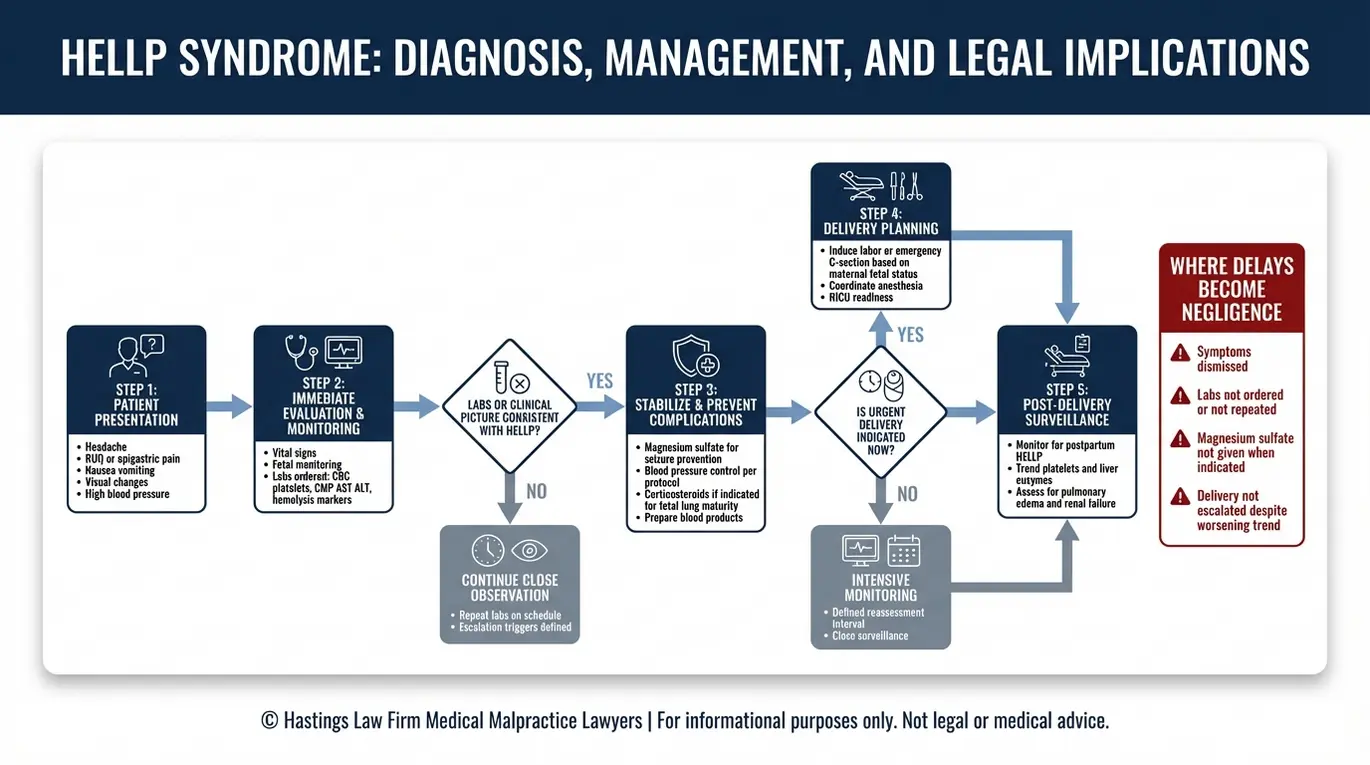
Medical negligence occurs when providers fail to induce labor, perform an emergency C-section, or administer magnesium sulfate despite clear clinical evidence of HELLP syndrome. The only definitive treatment for HELLP syndrome is delivery, and delays in making that decision can cause permanent harm or death.
The standard of care is the level of care a reasonably competent medical professional would provide in a similar situation. Hemolysis, the destruction of red blood cells, leads to anemia and organ damage as the body loses its ability to carry oxygen effectively. Severe anemia may require a blood transfusion to stabilize the mother’s condition.
Once lab results confirm this process is underway alongside elevated liver enzymes and low platelets, the standard of care typically requires an expedited delivery plan. The treatment timeline generally follows this sequence:
| Stage | Required Action |
|---|---|
| Symptom presentation | Immediate blood pressure monitoring and lab work |
| Lab confirmation | Administration of magnesium sulfate for seizure prevention |
| Fetal assessment | Continuous fetal monitoring to detect distress |
| Pre-delivery (if under 34 weeks) | Corticosteroids to accelerate fetal lung development |
| Delivery decision | Emergency C-section or labor induction based on maternal and fetal status |
Magnesium sulfate, a medication that prevents seizures in women with severe preeclampsia and HELLP syndrome, must be given in the correct dosage and timing. Failure to administer it, or errors in the infusion protocol, can leave mothers vulnerable to eclamptic seizures.
The baby also faces serious risks. Placental abruption can occur suddenly, cutting off the blood supply. Without proper fetal monitoring and rapid intervention, hypoxia and brain injury may result, leading to conditions like cerebral palsy. The medical team must remain vigilant for signs of fetal distress throughout the process.
A malpractice lawyer for HELLP syndrome cases examines whether the treatment decisions and timing met accepted medical standards.
Postpartum HELLP Syndrome Risks and Diagnosis
HELLP syndrome can develop or worsen after delivery, a window often overlooked by hospital staff focused on the newborn. Postpartum HELLP syndrome, which occurs when the condition emerges in the days following birth, presents the same dangerous symptoms and requires the same urgent response.
Women with risk factors such as preeclampsia during pregnancy or a higher recurrence risk due to history of the condition need careful monitoring after delivery. When providers discharge mothers without adequate follow-up instructions or fail to recognize worsening symptoms during postpartum hospital stays, preventable injuries can occur.
Establishing Negligence in Arizona HELLP Cases
To prove a malpractice claim in Arizona, the plaintiff must demonstrate that the healthcare provider breached the accepted standard of care resulting in specific damages to the mother or child. This requires connecting the provider’s actions or omissions directly to the harm suffered.
Arizona medical malpractice claim requirements rest on four elements:
- Duty: The provider had a professional obligation to treat the patient according to accepted standards
- Breach: The provider failed to meet that standard through action or inaction
- Causation: The breach directly caused the injury
- Damages: The patient or family suffered measurable harm as a result
Evidence is essential in building these cases. Prenatal care records document what symptoms were reported and how providers responded. Fetal monitoring strips, which are continuous recordings of the baby’s heart rate during labor, can reveal whether distress was detected and addressed.
Lab results showing elevated ALT and AST levels or thrombocytopenia, a critical decrease in blood platelets, establish when the clinical picture became clear. Establishing liability can be complex, particularly when determining whether to sue a hospital, a private practice physician, or both.
Hospitals may be held vicariously liable for the negligence of their employees, but independent contractors often carry their own insurance coverage. Identifying the correct defendants is an important step in the litigation process.
Under Arizona Revised Statutes § 12-2604, expert witnesses in medical malpractice cases must meet specific qualifications. Our founder, board-certified trial lawyer Tommy Hastings, oversees the legal strategy for these cases. We work with board-certified maternal-fetal medicine specialists and other qualified experts who can explain what the standard of care required.
A medical malpractice lawyer in Arizona can analyze your records, consult with experts, and determine whether the evidence supports a claim.

Recovering Damages for Mothers and Infants
Families may recover compensation for past and future medical bills, lost wages, pain and suffering, and in tragic cases, wrongful death damages. The goal is to address both the financial burden and the personal toll that medical negligence causes.
Compensatory damages in HELLP syndrome cases often include:
- Emergency care and hospitalization costs
- NICU expenses if the baby required intensive treatment
- Ongoing therapy, rehabilitation, or specialized medical equipment
- Lost income if the mother cannot return to work
- Future medical needs outlined in a life care plan
Non-economic damages cover the suffering that cannot be measured in receipts. This includes physical pain, emotional trauma, loss of enjoyment of life, and the impact on family relationships.
In cases involving severe birth injuries, these damages acknowledge the profound, lifelong alteration of the child’s potential and the family’s daily reality. When a mother or child dies due to medical negligence, surviving family members may pursue wrongful death claims to recover funeral expenses and compensation for their loss.
An Arizona HELLP Syndrome Malpractice Lawyer at Hastings Law Firm can help calculate the full scope of damages in your case and pursue the financial security your family needs.
Contact the Arizona Birth Injury Attorneys at Hastings Law Firm Today for Help
HELLP syndrome errors are often preventable. When providers miss the warning signs or delay treatment, families should not bear the financial burden of that negligence.
At Hastings Law Firm, we handle medical malpractice cases on a contingency fee basis. You pay no attorney fees or costs unless we recover compensation for you. Our Phoenix office serves families throughout Arizona, and our team of attorneys and in-house medical professionals is ready to review your case.
If you suspect that a delayed diagnosis or treatment failure caused harm to you or your baby, we can help you understand what happened and whether you have a valid claim. Contact us today for a free, confidential case evaluation.
Frequently Asked Questions About HELLP Syndrome Malpractice in Arizona


This content was researched and written by the Hastings Law Firm editorial team, which includes attorneys, medical professionals, and experienced researchers. Our writing is informed by internal knowledge and practical experience, and we cross-check critical details against authoritative sources cited throughout. Every piece undergoes human-led fact-checking and legal review. Because legal and medical information can change, if you spot an error, please contact us. Learn more about our content standards and review process on our editorial policy page.

Tommy Hastings, founder of Hastings Law Firm, is a board-certified personal injury trial lawyer (by the Texas Board of Legal Specialization) dedicated exclusively to healthcare injury cases. Since 2001, he has represented injured patients and families in litigation against major hospital systems, pharmaceutical companies, and negligent healthcare providers nationwide. He has handled numerous high-profile cases that have drawn national media attention and resulted in multi-million dollar recoveries.
