


Arizona Heart Attack Misdiagnosis Lawyer
Written by: Hastings Law Firm | Reviewed by: Tommy Hastings | Updated: July 27, 2026
A missed or delayed heart attack diagnosis can lead to permanent heart damage, heart failure, or fatal outcomes when emergency care does not recognize warning signs in time. Misdiagnosis often happens when symptoms are dismissed, test results are misread, or follow up is missed, especially when symptoms are not classic. The standard of care in emergency settings focuses on ruling out life threatening cardiac causes through timely testing and careful review before discharge. If you or a loved one were harmed or worse due to failure to diagnose a heart attack in Arizona, contact Hastings Law Firm for a free, confidential case review.
Trusted Arizona Medical Attorneys for Failure to Diagnose Heart Attack Claims
What You Should Know About Failure to Diagnose Heart Attack Claims in Arizona:
- Permanent heart damage or fatal outcomes can result when a heart attack is missed and treatment is delayed during the time sensitive period when intervention matters most.
- A malpractice claim can turn on whether the care fell below the accepted standard of care and whether the delay directly caused additional harm.
- Dangerous delays can occur when symptoms are attributed to non cardiac causes such as anxiety or acid reflux without an appropriate cardiac evaluation.
- Missed heart attacks can be more likely when symptoms are atypical and cognitive bias or gender bias leads to premature discharge.
- Liability can extend beyond an individual physician when systemic hospital problems such as inadequate staffing or flawed triage protocols contribute to the missed diagnosis.
- Recovery can include economic losses and non economic harms such as pain and suffering and reduced life expectancy when a delayed diagnosis causes lasting injury.
- Wrongful death claims may be available to surviving family members when a missed heart attack results in death.
- Options can be lost if filing time limits are missed and medical record evidence becomes harder to preserve as time passes.
- Case viability can depend on qualified expert review of the medical records to identify where the standard of care was not met.

A Healthcare Focused Law Firm
A missed heart attack diagnosis can change everything in a matter of hours. If you or someone you love suffered serious cardiac damage, or worse, because an emergency room failed to recognize the signs, the confusion and grief you are feeling right now are completely understandable. You trusted the medical system to act quickly, and that trust was broken.
As Arizona heart attack misdiagnosis lawyers, we represent patients and families harmed by preventable diagnostic failures. Our team includes in-house medical professionals and former defense attorneys who know exactly how to investigate these cases, identify where the standard of care was violated, and build a claim designed to hold the responsible parties accountable.
If you believe a heart attack was missed or misdiagnosed, we can review what happened and explain your options in a free, confidential consultation.
Understanding Heart Attack Misdiagnosis and Failure to Diagnose
A misdiagnosed heart attack occurs when a healthcare provider fails to recognize the clinical signs of myocardial infarction, discharging the patient or delaying treatment during the critical window for survival. In these cases, the patient may be discharged prematurely or given an incorrect diagnosis, and this delayed diagnosis occurs during the narrow window when intervention matters most.
A heart attack, or myocardial infarction, happens when blood flow to the heart is blocked. Failure to diagnose a cardiac event can take different forms. In some cases, a physician may dismiss symptoms entirely, attributing chest pain or shortness of breath to something benign.
In other instances, a provider may order the correct tests but misread the results or fail to follow up. This often results in missing acute coronary syndrome (ACS), a term for conditions including heart attack and unstable angina that require immediate care. According to a landmark report by the Agency for Healthcare Research and Quality (AHRQ), diagnostic errors remain one of the most underrecognized sources of patient harm in the U.S. healthcare system.
In cardiology, there is a well-known principle: “time is muscle.” This refers to the fact that every minute blood flow to the heart remains blocked, more heart tissue dies. A delay of even a few hours can mean the difference between a full recovery and permanent cardiac damage, heart failure, or death.
That said, not every negative outcome after a cardiac event is medical malpractice. An Arizona heart attack malpractice attorney must demonstrate that the provider’s actions fell below the accepted standard of care. This means a reasonably competent physician in the same situation would have acted differently, and that failure directly caused additional harm.
Common Conditions Mistaken for a Heart Attack in Arizona ERs
Emergency room physicians frequently misdiagnose heart attacks as less severe gastrointestinal or respiratory conditions, leading to dangerous delays in life-saving intervention. This is especially common when patients present with what are called atypical heart attack symptoms, meaning signs that do not match the classic “Hollywood” portrayal of sudden, crushing chest pain.
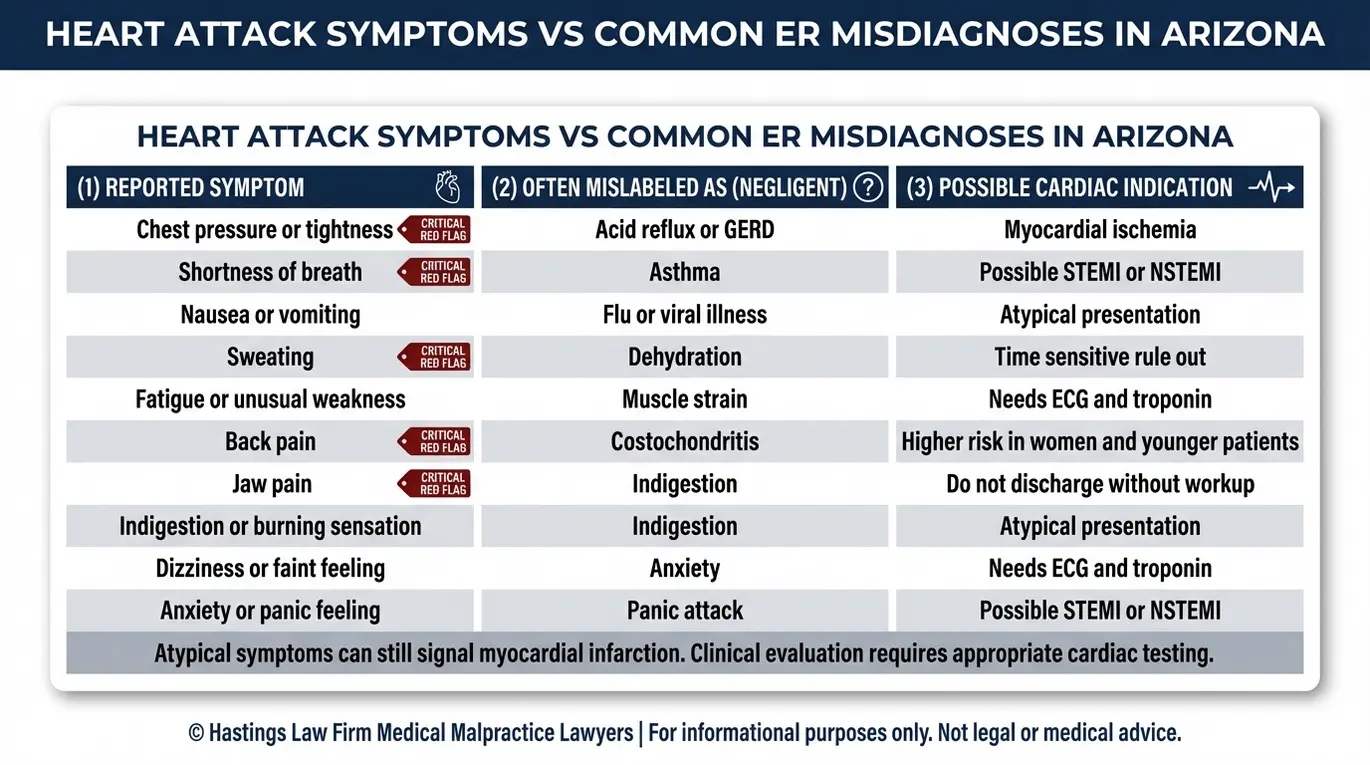
Many patients arrive at an ER with complaints like jaw pain, upper back pain, nausea, extreme fatigue, or shortness of breath without any chest discomfort at all. These symptoms are frequently attributed to acid reflux, anxiety or panic attacks, indigestion, or musculoskeletal strain. If a doctor settles on one of these explanations without running the necessary cardiac workup, the consequences can be severe.
The table below illustrates how commonly reported symptoms can be negligently misdiagnosed when the underlying cause is actually cardiac:
| Reported Symptom | Common Negligent Misdiagnosis | Actual Cardiac Indication |
|---|---|---|
| Chest tightness or pressure | Acid reflux / GERD | Angina or acute myocardial infarction |
| Nausea and vomiting | Stomach virus / food poisoning | Inferior wall heart attack |
| Shortness of breath | Anxiety / panic attack | Heart failure or coronary artery blockage |
| Jaw or neck pain | TMJ disorder / dental issue | Referred cardiac pain |
| Upper back pain | Muscle strain | Posterior myocardial infarction |
| Fatigue and lightheadedness | Dehydration / stress | Reduced cardiac output |
As the Kaiser Permanente guide on heart attack symptoms in women explains, women are particularly vulnerable to being sent home because their symptoms often fall outside the textbook presentation. Under A.R.S. § 12-563, a misdiagnosis of heart attack lawyer in Arizona must establish that the provider’s failure to properly evaluate these symptoms fell below accepted medical standards and directly caused harm.
Cognitive Bias and Gender Disparities in Cardiac Triage
One of the most dangerous factors behind missed heart attacks is cognitive bias, specifically a pattern called anchoring bias. This is a cognitive shortcut where a physician latches onto the first symptom or impression and fails to consider other possibilities. If a 38-year-old woman walks into an ER reporting nausea and chest tightness, a doctor affected by anchoring bias may immediately attribute those symptoms to anxiety and never order cardiac testing.
Gender bias in cardiac triage, the tendency to attribute women’s symptoms to emotional distress rather than physical emergencies, compounds this problem. Studies consistently show that women are statistically more likely to be discharged from emergency rooms during an active cardiac event.
Legal reviews often find that standard cardiac protocols were skipped entirely for female patients presenting with non-classic symptoms. When a lawyer for a missed heart attack reviews these cases, documentation often reveals where the clinical focus shifted away from potential cardiac causes prematurely.
The Hastings Law Firm Difference
Results matter, but what truly sets us apart is how we achieve them. Every verdict, every settlement, and every Arizona courtroom victory comes from one guiding promise: To treat each client’s fight for justice as if it were our own.
This balance of skill, experience, and empathy reflects our core philosophy that justice should not only compensate the injured, but also make healthcare safer nationwide.

The Medical Standard of Care for Chest Pain in Arizona
The standard of care requires Arizona emergency rooms to immediately rule out life-threatening conditions for any patient presenting with potential cardiac symptoms through specific protocols and testing. The standard of care refers to the specific level of attention and clinical steps a reasonably competent healthcare provider must follow.
A Phoenix failure to diagnose heart attack attorney evaluates whether these protocols were followed by reconstructing the clinical timeline from medical records, nursing notes, and test results. When a patient arrives with chest pain, pressure, or shortness of breath, a prudent emergency physician is expected to follow a structured diagnostic workup. According to guidelines referenced by Drexel University research on emergency department ECG protocols, obtaining a timely ECG is a foundational step in cardiac triage.
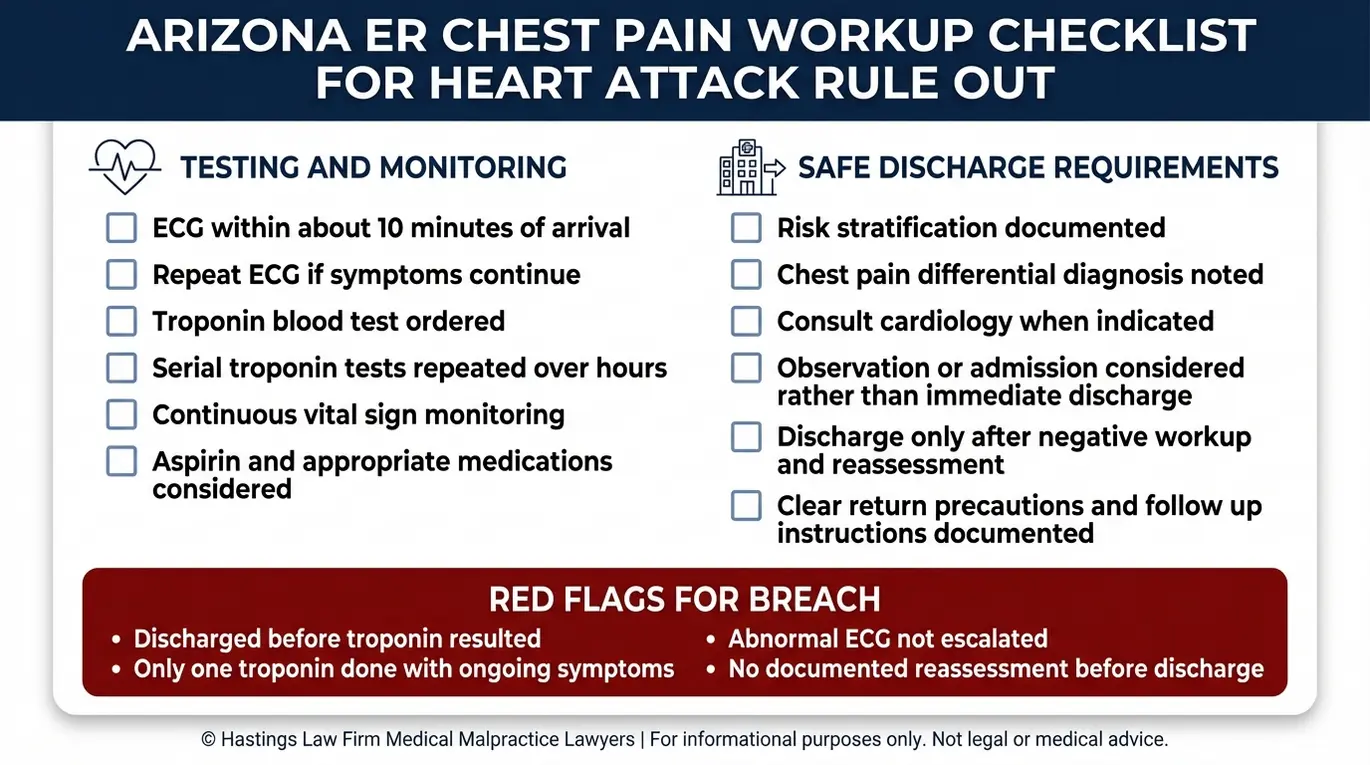
The following checklist outlines the key steps a competent ER team should perform for a patient with suspected cardiac symptoms:
- Was a 12-lead electrocardiogram (ECG/EKG), a test that records the heart’s electrical activity, performed within 10 minutes of arrival? This diagnostic tool allows doctors to quickly identify blocked blood flow.
- Were troponin levels, a blood marker released when heart muscle is injured, drawn promptly? Elevated levels often indicate that heart muscle damage is occurring.
- Were serial troponin tests repeated over several hours to detect rising cardiac enzymes? Repeating these tests helps confirm if heart tissue is actively dying over time.
- Was the patient placed on continuous cardiac monitoring during observation? Constant monitoring ensures that any sudden change in heart rhythm is detected immediately.
- Were results reviewed by a qualified physician before any discharge decision? A final medical review is necessary to ensure all test results fall within safe ranges.
- Was cardiology consulted if initial findings were borderline or symptoms persisted? A specialist can often identify cardiac issues that an emergency team might overlook.
If any of these steps were skipped, delayed, or ignored, it may represent a breach of the standard of care. That breach becomes the foundation of a malpractice claim.
The Critical Time Window: Why Every Minute Matters
During a heart attack, a blocked coronary artery cuts off oxygen to a section of the heart. The longer blood flow remains restricted, the more heart tissue dies permanently. This is the physiology behind “time is muscle,” the principle that rapid restoration of blood flow is necessary to prevent permanent heart damage.
The goal of emergency cardiac treatment is to restore blood flow as quickly as possible, most often through percutaneous coronary intervention (PCI), a catheter-based procedure that opens blocked arteries using a stent. When performed promptly, PCI can save significant heart tissue and dramatically improve long-term outcomes.
When it is delayed because the diagnosis was missed, the patient may suffer permanent heart damage or require bypass surgery. This time-dependent relationship between diagnosis and outcome is central to establishing causation. This gap between what happened and what should have happened forms the basis of the legal claim.
Proving Liability: Suing Arizona Hospitals and Emergency Physicians
Establishing liability involves proving that the doctor breached their duty of care and that this breach directly caused additional heart damage or death that would not have occurred with timely treatment. Founded by board-certified trial attorney Tommy Hastings, our firm focuses solely on medical negligence cases.
One of the first questions in any cardiac negligence case is who can be held responsible. Determining legal liability requires identifying if the treating ER physician is liable individually or if the hospital is accountable for systemic failures such as inadequate staffing or flawed triage protocols. This distinction matters because many emergency room doctors are independent contractors rather than hospital employees.
Under A.R.S. § 12-2604, Arizona law sets specific qualifications for expert witnesses in medical malpractice cases. An Arizona cardiac negligence attorney must retain a board-certified cardiologist or similarly qualified expert who can review the medical records and identify where the standard of care was violated. Our legal team includes former defense attorneys who understand how hospitals and insurers approach these claims.
Our in-house medical staff, including nurse practitioners and experienced hospital nurses who formerly worked for the healthcare systems we now challenge, works alongside our legal team to analyze clinical records and identify charting inconsistencies. This medical-legal collaboration helps us build a detailed timeline that supports the opinions of our retained experts. We prepare every case as if it will go to trial from day one, which signals to insurance carriers that we are ready to present the evidence to a jury.

Damages and Compensation for Victims of Undiagnosed Cardiac Events
Victims of heart attack misdiagnosis can recover compensation for medical bills, lost lifetime earnings, permanent heart damage, and significant non-economic damages for pain and suffering. The value of a heart attack misdiagnosis settlement in Arizona depends on the severity of the cardiac injury, the patient’s age and health before the event, and the long-term medical needs that resulted from the delay.
Economic damages typically include:
- Past and future medical expenses, including hospitalizations, surgeries, and cardiac rehabilitation. These costs often increase if a patient requires long-term heart care or a pacemaker.
- Lost wages and reduced earning capacity. If a patient can no longer work at their previous level, they may recover the income lost due to their condition.
- Costs of ongoing home care. Professional assistance may be necessary for those living with significant heart failure or disability.
Non-economic damages address the personal toll of the injury:
- Physical pain and suffering from the cardiac event and subsequent treatments
- Emotional distress, including anxiety, depression, and PTSD related to the medical experience
- Loss of enjoyment of life and reduced ability to participate in daily activities
- Reduced life expectancy
When a heart attack misdiagnosis results in death, surviving family members, including spouses and children, may pursue a wrongful death claim. These cases can include compensation for loss of the deceased’s income, loss of companionship and guidance, and funeral and burial costs.
Contact the Arizona Misdiagnosis Attorneys at Hastings Law Firm Today for Help
Arizona law limits the time you have to file a medical malpractice claim, and important evidence in your medical records may become harder to preserve as time passes. If you suspect that a heart attack was missed, misdiagnosed, or not treated quickly enough, taking the first step now can protect your ability to seek answers later.
Hastings Law Firm offers a free, confidential case evaluation led by our medical-legal team. As Arizona heart attack misdiagnosis lawyers, we will review your records, consult with qualified cardiac experts, and give you an honest assessment of whether you have a case.
There is no fee unless we recover compensation for you. Contact us today to start getting the answers you and your family deserve.
Frequently Asked Questions About Heart Attack Misdiagnosis in Arizona


This content was researched and written by the Hastings Law Firm editorial team, which includes attorneys, medical professionals, and experienced researchers. Our writing is informed by internal knowledge and practical experience, and we cross-check critical details against authoritative sources cited throughout. Every piece undergoes human-led fact-checking and legal review. Because legal and medical information can change, if you spot an error, please contact us. Learn more about our content standards and review process on our editorial policy page.

Tommy Hastings, founder of Hastings Law Firm, is a board-certified personal injury trial lawyer dedicated exclusively to healthcare injury cases. Since 2001, he has represented injured patients and families in litigation against major hospital systems, pharmaceutical companies, and negligent healthcare providers nationwide. He has handled numerous high-profile cases that have drawn national media attention and resulted in multi-million dollar recoveries. He draws on that experience in his writing, helping readers understand how these cases work and what options may be available to them.
