


Arizona Group B Streptococcus Birth Injury Lawyer
Group B Streptococcus infections in newborns can be devastating when routine screening, documentation, or timely antibiotics are missed during pregnancy and labor. The standard of care described includes universal testing, appropriate intrapartum antibiotics for positive results, and careful attention to risk factors when screening is missed. The timing of symptoms can also shape where responsibility may fall, and delayed recognition of infection signs can lead to permanent injury or worse. If you or a loved one were harmed or worse due to Group B Streptococcus birth injury in Arizona, contact Hastings Law Firm for a free, confidential case review.

Last Updated: September 24, 2026
Trial-Ready Arizona Birth Injury Attorneys for GBS Infection Cases
When you or a loved one experiences a newborn becoming seriously ill from an infection that should have been prevented, the grief can feel overwhelming. Group B Streptococcus, commonly called GBS, is a bacterial infection that pregnant mothers can carry without symptoms. If doctors fail to test for it or fail to treat it properly during labor, the bacteria can pass to the baby during delivery and cause life-threatening illness.
At Hastings Law Firm, we focus exclusively on medical malpractice. Our team includes former defense attorneys and experienced nurses who understand how hospitals work and where protocols break down. If your family is facing this situation, an Arizona Group B Streptococcus birth injury lawyer from our firm can review the medical records and help you understand whether negligence caused your child’s injury.
We offer a free, confidential case evaluation. There is no fee unless we recover compensation for your family.

Preventing Infection Through Mandatory Screening and Antibiotic Protocols
The standard of care mandates that doctors screen all expectant mothers for GBS between 36 and 37 weeks of pregnancy and administer intrapartum antibiotic prophylaxis to those who test positive.
GBS is a common bacterium that can lead to severe illness if transmitted to a baby during birth. A rectovaginal culture, which is a swab test of the vagina and rectum performed during this screening window, identifies whether the mother carries the bacteria. According to the National Center for Biotechnology Information, GBS colonizes roughly 25% of pregnant women, making universal testing a necessary standard of care rather than an optional choice.
When a mother tests positive, the medical team must provide intrapartum antibiotic prophylaxis, or IAP, which means administering IV antibiotics during labor. Penicillin is the first-choice medication, and it must be given at least four hours before delivery to be effective. This protocol reduces the risk of early-onset GBS disease in newborns by approximately 30-fold. Data from the CDC’s Group B Strep Surveillance program confirms that proper antibiotic administration has dramatically decreased infection rates since universal screening became standard practice.
Missing the screening window or failing to administer antibiotics represents medical malpractice and a clear departure from accepted medical standards. When providers skip the test entirely, they must still treat based on clinical risk factors such as maternal fever, prolonged rupture of membranes, or preterm labor. Ignoring these backup protocols worsens the original failure.
| Standard of Care | Breach of Standard |
|---|---|
| Screen all pregnant patients for GBS at 36-37 weeks | Failing to order the culture or ordering it too early/late |
| Document GBS status clearly in the chart | Missing or unclear documentation of test results |
| Administer IV penicillin at least 4 hours before delivery | Starting antibiotics too late or not at all |
| Monitor for risk factors if screening was missed | Ignoring fever, ruptured membranes, or preterm labor |
| Use alternative antibiotics for penicillin-allergic patients | Failing to prescribe effective substitutes |
If you suspect your medical team did not follow these protocols, a GBS negligence lawyer in Arizona can examine the prenatal records and labor notes to identify exactly where the breakdown occurred.
Alternative Antibiotics for Penicillin Allergic Mothers
While penicillin is the preferred treatment, alternative medications are required for mothers with allergies. Some mothers cannot receive penicillin due to allergies, but this does not excuse a failure to protect the baby. When a mother is allergic to standard treatments, alternative medications must be used to prevent GBS transmission.
Vancomycin, an antibiotic that works against resistant bacteria, is typically used for mothers with severe penicillin allergies. Gentamicin, another antibiotic option, may be combined with other drugs depending on the specific clinical situation. When providers fail to document a penicillin allergy, fail to order sensitivity testing, or prescribe an ineffective substitute, the baby remains unprotected despite the medical team’s compliance with “giving antibiotics.”
An Arizona Group B Streptococcus birth injury lawyer will review allergy documentation and medication administration records to determine whether your baby received adequate protection.

Liability in Early Onset Versus Late Onset GBS Infections
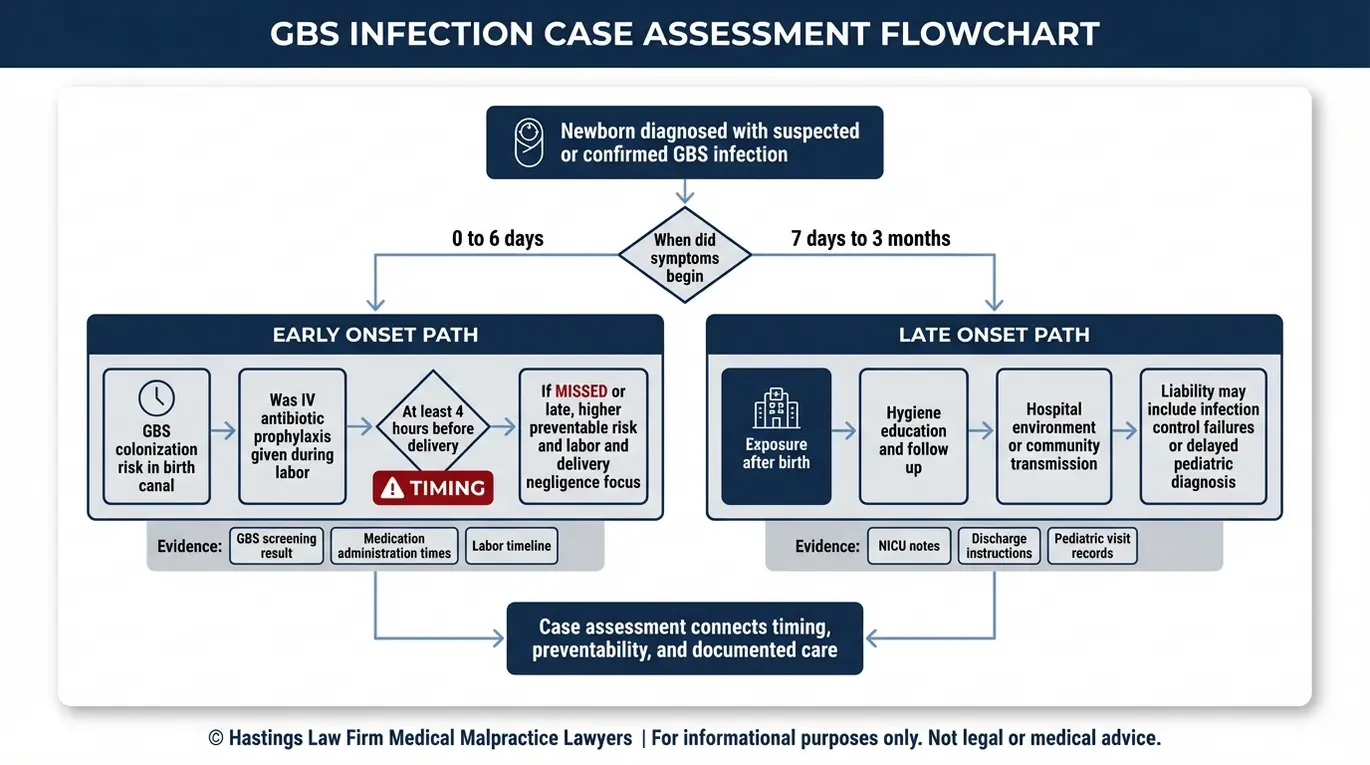
Early-onset GBS occurs within the first week of life and is often linked to labor and delivery negligence, while late-onset occurs after one week and may involve horizontal transmission or hospital hygiene failures.
GBS refers to Group B Streptococcus, which can cause severe neonatal infections. Understanding this distinction matters because it points to different responsible parties and different evidence.
Early-onset GBS disease, defined as infection appearing within the first six days after birth, typically results from vaginal delivery transmission. The bacteria enter the baby’s system as they pass through the birth canal when the mother’s GBS colonization was either undetected or untreated. Liability in these cases usually centers on whether providers screened the mother, whether they administered IV antibiotics at least four hours before delivery, and whether they monitored for risk factors that should have triggered prophylactic treatment.
Late-onset GBS disease, which develops between seven days and three months of age, presents different questions. The baby may have acquired the infection through contact after birth rather than during delivery. We examine whether hospital staff followed proper hand hygiene and infection control procedures, whether parents received adequate discharge education about warning signs, and whether contaminated equipment or surfaces may have contributed to transmission. Proving negligence in late-onset cases requires a detailed investigation into the nursery environment and staff practices to identify the source of the infection.
Defense attorneys often argue that GBS infections are unavoidable or that the timing of symptoms proves the infection happened after the mother left the hospital’s care. They may claim the bacteria were acquired in the community. Our Arizona lawyers handle GBS cases by building detailed timelines that connect documented gaps in care to the infant’s illness, systematically refuting these arguments with medical evidence. Proving causation is essential for recovering damages for your child.
The Hastings Law Firm Difference
Results matter, but what truly sets us apart is how we achieve them. Every verdict, every settlement, and every Arizona courtroom victory comes from one guiding promise: To treat each client’s fight for justice as if it were our own.
This balance of skill, experience, and empathy reflects our core philosophy that justice should not only compensate the injured, but also make health care safer nationwide.

Identifying Missed Symptoms of Neonatal Sepsis and Meningitis
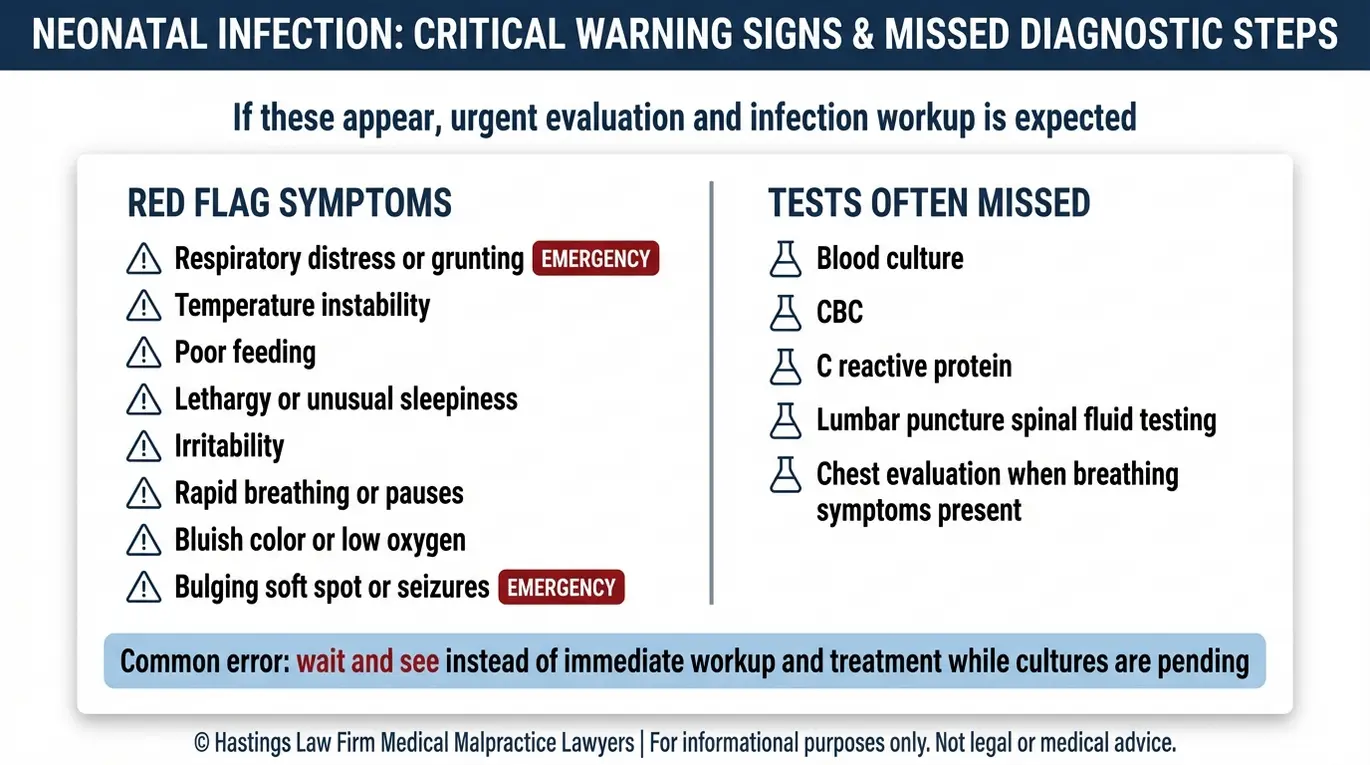
Medical malpractice occurs when physicians dismiss early signs of infection such as respiratory distress or temperature instability as normal newborn behavior instead of ordering immediate blood cultures and spinal taps.
GBS is a primary cause of sepsis and meningitis in infants. Neonatal sepsis, a bloodstream infection in newborns, can progress rapidly to pneumonia or septic shock within hours. When GBS bacteria cross into the spinal fluid, the result is meningitis, which can cause permanent brain damage even with treatment. The difference between full recovery and lifelong disability often depends on how quickly the medical team recognizes the problem and starts antibiotics.
The following symptoms should prompt immediate diagnostic testing in any newborn:
- Rapid or labored breathing, grunting, or flaring nostrils
- Temperature instability, including fever or abnormally low body temperature
- Poor feeding or refusal to eat
- Lethargy, decreased activity, or difficulty waking
- Pale, mottled, or bluish skin color
- Irritability or high-pitched crying
- Bulging fontanelle (soft spot on the head)
- Seizures or abnormal movements
When these warning signs appear, the standard of care requires ordering a complete blood count, C-reactive protein levels, blood cultures, and often a lumbar puncture (spinal tap) to test the spinal fluid for infection. Waiting for culture results before starting treatment is a diagnosis error. While the team awaits laboratory confirmation, broad-spectrum antibiotics should begin immediately to stop the infection from spreading.
Arizona Group B Streptococcus birth injury lawyers examine pediatric records for documentation showing when symptoms first appeared and when diagnostic testing was actually ordered. A gap of even a few hours can mean the difference between a child who recovers and one who suffers permanent neurological injury.
Using Prematurity Statistics to Rebut Defenses
Premature infants are often at higher risk for complications from GBS infections. Defense lawyers frequently blame a baby’s prematurity for developmental problems rather than acknowledging the role of infection. We counter this argument with survival and outcome statistics that demonstrate what premature infants of similar gestational age typically achieve without the added burden of sepsis or meningitis.
Modern neonatal intensive care allows many premature babies to develop normally. When a child’s disabilities exceed what prematurity alone would predict, and when those disabilities match the known consequences of GBS infection, the evidence supports causation.
Establishing Malpractice and Securing Compensation for Families
To secure compensation, your attorney must prove that the medical provider deviated from the accepted standard of care regarding GBS protocols and that this deviation directly caused the infant’s injury or wrongful death.
Medical malpractice occurs when a healthcare provider fails to follow the accepted standard of care. Since 2005, Hastings Law Firm has focused exclusively on medical malpractice litigation to help families seek justice. GBS cases involve complex medical negligence issues that require thorough legal and clinical review.
Arizona law requires an “Affidavit of Merit” from a qualified medical expert before a malpractice lawsuit can proceed. Under Arizona Revised Statutes § 12-2603, this preliminary expert opinion must certify that the claim has merit based on a review of the medical records. This requirement ensures that an objective expert witness has validated the grounds for the lawsuit.
An Arizona GBS birth injury attorney will help you pursue compensation for the damages your family has suffered. We seek recovery for life-care costs, including lifetime medical care, hospitalizations, therapies, and medications. Settlements also account for special education, home modifications, and assistive equipment. We also advocate for compensation regarding the child’s loss of earning capacity, pain and suffering, and the parents’ emotional distress.
Contact the Arizona Birth Injury Attorneys at Hastings Law Firm Today for Help
GBS infections in newborns are preventable when medical teams follow established screening and treatment protocols. If your child suffered sepsis, meningitis, or other complications from this bacteria, you deserve to know whether proper care could have changed the outcome.
At Hastings Law Firm, our Arizona Group B Streptococcus birth injury lawyer team is prepared to review your records and consult with medical experts. Founded by board-certified trial attorney Tommy Hastings, our firm focuses on securing full compensation for families who have been betrayed by the healthcare system. We handle these cases on a contingency fee basis, which means you pay no attorney fees unless we recover compensation for your family.
Contact us today for a free, confidential case evaluation. Let us help you find the answers you need.
Frequently Asked Questions About Group B Streptococcus Birth Injury in Arizona


This content was researched and written by the Hastings Law Firm editorial team, which includes attorneys, medical professionals, and experienced researchers. Our writing is informed by internal knowledge and practical experience, and we cross-check critical details against authoritative sources cited throughout. Every piece undergoes human-led fact-checking and legal review. Because legal and medical information can change, if you spot an error, please contact us. Learn more about our content standards and review process on our editorial policy page.

Tommy Hastings, founder of Hastings Law Firm, is a board-certified personal injury trial lawyer (by the Texas Board of Legal Specialization) dedicated exclusively to healthcare injury cases. Since 2001, he has represented injured patients and families in litigation against major hospital systems, pharmaceutical companies, and negligent healthcare providers nationwide. He has handled numerous high-profile cases that have drawn national media attention and resulted in multi-million dollar recoveries.
