


Arizona Gestational Diabetes Malpractice Lawyer
Gestational diabetes is often manageable, but missed screening, delayed diagnosis, or poor monitoring can turn a pregnancy into a high risk situation with lasting harm to a baby or mother. The article describes how failures to track blood sugar, respond to abnormal results, and plan delivery can lead to serious birth trauma and long term complications. It also explains how responsibility may involve multiple providers and why medical records and expert testimony matter in these claims. If you or a loved one were harmed or worse due to gestational diabetes malpractice in Arizona, contact Hastings Law Firm for a free, confidential case review.

Last Updated: September 24, 2026
Trial-Ready Advocates for Preventable Birth Injuries in Arizona
When your child suffers a birth injury that could have been prevented, finding answers becomes the only thing that matters. Gestational diabetes, when properly managed, rarely causes serious harm. But when providers fail to screen, diagnose, or treat it, the consequences can change a family’s life forever.
Pregnancy complicated by uncontrolled blood sugar is considered a high-risk pregnancy, meaning it requires closer monitoring and specialized care. Proper management often includes regular non-stress tests (NSTs), which measure your baby’s heart rate in response to movement. When these steps are skipped or results are ignored, preventable injuries can occur.
If you believe your child was harmed because of failures during a diabetic pregnancy, an Arizona gestational diabetes malpractice lawyer can help you understand what went wrong. We offer free, confidential case evaluations to review your medical records and explain your options.

How Mismanagement of Gestational Diabetes Constitutes Malpractice
Medical malpractice occurs when an obstetrician fails to screen for, diagnose, or properly manage gestational diabetes, deviating from the accepted standard of care and causing injury to the mother or child. When a medical professional overlooks clear warning signs, they endanger the lives they are entrusted to protect.
Gestational diabetes mellitus (GDM), a form of diabetes that develops during pregnancy and affects how your body processes sugar, can usually be controlled with diet, medication, or insulin. Left untreated, however, it creates serious risks for both mother and baby.
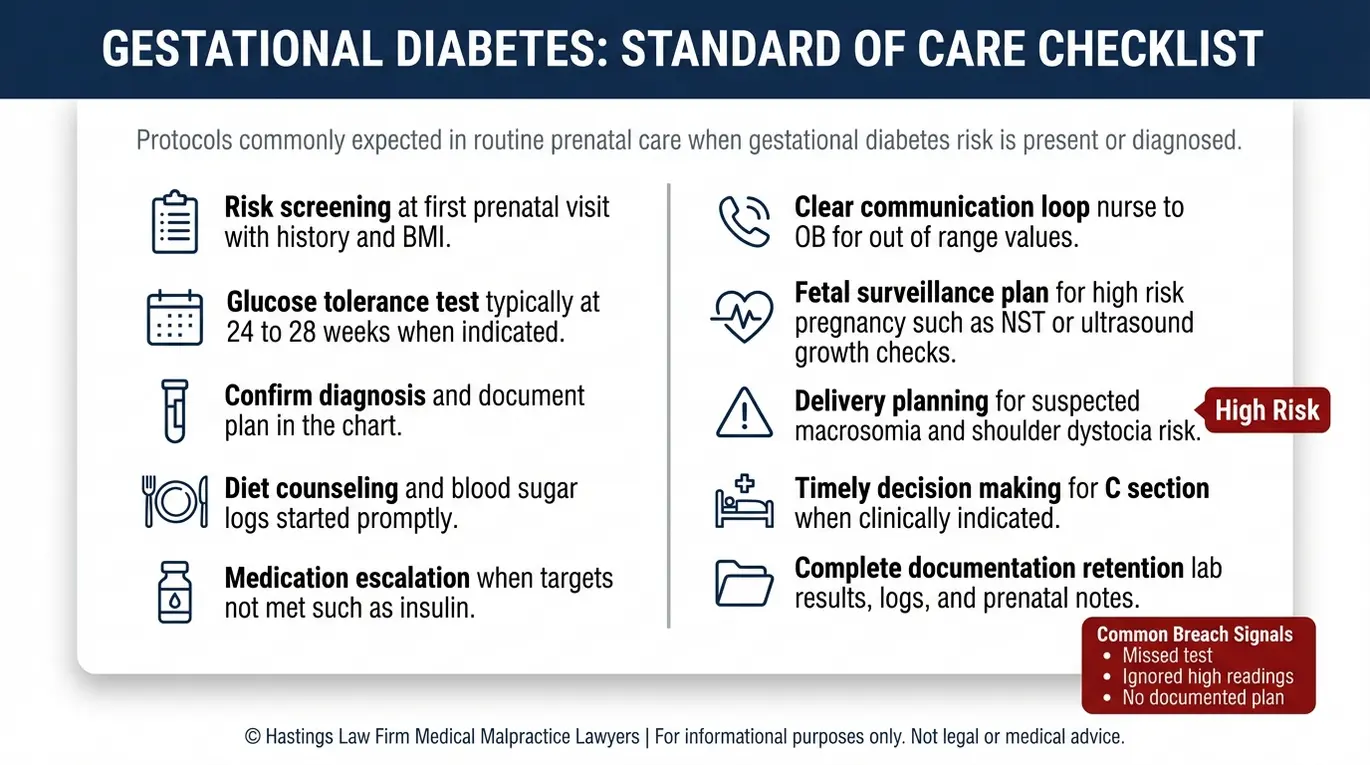
The standard of care refers to the level of treatment a reasonably competent medical professional would provide under similar circumstances. For diabetic pregnancies, this standard includes specific protocols that providers must follow to ensure safety. A pregnancy complicated by diabetes is classified as a high-risk pregnancy, necessitating vigilance that goes beyond routine prenatal visits. According to updated guidance from the American College of Obstetricians and Gynecologists, screening and management protocols are well-established.
Standard of Care Protocols for Gestational Diabetes:
- Universal screening with an oral glucose tolerance test (OGTT), a blood test that measures how your body handles sugar, typically between 24 and 28 weeks of pregnancy
- Early screening for patients with risk factors such as obesity, family history, or previous GDM
- Dietary counseling and blood sugar monitoring after diagnosis
- Insulin therapy if blood sugar cannot be controlled through diet alone
- Regular fetal monitoring, including non-stress tests in the third trimester
- Discussion of delivery timing and method based on estimated fetal weight
- Documentation of all glucose levels, interventions, and patient education
When prenatal screening is skipped, delayed, or when high blood sugar readings are ignored, providers may be liable for gestational diabetes negligence. An Arizona birth injury attorney will examine your records to determine whether these protocols were followed. Specifically, we look for gaps in the medical history where risk factors were overlooked or where glucose logs show dangerous trends that warranted immediate intervention but received none.
Malpractice involving diabetic pregnancy often stems from missed diagnoses. If your provider never ordered a glucose test, or if abnormal results were not addressed, that failure may constitute a breach of the standard of care. A failure to diagnose gestational diabetes deprives the mother of the chance to manage her blood sugar, directly endangering the fetus. When these medical errors result in harm, legal action is a way to hold the negligent parties accountable.
Injuries Caused by Uncontrolled Blood Sugar During Pregnancy
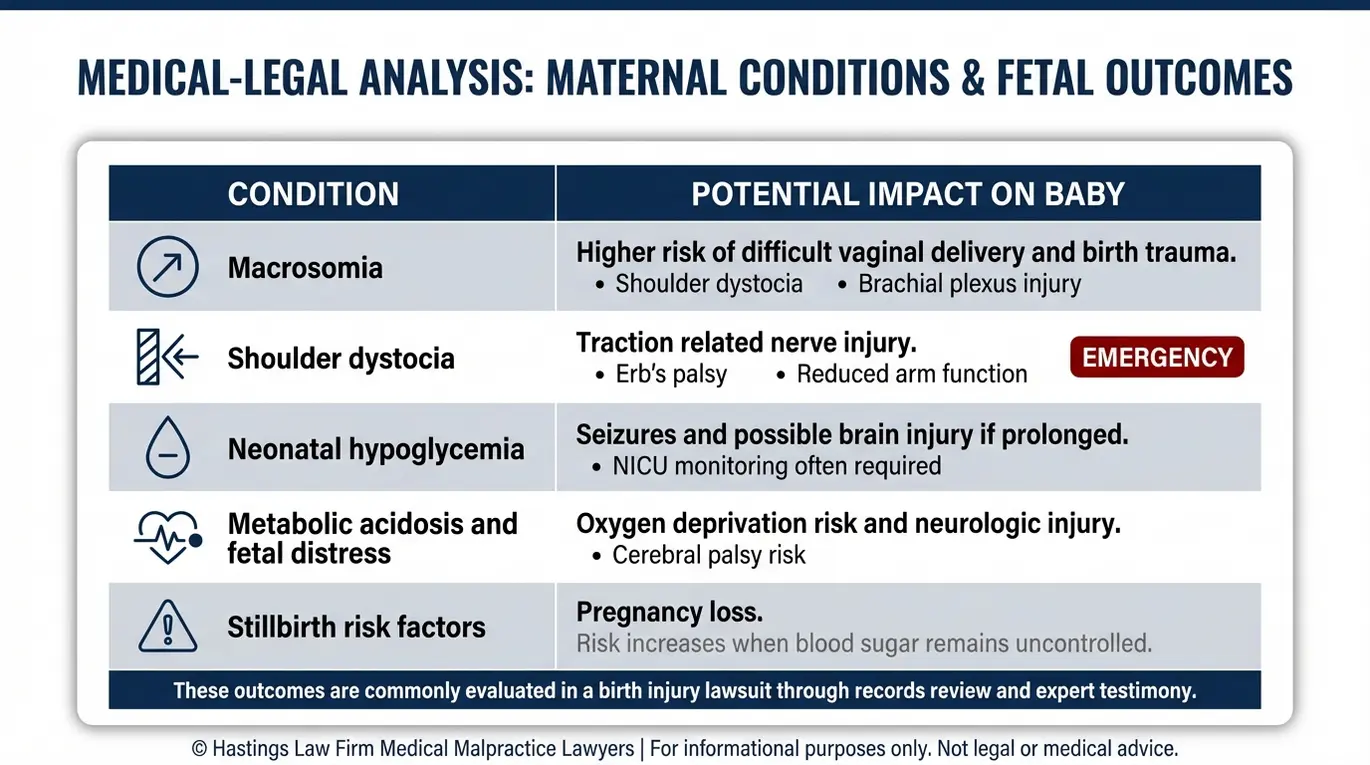
Uncontrolled maternal blood sugar often leads to macrosomia, a condition where the baby grows excessively large, which significantly increases the risk of birth trauma such as shoulder dystocia, brachial plexus injuries, and neonatal hypoglycemia.
When maternal blood sugar remains elevated throughout a diabetic pregnancy, the baby receives excess glucose through the placenta. The baby’s body responds by producing more insulin, which causes abnormal growth. Macrosomia, defined as a birth weight over 8 pounds 13 ounces, creates mechanical challenges during vaginal delivery. This excessive size is not just a cosmetic issue; it fundamentally alters the physics of childbirth, turning a routine delivery into a hazardous event.
Research published in PubMed confirms the association between diabetes in pregnancy and shoulder dystocia, particularly when infants have higher birth weights. This study highlights that as birth weight increases, the likelihood of mechanical obstruction rises, necessitating careful delivery planning by the obstetrician.
Shoulder dystocia occurs when the baby’s head delivers but the shoulders become lodged behind the mother’s pelvic bone. Providers may use excessive force or improper maneuvers to free the baby, which can stretch or tear the nerves in the neck and shoulder. This often results in Erb’s palsy, a form of brachial plexus injury that causes weakness or paralysis in the arm. In severe cases, the nerves may be completely avulsed, or torn from the spinal cord, resulting in permanent disability.
Neonatal hypoglycemia, or dangerously low blood sugar at birth, happens because the baby’s body continues producing excess insulin after delivery. Without the mother’s glucose supply, blood sugar drops rapidly. Severe hypoglycemia can cause seizures and permanent brain damage if not treated immediately, potentially leading to long-term conditions like cerebral palsy.
| Condition | Impact on Baby |
|---|---|
| Macrosomia | Difficult delivery, increased risk of birth trauma, higher chance of emergency C-section |
| Shoulder Dystocia | Nerve damage, Erb’s palsy, fractured clavicle, oxygen deprivation |
| Neonatal Hypoglycemia | Seizures, brain injury, developmental delays |
| Metabolic Acidosis | Organ damage from oxygen deprivation, long-term neurological effects |
| Stillbirth | Fetal death, often linked to uncontrolled blood sugar in third trimester |
A lawyer for gestational diabetes errors will work with medical experts to connect these conditions to your provider’s failures. If your child suffered a birth injury caused by diabetes that was not properly managed, you may have grounds for an Arizona malpractice case.
The Hastings Law Firm Difference
Results matter, but what truly sets us apart is how we achieve them. Every verdict, every settlement, and every Arizona courtroom victory comes from one guiding promise: To treat each client’s fight for justice as if it were our own.
This balance of skill, experience, and empathy reflects our core philosophy that justice should not only compensate the injured, but also make health care safer nationwide.

Liability and Proving Negligence in Arizona Courts
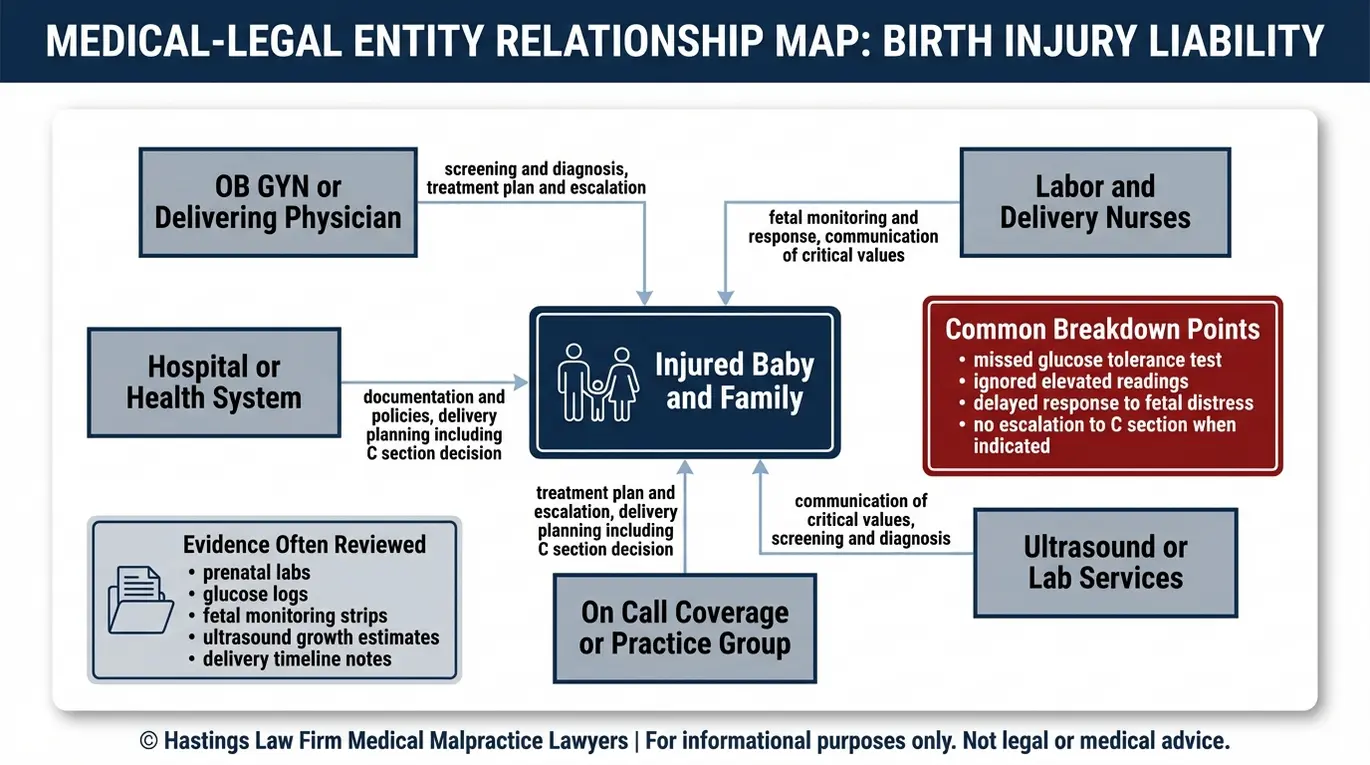
Liability often extends beyond the attending obstetrician to include hospital staff who failed to monitor fetal distress or nurses who did not communicate critical blood sugar levels to the physician.
The legal standard of care requires medical professionals to act as a prudent provider would under similar conditions. In gestational diabetes cases, multiple parties may share responsibility for preventable injuries. The obstetrician makes decisions about prenatal care, monitoring frequency, and delivery method. Nurses and hospital staff are responsible for checking and documenting glucose levels, administering medications, and alerting doctors to concerning changes.
When communication breaks down, injuries happen. In legal terms, this shared responsibility may fall under the doctrine of vicarious liability, where a facility is held accountable for the actions of its employees. Hospital policies typically dictate the frequency of glucose checks and the chain of command for reporting abnormalities. A deviation from these written protocols often is strong evidence of negligence.
Arizona law requires expert testimony to establish the standard of care and prove it was breached. Under Arizona Revised Statutes § 12-2604, expert witnesses in medical malpractice cases must have relevant qualifications and experience. This testimony is important for establishing causation, the legal link between the provider’s error and the child’s injury.
Metabolic acidosis, a dangerous buildup of acid in the blood caused by oxygen deprivation, can develop when fetal distress goes unrecognized. Brachial plexus injury, commonly called Erb’s palsy, involves nerve damage in the shoulder that affects arm function. Both conditions require expert analysis to connect the injury to specific failures in care. Cases of obstetrician negligence often hinge on whether the doctor reacted appropriately to signs of fetal distress visible on monitoring strips.
When suing a doctor for diabetes errors or pursuing hospital negligence liability, our team examines nursing notes, glucose logs, fetal monitoring strips, and delivery records. We scrutinize every entry to determine if the medical team missed opportunities to intervene. We work with qualified obstetricians and maternal-fetal medicine specialists who can testify about what a prudent provider would have done. An Arizona gestational diabetes malpractice lawyer builds this evidence from day one.
The Role of C-Sections in Diabetic Pregnancies
Shoulder dystocia, a delivery emergency where the baby’s shoulder becomes trapped, can cause nerve damage or oxygen deprivation within minutes. When providers know a baby is large, the standard of care often requires discussing or recommending a cesarean delivery.
An emergency cesarean section (C-section), a surgical delivery performed when vaginal birth becomes unsafe, may be required when a baby is known to be macrosomic. Failure to perform a C-section can constitute negligence if the decision to proceed with vaginal delivery leads to preventable trauma. Accurate birth weight estimation, maternal glucose control, and prior delivery history all factor into this decision.
Recovering Damages for Long-Term Care and Suffering
Compensation in gestational diabetes cases covers past and future medical expenses for the child, pain and suffering, lost wages for parents caring for a disabled child, and costs for specialized therapy or equipment.
In birth injury cases, economic damages represent the financial costs of care, such as current medical bills and projected future expenses. Children injured by gestational diabetes mismanagement often require care that extends well beyond infancy. According to the Centers for Disease Control and Prevention, cerebral palsy and related conditions frequently require lifelong support and intervention.
An Arizona malpractice law firm will help you pursue compensation for birth trauma that accounts for your child’s actual needs. This includes developing a life care plan with medical and economic experts to project future medical costs. We categorize these losses into economic damages, such as medical bills and lost wages, and non-economic damages, which cover intangible losses.
Damages available in gestational diabetes injury cases:
- Emergency medical care, including NICU stays and surgical interventions
- Ongoing treatment for conditions like cerebral palsy or Erb’s palsy
- Physical, occupational, and speech therapy
- Adaptive equipment such as wheelchairs, braces, or modified vehicles
- Home modifications for accessibility
- Lost income for parents who must reduce work hours to provide care
- Pain and suffering endured by the child
- Loss of enjoyment of life and future earning capacity
A settlement for diabetic birth injury should reflect the true cost of raising a child with special needs. While many cases settle, we prepare every claim to secure a favorable verdict if trial becomes necessary. We work to document every expense and loss so that your family receives full and fair compensation.
Why Choose Hastings Law Firm for Your Arizona Case
Hastings Law Firm offers a unique combination of board-certified trial expertise and in-house medical knowledge, ensuring that complex diabetic pregnancy cases are litigated with the same rigor used by defense teams.
Unlike general personal injury firms, we focus exclusively on medical malpractice. Our legal team includes former defense attorneys who know how hospitals and insurers approach these cases. We also have in-house nurse consultants who review records, identify charting inconsistencies, and help build the medical timeline.
Founder Tommy Hastings is board certified in personal injury trial law by the Texas Board of Legal Specialization, a distinction held by fewer than two percent of Texas attorneys. His experience includes multi-million dollar recoveries in birth injury and medical negligence cases across the country. Our commitment extends beyond individual cases; we fight to improve patient safety standards across Arizona healthcare facilities.
As your Arizona gestational diabetes malpractice lawyer, we prepare every case as if it will go to trial. This trial-ready approach signals to defense teams that we will not accept less than your case is worth. Our Phoenix medical negligence attorney team is backed by national resources and a network of top-tier medical experts who provide credible testimony.
We handle cases on a contingency fee basis. You pay no attorney fees unless we recover compensation for you. If you are searching for the best birth injury lawyer to represent your family, we offer a free case evaluation to review your situation and explain your legal options.
Contact the Arizona Birth Injury Attorneys at Hastings Law Firm Today for Help
A child’s injury caused by unmanaged gestational diabetes represents a profound breach of the trust you placed in your medical team. You trusted them to monitor your pregnancy, recognize warning signs, and protect your baby. When that trust is violated, you deserve answers.
Pursuing a legal claim is about more than compensation. It is about finding out what happened, holding providers accountable, and securing legal guidance for birth injuries that your child needs for the future.
Our team understands the emotional weight of this situation. We are here to listen, investigate, and explain your options without pressure or obligation. The evaluation is free and confidential.
If your child was harmed during a diabetic pregnancy, contact Hastings Law Firm today. Let us help you understand what went wrong and what comes next.
Frequently Asked Questions About Gestational Diabetes Malpractice in Arizona


This content was researched and written by the Hastings Law Firm editorial team, which includes attorneys, medical professionals, and experienced researchers. Our writing is informed by internal knowledge and practical experience, and we cross-check critical details against authoritative sources cited throughout. Every piece undergoes human-led fact-checking and legal review. Because legal and medical information can change, if you spot an error, please contact us. Learn more about our content standards and review process on our editorial policy page.

Tommy Hastings, founder of Hastings Law Firm, is a board-certified personal injury trial lawyer (by the Texas Board of Legal Specialization) dedicated exclusively to healthcare injury cases. Since 2001, he has represented injured patients and families in litigation against major hospital systems, pharmaceutical companies, and negligent healthcare providers nationwide. He has handled numerous high-profile cases that have drawn national media attention and resulted in multi-million dollar recoveries.
