


Arizona External Cephalic Version Complication Lawyer
External cephalic version is a hands on obstetric procedure used to turn a breech baby head down, and it is generally safe when proper screening and monitoring are followed. Harm can occur when an obstetrician proceeds despite contraindications, misses fetal distress, or delays an emergency response to complications such as bleeding or loss of oxygen. These failures can leave families facing long term medical needs, emotional strain, and uncertainty about whether the care met accepted standards. If you or a loved one were harmed or worse due to external cephalic version complications in Arizona, contact Hastings Law Firm for a free, confidential case review.

Last Updated: September 24, 2026
Trial-Ready Legal Representation for ECV Injuries in Arizona
When you expected a safe delivery but instead watched your baby or you suffer an injury during an external cephalic version procedure, the confusion and fear can be overwhelming. An external cephalic version (ECV) is a manual technique where an obstetrician applies pressure to the mother’s abdomen to turn a baby from a breech position (feet or buttocks first) into a head-down position. Doctors use this to avoid cesarean delivery. When performed correctly with proper monitoring, this procedure is generally safe. But when doctors ignore warning signs or fail to respond to complications, the results can be devastating.
If your family experienced an ECV-related injury, you may have questions about what went wrong and whether the care you received met acceptable medical standards. An Arizona External Cephalic Version Complication Lawyer at Hastings Law Firm can review your medical records, explain what should have happened, and help you understand your legal options. Contact us for a free, confidential case evaluation.

Recognizing Negligence During External Cephalic Version Procedures
Medical negligence during an ECV occurs when an obstetrician attempts the maneuver despite contraindications or fails to monitor for distress signals like umbilical cord compression. Because the procedure involves turning a baby from a breech position, strict adherence to safety protocols is important. When providers disregard known risk factors or delay their response to complications, they may fall below the standard of care and cause preventable harm.
The Standard of Care for ECV
The standard of care, the level of treatment a reasonably competent obstetrician would provide under similar circumstances, typically requires:
- Thorough pre-procedure assessment for contraindications
- Electronic fetal monitoring (EFM) before, during, and after the procedure to detect distress
- Immediate access to an operating room for emergency C-section
- Stopping the procedure if the baby shows signs of distress
According to The ObG Project’s clinical recommendations, careful patient selection and real-time monitoring are essential. When these protocols are ignored, preventable injuries can occur.
Red Flag Checklist: Contraindications for ECV
Doctors must screen for contraindications (medical conditions or factors that make a procedure inadvisable or dangerous) before attempting the procedure. Key risk factors include:
- Low amniotic fluid (oligohydramnios)
- Non-reassuring fetal heart rate patterns
- Placenta previa or other placental abnormalities
- Prior uterine surgery or C-section scars
- Multiple gestation (twins or more)
- Ruptured membranes
- Active vaginal bleeding
Proceeding with ECV despite these factors often constitutes a breach of the standard of care. The Arizona Department of Health Services maintains perinatal records that can help establish what conditions were present and what providers knew before attempting the procedure.
Failure to React to Complications
Even when ECV is appropriate, complications can develop quickly. Placental abruption, where the placenta separates from the uterine wall, can cause sudden bleeding and cut off oxygen to the baby. Umbilical cord prolapse, when the cord slips ahead of the baby, can compress the cord and restrict blood flow.
The standard of care requires immediate recognition of these complications and rapid delivery, typically by emergency C-section. A delay of even minutes can mean the difference between a healthy baby and permanent injury. If you suspect your providers failed to act quickly enough, an ECV complication attorney in Arizona can help you examine the timeline and determine whether the response was adequate.
Common Injuries Caused by ECV Errors
When negligence occurs during ECV, the resulting injuries can be severe and lifelong:
- Brain damage from hypoxia: Hypoxia, or oxygen deprivation, happens when blood flow to the baby stops. Even brief oxygen loss can cause permanent neurological harm.
- Cerebral palsy: Prolonged oxygen deprivation during a complicated ECV or delayed emergency delivery can lead to this permanent movement disorder.
- Maternal injuries: Mothers may suffer hemorrhage or emergency hysterectomy when complications are mismanaged.

Proving Malpractice in Arizona Breech Birth Injury Cases
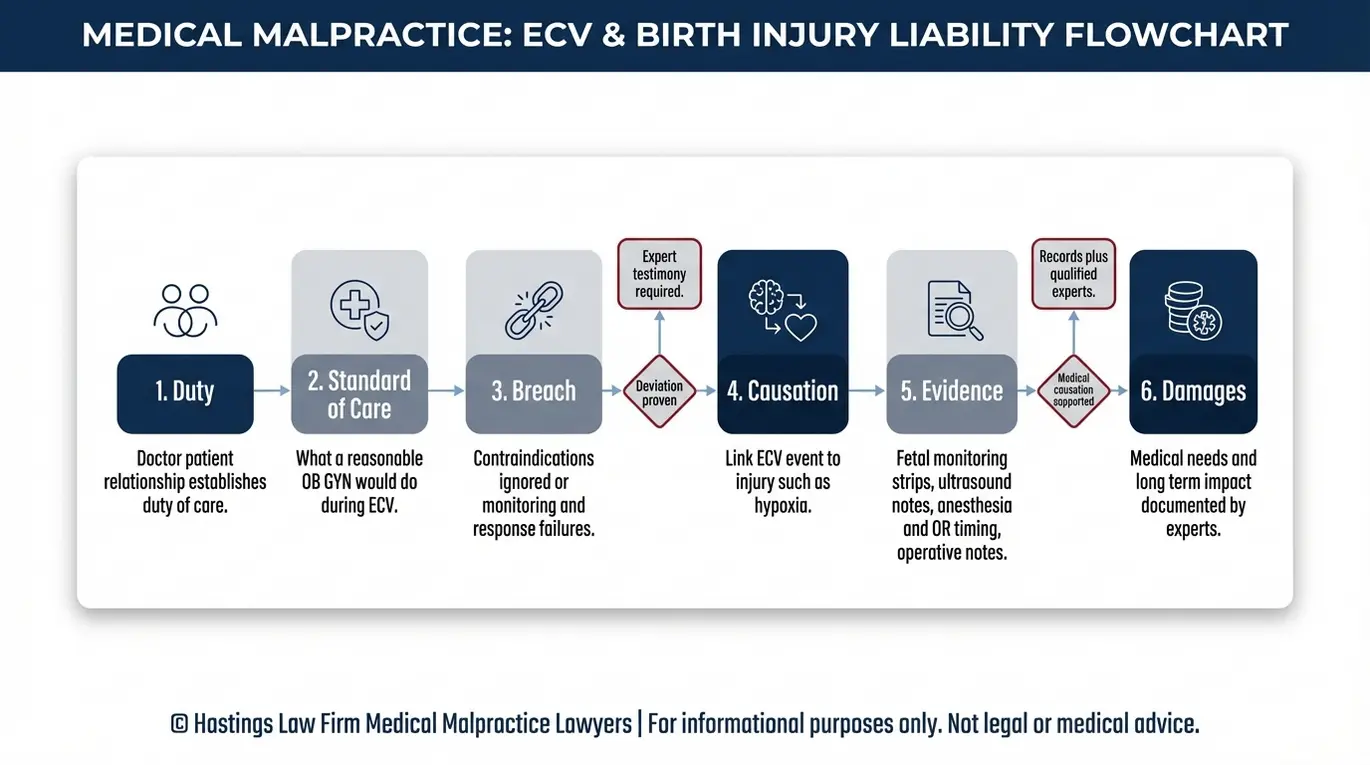
Proving a medical malpractice case requires clear evidence that the OB/GYN deviated from the accepted medical standard of care, directly causing the infant’s injury. Arizona law establishes specific requirements for medical malpractice claims, and building a successful case demands both legal strategy and medical expertise.
Steps to Establishing Liability
| Element | What It Means | How We Prove It |
|---|---|---|
| Duty of Care | The doctor-patient relationship created an obligation to provide competent care | Medical records showing the provider treated you |
| Breach of Duty | The provider failed to meet the standard of care | Expert testimony comparing actions to accepted protocols |
| Causation | The breach directly caused the injury | Medical evidence linking the error to the specific harm |
| Damages | The patient suffered measurable harm | Documentation of injuries, treatment costs, and impact |
Under Arizona Revised Statutes § 12-2604, expert witness qualifications in a medical malpractice claim require specialists with relevant training and experience. The Arizona Supreme Court has reinforced these standards in recent decisions.
Our team includes former defense attorneys who understand how hospitals and their insurers approach these claims. We know the arguments they make and the evidence they try to minimize. Combined with our network of nationally recognized obstetrical experts, we can examine fetal monitoring strips, operative notes, and nursing records to identify exactly where care fell short.
Placental abruption, the premature separation of the placenta, and umbilical cord prolapse, when the cord exits before the baby, are complications that require immediate action. When health care providers fail to recognize or respond to these emergencies, expert testimony can establish that the delay, not the complication itself, caused the injury. Distinguishing between unavoidable complications and actionable obstetrical errors is critical to securing fair compensation.
The Hastings Law Firm Difference
Results matter, but what truly sets us apart is how we achieve them. Every verdict, every settlement, and every Arizona courtroom victory comes from one guiding promise: To treat each client’s fight for justice as if it were our own.
This balance of skill, experience, and empathy reflects our core philosophy that justice should not only compensate the injured, but also make health care safer nationwide.

Contact the Arizona Birth Injury Attorneys at Hastings Law Firm Today for Help
If your child suffered a birth injury during an external cephalic version procedure, you deserve answers. The medical system holds the records, the expertise, and the timeline of what happened. We can help you access that information and determine whether the care you received was acceptable.
Arizona law limits the time you have to file a medical malpractice claim for an ECV complication. For most cases, the statute of limitations is two years from the date of injury, though different rules may apply when a child is harmed. Waiting too long can mean losing your right to seek compensation entirely.
At Hastings Law Firm, we handle birth injury cases on a contingency fee basis. You pay no attorney fees unless we recover compensation for your family. Your case evaluation is free and confidential, and our in-house nursing staff can review your records to help identify potential concerns.
Contact an Arizona External Cephalic Version Complication Lawyer today. Let us help you find the answers you deserve.
Frequently Asked Questions About External Cephalic Version Complication in Arizona


This content was researched and written by the Hastings Law Firm editorial team, which includes attorneys, medical professionals, and experienced researchers. Our writing is informed by internal knowledge and practical experience, and we cross-check critical details against authoritative sources cited throughout. Every piece undergoes human-led fact-checking and legal review. Because legal and medical information can change, if you spot an error, please contact us. Learn more about our content standards and review process on our editorial policy page.

Tommy Hastings, founder of Hastings Law Firm, is a board-certified personal injury trial lawyer (by the Texas Board of Legal Specialization) dedicated exclusively to healthcare injury cases. Since 2001, he has represented injured patients and families in litigation against major hospital systems, pharmaceutical companies, and negligent healthcare providers nationwide. He has handled numerous high-profile cases that have drawn national media attention and resulted in multi-million dollar recoveries.
