


Arizona Drug Interaction Malpractice Lawyer
Written by: Hastings Law Firm | Reviewed by: Tommy Hastings | Updated: July 27, 2026
Contraindicated medication errors can happen when a prescription is written, filled, or given without properly reviewing a patient medication history or documented allergies. These preventable drug interactions can lead to severe harm, including organ damage, respiratory failure, or fatal outcomes. Responsibility may involve a prescriber, a pharmacist, or a healthcare facility when safety alerts are ignored or systems fail. Evidence such as electronic records and dispensing logs can clarify what warnings appeared and what decisions were made. If you or a loved one were harmed or worse due to contraindicated medication negligence in Arizona, contact Hastings Law Firm for a free, confidential case review.
Trusted Arizona Medical Attorneys for Contraindicated Medication Negligence Claims
What You Should Know About Contraindicated Medication Negligence Claims in Arizona:
- Life changing injuries can result when a contraindicated medication is prescribed or dispensed without reviewing an existing drug regimen or documented allergies.
- Accountability can involve more than one party when prescribing decisions, pharmacy checks, and hospital safety systems each contribute to a harmful interaction.
- Severe outcomes can follow from preventable interactions, including organ damage, respiratory failure, stroke, cardiac arrest, or death.
- Recovery can be reduced when a patient is found partially at fault, such as by not disclosing a medication they were taking.
- Compensation can cover financial losses and personal harm, including medical bills, lost wages, pain and suffering, and permanent impairment.
- Wrongful death claims may be available to surviving family members when a drug interaction results in death.
- Options can be lost if required expert support is not obtained early enough for a claim to move forward.
- Clarity about what happened can depend on electronic records that show whether safety alerts appeared and whether they were overridden.
- Risk can increase when free drug samples bypass pharmacy screening and are not documented in the medical record.
- Key evidence can include pharmacy dispensing logs, electronic health record audit trails, and electronic prescribing logs.

A Healthcare Focused Law Firm
When you trust a doctor to prescribe medication safely, you expect that someone along the way checked whether your prescriptions are compatible. If that trust was broken and a preventable drug interaction caused you or a loved one serious harm, the confusion and frustration you feel right now are completely understandable.
Drug interaction injuries are among the most preventable forms of medical harm. They happen when a provider prescribes, dispenses, or administers a medication without properly reviewing a patient’s existing drug regimen or documented allergies. These errors can cause devastating consequences, from organ damage to respiratory failure to death.
As an Arizona drug interaction malpractice lawyer, Hastings Law Firm focuses exclusively on medical malpractice litigation. Founded by Tommy Hastings, a board-certified trial lawyer, our team includes former defense counsel and nurse consultants who previously worked for the hospital systems they now challenge. We look for exactly where the system failed to protect you and offer a free, confidential case evaluation to review your options.
Understanding Dangerous Drug Interactions and Medical Negligence
A harmful drug interaction occurs when a medical professional negligently prescribes or dispenses a medication that is contraindicated with a patient’s existing drug regimen, leading to preventable physiological harm. Contraindicated means the drug should not be used because it could harm the patient. These cases hinge on a concept called the standard of care, which is the level of treatment a reasonably competent provider would deliver under similar circumstances. This standard is a legal requirement that dictates the steps a prudent physician must take to ensure patient safety before finalizing any treatment plan.
Before writing any prescription, providers have a duty of care to review a patient’s full medication history, existing conditions, and documented allergies. A drug-drug interaction, a reaction where one medication changes the way another drug works in the body, can amplify effects to dangerous levels or block them entirely. Prescribers must also avoid a contraindicated medication, a drug that should not be prescribed at all given a patient’s specific circumstances because the known risks are too severe.
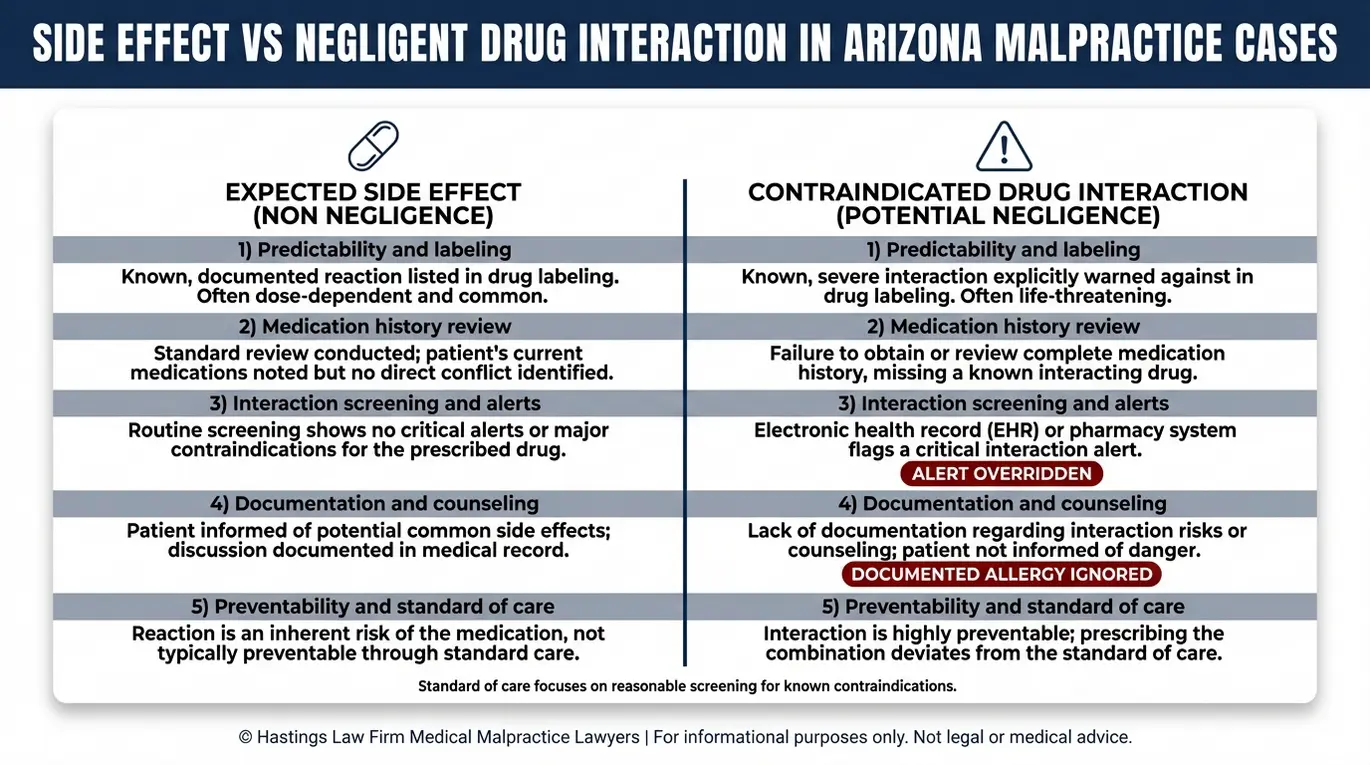
There is an important distinction between a known side effect and a negligent drug interaction. Side effects are recognized risks that may occur even when a medication is properly prescribed. An adverse reaction caused by a contraindication, on the other hand, is one that a careful provider should have anticipated and prevented. A drug interaction attorney focuses on this difference because it separates an unfortunate outcome from actionable negligence.
The severity of these errors can be catastrophic. Depending on the drugs involved, a negligent interaction can cause internal hemorrhaging, liver or kidney toxicity, seizures, stroke, or cardiac arrest. When a provider fails to catch a well-documented contraindication, the resulting harm is not a medical mystery. It is a failure of the standard of care, and a medication negligence lawyer can help determine whether legal action is warranted.
Common Types of Harmful Drug Contraindications
Common negligent interactions include prescribing multiple CNS depressants, mixing blood thinners with contraindicated drugs, or ignoring documented allergies, often resulting in severe toxicity or anaphylaxis. Anaphylaxis is a severe, life-threatening allergic reaction that requires immediate medical intervention. Contraindications are specific medical reasons to avoid certain treatments due to patient harm.
Many of these preventable interactions involve well-known dangerous drug combinations. The medical community has documented these risks extensively, yet errors continue to occur due to factors like alert fatigue, rushed workflows, and poor communication. These systemic issues can result in the wrong medication or wrong dosage reaching the patient.
Here are some of the most common dangerous pairings an Arizona medication malpractice counsel evaluates:
- Warfarin or other blood thinners combined with antibiotics or NSAIDs. This pairing can dramatically increase the risk of uncontrolled hemorrhaging. The interaction is well-documented, and prescribers are expected to monitor INR levels (a test measuring blood clotting time) closely or avoid the combination altogether.
- Opioids combined with benzodiazepines. Both are central nervous system (CNS) depressants, agents that slow brain activity that controls breathing. Together, they can cause fatal respiratory depression. Research funded through a CDC grant to study risks of combined use of opioids and benzos at UC Davis Health has highlighted the serious dangers of co-prescribing these drugs, and the risk of overdose is significant.
- SSRIs combined with MAOIs. Prescribing these two classes of antidepressants together can trigger serotonin syndrome, a potentially life-threatening condition caused by dangerously elevated serotonin levels. Symptoms range from agitation and rapid heart rate to seizures and organ failure.
- Prescribing a medication despite a documented allergy. When a patient’s chart clearly records an allergy and a provider prescribes that allergen anyway, the resulting reaction is one of the clearest forms of negligence.
An adverse drug reaction lawyer examines how these errors happen at the system level. A Report of the Evidence on Health IT Safety and Interventions from HealthIT.gov has identified how electronic safety systems, when poorly designed or routinely overridden, contribute to these failures. Arizona medication malpractice cases often involve tracing whether a warning was generated, whether it was seen, and whether it was ignored.
The Hastings Law Firm Difference
Results matter, but what truly sets us apart is how we achieve them. Every verdict, every settlement, and every Arizona courtroom victory comes from one guiding promise: To treat each client’s fight for justice as if it were our own.
This balance of skill, experience, and empathy reflects our core philosophy that justice should not only compensate the injured, but also make healthcare safer nationwide.

Determining Liability for Dangerous Drug Combinations
Liability for drug interactions often falls on the prescribing physician for failing to check history, the pharmacist for failing to warn of contraindications, or the hospital for inadequate electronic safety alerts. Liability is the legal responsibility a provider holds for the harm caused by their errors. In many cases, more than one party shares responsibility.
Physician liability centers on the duty to take a complete medication history and review it before prescribing. Providers are expected to be aware of known contraindications, including those carrying Black Box warnings, the FDA’s most serious safety labels reserved for drugs with life-threatening risks. A pharmacy negligence lawyer or doctor malpractice attorney will investigate whether the prescriber reviewed the patient’s chart, whether a warning was present, and whether it was acknowledged or overridden.
Pharmacy liability is equally significant. Pharmacists have an independent duty to counsel patients and to catch computer-flagged interactions before dispensing. When a pharmacy’s system flags a dangerous combination and the pharmacist overrides it without clinical justification, that pharmacist and the pharmacy may bear direct liability. The Drug Interaction Visualizer from Cyntegrity demonstrates FDA-based drug safety tools available to help identify these risks, reinforcing that the information is accessible to any diligent provider.
System failures also contribute to these injuries. Hospitals and clinics that fail to maintain properly configured electronic alert systems, or that allow alert fatigue, a desensitization to constant warnings, to go unaddressed can be held liable for the institutional breakdown that allowed a dangerous prescription to reach a patient.
| Physician | Pharmacist | |
|---|---|---|
| Primary Duty | Review full patient history; prescribe safely | Verify prescriptions; catch flagged interactions |
| Key Failure Point | Ignoring contraindications or Black Box warnings | Overriding computer alerts without justification |
| Evidence We Examine | EHR notes, prescribing logs, override records | Dispensing logs, counseling records, alert history |
Free Drug Samples and Lack of Oversight
One often-overlooked risk involves free drug samples that doctors provide directly to patients. Free drug sample medications provided in doctors’ offices often bypass standard pharmacy safety checks, creating a hidden risk for patients. These samples are given directly to you without the usual safety screening done by a pharmacist.
When a physician hands a patient sample medications, those drugs typically bypass the pharmacy entirely. That means they skip the independent interaction checks a pharmacist would normally perform, including interaction screening and allergy verification. Without proper documentation of the sample in the patient’s medical record, other providers may not even know the patient is taking that medication, creating a dangerous gap in oversight for a drug interaction lawsuit to address.

Proving Negligence with Evidence and Experts
Proving a drug interaction claim requires specific evidence, including pharmacy dispensing logs, electronic health record (EHR) audit trails, and expert testimony to demonstrate that the provider violated the standard of care. This process involves showing that the care provided failed to meet established safety standards. Arizona law imposes a specific procedural requirement before a medical malpractice case can move forward. Under A.R.S. § 12-2603, the patient must obtain a preliminary expert opinion from a qualified medical professional who certifies that the care provided fell below the accepted standard.
This is sometimes called an affidavit of merit, and it ensures that only substantiated claims proceed through the court system. An Arizona malpractice lawyer experienced in these cases will coordinate this expert witness testimony early in the process to establish causation.
One of the most powerful sources of evidence is the EHR audit trail. This is a digital log that tracks when a provider viewed a chart, whether an alert appeared, and if the provider performed an alert override (a deliberate decision to dismiss a safety warning). These override logs can establish with precision whether a provider was warned about a contraindication and chose to proceed anyway.
The Importance of Electronic Prescribing Logs
Electronic prescribing, or e-prescribing, systems replace paper prescriptions but can introduce errors like drop-down menu mistakes. Mistakes where a provider accidentally selects the wrong medication or dosage from a digital list often occur because drug names appear similar on screen. Audit trails from these systems can serve as critical evidence showing exactly what was selected and when.
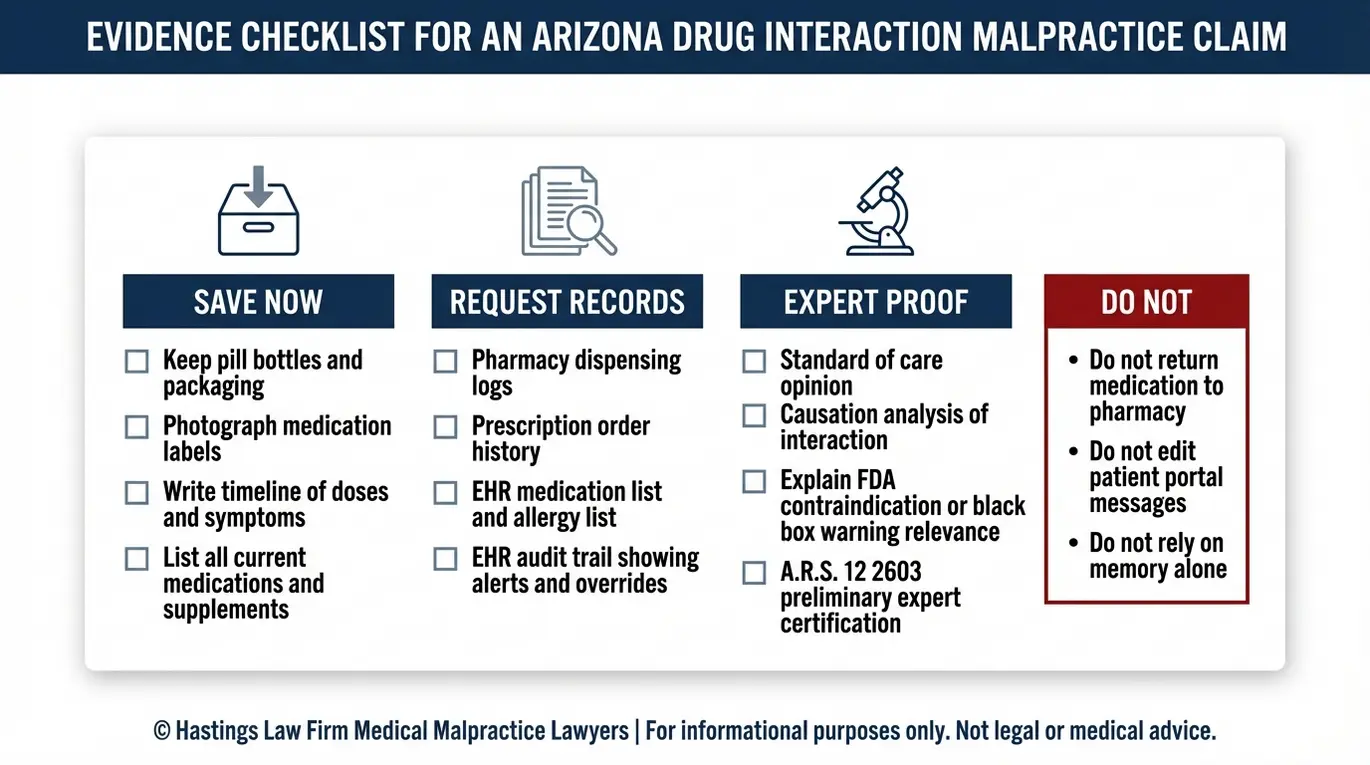
A medication error attorney will help you preserve the evidence needed to support your claim. If you suspect a drug interaction caused harm, consider taking these steps:
- Save all physical pill bottles and packaging, including labels with pharmacy and prescriber information.
- Request complete pharmacy transaction records and dispensing logs.
- Do not return the medication to the pharmacy.
- Request your full medical records, including EHR data and any clinical decision support alerts.
- Document your symptoms and any communications with your providers in writing.
Damages for Injuries Caused by Adverse Drug Reactions
Patients harmed by drug interaction malpractice may recover economic damages for medical bills and lost wages, as well as non-economic damages for pain, suffering, and permanent impairment. Damages is the legal term for the financial compensation paid to a patient for their injuries. Economic damages cover tangible financial costs, while non-economic damages address the human impact of an injury.
This category includes current and future medical expenses such as hospitalizations, surgeries, dialysis for drug-induced kidney failure, and rehabilitation. Lost wages and reduced earning capacity are also recoverable when an injury prevents a patient from working. Drug injury compensation in these cases is calculated based on the full scope of financial harm, both past and projected.
Non-economic damages address the human cost: chronic pain, emotional distress, loss of enjoyment of life, and the long-term impact of living with a preventable injury. In cases where a drug interaction results in death, surviving family members may pursue a wrongful death claim seeking compensation for their loss, including funeral expenses, lost financial support, and the loss of companionship. A malpractice damages attorney can help identify every category of harm that applies to your situation, and a fair settlement should reflect the full impact on your life.
Contact the Arizona Healthcare Malpractice Attorneys at Hastings Law Firm Today for Help
You should be able to trust that every medication you are prescribed has been checked for safety. When that trust is broken and a preventable drug interaction causes serious harm, you deserve answers and accountability.
Hastings Law Firm represents patients and families across Arizona from our Phoenix office, bringing a team of trial attorneys and in-house medical professionals to every case we accept. Our firm focuses exclusively on medical malpractice litigation to provide specialized support for these complex claims. As an Arizona drug interaction malpractice lawyer, we prepare every case as if it is going to trial to drive fair results.
There are no upfront fees or costs. We work on a contingency basis, which means you pay nothing unless we recover compensation on your behalf. If you or a loved one was harmed by a dangerous drug combination, contact us today for a free, confidential case evaluation. Let us help you find the answers you deserve.
Frequently Asked Questions About Drug Interaction Malpractice in Arizona


This content was researched and written by the Hastings Law Firm editorial team, which includes attorneys, medical professionals, and experienced researchers. Our writing is informed by internal knowledge and practical experience, and we cross-check critical details against authoritative sources cited throughout. Every piece undergoes human-led fact-checking and legal review. Because legal and medical information can change, if you spot an error, please contact us. Learn more about our content standards and review process on our editorial policy page.

Tommy Hastings, founder of Hastings Law Firm, is a board-certified personal injury trial lawyer dedicated exclusively to healthcare injury cases. Since 2001, he has represented injured patients and families in litigation against major hospital systems, pharmaceutical companies, and negligent healthcare providers nationwide. He has handled numerous high-profile cases that have drawn national media attention and resulted in multi-million dollar recoveries. He draws on that experience in his writing, helping readers understand how these cases work and what options may be available to them.
