


Arizona Drop Foot Lawyer
Written by: Hastings Law Firm | Reviewed by: Tommy Hastings | Updated: July 27, 2026
Foot drop after a surgery, injection, or hospital stay can disrupt walking, work, and daily independence, and it can be linked to nerve damage that was preventable. The condition is often tied to injury of the peroneal nerve near the knee or nerve roots in the lower spine, including situations where warning signs were missed. Ongoing therapy, bracing, or additional procedures may follow, and some people face lasting disability. If you or a loved one were harmed or worse due to foot drop medical negligence in Arizona, contact Hastings Law Firm for a free, confidential case review.
Trusted Arizona Medical Attorneys for Nerve Injury and Foot Drop Claims
What You Should Know About Foot Drop From Medical Negligence Claims in Arizona:
- Long term disability can follow when foot drop results from nerve damage during medical care.
- Liability can turn on whether providers followed accepted standards for positioning, padding, and monitoring during procedures.
- Permanent paralysis can result when time sensitive spinal compression is not recognized and treated promptly.
- Recovery options can be limited without credible expert support linking a specific deviation in care to the nerve injury.
- Compensation can cover financial losses and personal harm such as medical costs, lost income, and reduced quality of life.
- Full recovery can be available in Arizona because the article states there is no state cap on compensation for these injuries.
- The ability to pursue a claim can be lost if the filing deadline passes, even when exceptions might apply.
- Disputes about timing and cause can depend on diagnostic testing and imaging that helps distinguish pre existing issues from acute injury.
- Accountability can be harder when records are incomplete or inconsistent because operative notes and monitoring documentation are central to what occurred.

A Healthcare Focused Law Firm
If you or someone you love developed foot drop after a surgery, injection, or hospital stay, you likely have questions about what went wrong and whether negligence was involved. That uncertainty can feel overwhelming, especially when you are dealing with a condition that affects your ability to walk, work, and live without assistance.
At Hastings Law Firm, we focus exclusively on medical malpractice. Founded by Tommy Hastings, a 2025 inductee into the American Board of Trial Advocates (ABOTA), our firm operates with a trial-ready philosophy. Our legal team includes former defense attorneys, in-house nurse consultants, and board-certified trial lawyers who understand both the medicine and the law behind nerve injury claims. As an experienced Arizona drop foot lawyer team, we are prepared to review your medical records, identify what happened, and explain your legal options.
If you believe a medical error caused your foot drop, we offer a free, confidential case evaluation. There is no fee unless we recover compensation for you.
Understanding Foot Drop Injuries Caused by Medical Negligence
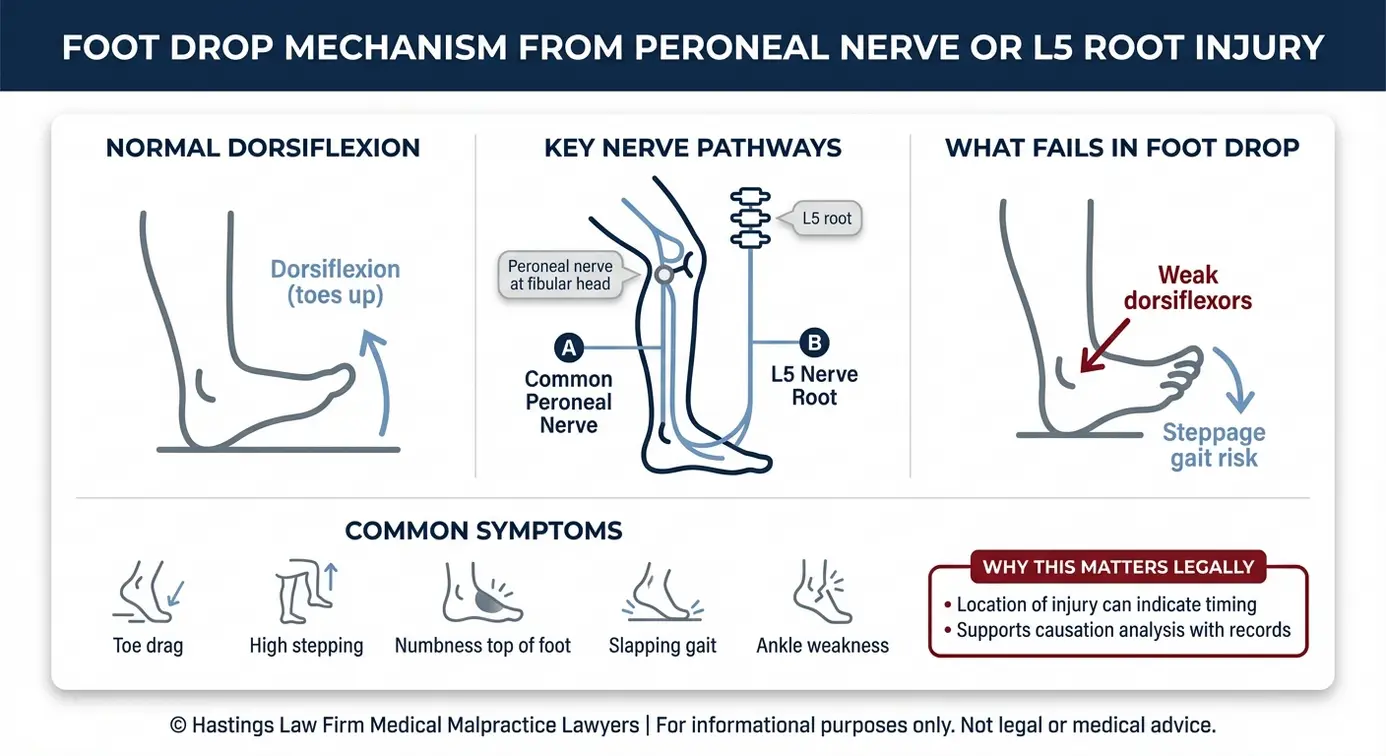
Foot drop is a neuromuscular condition where a person loses the ability to lift the front part of the foot, often caused by damage to the peroneal nerve during surgery or by missed spinal compression. The result is a distinctive walking pattern called steppage gait, where the person must lift their knee abnormally high to keep the foot from dragging along the ground.
The peroneal nerve runs along the outside of the knee, making it especially vulnerable during orthopedic procedures, prolonged immobilization, or improper positioning on a surgical table. Damage to this nerve, or to the L5 nerve root in the lower spine, can disrupt the signals that control foot and ankle movement, potentially leading to partial or complete paralysis of the foot muscles. When that damage occurs because of a medical error, what should have been a treatable condition can become a lasting disability.
Common symptoms that may indicate foot drop include:
- Dragging the toes or front of the foot while walking
- A high-stepping gait to compensate for the inability to lift the foot
- Numbness or tingling along the top of the foot or outer shin
- Difficulty with balance and frequent tripping or falling
- Reliance on orthotic devices, such as ankle-foot braces, to walk safely
Many patients require ongoing physical therapy, custom bracing, or even additional surgery. If you developed these symptoms following a medical procedure and are looking for a drop foot attorney in Arizona, having your records reviewed can help determine whether the injury was preventable.
Common Medical Errors Leading to Permanent Foot Drop
Medical negligence causes foot drop through surgical positioning errors, severing of the peroneal nerve during knee or hip surgeries, or failure to diagnose spinal emergencies like Cauda Equina Syndrome. These are not random complications. They are often preventable when providers follow established protocols. An Arizona drop foot lawyer must examine the specific medical decisions involved.
Common errors include:
- Surgical nerve transection: During lower extremity procedures, the common peroneal nerve, the sciatic branch responsible for lifting the foot, can be severed. Research on prophylactic common peroneal nerve release in complex total knee replacement confirms this is a known risk requiring active prevention.
- Injection injuries: Poorly placed intramuscular injections can damage the sciatic nerve.
- Post-operative monitoring failures: Failing to detect compartment syndrome can cause irreversible nerve compression.
Improper Surgical Table Positioning and Anesthesia Errors
Preventable foot drop often results from improper surgical table positioning, the strategic arrangement and padding of a patient’s body during a procedure. The common peroneal nerve near the knee is vulnerable to pressure. Proper padding, repositioning during long operations, and careful monitoring are all part of the standard of care.
When anesthesia prevents a patient from moving, prolonged compression can cause nerve ischemia, a tissue-damaging loss of blood flow. A drop foot malpractice lawyer reviews anesthesia logs to confirm if standard protocols were neglected.
Failure to Diagnose Cauda Equina Syndrome
Not all cases start in surgery. Cauda equina syndrome (CES), a condition where the bundle of nerve roots at the spinal base is compressed, requires immediate attention. Causes include a herniated disc, lumbar stenosis, or spinal trauma. Compression of the L5 nerve root, the spinal nerve often implicated in foot drop, can occur as part of this syndrome.
A delayed diagnosis, whether from misreading imaging results or dismissing symptoms as routine back pain, is a critical failure. CES warrants emergency decompression surgery, a procedure to relieve pressure on the nerves. A lawyer for foot drop knows that delaying surgical intervention or MRI imaging can turn treatable symptoms into permanent paralysis.
The Hastings Law Firm Difference
Results matter, but what truly sets us apart is how we achieve them. Every verdict, every settlement, and every Arizona courtroom victory comes from one guiding promise: To treat each client’s fight for justice as if it were our own.
This balance of skill, experience, and empathy reflects our core philosophy that justice should not only compensate the injured, but also make healthcare safer nationwide.

Proving Liability and the Standard of Care in Arizona
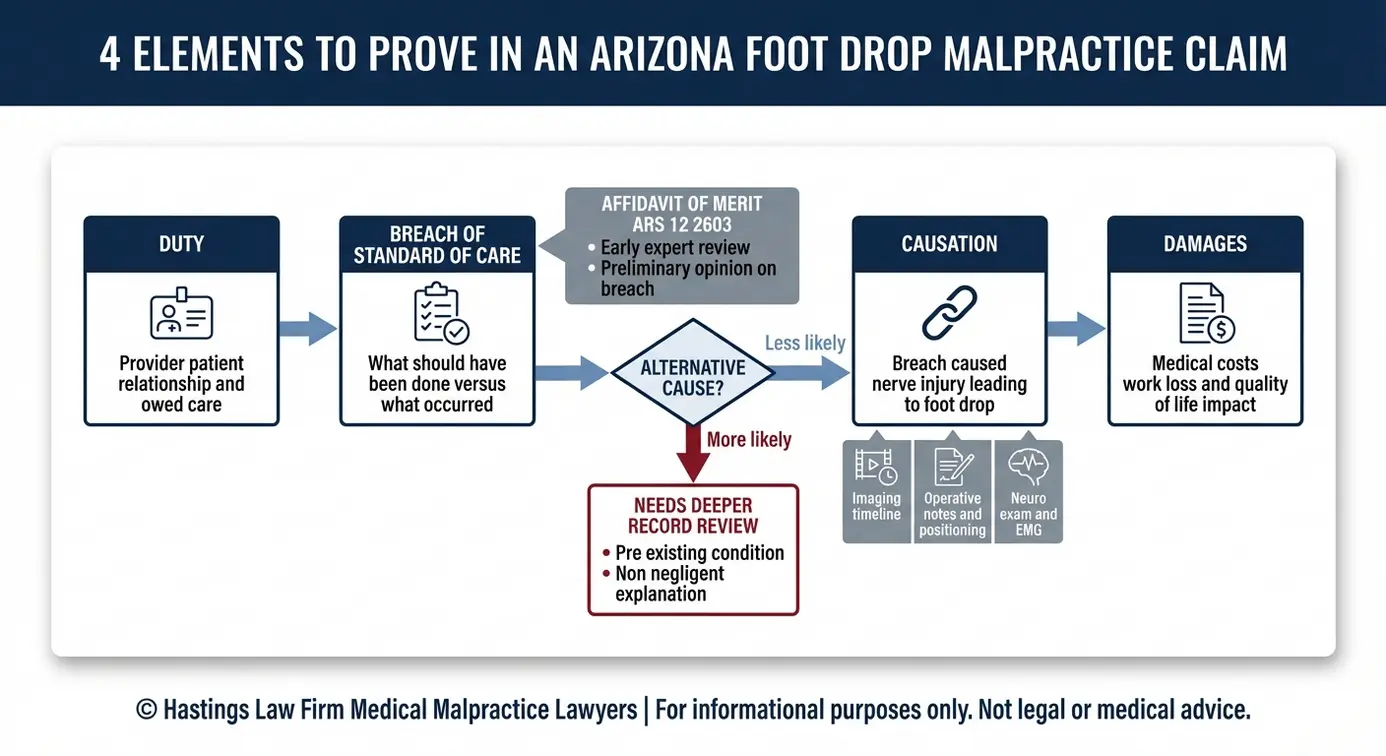
To prove liability, a patient must show that the medical provider deviated from the accepted standard of care, the level of treatment a reasonably competent specialist would have provided under similar circumstances, and that this deviation directly caused the nerve injury. This typically requires expert testimony and a detailed analysis of the medical records.
In Arizona, medical malpractice claims carry a specific procedural requirement. Under Arizona Revised Statutes § 12-2603, a plaintiff must obtain a preliminary expert opinion affirming that the provider’s conduct fell below the standard of care. This affidavit, sometimes called a certificate of merit, must be supported by a qualified medical expert in the same or similar specialty.
An Arizona drop foot lawyer builds the case for medical negligence by reconstructing the timeline of care: reviewing operative reports, imaging studies, nursing notes, and post-surgical assessments to identify exactly when and how the nerve injury occurred. Our team’s in-house nurse consultants and national network of medical experts work together to evaluate whether the treating provider’s actions were reasonable or fell short.
This is the foundation of every malpractice case. Without credible expert testimony connecting the provider’s specific conduct to the injury, the claim cannot move forward. As a malpractice attorney for foot drop cases, we handle this process from the initial record review through expert retention and litigation strategy.
Recoverable Damages for Nerve Injury Victims
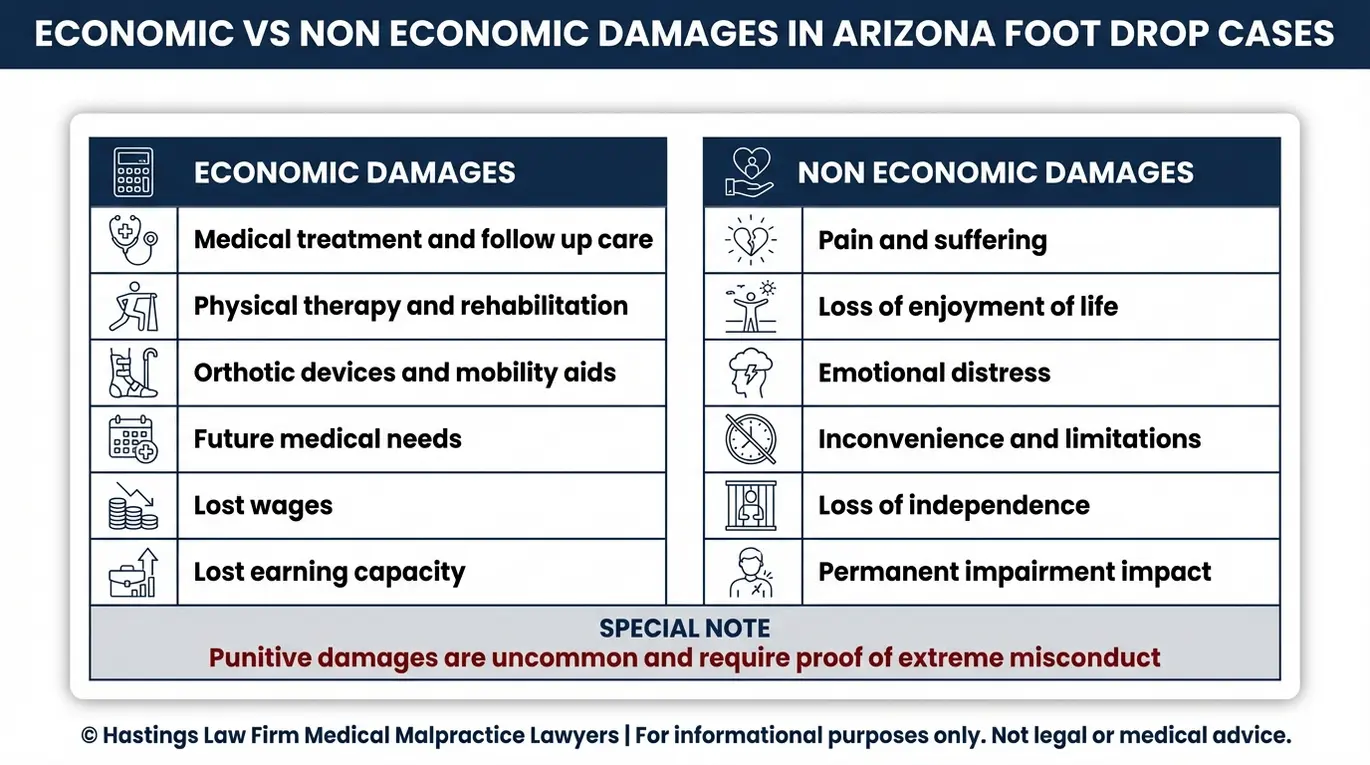
Victims of medical negligence in Arizona can recover economic damages for medical bills and lost wages, as well as non-economic damages for pain, suffering, and loss of quality of life, with no state cap on compensation. Damages represent the financial compensation paid to an injured person to cover their various losses.
Whether through a negotiated settlement or a jury trial, the goal of a damage award is to account for the full scope of harm, both financial and personal. A foot drop compensation lawyer evaluates damages in two main categories:
| Economic Damages | Non-Economic Damages |
|---|---|
| Past and future medical bills (surgeries, physical therapy, rehabilitation) | Pain and suffering |
| Cost of orthotic devices such as an ankle-foot orthosis (AFO), a brace worn to support the foot and ankle during walking | Emotional distress |
| Lost wages and lost earning capacity | Loss of enjoyment of life (inability to run, hike, or walk freely) |
| In-home assistance or modifications | Loss of independence and daily function |
In rare cases involving gross negligence, punitive damages may also be available. These are not tied to the patient’s losses but are intended to address especially reckless conduct.
Every foot drop case is different, and the value of a claim depends on the severity of the injury, the patient’s age and occupation, and the long-term prognosis. An Arizona drop foot lawyer can help you understand what categories of compensation apply to your situation after reviewing the full medical picture.
Arizona Statute of Limitations for Medical Injury Claims
In Arizona, medical malpractice claims must generally be filed within two years of the date the injury occurred or was discovered, though exceptions exist for minors and cases of concealed negligence. This statute of limitations, which is the legal deadline for filing a lawsuit, is set by the Arizona Revised Statutes, Title 12.
While Arizona recognizes a discovery rule that may delay the clock if the error wasn’t immediately apparent, relying on tolling exceptions is risky. Tolling is a legal concept that pauses the filing deadline under certain circumstances. Evidence fades quickly, and consulting an Arizona drop foot lawyer immediately protects your right to file before the deadline expires.
Contact the Arizona Healthcare Malpractice Attorneys at Hastings Law Firm Today for Help
Foot drop can change the way you move through every part of your day, from getting dressed in the morning to doing your job to simply walking across a room. When that disability results from a preventable medical error, you deserve answers and the opportunity to hold the responsible party accountable.
Hastings Law Firm handles these cases on a contingency fee basis, meaning you pay no attorney fees or costs unless we recover compensation for you. Our team of board-certified trial attorneys, former defense lawyers, and in-house nurse consultants is prepared to review your medical records, consult with qualified experts, and determine whether you have a viable claim.
Contact us today for a free, confidential case evaluation. Let us help you understand what happened and what your options are.
Frequently Asked Questions About Drop Foot in Arizona


This content was researched and written by the Hastings Law Firm editorial team, which includes attorneys, medical professionals, and experienced researchers. Our writing is informed by internal knowledge and practical experience, and we cross-check critical details against authoritative sources cited throughout. Every piece undergoes human-led fact-checking and legal review. Because legal and medical information can change, if you spot an error, please contact us. Learn more about our content standards and review process on our editorial policy page.

Tommy Hastings, founder of Hastings Law Firm, is a board-certified personal injury trial lawyer dedicated exclusively to healthcare injury cases. Since 2001, he has represented injured patients and families in litigation against major hospital systems, pharmaceutical companies, and negligent healthcare providers nationwide. He has handled numerous high-profile cases that have drawn national media attention and resulted in multi-million dollar recoveries. He draws on that experience in his writing, helping readers understand how these cases work and what options may be available to them.
