


Arizona Dialysis Malpractice Lawyer
Written by: Hastings Law Firm | Reviewed by: Tommy Hastings | Updated: July 27, 2026
Dialysis is a life sustaining treatment that depends on careful setup, monitoring, and infection control. When a clinic or provider makes preventable errors, the results can be catastrophic, including life threatening complications or fatal outcomes. Harm may stem from equipment or solution problems, missed warning signs during treatment, or failures to keep access sites and water systems safe. Accountability can involve individual staff, supervising nephrologists, facility leadership, or corporate owners. If you or a loved one were harmed or worse due to dialysis negligence in Arizona, contact Hastings Law Firm for a free, confidential case review.

Trusted Arizona Medical Attorneys for Dialysis Negligence Claims
What You Should Know About Dialysis Negligence Claims in Arizona:
- Life threatening harm can follow dialysis errors because treatment depends on precise machine setup, close monitoring, and strict infection control.
- Severe outcomes can be tied to monitoring failures when alarms or sudden blood pressure drops are not addressed during treatment.
- Catastrophic injury can result from machine and line problems such as incorrect dialysate mixing or air entering the bloodstream.
- Long term complications can follow infection control breakdowns when access sites, water systems, or dialysate are contaminated.
- Fatal outcomes can be associated with shortened dialysis sessions when inadequate toxin clearance leaves dangerous waste levels in the body.
- Responsibility may extend beyond a single clinician because liability can involve technicians, supervising nephrologists, medical directors, facilities, and corporate owners.
- Recovery options can be limited if action is delayed because Arizona imposes a statute of limitations and key facility records may be overwritten or discarded.
- Case outcomes can depend on what treatment logs and machine data show because flow sheets, maintenance records, and infection control documentation may reveal deviations from expected care.
- Proving a breach can hinge on specialty expert review because nephrology experts may be needed to address standard of care and causation.
- Compensation can reflect both financial losses and personal harm because damages may include medical bills, lost income, pain and suffering, and wrongful death losses in fatal cases.

A Healthcare Focused Law Firm
Dialysis patients depend on consistent, carefully monitored treatment to stay alive. When a dialysis center or medical provider fails to meet that responsibility, the consequences can be severe and sometimes fatal. If you or a loved one has been harmed by negligent dialysis care in Arizona, the confusion and frustration you feel right now is understandable.
Hastings Law Firm focuses exclusively on medical malpractice. Our legal team, which includes in-house medical professionals and former defense attorneys, understands both the clinical details and the legal strategy required to hold negligent providers accountable. As experienced Arizona dialysis malpractice lawyers, we can review what happened, explain your options, and help you determine whether you have a case. The consultation is free, and you pay nothing unless we recover compensation on your behalf.
Understanding Kidney Dialysis and Associated Risks
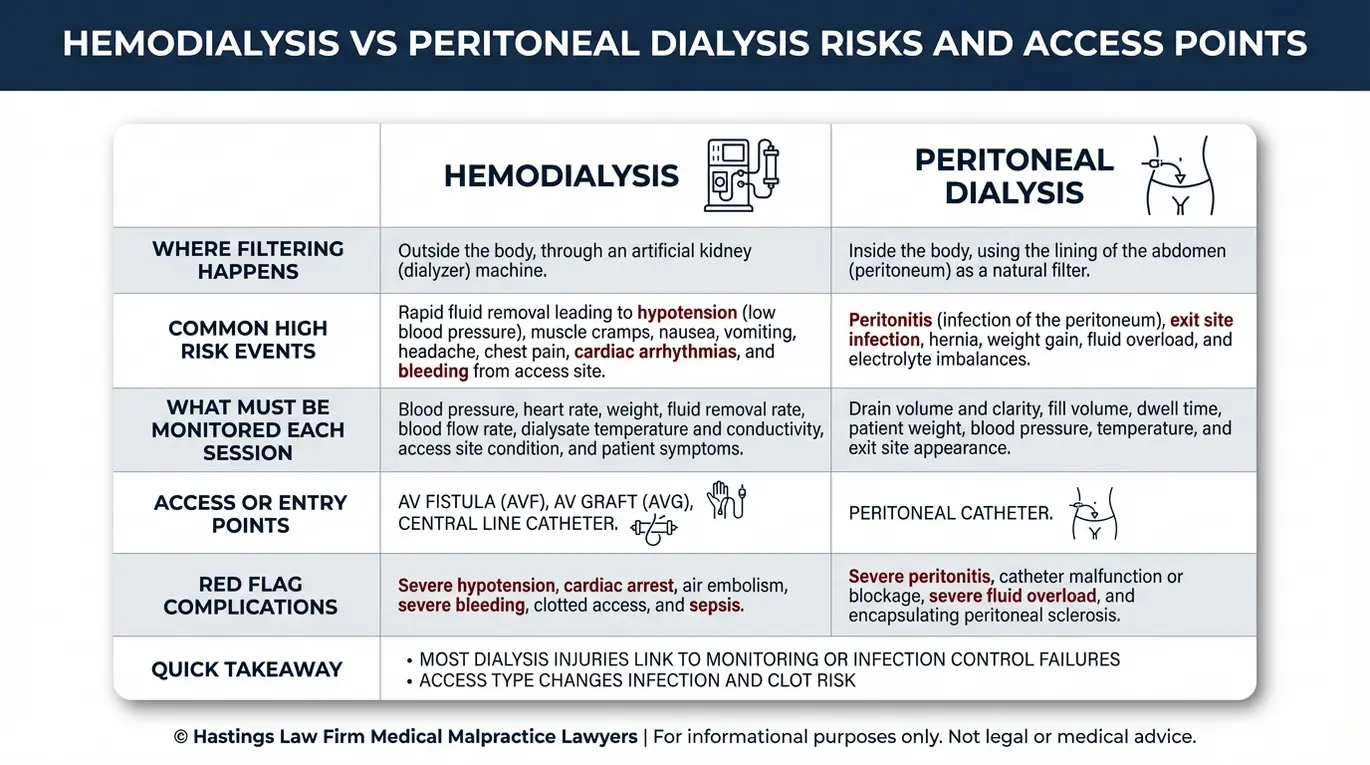
Kidney dialysis is a medical procedure that artificially filters waste and excess fluids from the blood when the kidneys can no longer perform this function, carrying risks of infection and hemodynamic instability if not monitored correctly. It is a life-sustaining treatment for patients with chronic kidney disease, kidney failure, or end-stage renal disease.
There are two primary types of dialysis. Hemodialysis is the more common form and involves a process that filters blood through an external machine using a special membrane. Peritoneal dialysis uses the lining of the patient’s abdomen as a natural filter with a cleansing solution cycled in and out, which carries its own set of risks. Each method has distinct risk profiles that affect how negligence can occur.
Both types of dialysis require reliable access, the point where treatment is delivered to or through the body. Hemodialysis requires vascular access; as outlined in research published by PubMed Central on hemodialysis access and assessment, common access types include an arteriovenous fistula (AVF), an arteriovenous graft (AVG), and central line catheters. Peritoneal dialysis requires a peritoneal catheter placed in the abdomen. Each access point is vulnerable to clotting, infection, and physical damage if not properly placed and maintained.
Understanding these basics is an important first step for anyone exploring a potential claim with an Arizona dialysis negligence attorney. The type of dialysis and the access method involved often shape the direction of the investigation.
| Factor | Hemodialysis | Peritoneal Dialysis |
|---|---|---|
| How It Works | Blood filtered through an external machine | Fluid cycled through the abdominal lining |
| Access Type | AVF, AVG, or central line catheter | Peritoneal catheter in the abdomen |
| Primary Infection Risk | Bloodstream infections at the access site | Peritonitis (infection of the abdominal lining) |
| Monitoring Concerns | Blood pressure drops, machine alarms, clotting | Fluid balance, catheter integrity, signs of infection |
| Setting | Typically in-center at a dialysis clinic | Often performed at home |
Common Negligence in Arizona Dialysis Clinics
Dialysis negligence frequently involves errors such as improper machine setup, failure to monitor vital signs leading to cardiac events, contamination of the dialysate solution, or inadequate sterilization of vascular access points. These failures may seem technical, but they can cause catastrophic harm or death.
When we evaluate a case as Arizona dialysis malpractice lawyers, the errors we investigate generally fall into three categories:
Machine and Solution Errors
- Incorrect acid concentrate ratios in the dialysate can cause hemolysis, the destruction of red blood cells, or hemolytic anemia. A common dialysate error involves incorrect acid concentrate ratios; acid concentrate, the chemical component mixed into the dialysis solution to maintain proper pH balance, must be calculated precisely.
- Air embolisms can occur if loose or improperly connected lines allow air bubbles to enter the bloodstream.
- Faulty equipment may result from a failure to maintain, calibrate, or clean machines between patients.
Monitoring Failures
- Failure to respond to machine alarms or sudden drops leading to dangerous low blood pressure, which can lead to dialysis-induced cardiac events or sudden cardiac death.
- Medication errors often involve incorrect dosing of anticoagulants used during treatment.
- Inadequate blood work monitoring fails to track whether dialysis is effectively clearing toxins.
Infection Control Failures
- Improper sterilization of access sites can lead to bloodstream infections and sepsis. According to a CDC Vital Signs report on hemodialysis-associated Staphylococcus aureus bloodstream infections, dialysis patients face significantly elevated infection risks, and many of these infections are preventable with proper protocols.
- Pathogens can enter the blood through contaminated water systems, contaminated dialysate solution (the fluid used to draw toxins), or reused filters.
A ProPublica investigation into dialysis patient outcomes revealed how systemic operational failures at dialysis facilities contributed to widespread patient harm. These are not isolated incidents; they reflect patterns that our team is trained to identify.
Arizona law imposes a two-year statute of limitations on medical malpractice claims under Arizona Revised Statutes § 12-542. Evidence like machine logs and infection control records can be overwritten or discarded, so early action matters.
Shorter Delivered Dialysis Time and Mortality Risks
Another pattern we examine involves shortened dialysis treatment sessions. Each patient requires a specific dialysis dose, the amount of toxin clearance needed to keep uremic toxins, the waste products the kidneys normally remove, at safe levels. When sessions are cut short, the body retains dangerous levels of these toxins, increasing the risk of organ damage and death.
Studies have linked shorter delivered dialysis time to higher mortality risk. This issue can arise in a for-profit dialysis center where high patient turnover affects the quality of care. If treatment records show that a facility consistently delivered less dialysis than the standard of care requires, that pattern can become central to a negligence claim.
The Hastings Law Firm Difference
Results matter, but what truly sets us apart is how we achieve them. Every verdict, every settlement, and every Arizona courtroom victory comes from one guiding promise: To treat each client’s fight for justice as if it were our own.
This balance of skill, experience, and empathy reflects our core philosophy that justice should not only compensate the injured, but also make healthcare safer nationwide.

Liability for Suing Arizona Dialysis Centers and Nephrologists
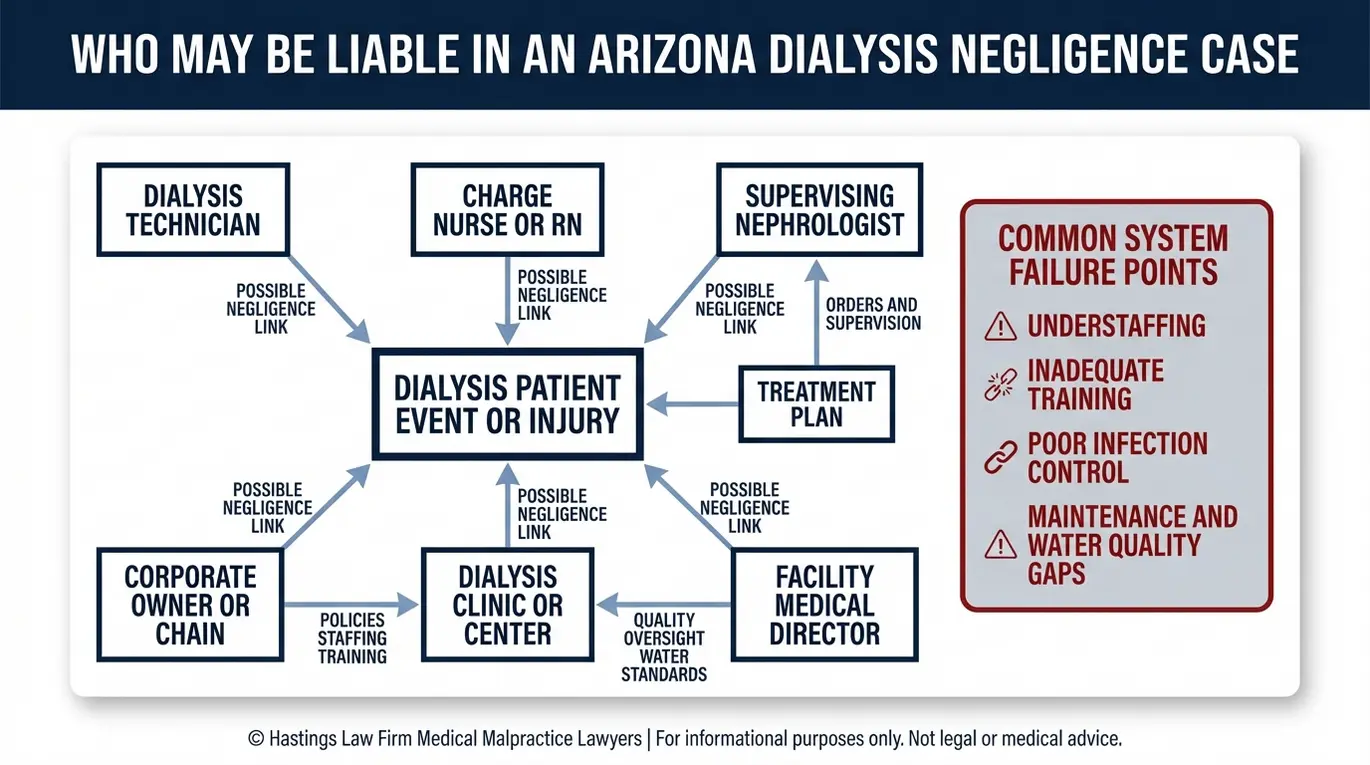
Liability for dialysis injuries may extend to the dialysis technician, the staff member operating the equipment, the supervising nephrologist, a physician specializing in kidney disease, the facility medical director, or the corporate entity itself, depending on whether the error resulted from clinical judgment or systemic operational failures.
When a dialysis center is owned by a large corporate chain, we investigate whether policies around staffing levels, training requirements, and equipment maintenance contributed to the injury. Medical negligence claims against corporate entities often focus on whether operational decisions created conditions where errors became likely. For instance, systemic failures in sanitation protocols can lead to preventable harm, underscoring the importance of preventing healthcare-acquired infections (HAIs) through strict adherence to safety standards.
The medical director of a dialysis facility carries a separate obligation. This nephrologist is responsible for overseeing treatment protocols, water quality standards, and the overall adequacy of care delivered at the clinic. When those oversight duties are not met, the medical director may bear individual liability alongside the facility.
We understand that many patients and families hesitate to question their doctors. Years of trusting medical professionals can make it feel uncomfortable, even wrong, to challenge their care.
However, the “white coat” effect should not deter you from seeking justice when a loved one is harmed. Seeking legal help for dialysis errors is not about disrespecting a profession; it is about determining whether the standard of care was met and holding the right parties accountable when it was not. In many cases, the failures trace back to institutional decisions rather than any single provider.
At Hastings Law Firm, our team includes former defense attorneys who previously represented hospitals and healthcare systems. That experience gives us direct insight into how these entities structure their defenses and identifies where liability truly lies.
Proving Breaches in the Standard of Care
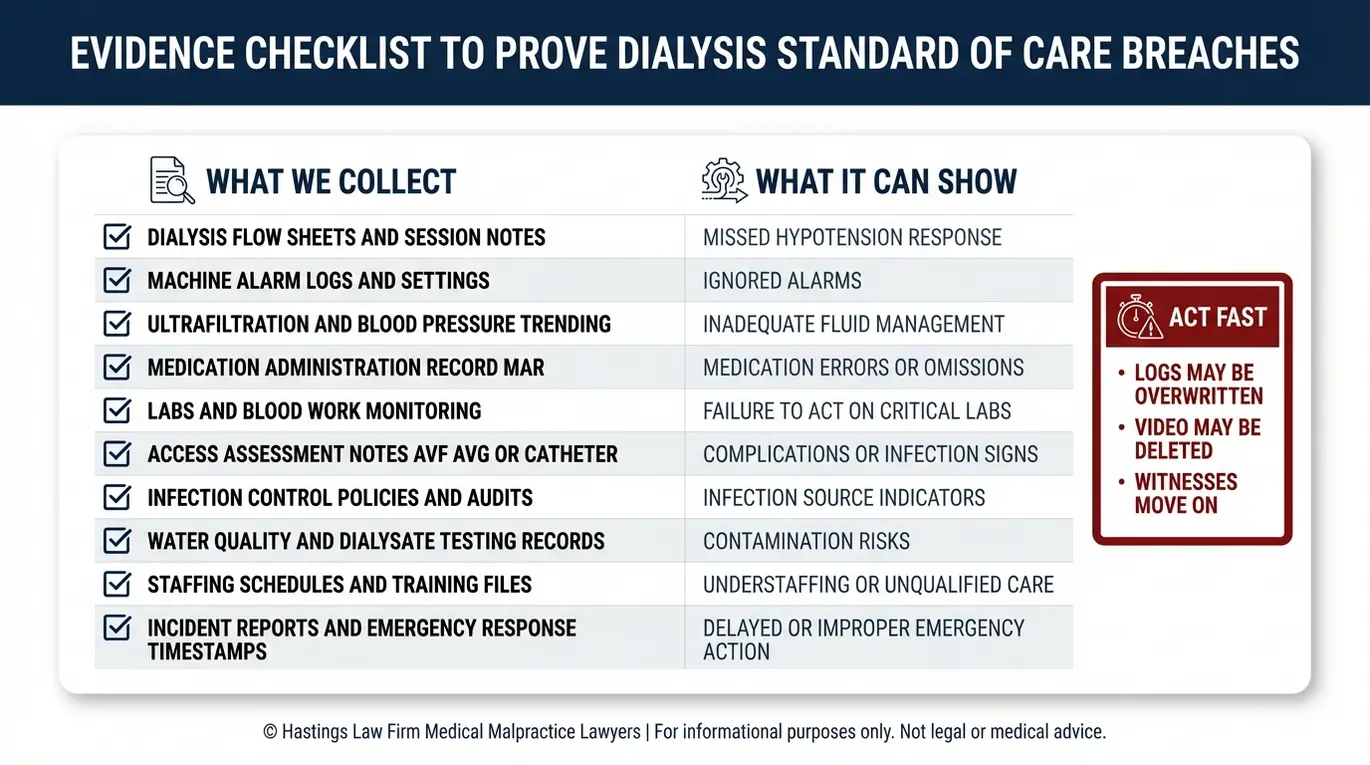
Proving a breach in the standard of care requires a detailed audit of medical records, treatment logs, machine data, and staffing records to demonstrate that the clinic’s actions deviated from what a competent dialysis provider would have done under similar circumstances. As an Arizona kidney dialysis injury attorney, this is the core of every case we build.
Our investigation targets specific categories of evidence:
- Dialysis flow sheets, the detailed records of each treatment session that track vitals, fluid removal rates, and any complications
- Machine maintenance and calibration logs showing whether equipment was functioning properly
- Kt/V readings, a clinical measurement of dialysis adequacy that indicates whether enough waste was removed during treatment, and blood work monitoring results
- Infection control records and water quality test results
- Staffing schedules documenting patient-to-technician ratios at the time of the incident
- Alarm response documentation and nursing notes
To interpret this clinical data, we work with board-certified nephrology experts who can provide expert testimony regarding the standard of care. Research published in PubMed Central on dialysis adequacy standards explains how Kt/V thresholds are used to evaluate treatment quality. These specialists review the clinical evidence and determine whether the care provided fell below the accepted standard. They can also establish causation, the direct link between a specific error and the resulting injury.
Our in-house medical staff, including nurse practitioners and board-certified patient advocates, assist in parsing through these records before the case ever reaches a courtroom. This medical-legal collaboration is central to how we prepare every case from day one.
Recoverable Damages for Dialysis Injuries and Wrongful Death
Patients harmed by dialysis malpractice in Arizona may recover compensation for past and future medical bills, lost income, pain and suffering, and in fatal cases, families may pursue wrongful death damages for funeral costs and loss of companionship.
Economic damages cover the measurable financial losses caused by the negligence. These often include costs for corrective surgeries, extended hospital stays, emergency interventions, and ongoing treatment. In cases where dialysis errors cause kidney transplant complications or accelerate the need for a transplant, the financial burden can be enormous. Lost wages and diminished earning capacity also fall into this category, particularly for patients whose injuries prevent them from returning to work.
Non-economic damages address the harm that does not come with a receipt. Dialysis-related cardiac injuries, for example, can leave a patient as a “cardiac cripple,” which describes someone with permanent heart damage that severely limits daily activity and quality of life. The physical pain, emotional distress, and loss of independence caused by preventable medical errors are compensable under Arizona law.
Wrongful death claims apply when a patient dies as a result of negligent dialysis care. Surviving family members may seek compensation for funeral and burial expenses, loss of the patient’s income and financial support, and the profound loss of love, guidance, and companionship. Our legal team can help families understand who has standing to bring these claims and what evidence is needed to prove the extent of the loss.
Every case is different, and we evaluate damages based on the full scope of harm to the patient and family.
Contact the Arizona Healthcare Malpractice Attorneys at Hastings Law Firm Today for Help
If you or a loved one suffered a preventable injury or loss at a dialysis center, you deserve answers. The medical and corporate systems involved have legal teams working to protect their interests. You should have experienced advocates working to protect yours.
Founded by board-certified trial lawyer Tommy Hastings, our firm brings decades of medical malpractice litigation experience and in-house medical expertise to every case. As your Arizona dialysis malpractice lawyers, we handle every aspect of the investigation and litigation so you can focus on your health and your family.
We work on a contingency fee basis, which means you pay no attorney fees or costs unless we secure a recovery for you. Contact us today for a free, confidential case evaluation. Let us help you find the answers you deserve.
Frequently Asked Questions About Dialysis Malpractice in Arizona


This content was researched and written by the Hastings Law Firm editorial team, which includes attorneys, medical professionals, and experienced researchers. Our writing is informed by internal knowledge and practical experience, and we cross-check critical details against authoritative sources cited throughout. Every piece undergoes human-led fact-checking and legal review. Because legal and medical information can change, if you spot an error, please contact us. Learn more about our content standards and review process on our editorial policy page.

Tommy Hastings, founder of Hastings Law Firm, is a board-certified personal injury trial lawyer dedicated exclusively to healthcare injury cases. Since 2001, he has represented injured patients and families in litigation against major hospital systems, pharmaceutical companies, and negligent healthcare providers nationwide. He has handled numerous high-profile cases that have drawn national media attention and resulted in multi-million dollar recoveries. He draws on that experience in his writing, helping readers understand how these cases work and what options may be available to them.
