


Arizona Clavicle Fracture Birth Injury Lawyer
A newborn clavicle fracture during delivery can leave families overwhelmed and searching for clarity about what happened. This topic involves how excessive force, missed warning signs, or improper maneuvers during a difficult birth can contribute to a broken collarbone and related nerve injuries that affect arm function. Arizona law also shapes what compensation may be available and how delays can make key evidence harder to obtain. If you or a loved one were harmed or worse due to a clavicle fracture birth injury in Arizona, contact Hastings Law Firm for a free, confidential case review.

Last Updated: September 24, 2026
Trial-Ready Legal Representation for Infant Broken Bone Injuries in Arizona
Learning that your newborn suffered a broken bone during delivery is devastating. You trusted your medical team to protect your child, and now you are left with questions about what went wrong and whether it could have been prevented. These feelings of confusion and betrayal are valid, and you deserve clear answers.
An Arizona clavicle fracture birth injury lawyer can help you understand whether medical negligence played a role in your child’s injury. At Hastings Law Firm, we focus exclusively on medical malpractice cases. Our team includes in-house nurses and former defense attorneys who know how to investigate delivery room errors and identify breaches in the standard of care.
If your baby was injured during birth, we are here to listen. Contact us for a free, confidential case evaluation to learn what happened and explore your legal options.

Understanding Clavicle Fractures and Medical Negligence During Delivery
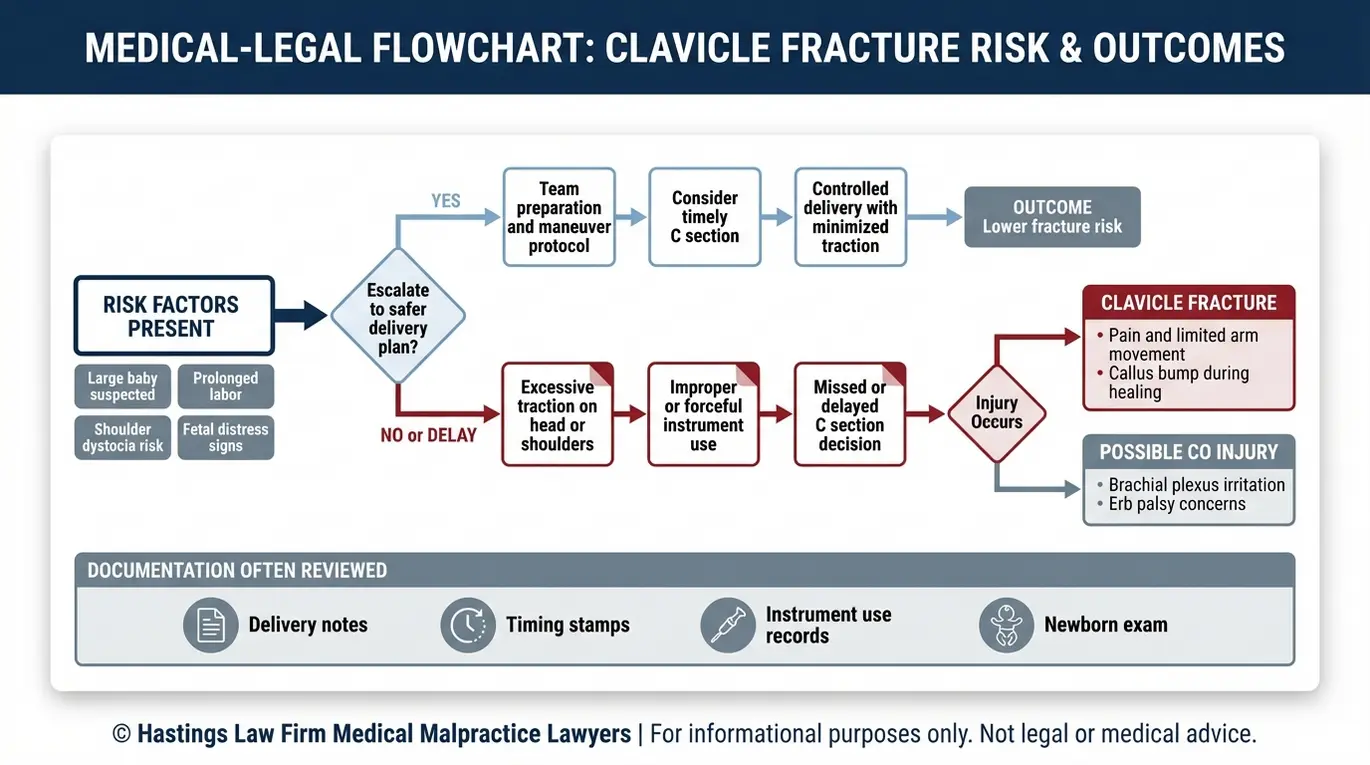
A clavicle fracture, or broken collarbone, in a newborn is often caused by excessive force or improper maneuvering during a difficult delivery, particularly when shoulder dystocia occurs. A clavicle fracture is a break in the collarbone. This type of birth trauma happens when a baby’s shoulder becomes lodged behind the mother’s pubic bone after the head has already emerged. When this occurs, the delivering physician must act quickly and use proper maneuvers to free the baby safely.
While a neonatal clavicle fracture, a break in the thin, delicate collarbone of a newborn, is one of the most common bone injuries during childbirth, it often signals a deviation from the standard of care. The presence of a fracture can signal that something went wrong during delivery. While some fractures occur despite appropriate care, others result from a physician applying too much downward traction on the baby’s head or failing to recognize the need for an emergency Cesarean section.
Shoulder dystocia, the condition where the baby’s shoulder gets stuck, is a known obstetric emergency. According to guidelines published by the French College of Obstetricians and Gynecologists, physicians should follow specific protocols to resolve this complication safely. When these protocols are ignored or performed incorrectly, the excessive pulling can fracture the clavicle or damage the delicate nerves in the baby’s neck and shoulder.
Many infants with fractured collarbones also suffer brachial plexus injuries, which is damage to the network of nerves controlling the arm and hand. One of the most recognized forms of this nerve damage is Erb’s palsy, where the baby loses movement and sensation in the affected arm. These injuries often occur together because the same excessive force that breaks the collarbone can stretch or tear these vulnerable nerves.
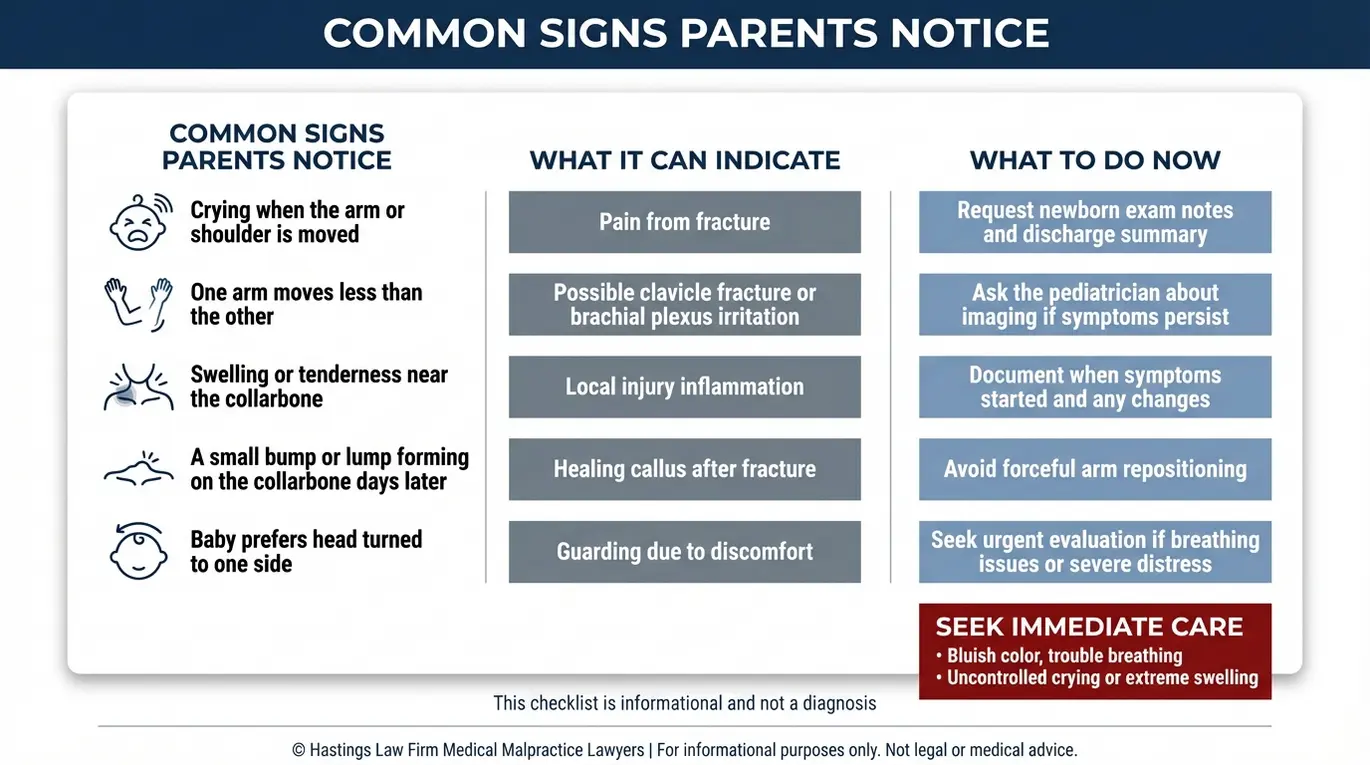
If you notice any of the following symptoms in your newborn, seek medical attention and document what you observe:
- Crying or signs of pain when the arm or shoulder is touched or moved
- Limited or absent movement in one arm compared to the other
- A visible lump or swelling along the collarbone area
- The arm held close to the body or appearing limp
- Uneven shoulder positioning or asymmetry
As Kaiser Permanente explains, most newborn clavicle fractures heal within a few weeks with proper care. Under Arizona Revised Statutes § 12-542, families have the right to pursue a claim if an injury resulted from medical negligence. An experienced Arizona birth injury attorney can review your case to determine whether the fracture and any related infant broken bones injuries were preventable.
Common Causes of Preventable Infant Bone Fractures
Preventable fractures often result from the misuse of assisted delivery tools or the failure to anticipate a large baby, known as macrosomia, requiring a Cesarean section. Investigating the circumstances of birth can help determine if medical errors occurred. Physicians must monitor for macrosomia, a condition where a baby has an estimated birth weight above 8 pounds, 13 ounces.
Babies of this size face a higher risk of becoming stuck during vaginal delivery. Physicians have a responsibility to monitor fetal size throughout pregnancy and consider whether a planned Cesarean section (C-section), a surgical delivery through the abdomen, would be safer than a vaginal birth.
A study published in PubMed Central analyzing risk factors for clavicle fractures found a strong association between shoulder dystocia, brachial plexus injury, and newborn bone fractures. This research underscores why identifying high-risk deliveries before labor begins is so important for preventing Arizona medical malpractice situations.
The following red flags may indicate that preventable errors contributed to your child’s bone fractures:
- Forceps or vacuum extractor used with excessive force or improper positioning
- No attempt to perform recognized shoulder dystocia maneuvers before pulling on the baby
- Failure to recommend a C-section despite documented risk factors like fetal size estimates or gestational diabetes
- Ignoring signs of fetal distress on the heart rate monitor
- Rushed delivery despite warning signs that the baby was too large for safe vaginal birth
- Lack of communication between nursing staff and the attending physician about complications
Although less common, rough handling by nursing staff or physicians post-delivery can also lead to fractures. Both vacuum extractors and obstetric forceps can be safe when used correctly, but improper maneuvering can cause skull fractures, facial injuries, and damage to the collarbone.
Defective Medical Devices and Birth Trauma
Physicians rely on tools like the vacuum extractor (ventouse), a suction device placed on the baby’s head, and obstetric forceps, curved metal instruments used to guide the baby. In rare cases involving defective medical devices, a defect in the tool itself may contribute to the injury. If a device malfunctioned or was designed in a way that made injury more likely, the manufacturer could share liability under Arizona product liability law. Our team examines all possible causes, including whether equipment failure played a role, to ensure every responsible party is identified.
The Hastings Law Firm Difference
Results matter, but what truly sets us apart is how we achieve them. Every verdict, every settlement, and every Arizona courtroom victory comes from one guiding promise: To treat each client’s fight for justice as if it were our own.
This balance of skill, experience, and empathy reflects our core philosophy that justice should not only compensate the injured, but also make health care safer nationwide.

Recoverable Damages for Birth Injuries Under Arizona Law
Arizona law allows families to recover compensation for medical bills, future care costs, pain and suffering, and loss of earning capacity without a statutory cap on damages. In legal terms, recoverable damages refer to the financial compensation a family seeks to cover their losses. This protection comes directly from the Arizona Constitution, which safeguards your right to full and fair compensation.
Article 2, Section 31 of the Arizona Constitution explicitly prohibits the legislature from placing limits on the amount of damages recoverable for personal injuries or wrongful death. This means that unlike some other states, Arizona juries can award whatever amount they determine is fair based on the evidence presented.
When we take on a case as your Arizona clavicle fracture birth injury lawyer, we work to document every category of harm your family has suffered. The goal is to secure damages that truly reflect the impact of this injury on your child’s life and your family’s future.
| Damage Category | What It Covers |
|---|---|
| Economic Damages | Medical bills, hospital stays, orthopedic treatment, physical therapy, surgeries, prescription medications, assistive devices, and transportation costs for ongoing care |
| Non-economic damages | Physical pain and suffering, emotional distress experienced by the child and parents, loss of enjoyment of life, and psychological trauma |
| Future Medical Costs | Projected expenses for continued treatment, follow-up surgeries, occupational therapy, and any care needed into adulthood |
| Loss of Earning Capacity | If the injury causes permanent limitations, compensation for reduced ability to work and earn income as an adult |
A brachial plexus injury, which involves damage to the bundle of nerves running from the spine through the neck and into the arm, can range from mild stretching that heals on its own to permanent nerve tears requiring surgery. In severe cases, the child may develop Erb’s palsy, a specific type of brachial plexus injury affecting the upper nerves. This condition typically causes weakness or paralysis in the shoulder and upper arm.
When a clavicle fracture is accompanied by permanent nerve damage like Erb’s palsy, the compensation needs extend far beyond initial hospital bills. Families may need to establish long-term trusts to fund a lifetime of physical therapy, adaptive equipment, and potential surgeries. We work with medical and economic experts to calculate these future costs and present them clearly to insurance carriers or juries.
Arizona Statute of Limitations for Infant Injury Claims
In Arizona, the statute of limitations for birth injury claims is generally two years, but specific rules apply to minors that may toll, or pause, this deadline; however, immediate action remains essential to preserve evidence and protect your child’s rights. A statute of limitations acts as the legal deadline for filing a lawsuit.
The standard rule under Arizona Revised Statutes § 12-542 gives injury claimants two years from the date of injury to file a lawsuit. For birth injuries, this clock typically starts running on the day your child was born.
Arizona law does provide protection for children who cannot file claims on their own behalf. The statute of limitations may be tolled until the child reaches age 18, giving them until their 20th birthday to file a claim or take legal action.
Relying on this extended timeline carries serious risks. Medical records can be lost, altered, or destroyed over time. Witnesses move away or forget important details. The physicians and nurses involved may also retire or relocate, making evidence harder to gather.
Critical Deadline Warnings:
- Hospital policies and procedures may change, making it harder to establish what standards applied at the time of delivery
- Evidence of equipment defects becomes harder to trace
- Fetal monitoring strips may be purged after a set number of years
Special Rule for Public Hospitals: If your baby was born at a state, county, or municipal hospital in Arizona, you face a much shorter deadline. Under Arizona Revised Statutes § 12-821.01, you must file a notice of claim within just 180 days of the injury. Missing this deadline can permanently bar your Arizona birth injury claim, regardless of how strong your evidence might be.
The safest approach is to consult with a birth injury attorney as soon as you suspect negligence played a role. Early investigation allows us to secure fetal monitoring strips, delivery room records, and witness statements while they are still available and accurate.

Why Choose Hastings Law Firm for Your Family
Choosing Hastings Law Firm means partnering with a Board Certified specialist who uses a national expert network and trial-ready strategy to hold negligent providers accountable. We understand that your family has been through a traumatic experience, and we treat every client with the respect and attention they deserve.
Unlike general personal injury firms that handle car accidents or slip-and-falls, we focus exclusively on medical malpractice litigation. This specialization matters because birth injury cases require deep knowledge of obstetric standards, fetal monitoring interpretation, and the specific maneuvers physicians should use during complicated deliveries. Our Arizona clavicle fracture birth injury lawyer team brings this focused expertise to every case.
Our founder, Tommy Hastings, is Board Certified in Personal Injury Trial Law by the Texas Board of Legal Specialization, a distinction held by fewer than 2% of Texas attorneys. In 2025, he was inducted into the American Board of Trial Advocates (ABOTA), an invitation-only organization recognizing elite trial lawyers. His track record includes numerous multi-million dollar results for families harmed by medical negligence.
What truly sets us apart is our “insider” perspective. Our team includes former defense attorneys who previously represented hospitals and insurance companies. We know the tactics they use to minimize payouts and deny responsibility. We also employ experienced nurses who help us analyze medical records and identify charting inconsistencies that might otherwise go unnoticed.
From our Phoenix office, we combine the resources of a national litigation firm with dedicated local representation for Arizona families. We prepare every case as if it will go to trial, which sends a clear message to defense counsel and insurance carriers that we will not accept an unfair settlement. This trial-ready approach often leads to better outcomes for our clients.
We handle cases on a contingency fee basis, meaning you pay no attorney fees unless we recover compensation for your family.
Contact the Arizona Birth Injury Attorneys at Hastings Law Firm Today for Help
You are not alone in this. If your baby suffered a clavicle fracture or other injury during delivery, you have every right to ask questions and seek accountability. Many of these injuries are preventable, and families deserve to know the truth about what happened in the delivery room.
The team at Hastings Law Firm is ready to listen to your story. Our free case review gives you the opportunity to share what happened and learn whether you may have a valid claim. There is no obligation and no pressure.
We operate on a “No Fee Unless We Win” promise. You will never owe attorney fees or costs unless we successfully recover compensation for your family. This allows you to focus on your child’s health and recovery while we handle the legal process.
Contact our Arizona birth injury attorneys today to schedule your consultation. Let us help you find the answers you deserve.
Frequently Asked Questions About Clavicle Fracture Birth Injury in Arizona


This content was researched and written by the Hastings Law Firm editorial team, which includes attorneys, medical professionals, and experienced researchers. Our writing is informed by internal knowledge and practical experience, and we cross-check critical details against authoritative sources cited throughout. Every piece undergoes human-led fact-checking and legal review. Because legal and medical information can change, if you spot an error, please contact us. Learn more about our content standards and review process on our editorial policy page.

Tommy Hastings, founder of Hastings Law Firm, is a board-certified personal injury trial lawyer (by the Texas Board of Legal Specialization) dedicated exclusively to healthcare injury cases. Since 2001, he has represented injured patients and families in litigation against major hospital systems, pharmaceutical companies, and negligent healthcare providers nationwide. He has handled numerous high-profile cases that have drawn national media attention and resulted in multi-million dollar recoveries.
