


Arizona Blood Transfusion Error Lawyer
Written by: Hastings Law Firm | Reviewed by: Tommy Hastings | Updated: July 27, 2026
Wrong blood type transfusions are preventable medical errors that can trigger rapid immune reactions and severe complications. Breakdowns often occur during blood typing, cross matching, labeling, storage, or bedside identity checks, and the harm can extend beyond the initial transfusion through delayed reactions or infections. Understanding what happened often depends on pinpointing where protocols failed and which entity controlled the blood product at each step. If you or a loved one were harmed or worse due to a wrong blood type transfusion in Arizona, contact Hastings Law Firm for a free, confidential case review.

Trusted Arizona Medical Attorneys for Wrong Blood Type Transfusion Claims
What You Should Know About Wrong Blood Type Transfusion Claims in Arizona:
- Life threatening injury can occur quickly when incompatible blood is transfused because the immune response can cause organ damage, clotting abnormalities, shock, or fatal outcomes.
- Recovery can turn on whether required verification steps were followed because transfusion safety depends on strict blood typing, cross matching, and two clinician bedside identity confirmation.
- Long term medical needs can follow a transfusion error because survivors may face dialysis, ongoing treatment for organ damage, or lasting respiratory impairment.
- Options can be affected when harm is delayed because some transfusion injuries such as delayed reactions or latent infections may not be recognized until much later.
- Responsibility may extend beyond the bedside clinician because liability can involve hospitals, blood banks, and third party storage facilities tied to the chain of custody.
- Preventable administrative breakdowns can drive disputes because mislabeled samples, patient misidentification, and communication failures are common sources of wrong blood type events.
- Hospital accountability can be central in emergency settings because time pressure and staffing shortages can lead to rushed or skipped safety checks.
- Recovery may depend on what the records show because transfusion logs, temperature logs, and documentation of bedside verification can indicate where protocols failed.

A Healthcare Focused Law Firm
A blood transfusion is supposed to save your life, not put it at risk. When a hospital or medical team administers the wrong blood type, the consequences can be sudden, severe, and life-altering. If you or someone you love was harmed by a preventable transfusion error, you may be wondering whether what happened qualifies as medical malpractice and what you can do about it.
These cases involve a unique overlap of clinical protocols, laboratory procedures, and hospital accountability. Understanding where the breakdown occurred requires both medical knowledge and legal experience. As a firm that focuses exclusively on medical malpractice, Hastings Law Firm has the in-house medical staff and legal team to examine what went wrong and determine who should be held responsible.
If you need an Arizona blood transfusion error lawyer, we welcome you to contact us for a free, confidential case evaluation. There is no fee unless we recover compensation on your behalf.
Standard of Care for Blood Transfusions in Arizona Hospitals
The standard of care for blood transfusions requires a strict double-verification process involving blood typing, cross-matching, and bedside patient identification to confirm compatibility between the donor blood and the recipient. When any step in this process is skipped or performed incorrectly, the result can be a transfusion of incompatible blood, one of the most preventable yet dangerous errors in modern medicine.
The process begins with what is known as a “Type and Cross,” a two-part laboratory test. First, the patient’s blood is typed to identify their ABO blood group, the classification system that categorizes blood as A, B, AB, or O. The lab also checks for the Rh D antigen, commonly called the Rh factor, which determines whether the blood is positive or negative. A cross-match is then performed, mixing a sample of the donor blood with the patient’s blood to check for adverse reactions before the transfusion reaches the bedside.
Even after the lab confirms compatibility, a critical safety step remains: two-person bedside verification. Before the IV line is started, two qualified clinicians must independently confirm the patient’s identity and match it to the labeled blood product. Research published on PubMed regarding electronic bedside transfusion verification systems demonstrates how standardized verification protocols reduce the risk of misidentification at the point of care.
Here is a checklist of steps a nurse must complete before starting a blood transfusion:
- Verify the patient’s identity using their wristband and by asking the patient to state their name and date of birth
- Compare the patient’s identification to the label on the blood bag
- Confirm the ABO and Rh type on the blood bag matches the compatibility report from the lab
- Check the expiration date and inspect the blood product for discoloration or clots
- Have a second clinician independently repeat and confirm all of the above
- Document the verification in the patient’s medical record before starting the infusion
A failure at any one of these checkpoints can result in incompatible blood entering the patient’s body. As an Arizona blood transfusion attorney, we review hospital records and transfusion logs to identify exactly where the protocol broke down. A lawyer for transfusion errors examines not just whether a mistake was made, but whether the facility’s own policies were followed, establishing whether medical malpractice occurred.
Technical Mechanisms of Incompatibility
When incompatible blood is transfused, the patient’s immune system treats the donor red blood cells as a threat. The body produces antibodies that attack the foreign cells, triggering a process called agglutination, where red blood cells clump together and begin to break apart. This destruction releases harmful substances into the bloodstream, which can rapidly lead to organ damage, clotting abnormalities, and cardiovascular collapse.
The Rh D antigen, a protein found on the surface of red blood cells, is a frequent source of incompatibility. If an Rh-negative patient receives Rh-positive blood, their immune system may mount an aggressive response. This is especially dangerous in subsequent transfusions or pregnancies, where sensitization from the first exposure magnifies the reaction.

Severe Injuries From Incompatible Blood Transfusions
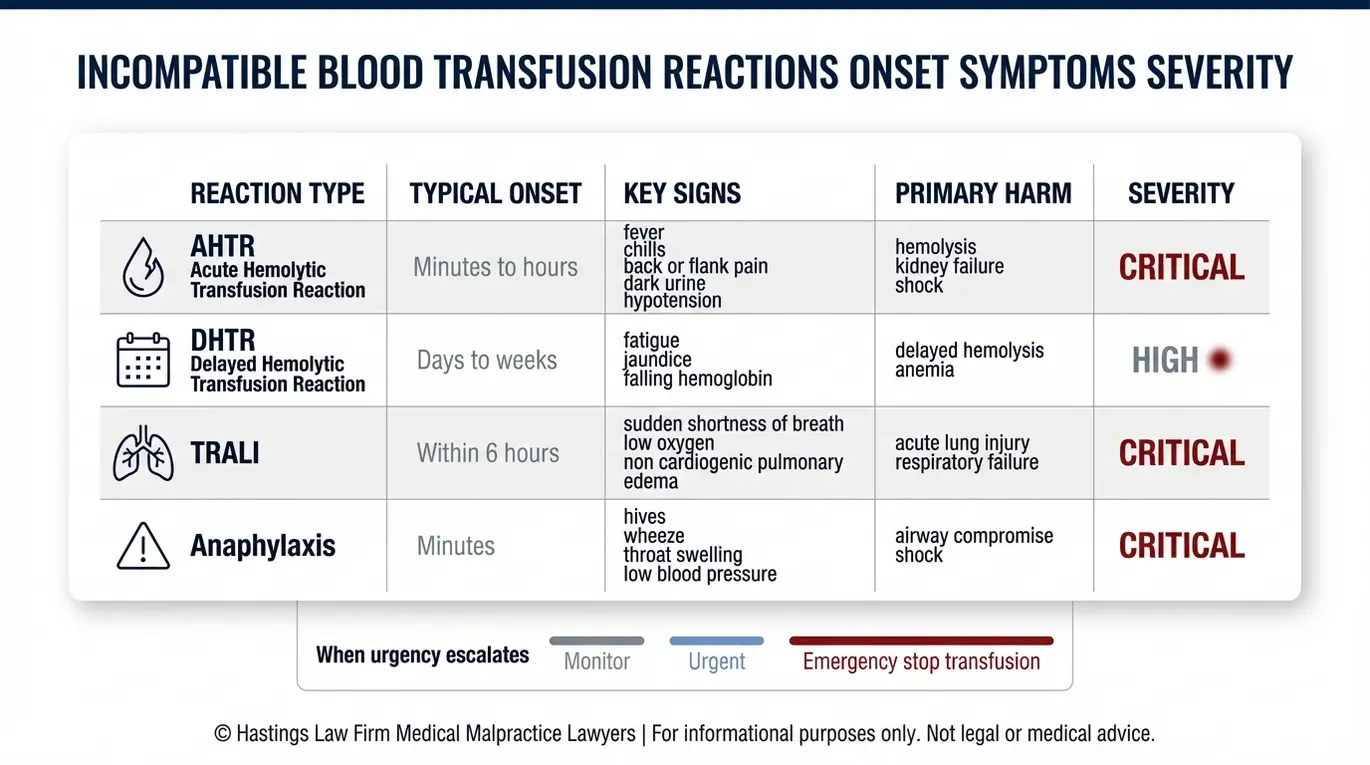
Blood transfusion errors can cause life-altering complications, the most dangerous of which is Acute Hemolytic Transfusion Reaction (AHTR), a condition where the immune system rapidly destroys donor red blood cells, leading to kidney failure, shock, or death. The speed and severity of these reactions are why transfusion safety protocols exist, and why their violation often forms the basis of a medical malpractice claim.
Acute Hemolytic Transfusion Reaction (AHTR) occurs within minutes to hours of receiving incompatible blood. Symptoms include fever, chills, chest pain, dark urine, and a sudden drop in blood pressure. If not recognized and treated immediately, AHTR can cause complete renal shutdown and fatal cardiovascular collapse. A blood transfusion error lawyer in Arizona can help families understand whether the medical team’s response to these warning signs met the standard of care.
Delayed Hemolytic Transfusion Reaction (DHTR) develops days or even weeks after the transfusion. Because symptoms such as unexplained anemia, fatigue, and jaundice appear gradually, DHTR is often misdiagnosed or overlooked entirely. A wrong blood type attorney in Phoenix can investigate whether post-transfusion monitoring was adequate and whether the delayed reaction was properly identified.
Another serious complication is Transfusion-Related Acute Lung Injury (TRALI), a condition in which antibodies in the donor blood trigger severe inflammation in the lungs. According to the U.S. Food and Drug Administration’s annual summary on transfusion-related fatalities, TRALI remains one of the leading causes of transfusion-related death in the United States. Patients who survive may require prolonged ventilator support and face lasting respiratory damage.
Long-term consequences of transfusion injuries extend well beyond the initial event. Patients may require dialysis for kidney failure, ongoing treatment for organ damage, or lifetime monitoring for complications such as anaphylactic shock. In the most devastating cases, a transfusion injury results in wrongful death, leaving families with both grief and mounting financial burdens. A transfusion injury lawyer can evaluate both the immediate and long-term harm to build a case that reflects the full scope of damages.
| Reaction Type | Onset Time | Key Symptoms | Severity |
|---|---|---|---|
| Acute Hemolytic Transfusion Reaction (AHTR) | Minutes to hours | Fever, chest pain, dark urine, low blood pressure, shock | Life-threatening; can cause kidney failure and death |
| Delayed Hemolytic Transfusion Reaction (DHTR) | Days to weeks | Unexplained anemia, jaundice, fatigue | Moderate to serious; often missed initially |
| Transfusion-Related Acute Lung Injury (TRALI) | Within 6 hours | Sudden respiratory distress, low oxygen, lung inflammation | Life-threatening; leading cause of transfusion-related death |
| Anaphylactic Reaction | Seconds to minutes | Hives, swelling, difficulty breathing, cardiovascular collapse | Life-threatening without immediate intervention |
The Hastings Law Firm Difference
Results matter, but what truly sets us apart is how we achieve them. Every verdict, every settlement, and every Arizona courtroom victory comes from one guiding promise: To treat each client’s fight for justice as if it were our own.
This balance of skill, experience, and empathy reflects our core philosophy that justice should not only compensate the injured, but also make healthcare safer nationwide.

Common Causes of Transfusion Negligence and Medical Errors
Most transfusion errors are not medical mysteries but administrative failures caused by mislabeled blood samples, patient identification mistakes, or communication breakdowns between the blood bank and the bedside staff. An Arizona medical malpractice lawyer for blood errors investigates these failures, ranging from administration errors to issues causing iron overload, to establish where the system broke down.
Improper labeling during the blood draw. A mislabeled blood sample, one where the patient’s blood is drawn but marked with another patient’s information, is one of the most common and dangerous errors in the transfusion process. This mistake at the phlebotomy stage means the lab performs a type and cross on blood that does not belong to the intended recipient, producing compatibility results that are wrong from the start.
Improper storage and handling. Blood products must be stored within strict temperature ranges. When storage protocols are violated, bacterial contamination or degradation of the blood can occur, turning a safe product into a harmful one. A hospital negligence attorney in Arizona can review facility temperature logs and chain-of-custody records to identify storage failures.
Bedside mix-ups. Even when the lab work is correct, errors can happen at the moment of administration. Patients with similar names, missing wristbands, or rooms where two-person bedside verification (the required independent check by two clinicians before starting the transfusion) was skipped are all scenarios that lead to the right blood going to the wrong patient. A blood transfusion malpractice lawyer examines nursing documentation, shift logs, and hospital staffing records to determine whether verification protocols were followed.
- Phlebotomy labeling errors at the time of blood collection
- Failure to maintain proper blood product storage temperatures
- Skipping or rushing the two-person bedside verification check
- Communication gaps between the blood bank and nursing staff
- Patient misidentification due to missing or incorrect wristbands
Vicarious Liability and ER Staffing
Emergency rooms present a particularly high-risk environment for transfusion errors. The ER environmental stress combined with high patient volume, time pressure, and staffing shortages increases the likelihood that safety steps are rushed or bypassed entirely. Under the legal doctrine of vicarious liability, hospitals can be held responsible for the negligent actions of their employees, including nurses, lab technicians, and support staff who make errors during the transfusion process. If understaffing contributed to the mistake, the hospital’s own scheduling and resource decisions become part of the case.
Determining Liability for Blood Transfusion Mistakes
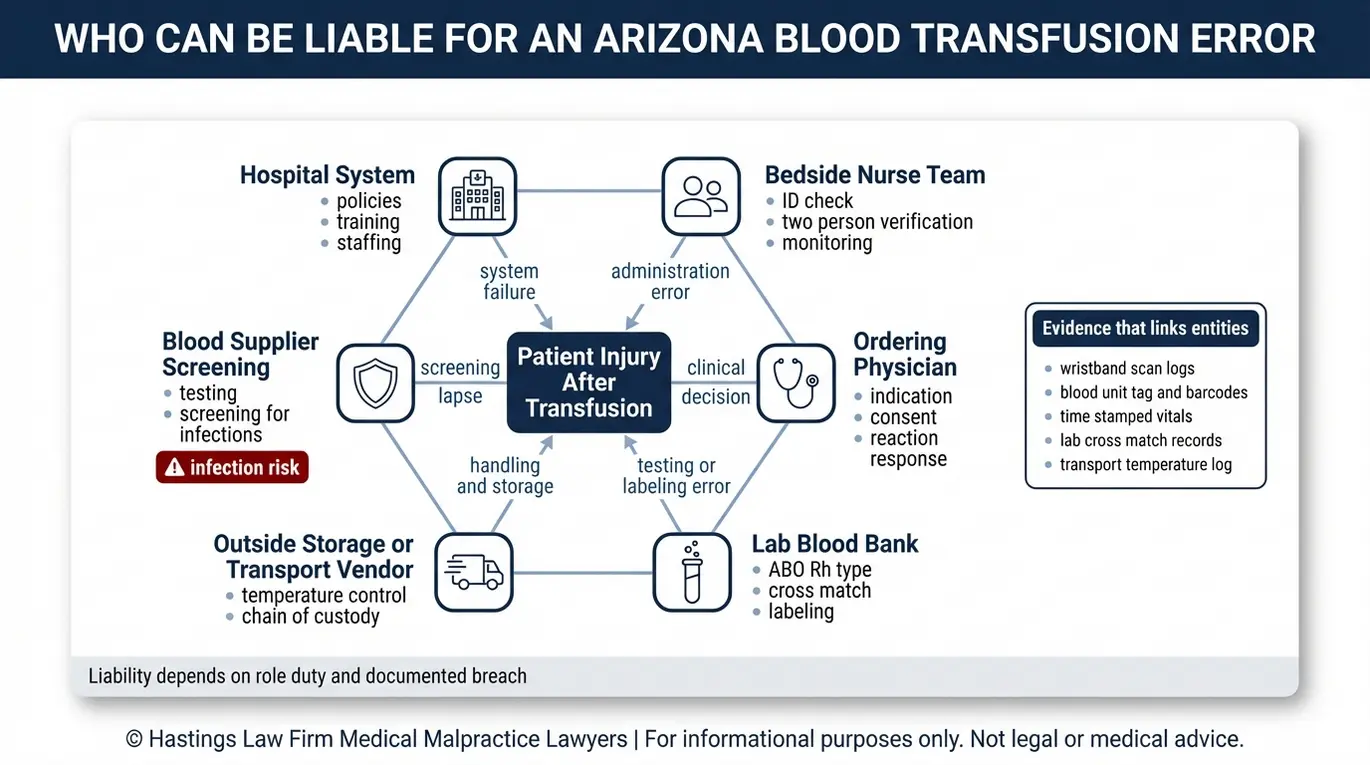
Liability in a transfusion error case may extend well beyond the nurse who administered the blood to include the hospital for systemic protocol failures, the blood bank for screening or testing errors, and third-party storage facilities for improper handling of blood products. As an Arizona blood injury lawyer, we trace the chain of custody from the moment blood was collected to the moment it entered the patient’s body.
When a patient receives the wrong blood type, the critical question is where the error originated. If the hospital’s nursing or lab staff failed to verify the blood at the bedside, liability typically falls on the hospital. If the blood bank provided a contaminated or incorrectly typed product, the blood bank may bear responsibility. Our firm operates with a trial-ready philosophy, investigating and preparing every case from day one as if it will proceed to a jury trial.
Blood-borne infections transmitted through blood products like Hepatitis B, Hepatitis C, or HIV raise separate liability questions. These claims often focus on whether the blood bank performed required screening tests and followed federal safety regulations. Under Arizona Revised Statute § 36-445.02, certain immunity protections exist for peer review, but they do not shield providers from direct negligence claims. An Arizona blood injury lawyer can determine whether the claim falls under standard medical malpractice, product liability, or both.
Discovery Rule for Latent Infections
Some transfusion injuries are not immediately apparent. A patient may not discover a latent infection like Hepatitis C until years after the transfusion. Arizona’s discovery rule recognizes this reality.
The statute of limitations may begin running from the date the patient knew or should have known about the infection and its connection to the transfusion. This distinction is critical for preserving your right to file a claim and is one reason to consult with a medical negligence attorney as soon as a link is identified.
Contact the Arizona Healthcare Malpractice Attorneys at Hastings Law Firm Today for Help
You should not have to bear the cost of a hospital’s preventable mistake. If a blood transfusion error caused harm to you or someone in your family, Hastings Law Firm is ready to review your case and explain your legal options.
Founder Tommy Hastings is a board-certified trial lawyer who has spent over two decades enforcing accountability for patient safety. Our team includes in-house medical professionals who analyze transfusion records, hospital protocols, and laboratory data to determine exactly what went wrong. As an Arizona blood transfusion error lawyer team that handles only medical malpractice cases, we bring focused experience and the resources to hold the responsible parties accountable.
We work on a contingency fee basis, which means you pay no attorney fees and no costs unless we secure a recovery for you. Contact us today for a free, confidential case evaluation. Let us help you find the answers and the accountability you deserve.
Frequently Asked Questions About Blood Transfusion Error in Arizona


This content was researched and written by the Hastings Law Firm editorial team, which includes attorneys, medical professionals, and experienced researchers. Our writing is informed by internal knowledge and practical experience, and we cross-check critical details against authoritative sources cited throughout. Every piece undergoes human-led fact-checking and legal review. Because legal and medical information can change, if you spot an error, please contact us. Learn more about our content standards and review process on our editorial policy page.

Tommy Hastings, founder of Hastings Law Firm, is a board-certified personal injury trial lawyer dedicated exclusively to healthcare injury cases. Since 2001, he has represented injured patients and families in litigation against major hospital systems, pharmaceutical companies, and negligent healthcare providers nationwide. He has handled numerous high-profile cases that have drawn national media attention and resulted in multi-million dollar recoveries. He draws on that experience in his writing, helping readers understand how these cases work and what options may be available to them.
