


Arizona Blood Thinner Drug Injury Lawyer
Written by: Hastings Law Firm | Reviewed by: Tommy Hastings | Updated: July 27, 2026
Anticoagulant medications such as Xarelto, Eliquis, and Pradaxa were promoted as convenient alternatives to older blood thinners, yet serious bleeding complications have been linked to their use. The risks can be especially severe when a major bleed occurs without an effective reversal option and when reduced kidney function or certain medications increase drug levels. Concerns have also been raised about whether warnings and marketing fully reflected the bleeding dangers. If you or a loved one were harmed or worse due to blood thinner drug injuries in Arizona, contact Hastings Law Firm for a free, confidential case review.
Top-Rated Legal Representation for Anticoagulant Injuries in Arizona
What You Should Know About Anticoagulant Medication Claims in Arizona:
- Life changing harm can follow anticoagulant related bleeding, since uncontrollable internal bleeding is described as leading to organ failure, stroke, or death.
- Emergency treatment options can be limited during a major bleed, because several newer anticoagulants historically lacked an effective reversal agent.
- The risk of catastrophic bleeding can be higher for some patients, since reduced kidney function and concurrent NSAID use are described as increasing bleeding risk.
- Liability disputes often focus on manufacturer conduct rather than physician error, because the article emphasizes failure to warn and defective design theories.
- Recovery options can be lost in Arizona, because missing filing deadlines is described as barring compensation.
- Compensation can extend beyond medical costs, since the article lists lost wages and pain and suffering as potential damages.
- Wrongful death claims may be available in Arizona, because the article states surviving family members may be entitled to file when a drug injury results in death.
- Proof disputes can turn on documentation, because medical records showing the drug taken and the bleeding event are described as essential to causation and warning issues.

A Healthcare Focused Law Firm
If you or someone you love has suffered serious bleeding after taking a blood thinner like Xarelto, Eliquis, or Pradaxa, you are not alone, and you deserve answers. Millions of Americans take anticoagulant medications to manage conditions like non-valvular atrial fibrillation (NVAF), a common heart rhythm disorder that increases the risk of stroke. These drugs were marketed as safe, convenient alternatives to older treatments. But for too many patients, the consequences have been devastating.
An experienced Arizona Blood Thinner Drug Injury Lawyer can help you understand what went wrong and whether the drug manufacturer failed to provide adequate warnings. At Hastings Law Firm, our team includes in-house medical professionals and former defense attorneys who previously worked for the medical systems they now challenge.
If you believe a blood thinner caused you or a loved one serious harm, we welcome the chance to review what happened and explain your options.
Common Dangerous Blood Thinners: Xarelto, Eliquis, and Pradaxa
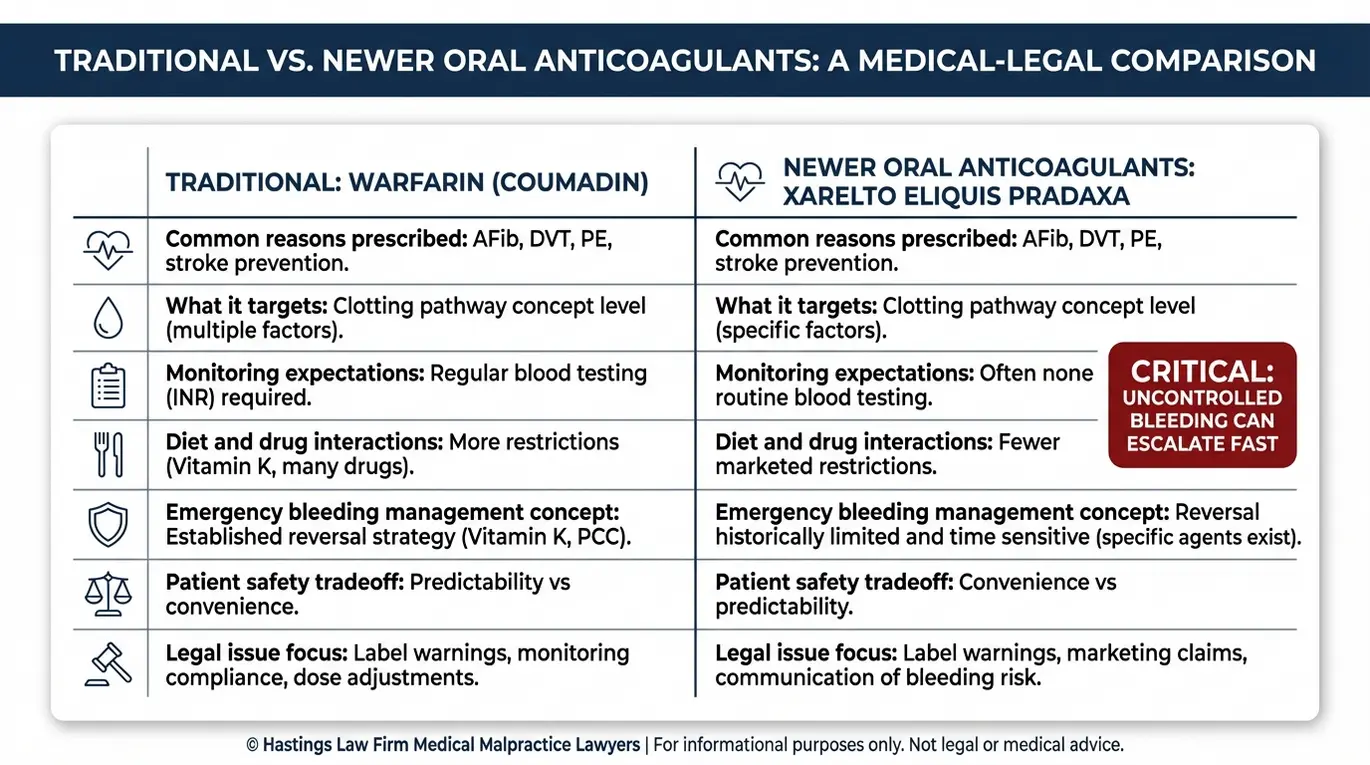
Newer direct oral anticoagulants (DOACs), sometimes called novel oral anticoagulants (NOACs), like Xarelto, Eliquis, and Pradaxa are prescribed to prevent blood clots but carry a high risk of uncontrollable bleeding because they often lack an immediate antidote, unlike traditional Warfarin.
All blood thinners work by interfering with the body’s clotting process. Traditional Warfarin (also sold as Coumadin) has been used for decades to reduce the risk of stroke from atrial fibrillation, deep vein thrombosis, and pulmonary embolism. It requires regular blood monitoring and dietary adjustments, but it can be reversed quickly with Vitamin K if a patient starts to bleed.
Xarelto (rivaroxaban), manufactured by Bayer and Janssen, and Eliquis (apixaban), manufactured by Bristol-Myers Squibb and Pfizer, were aggressively marketed as easier alternatives. They required no regular blood tests and no food restrictions. Pradaxa (dabigatran) carried similar promises. But these conveniences came at a cost that was not always made clear to patients or their doctors.
The critical danger is this: for years, several of these newer drugs had no effective reversal agent, or antidote. If a patient on Xarelto or Eliquis experienced a major bleed, emergency physicians had limited options to stop it. For patients with renal impairment, meaning reduced kidney function, the risks were even higher because the drugs could accumulate in the body. The FDA-approved prescribing information for Xarelto includes warnings about these bleeding risks, and federal regulations under 21 CFR § 201.57 set specific requirements for how drug labels must disclose known dangers.
| Feature | Traditional (Warfarin/Coumadin) | New Generation (Xarelto/Eliquis/Pradaxa) |
|---|---|---|
| Regular blood monitoring required | Yes (INR testing) | No |
| Dietary restrictions | Yes (Vitamin K intake) | No |
| Proven reversal agent available | Yes (Vitamin K) | Limited or historically unavailable |
| Dose adjustment for kidney function | Yes | Often underemphasized |
| Decades of clinical use | Yes | No (approved 2010 and later) |
A blood thinner injury attorney can help determine whether a manufacturer’s marketing downplayed these risks in ways that put patients in danger.
Clinical Trial Issues and FDA Warnings
Questions have also been raised about how anticoagulant medications like Xarelto were studied before reaching the market. The ROCKET AF trial was the primary clinical study used to support Xarelto’s FDA approval. It has faced scrutiny over allegations that adverse event reporting may not have reflected the full scope of bleeding risks. This reporting involves the process of documenting harmful side effects during testing.
Detailed clinical trial critique is essential, as lawyers for anticoagulant lawsuits examine this trial data closely. If a pharmaceutical company failed to accurately report how often patients experienced serious bleeding, that failure can form the foundation of a legal claim.
Severe Side Effects: Uncontrollable Bleeding and Hemorrhage
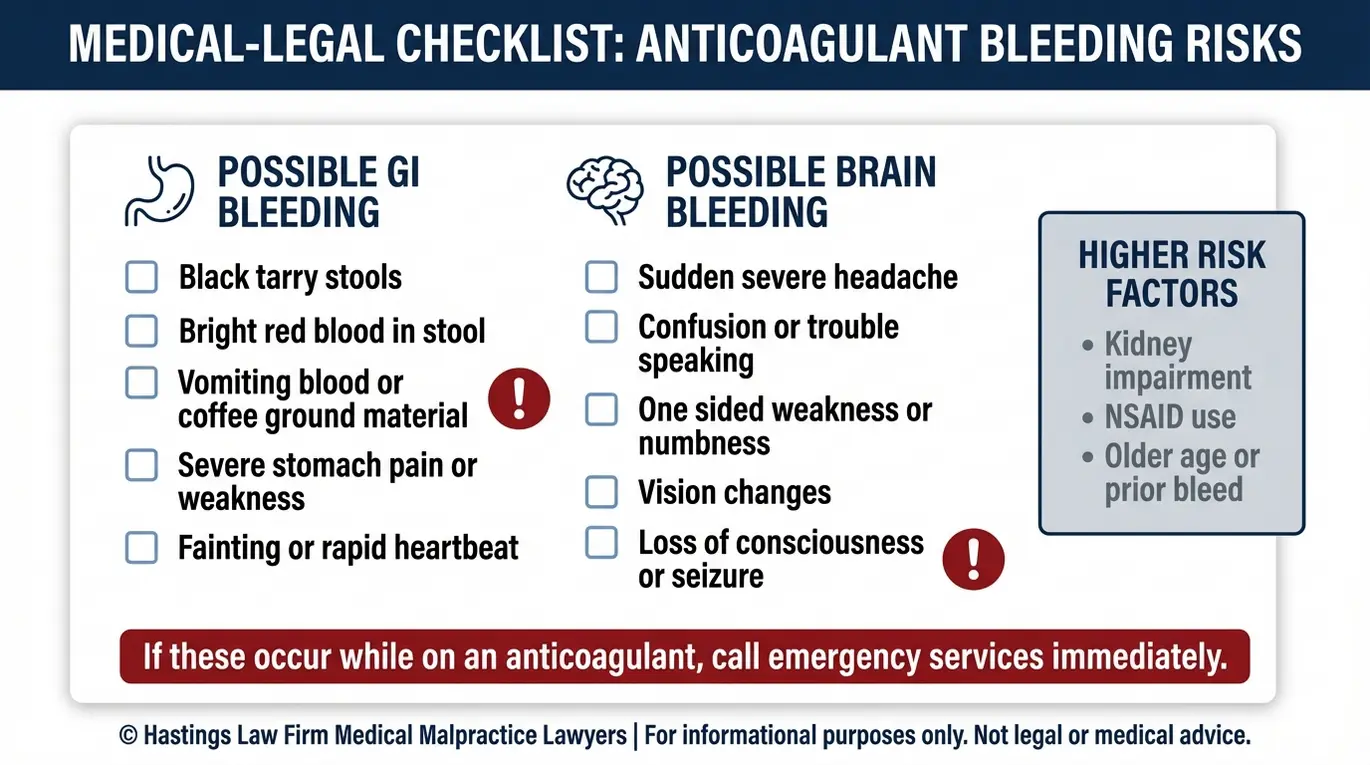
The most dangerous side effect of anticoagulant medication is uncontrollable internal bleeding, which can lead to organ failure, stroke, or death when the body loses its ability to form clots and seal wounds.
Without a reversal agent, a medication that counteracts the effects of a blood thinner during an emergency, bleeding can become impossible to control. The types of bleeding injuries linked to these drugs are severe and sometimes fatal:
- Gastrointestinal bleeding (GI bleed): Bleeding in the stomach or intestines, which can cause bloody or black stool, rectal bleeding, vomiting blood, and dangerous drops in blood pressure.
- Intracranial bleeding: Also known as cerebral hemorrhage, this is bleeding inside the skull or brain tissue. This is the most lethal complication, often causing permanent neurological damage or death.
- Subdural bleeding: A specific type of brain bleed where blood collects between the inner layer of the dura (the brain’s tough outer membrane) and the arachnoid layer beneath it.
- Hemorrhaging from minor injuries: Even a small cut or fall can trigger prolonged, heavy bleeding that requires emergency intervention.
Many patients prescribed these drugs are elderly and were taking the medication specifically to reduce stroke risk. Manufacturers often failed to adequately highlight how factors like reduced kidney function or concurrent use of NSAIDs like ibuprofen dramatically increased the chance of a catastrophic bleed. Research published through the ROCKET AF trial results in the New England Journal of Medicine documented significant bleeding events among participants. Under Arizona Revised Statutes § 12-612, surviving family members may be entitled to file a claim when a drug injury results in wrongful death.
If you or a loved one experienced any of these complications, a drug injury lawyer in Arizona can evaluate whether the manufacturer’s warnings were adequate. An anticoagulant lawsuit attorney can also help connect the specific injury to the drug and the information that was, or was not, provided.
The Hastings Law Firm Difference
Results matter, but what truly sets us apart is how we achieve them. Every verdict, every settlement, and every Arizona courtroom victory comes from one guiding promise: To treat each client’s fight for justice as if it were our own.
This balance of skill, experience, and empathy reflects our core philosophy that justice should not only compensate the injured, but also make healthcare safer nationwide.

Grounds for Litigation: Failure to Warn and Defective Design
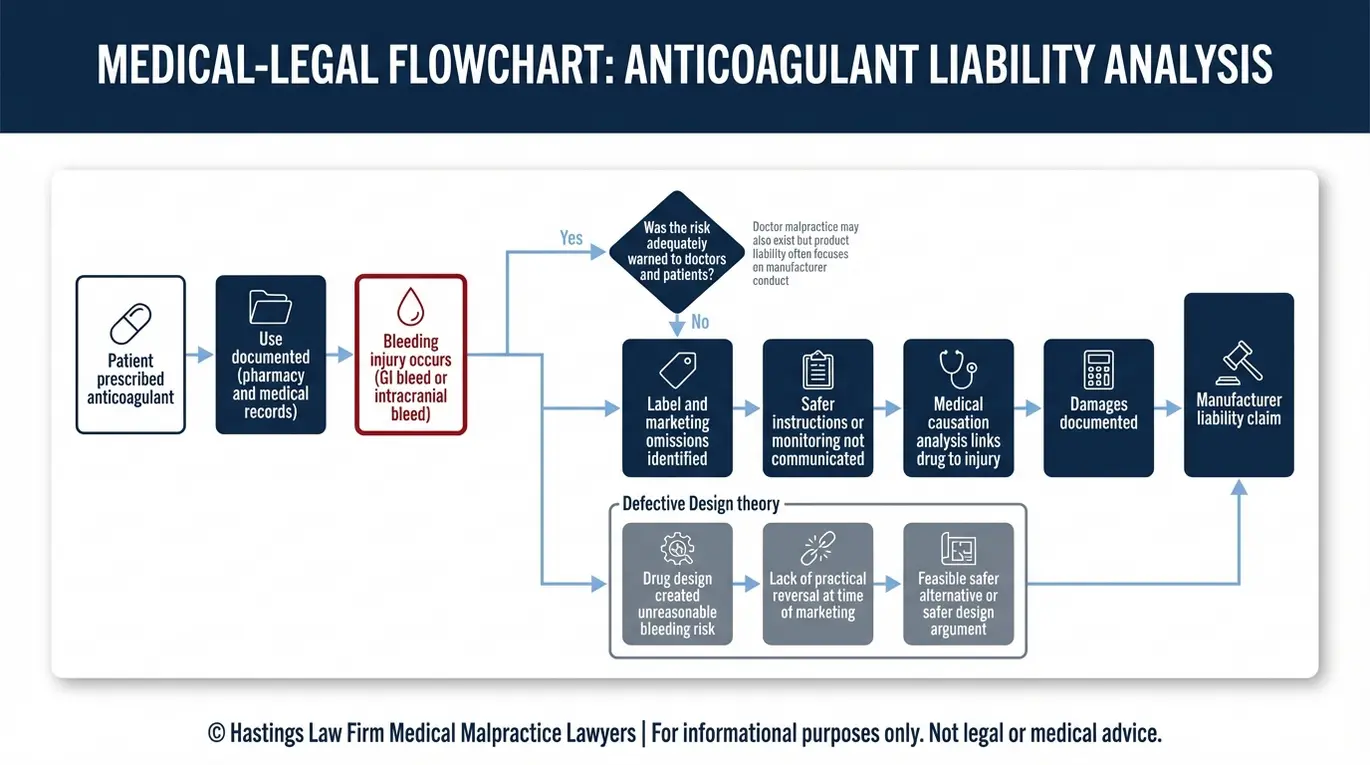
Pharmaceutical litigation against blood thinner manufacturers is typically based on “failure to warn” (hiding bleeding risks) and “defective design” (selling a drug without a reversal agent), rather than claiming the doctor made a mistake. These claims target the manufacturer, though both types of claims can exist in the same case.
A failure-to-warn claim focuses on the drug’s label and marketing materials. Under federal law, manufacturers have a duty to inform doctors about known risks. If a company knew that its drug could cause intracranial hemorrhage (ICH), which is bleeding inside the skull, but did not disclose that risk clearly, patients and their families may have grounds for a lawsuit alleging corporate negligence. The same applies if the company failed to recommend international normalized ratio (INR) monitoring, a blood test that measures clotting speed and helps doctors adjust dosing to prevent dangerous bleeds.
A defective design claim takes a different angle. It argues that dangerous drugs released without a safe and effective way to reverse its effects in an emergency are unreasonably dangerous. For Arizona drug injury counsel, proving manufacturer liability in a pharmaceutical injury case often involves showing that the manufacturer could have developed or included a reversal mechanism before bringing the product to market.
Blood thinner lawsuit representation requires both medical and legal expertise. At Hastings Law Firm, our in-house nurses and board-certified patient advocates review clinical records, prescribing history, and the manufacturer’s own data to build a clear picture of what the patient was told, what they were not told, and how that gap caused harm.
Filing a Blood Thinner Lawsuit in Arizona: Damages and Process
Patients harmed by dangerous anticoagulants can pursue compensation for medical bills, lost wages, and pain and suffering, but preserving evidence and meeting Arizona’s filing deadlines are essential first steps.
Compensable damages in a blood thinner case may include:
- Past and future medical expenses, including ICU stays, blood transfusions, and rehabilitation
- Lost income and reduced earning capacity
- Physical pain and emotional suffering
- Loss of enjoyment of life
- Wrongful death damages for surviving family members
Every case our firm accepts is prepared from day one as though it will go before a jury. We meticulously gather evidence, consult with experts, and ensure that every aspect of your suffering is documented. This trial-ready approach strengthens negotiations and signals to pharmaceutical companies and their insurers that we will not accept less than fair value. Unlike firms that push for quick, low settlements, an Arizona pharmaceutical injury lawyer at Hastings Law Firm builds each case with the depth and rigor required for trial.
There are no upfront costs to work with us. We handle blood thinner cases on a contingency fee basis, which means you pay nothing unless we recover compensation on your behalf.
Contact the Arizona Dangerous Drug Attorneys at Hastings Law Firm Today for Help
When a drug you trusted causes serious harm, the answers you need are locked inside medical records, clinical trial data, and corporate documents. You should not have to face that alone.
Hastings Law Firm was founded by board-certified trial lawyer Tommy Hastings, a 2025 Inductee into the American Board of Trial Advocates (ABOTA), to hold powerful institutions accountable. Our medical malpractice team in Arizona includes former defense attorneys and in-house nurses who understand how pharmaceutical companies operate. This insider insight helps us identify what went wrong and build the strongest possible claim on your behalf.
If you or a loved one suffered uncontrollable bleeding or other serious complications from a blood thinner, we encourage you to reach out for a free, confidential case evaluation. There is no fee unless we win. Let us help you find the answers you deserve.
Call Hastings Law Firm or contact us online to schedule your risk-free consultation today.
Frequently Asked Questions About Blood Thinner Drug Injury in Arizona


This content was researched and written by the Hastings Law Firm editorial team, which includes attorneys, medical professionals, and experienced researchers. Our writing is informed by internal knowledge and practical experience, and we cross-check critical details against authoritative sources cited throughout. Every piece undergoes human-led fact-checking and legal review. Because legal and medical information can change, if you spot an error, please contact us. Learn more about our content standards and review process on our editorial policy page.

Tommy Hastings, founder of Hastings Law Firm, is a board-certified personal injury trial lawyer dedicated exclusively to healthcare injury cases. Since 2001, he has represented injured patients and families in litigation against major hospital systems, pharmaceutical companies, and negligent healthcare providers nationwide. He has handled numerous high-profile cases that have drawn national media attention and resulted in multi-million dollar recoveries. He draws on that experience in his writing, helping readers understand how these cases work and what options may be available to them.
