


Arizona Birth-Related Subdural Hemorrhage Lawyer
Birth related subdural hemorrhage can leave families facing sudden fear and long term uncertainty after a difficult delivery. These infant brain bleeds are often tied to delivery trauma, delayed recognition of warning signs, or delayed imaging that can allow harm to worsen. Understanding how symptoms may appear, how imaging confirms the injury, and how delivery decisions are documented can clarify whether the outcome was preventable. The effects can be lasting and may require extensive medical support and planning. If you or a loved one were harmed or worse due to birth related subdural hemorrhage in Arizona, contact Hastings Law Firm for a free, confidential case review.

Last Updated: September 24, 2026
Advocating for Infants Injured by Medical Negligence in Arizona
When your newborn suffers a brain injury during delivery, the weight of uncertainty can feel unbearable. Families trust medical teams to protect their children, but a diagnosis can change lives forever. If you suspect that something went wrong during labor or delivery, you are not alone in wanting answers.
At Hastings Law Firm, founded by board-certified trial lawyer Tommy Hastings, our team focuses exclusively on medical malpractice. As an Arizona birth-related subdural hemorrhage lawyer, we combine legal experience with in-house medical expertise to investigate whether negligence played a role in your child’s injury.
If your child was diagnosed with a brain bleed after a difficult delivery, we encourage you to reach out. Our patient advocates offer free, confidential case evaluations to help you understand your options and find a path forward.

Understanding Subdural Hemorrhage and Infant Brain Bleeds
A subdural hemorrhage in a newborn is a collection of blood that forms between the brain’s surface and the dura mater, the tough outer membrane covering the brain. Prompt identification of the type of hemorrhage is important for determining the proper medical response. This type of intracranial hemorrhage often results from traumatic force applied to the skull during delivery, particularly when instruments are used improperly or when labor becomes prolonged.
When we evaluate cases, understanding the specific anatomy of the brain and the precise location of the bleed is important. While a subdural bleed lies on the surface, other conditions like intraventricular hemorrhage (IVH) or subarachnoid hemorrhage occur in different areas and have distinct causes. Each type of hemorrhage presents different risks to the infant’s development.
Diagnostic imaging is important for confirming these injuries. According to a systematic review published in PubMed Central comparing MRI and CT efficacy in traumatic brain injury, both imaging methods serve important diagnostic purposes.
CT scans can quickly detect acute bleeding in emergency situations, while MRI provides more detailed information about the extent of brain tissue damage. The timing of these scans matters because prompt diagnosis allows for earlier intervention and can limit secondary injury.
The important window for diagnosis and treatment is narrow. When medical teams delay imaging or fail to recognize warning signs, the opportunity to reduce harm can pass. Our team examines the timing of these medical responses closely when reviewing your child’s medical records.
Clinical Differences Between Subdural and Other Hemorrhages
Not all newborn brain bleeds arise from the same causes, and the type of hemorrhage often points toward what went wrong.
| Hemorrhage Type | Location | Common Cause | Relevance to Negligence |
|---|---|---|---|
| Subdural | Between dura mater and brain surface | Delivery trauma, instrument misuse | Often linked to preventable mechanical injury |
| Intraventricular (IVH) | Within brain ventricles | Prematurity, fragile blood vessels | More common in premature infants; may or may not involve negligence |
| Subarachnoid | Beneath arachnoid membrane | Trauma or spontaneous causes | Can occur with or without delivery complications |
| Subgaleal | Between skull periosteum and scalp aponeurosis | Vacuum extractor injury | Strong association with instrument-assisted delivery |
Intraventricular hemorrhage, or IVH, is a condition occurring within the fluid-filled ventricles of the brain and is more common in premature births. Subgaleal hemorrhage, bleeding between the skull’s outer covering and the scalp, is frequently linked to vacuum-assisted deliveries.
The distinction matters because subdural hemorrhages in full-term infants often suggest that a mechanical injury occurred during delivery. Clinical distinctions help determine if the injury resulted from natural complications or mechanical trauma. This is the kind of evidence our team examines closely when building a case.

Identifying Symptoms of Neonatal Brain Hemorrhage
Symptoms of a subdural hemorrhage may appear immediately after birth or develop gradually over days. Observing these signs helps medical providers determine if the brain is under pressure from fluid or blood. Early recognition is important, yet some signs are subtle enough that staff may miss them.
In the delivery room, warning signs may include low Apgar scores, which measure a newborn’s heart rate, breathing, muscle tone, reflexes, and skin color. Infants who require resuscitation or who appear unusually limp or unresponsive may be showing early signs of a brain injury.
Other symptoms can develop in the hours or days following delivery. Parents often notice these changes before anyone else. Early medical intervention is necessary to stabilize the infant and prevent the hemorrhage from causing further brain tissue damage.
Early Warning Signs (First 24-48 Hours):
- Seizures or unusual jerking movements
- Apnea, a pause in breathing lasting 20 seconds or more
- High-pitched cry, a piercing sound that differs from normal crying and often indicates neurological irritation
- Extreme lethargy or difficulty waking for feedings
- Bulging fontanelle, the soft spot on the baby’s head that appears swollen or tense
Later Signs (Days to Weeks):
- Feeding difficulties or poor weight gain
- Abnormal eye movements or inability to focus
- Increased irritability
- Developmental delays becoming apparent over time, such as an inability to roll over, sit up, or grasp objects at expected ages. These delays often signal that the brain injury has affected motor function or cognitive processing.
When hospital staff take a “wait and see” approach to these symptoms, valuable time can be lost. Parents know their children best. If a medical provider dismisses your concerns as normal behavior while symptoms persist, it is important to seek a second opinion immediately.
Documentation of these early interactions can be important evidence. A lawyer for infant brain bleeds will review whether your child’s care team responded appropriately to warning signs or whether delays in diagnosis allowed the injury to worsen.

The Hastings Law Firm Difference
Results matter, but what truly sets us apart is how we achieve them. Every verdict, every settlement, and every Arizona courtroom victory comes from one guiding promise: To treat each client’s fight for justice as if it were our own.
This balance of skill, experience, and empathy reflects our core philosophy that justice should not only compensate the injured, but also make health care safer nationwide.

How Delivery Room Negligence Causes Subdural Hemorrhages
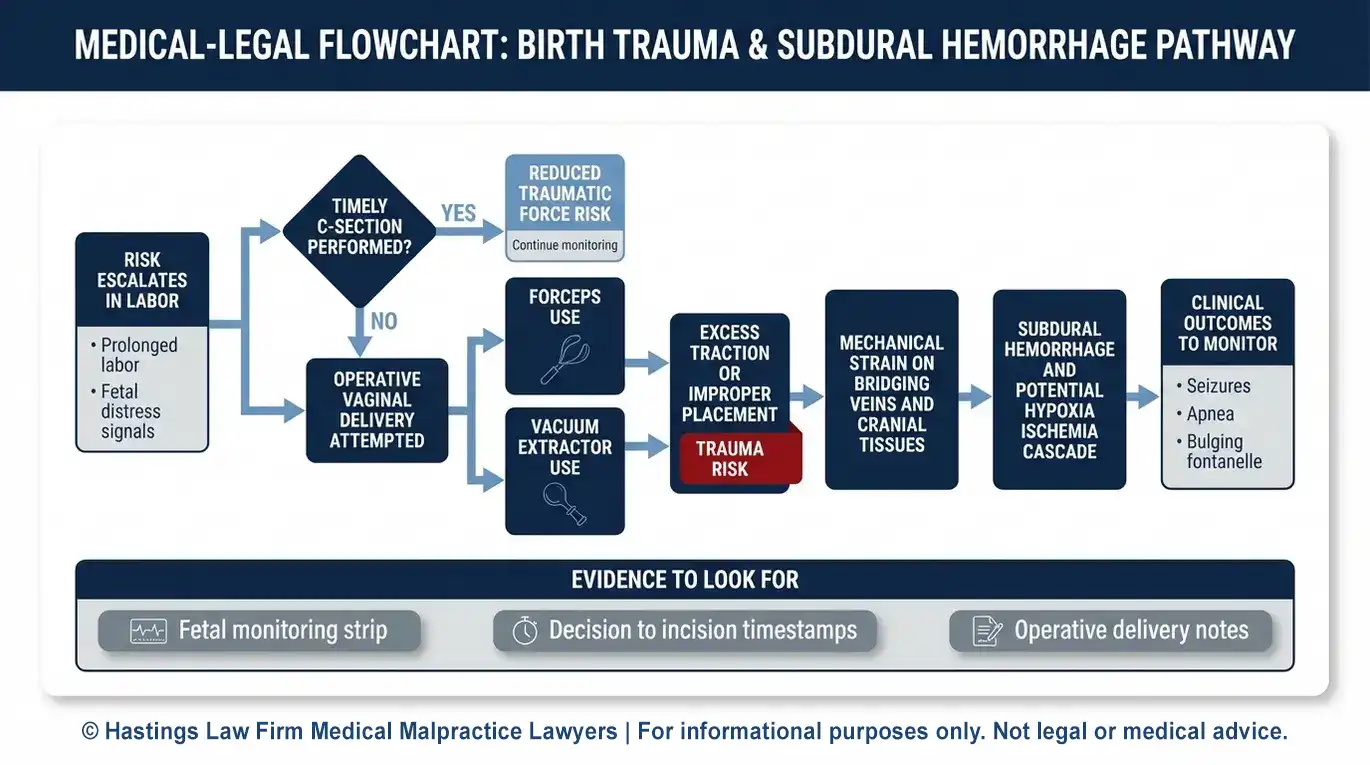
Medical negligence causes subdural hemorrhages through several mechanisms, including the improper use of forceps or vacuum extractors, failure to perform a timely C-section during fetal distress, or excessive traction during difficult deliveries. Reviewing medical protocols helps determine if the healthcare team followed the expected standard of care. Understanding these causes helps families recognize when something may have gone wrong.
Instrument Misuse
Forceps, metal instruments used to guide the baby’s head during operative vaginal delivery, and vacuum extractors, suction devices attached to the baby’s scalp, can both cause injury when used incorrectly. These instruments apply external force to the skull. When that force is excessive or improperly angled, it can tear the delicate blood vessels surrounding the brain.
Prolonged Labor and Failure to Escalate
According to the NCBI Bookshelf resource on Abnormal Labor, managing labor abnormalities is fundamental to obstetric care. When labor fails to progress, the baby’s head can experience prolonged compression against the birth canal.
Prolonged compression can lead to ischemia, a restriction in blood supply, or hypoxia, a dangerous lack of oxygen. If the medical team does not recognize this pattern and respond, the risk of hemorrhage increases. Severe cases may result in perinatal asphyxia, where the baby is deprived of oxygen during the birth process.
An Arizona birth injury attorney will examine fetal monitoring strips and delivery notes to determine whether the standard of care required earlier intervention.
Common Forms of Negligence That Can Cause Brain Bleeds:
- Applying excessive force with forceps or vacuum
- Continuing vacuum extraction after multiple failed attempts
- Failing to recognize signs of fetal distress on monitoring strips
- Delaying a medically necessary C-section
- Misusing Pitocin, which can cause overly strong contractions
- Failing to account for risk factors that increase hemorrhage likelihood
Our team includes in-house medical staff who previously worked in hospital settings. This background allows us to analyze delivery records with an insider’s understanding of protocols and charting practices. When we investigate negligence causing brain bleeds, we reconstruct the timeline minute by minute to identify where the standard of care may have been breached.
If you believe your child’s injury could have been prevented, speaking with an Arizona birth-related subdural hemorrhage lawyer can help you understand what the evidence shows.
Proving Malpractice and Liability in Arizona Courts
To prove malpractice in Arizona, a plaintiff must establish that the healthcare provider breached the accepted standard of care and that this breach directly caused the infant’s subdural hemorrhage. Legal analysis focuses on whether the injury could have been avoided with proper medical intervention. This requires demonstrating a clear connection between specific actions and the resulting injury.
Establishing Duty
The first element is clear. When a doctor, nurse, or hospital agrees to provide care during labor and delivery, they accept a legal duty to provide treatment that meets professional standards. This legal obligation is known as the duty of care. It requires providers to act with the prudence and skill that a qualified professional would use in similar circumstances.
Demonstrating Breach
Proving medical negligence requires showing that the provider’s actions constituted a breach of duty by falling below what a reasonably competent professional would have done. Expert testimony is important to identify specific errors. We must show a clear breach of duty by pinpointing exact moments where protocols were ignored or warning signs were missed.
Our firm maintains a National Expert Network of board-certified specialists who can evaluate whether the care provided met accepted standards.
Establishing Causation
Even when a breach is clear, the family must prove that the error actually caused the injury. In a subdural hemorrhage lawsuit, this means connecting the specific negligent act, such as improper forceps use, to the specific brain injury documented on imaging. Defense attorneys often argue that the injury would have occurred regardless of the care provided, which is why causation analysis requires thorough review.
Building the Evidence
We examine delivery records, nursing notes, fetal monitoring data, imaging reports, and communication logs to construct a complete picture. We also ensure all filings comply with the Arizona Revised Statutes governing medical liability actions. Our in-house medical staff assists in interpreting clinical data and identifying inconsistencies that may support your claim.
Recoverable Damages for Long-Term Care
Compensation for birth injuries in Arizona covers past and future medical expenses, life care planning costs, pain and suffering, and loss of future earning capacity. A life care plan provides a detailed roadmap of the child’s future medical and support requirements. When a child suffers a subdural hemorrhage that results in lasting harm, the long-term effects can extend across a lifetime, altering their developmental trajectory.
Economic Damages
These include all measurable financial losses:
- Past and future medical costs
- Physical, occupational, and speech therapy
- Adaptive equipment and home modifications
- Special education services
- In-home nursing or attendant care
Non-Economic Damages
These address losses that cannot be calculated with receipts:
- Physical pain and suffering
- Emotional distress
- Loss of enjoyment of life
- Impact on the parent-child relationship
Life Care Planning
For children who develop conditions like cerebral palsy or experience significant developmental delays, our firm works with life care planners to calculate the full cost of care. Life care plans are complete. They account for inflation in medical costs, potential replacement of technologies, and the need for respite care for family members. This thorough approach ensures that a settlement or verdict covers a lifetime of needs.
No Damage Caps in Arizona
Unlike many states, Arizona’s Constitution explicitly prohibits placing caps on damages for personal injury or wrongful death. This means families pursuing birth injury compensation can seek the full value of their losses without arbitrary financial limits. Future care planning ensures that the long-term needs of the child are financially covered.
Contact the Arizona Birth Injury Attorneys at Hastings Law Firm Today for Help
Your child’s future matters, and so does understanding what happened during delivery. At Hastings Law Firm, we believe that families deserve answers and that accountability can help prevent similar injuries from happening to others.
Our team prepares every case from day one as if it will go to trial. This approach signals to hospitals and insurers that we will not accept less than fair compensation for your child’s injuries. With former defense attorneys on staff and a network of nationally recognized medical experts, we bring resources that match the complexity of these cases.
We work on a contingency fee basis, which means you pay no attorney fees unless we recover compensation for your family. Our patient advocates are available to provide a free, confidential case evaluation.
If you are looking for an Arizona birth-related subdural hemorrhage lawyer who will stand with your family, we are here to help. Contact us today to take the first step toward finding answers and protecting your child’s future.
Frequently Asked Questions About Birth-Related Subdural Hemorrhage in Arizona


This content was researched and written by the Hastings Law Firm editorial team, which includes attorneys, medical professionals, and experienced researchers. Our writing is informed by internal knowledge and practical experience, and we cross-check critical details against authoritative sources cited throughout. Every piece undergoes human-led fact-checking and legal review. Because legal and medical information can change, if you spot an error, please contact us. Learn more about our content standards and review process on our editorial policy page.

Tommy Hastings, founder of Hastings Law Firm, is a board-certified personal injury trial lawyer (by the Texas Board of Legal Specialization) dedicated exclusively to healthcare injury cases. Since 2001, he has represented injured patients and families in litigation against major hospital systems, pharmaceutical companies, and negligent healthcare providers nationwide. He has handled numerous high-profile cases that have drawn national media attention and resulted in multi-million dollar recoveries.
