


Arizona Birth Center Transfer Delay Lawyer
Birth center transfer delays can turn a planned out of hospital delivery into an emergency when warning signs are missed and transport to a hospital is not started in time. The result can be serious injury to a baby or a parent, long term medical needs, and profound emotional strain for a family. Understanding how midwifery scope of practice, emergency transport planning, and timely surgical care intersect can clarify where safety broke down. If you or a loved one were harmed or worse due to a birth center transfer delay in Arizona, contact Hastings Law Firm for a free, confidential case review.

Last Updated: September 24, 2026
Specialized Legal Representation for Negligent Midwifery Transport Failures
When your family chose a birth center, you placed your trust in professionals who promised attentive, personalized care. If that trust was broken by a delayed transfer that caused harm to your baby or yourself, you deserve answers and someone who will listen.
Hastings Law Firm focuses exclusively on medical malpractice, including cases involving licensed midwives, professionals authorized to manage low-risk pregnancies, and birthing centers that fail to act within their midwifery scope of practice, which defines the boundaries of safe care they are legally permitted to provide. Our founder, Tommy R. Hastings, is a Board Certified Personal Injury Trial Lawyer who has spent over two decades holding healthcare providers accountable. Our team includes former defense attorneys and medical staff who understand how hospital systems operate from the inside.
If you believe a transfer delay harmed your family, an Arizona Birth Center Transfer Delay Lawyer at our firm can review what happened and explain your options at no cost. We prepare every case from day one as if it will go to trial to ensure our clients have the strongest possible firm negotiation posture.

The Risks of Birth Center Transfer Delays
A transfer delay occurs when a midwife or birth center staff fails to recognize critical warning signs of fetal distress or maternal hemorrhage and does not initiate transport to a hospital in time for a life-saving C-section.
Under Arizona law and professional guidelines, midwives must practice within a defined standard of care, the level of treatment a reasonably competent midwife would provide under similar circumstances. A core part of that standard is recognizing when a birth becomes high-risk and requires immediate hospital intervention. According to Committee Opinion No. 697 from the American College of Obstetricians and Gynecologists, planned out-of-hospital births should include established transfer protocols and proximity to hospital care.
The timeline matters. Once fetal distress is identified, the “decision-to-incision” time for an emergency C-section can determine whether a baby suffers permanent injury. Delays in calling 911, relying on private transport instead of ambulances, or hesitating to acknowledge complications can all constitute midwife negligence. When a failure to transfer leads to a preventable injury, the deviation from safety protocols becomes the basis for a malpractice claim.
We examine medical records, fetal monitoring strips, and transport logs to determine whether the standard of care was met. The Arizona Department of Health Services outlines specific scope-of-practice limitations for midwives, including restrictions on breech deliveries and VBACs in non-hospital settings.
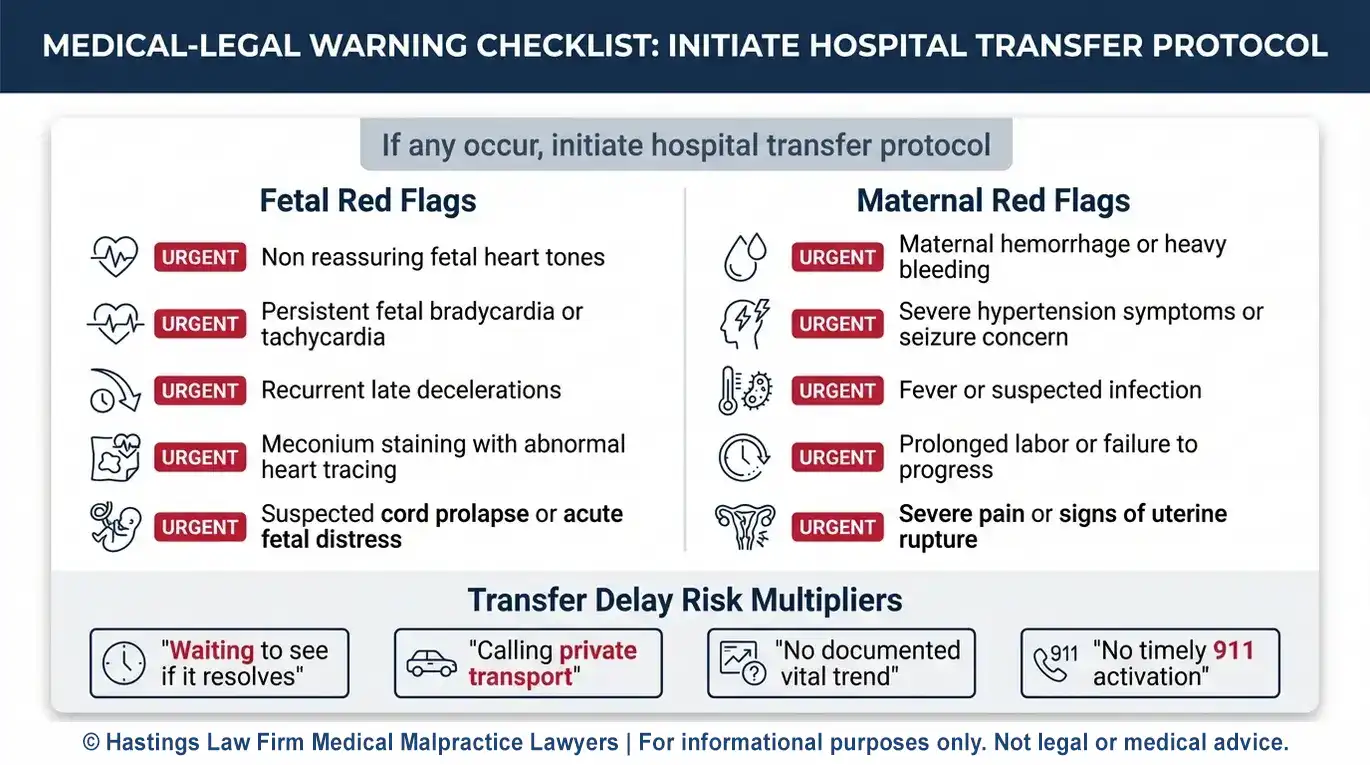
Warning signs that may require immediate hospital transfer include:
- Non-reassuring fetal heart tones (NRFHT), which are abnormal patterns on the fetal heart rate monitor suggesting the baby is not receiving enough oxygen
- Meconium staining of the amniotic fluid
- Prolonged labor or failure to progress
- Maternal hemorrhage or signs of infection
- Breech presentation discovered late in labor
An Arizona birth center transfer delay lawyer can help determine whether any of these warning signs were present and whether the response was appropriate. Establishing the standard of care is the first step in understanding if negligence occurred.
Common Injuries Caused by Delayed Hospital Transport
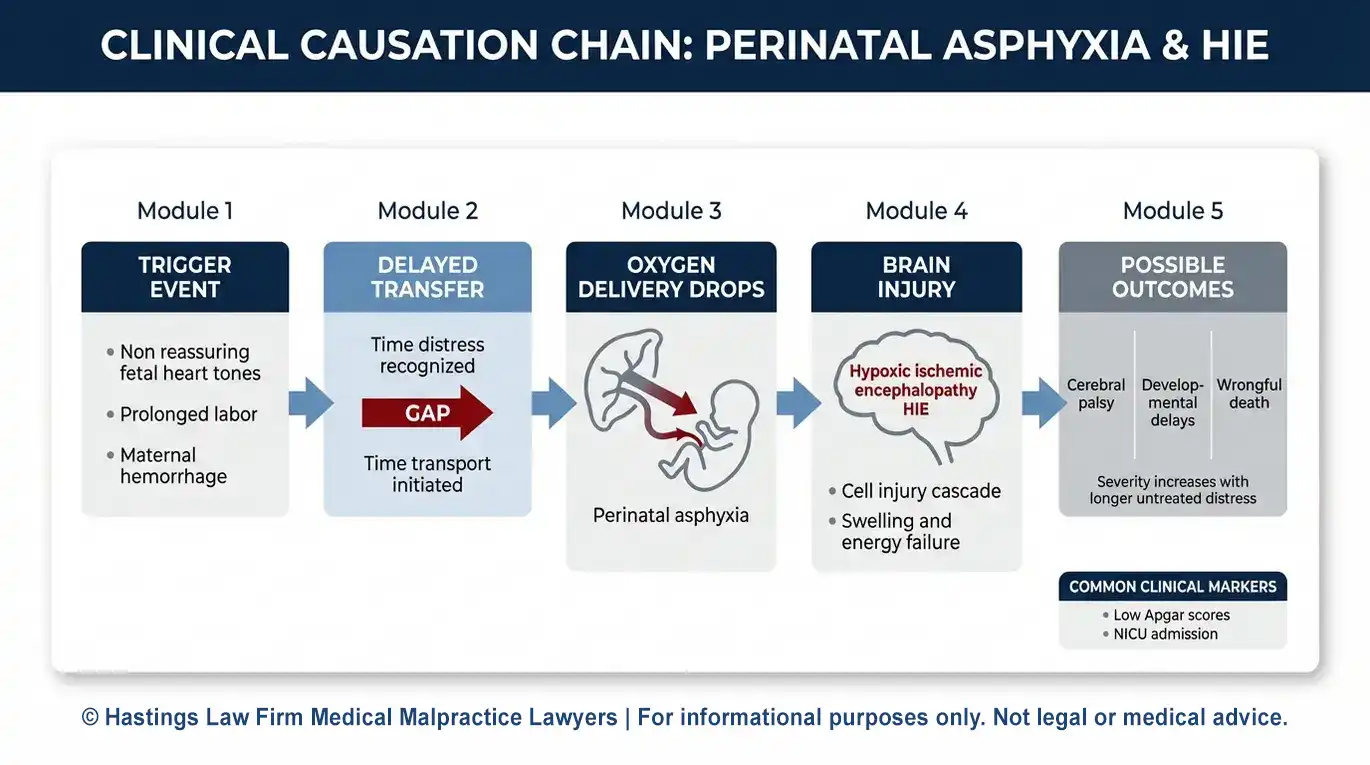
The most severe consequence of a delayed transfer is Hypoxic-Ischemic Encephalopathy (HIE), a brain injury caused by oxygen deprivation that frequently leads to cerebral palsy or wrongful death.
HIE occurs when the baby’s brain is deprived of oxygen during labor or delivery. Even a delay of ten minutes during active fetal distress can cause irreversible damage. The severity of the injury often correlates with how long oxygen was restricted and how quickly the baby received medical intervention after birth.
Doctors use the Apgar score, a quick assessment of a newborn’s heart rate, breathing, muscle tone, reflexes, and skin color, to evaluate a baby’s condition at birth. Low Apgar scores can indicate that oxygen deprivation occurred and may support a claim for negligence.
Children who survive HIE may face a lifetime of challenges. These can include cerebral palsy, developmental delays, seizure disorders, and cognitive impairments. Families often require ongoing physical therapy, specialized education, and long-term medical care. In the most tragic cases, the infant or mother does not survive, giving rise to a wrongful death claim. Consulting an Arizona birth center transfer delay lawyer allows families to assess the full extent of these damages and plan for the lifetime of care their child may need. Oxygen deprivation during birth is a leading cause of long-term neurological conditions.
The Hastings Law Firm Difference
Results matter, but what truly sets us apart is how we achieve them. Every verdict, every settlement, and every Arizona courtroom victory comes from one guiding promise: To treat each client’s fight for justice as if it were our own.
This balance of skill, experience, and empathy reflects our core philosophy that justice should not only compensate the injured, but also make health care safer nationwide.

Establishing Liability and Damages in Midwife Negligence Cases
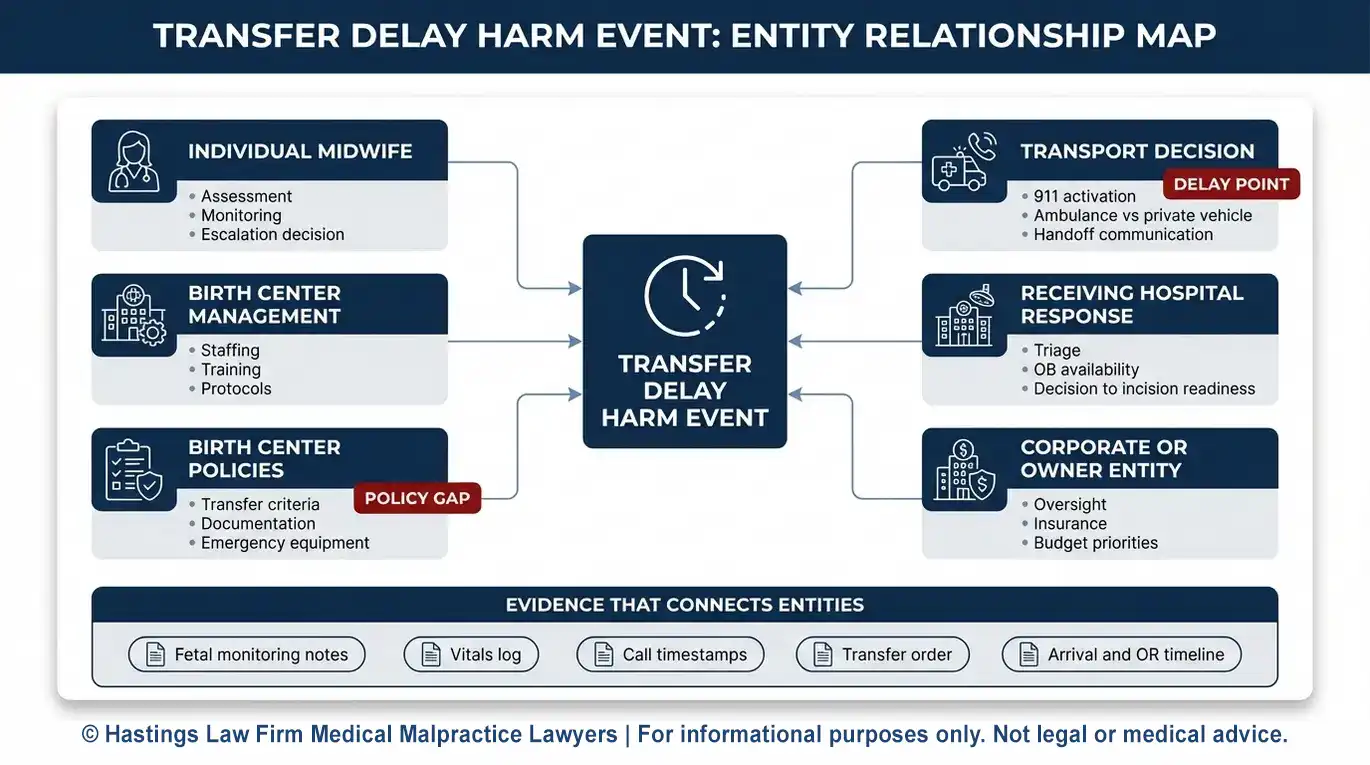
Liability in transfer delay cases often extends beyond the individual midwife to the birth center itself for inadequate staffing, lack of emergency protocols, or failure to establish emergency transport plans.
An emergency transport plan outlines how and when patients will be transported during emergencies. When these plans are missing or poorly executed, critical minutes can be lost. As FOX 10 Phoenix reported, families in Arizona have pursued legal action after birth center failures led to devastating outcomes. An experienced Arizona birth center transfer delay lawyer can help these families seek justice.
Our team includes former defense attorneys who understand how insurance companies evaluate and defend these claims. We use that insight to build thorough cases and negotiate from a position of strength, analyzing critical metrics like decision-to-incision time, the speed at which a surgical birth was performed, to establish fault during labor and delivery.
Recoverable damages in birth center transfer delay cases address the financial and emotional hardships caused by the injury and may include:
- Past and future medical expenses, including surgeries, therapy, and adaptive equipment
- Pain and suffering for the child and parents
- Loss of earning capacity for the child
- Parents’ emotional distress and loss of companionship
We handle these cases on a contingency fee basis, meaning you pay no attorney fees unless we recover compensation for your family.
Contact the Arizona Birth Injury Attorneys at Hastings Law Firm Today for Help
Birth centers have a responsibility to prioritize safety. When a delay in recognizing complications or initiating transport causes harm, families deserve accountability.
If you suspect that a transfer delay injured your baby or contributed to a loss, Hastings Law Firm offers a free, confidential case evaluation. Our team includes Board Certified Patient Advocates and medical professionals who assist in record analysis to find the truth for our clients. Our founder, Tommy Hastings, believes that holding providers accountable is the only way to prevent similar tragedies from happening to other families. Our goal is to help you understand what happened and secure your child’s future financial security.
Contact an Arizona Birth Center Transfer Delay Lawyer today to speak with a patient advocate and take the first step toward answers.
Frequently Asked Questions About Birth Center Transfer Delay in Arizona


This content was researched and written by the Hastings Law Firm editorial team, which includes attorneys, medical professionals, and experienced researchers. Our writing is informed by internal knowledge and practical experience, and we cross-check critical details against authoritative sources cited throughout. Every piece undergoes human-led fact-checking and legal review. Because legal and medical information can change, if you spot an error, please contact us. Learn more about our content standards and review process on our editorial policy page.

Tommy Hastings, founder of Hastings Law Firm, is a board-certified personal injury trial lawyer (by the Texas Board of Legal Specialization) dedicated exclusively to healthcare injury cases. Since 2001, he has represented injured patients and families in litigation against major hospital systems, pharmaceutical companies, and negligent healthcare providers nationwide. He has handled numerous high-profile cases that have drawn national media attention and resulted in multi-million dollar recoveries.
