


Arizona Appendicitis Misdiagnosis Lawyer
A missed or delayed appendicitis diagnosis can turn a treatable emergency into a medical crisis with serious complications, longer recovery, and lasting harm. Symptoms do not always follow a classic pattern, and rushed evaluations or incomplete testing can leave warning signs unaddressed. When appendicitis progresses to rupture, infection can spread quickly and lead to life threatening consequences, additional procedures, and significant physical and emotional strain. If you or a loved one were harmed or worse due to appendicitis misdiagnosis in Arizona, contact Hastings Law Firm for a free, confidential case review.

Last Updated: July 27, 2026
Trusted Arizona Medical Attorneys for Failure to Diagnose Appendicitis Claims
When a doctor fails to diagnose appendicitis, the consequences can be severe and life-altering. What should be a treatable condition can quickly escalate into a ruptured appendix, dangerous infection, or worse. If you or a loved one experienced a delayed or missed appendicitis diagnosis in Arizona, you may be dealing with unnecessary pain, extended hospital stays, and mounting medical bills that never should have been yours to carry.
As an Arizona Appendicitis Misdiagnosis Lawyer, Hastings Law Firm focuses exclusively on medical malpractice cases. Our team includes former defense attorneys and in-house medical professionals who investigate whether your care fell below accepted standards. We can review what happened and explain your legal options during a free, confidential consultation.

Recognizing Symptoms of Appendicitis and Medical Oversight
Medical professionals are trained to recognize the classic progression of appendicitis, yet patients are sometimes dismissed from emergency rooms without proper evaluation, leading to preventable ruptures. Appendicitis is the painful inflammation of the appendix, a small pouch-like organ located on the lower right side of the abdomen. The failure to diagnose appendicitis often begins when a provider does not look closely enough at the symptoms in front of them.
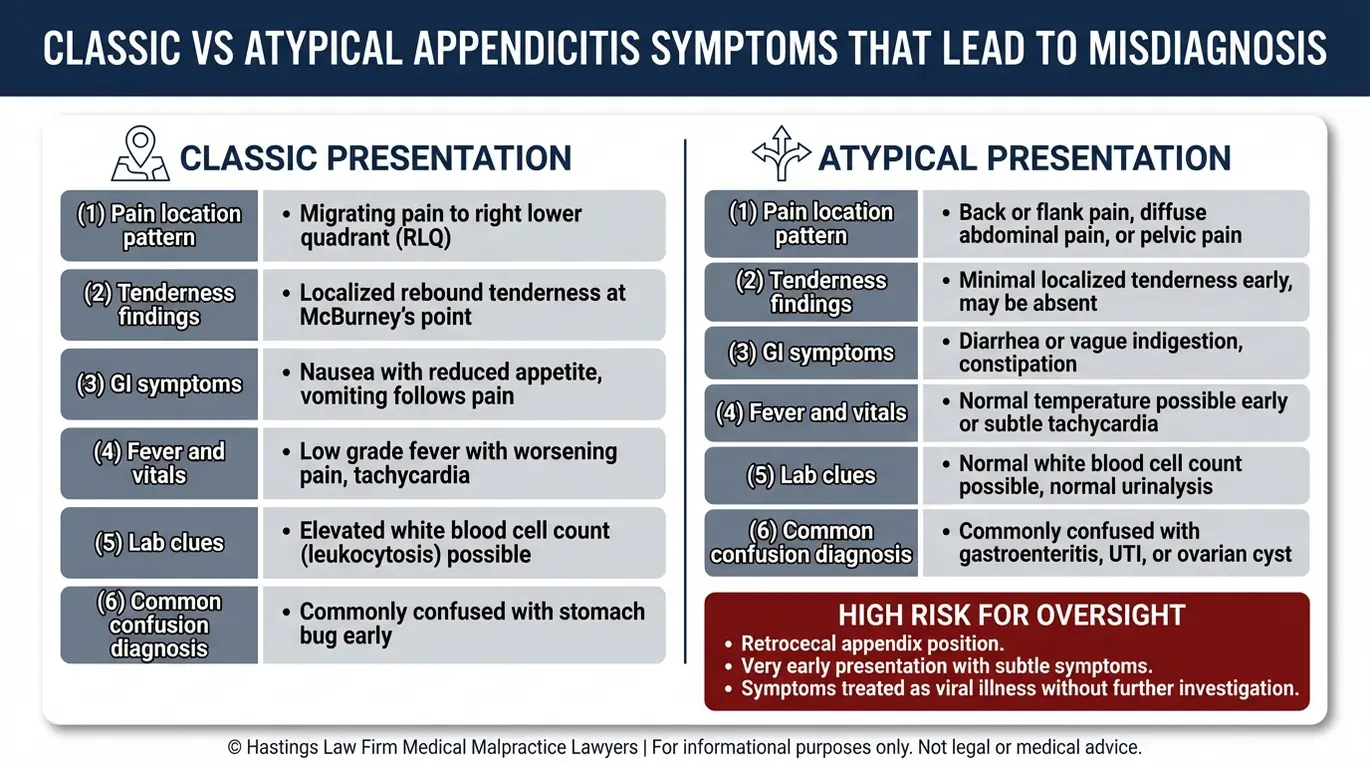
Classic symptoms start with vague pain near the navel that moves over several hours to the right lower quadrant (RLQ). This is the area of the abdomen near the hip bone. This is typically accompanied by fever, nausea, and loss of appetite. Mass General Brigham states that sudden, severe, or worsening abdominal pain needs emergency evaluation rather than a wait-and-see approach.
Not every case follows the textbook presentation. Many patients present with atypical symptoms that can mislead even attentive physicians. For example, a retrocecal appendix is a condition where the appendix sits behind the large intestine rather than in front. This can cause back pain or flank pain instead of the expected RLQ tenderness.
An appendicitis misdiagnosis attorney looks closely at whether the treating physician accounted for these variations or simply defaulted to a less serious explanation.
| Feature | Classic Presentation | Atypical Presentation |
|---|---|---|
| Pain Location | Moves from navel to right lower quadrant | Back pain, flank pain, or diffuse abdominal pain |
| White Blood Cell Count | Elevated | May be normal, especially early |
| Nausea/Vomiting | Common and persistent | May be mild or absent |
| Fever | Low-grade, progressing | Can be absent initially |
| Rebound Tenderness | Present in RLQ | Absent or in an unexpected location |
These differences are exactly why a careful clinical examination matters. When physicians rush through an evaluation and blame stomach issues on a minor illness, the window for safe treatment can close quickly.
Common Reasons for Appendicitis Misdiagnosis in Arizona ERs
Misdiagnosis frequently occurs when doctors fail to perform a differential diagnosis, the process of systematically comparing possible conditions to narrow down the correct one. This diagnostic process is essential in an emergency department setting to distinguish between minor stomach issues and serious surgical emergencies. Instead of ruling out serious causes, a physician may settle on a less severe explanation like the flu or food poisoning and stop investigating.
This pattern is sometimes driven by what medical professionals call anchoring bias, a cognitive error where a doctor locks onto an initial impression. They then interpret all later information through that narrow lens. If the first thought is a stomach bug, signs pointing to appendicitis may be overlooked or rationalized away.
Several conditions can mimic appendicitis symptoms, which makes the differential diagnosis process even more important:
- Gastroenteritis (stomach flu): Shares symptoms like nausea, vomiting, and abdominal cramping.
- Ovarian cysts: In women, a ruptured or twisted cyst can produce pain strikingly similar to appendicitis.
- Urinary tract infection (UTI): Can cause lower abdominal discomfort and fever, overlapping with early appendicitis signs.
- Crohn’s disease: Inflammation in the intestines may present with RLQ pain that closely resembles appendicitis.
Diagnostic confusion can also lead to a negative appendectomy, a surgery to remove the appendix that turns out to have been unnecessary. While this outcome is sometimes unavoidable in genuine emergencies, it may point to negligence when a more careful workup could have led to the correct diagnosis without subjecting the patient to surgical risk.
An Arizona appendicitis malpractice lawyer evaluates whether the treating physician considered and ruled out these mimicking conditions before reaching a conclusion. If the medical record shows the doctor settled on a diagnosis without adequate testing, that gap in reasoning becomes central to our investigation.
Misdiagnosis Patterns in Women and Children
Women and children face higher rates of appendicitis misdiagnosis. Vulnerable populations often present with symptoms that are easily confused with other common health conditions. In women of childbearing age, abdominal pain is frequently attributed to gynecological causes like ovarian cysts, ectopic pregnancy, or menstrual cramping. This assumption can delay the imaging and blood work needed to identify appendicitis before it becomes dangerous.
Children present their own diagnostic challenges. Pediatric appendicitis, appendicitis occurring in patients under 18, can be harder to identify because younger children often struggle to describe or localize their pain. Their symptoms may be dismissed as a viral infection, especially during cold and flu season. Perforation rates are significantly higher in children whose diagnosis is delayed.
The Hastings Law Firm Difference
Results matter, but what truly sets us apart is how we achieve them. Every verdict, every settlement, and every Arizona courtroom victory comes from one guiding promise: To treat each client’s fight for justice as if it were our own.
This balance of skill, experience, and empathy reflects our core philosophy that justice should not only compensate the injured, but also make health care safer nationwide.

Standard of Care for Appendicitis Diagnostic Testing
The standard of care often requires that physicians order diagnostic imaging studies like a CT scan or ultrasound when a patient presents with abdominal pain and elevated white blood cell counts. This clinical standard ensures that life-threatening conditions like appendicitis are identified before they progress. Relying on a physical exam alone, without confirmatory testing, can represent a breach of the physician’s duty.
A computed tomography (CT) scan is an imaging technique that uses X-rays to create detailed images of the body. It is generally the standard diagnostic tool for appendicitis in adults. It has a high accuracy rate and can identify inflammation or perforation. When a patient arrives with symptoms but is sent home without imaging, it raises serious questions about the care received.
Blood work and urine tests are important first steps but are not definitive on their own. An elevated white blood cell count can suggest infection or inflammation, but it does not pinpoint the source. Similarly, urine tests help rule out urinary causes but cannot confirm or exclude appendicitis. These results should prompt further investigation, not serve as the final word.
Testing standards differ for children. According to the ACR Appropriateness Criteria for Suspected Appendicitis in Children, an abdominal ultrasound is the recommended first-line study. This non-invasive imaging method uses sound waves to help avoid unnecessary radiation exposure from CT scans. Failing to follow these protocols can be evidence of a breach.
Research published in PubMed Central on misdiagnosis of acute appendicitis in the emergency department highlights the prevalence of diagnostic errors and their association with worse patient outcomes. As an Arizona Appendicitis Misdiagnosis Lawyer, we examine whether the ordering physician followed accepted diagnostic protocols or cut corners that allowed the condition to progress.
Legal Consequences of a Ruptured Appendix
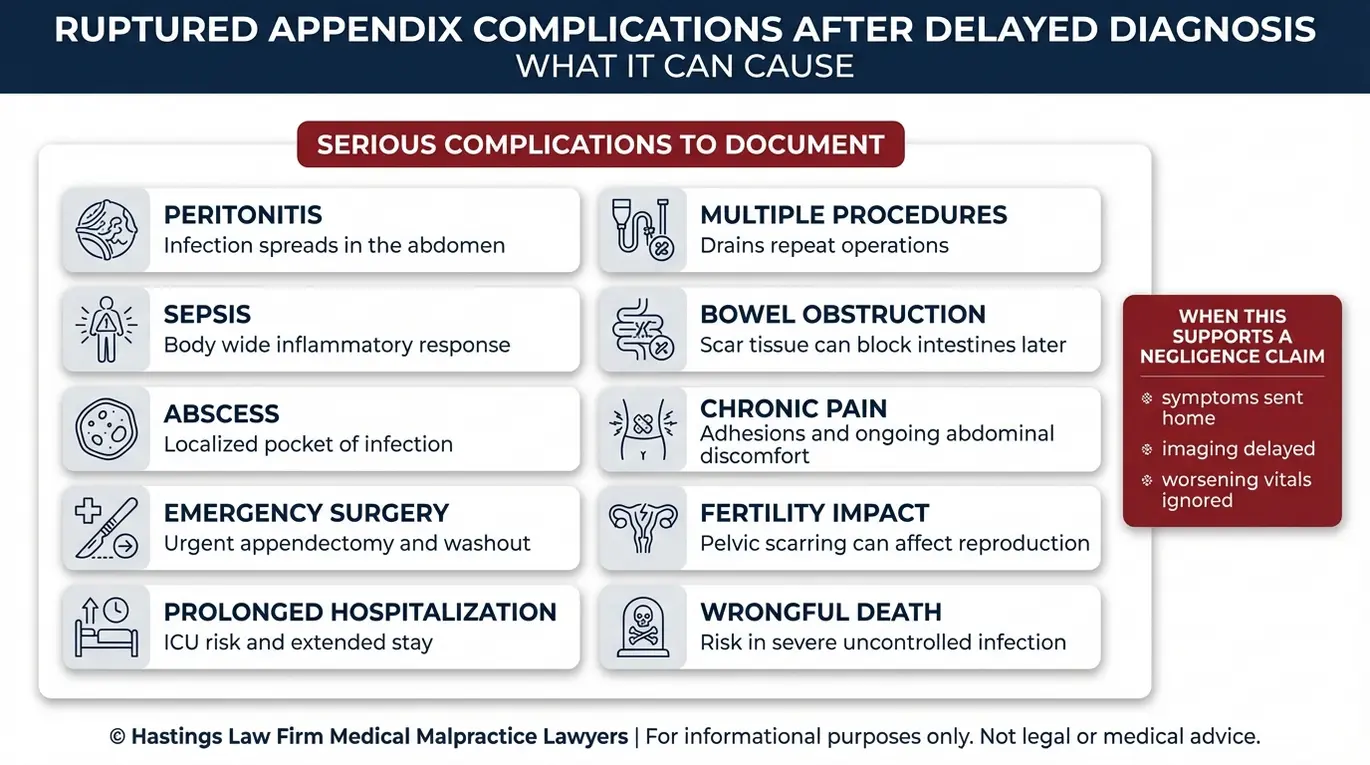
A delayed diagnosis can lead to the appendix rupturing, causing life-threatening infection, prolonged hospitalization, and permanent internal damage. A rupture occurs when the infected appendix bursts, releasing toxins into the abdomen. What begins as a treatable condition can spiral into a medical crisis that changes a patient’s life.
When the appendix perforates, bacteria spill into the abdominal cavity. This can trigger peritonitis, a serious infection of the peritoneum (the thin tissue lining the inner wall of the abdomen). Peritonitis requires emergency surgery and aggressive antibiotic treatment. Recovery is significantly longer and more painful than a routine appendectomy would have been.
If the infection is not contained, it can enter the bloodstream and cause sepsis, the body’s overwhelming and potentially fatal response to infection. Sepsis triggers a chain reaction throughout the body. Without rapid treatment, tissue damage, organ failure, and death can occur within hours. A ruptured appendix lawyer investigates the timeline between the initial ER visit and the eventual diagnosis to determine whether earlier intervention could have prevented these outcomes.
The long-term complications of a ruptured appendix extend well beyond the initial hospitalization:
- Abdominal abscesses requiring additional drainage procedures or surgeries. Pockets of infected pus can form post-rupture, necessitating invasive interventions.
- Bowel obstructions caused by internal scar tissue (adhesions).
- Fertility problems in women due to scarring near the reproductive organs.
- Chronic pain from nerve damage or repeated surgical interventions.
- Emotional and psychological trauma from an extended, preventable medical ordeal.
Sepsis from untreated appendicitis is one of the most dangerous outcomes of a missed diagnosis. Each of these complications represents harm that a timely diagnosis likely would have prevented, and each can be the basis for a legal claim.
Establishing Liability for Delayed Appendicitis Treatment
Proving malpractice requires demonstrating that a competent doctor acting under the same circumstances would have diagnosed the condition before the appendix ruptured. Medical malpractice law allows patients to seek accountability when a healthcare provider fails to meet the expected standard of care. This is not about second-guessing medicine; it is about showing that specific, accepted steps were skipped or delayed.
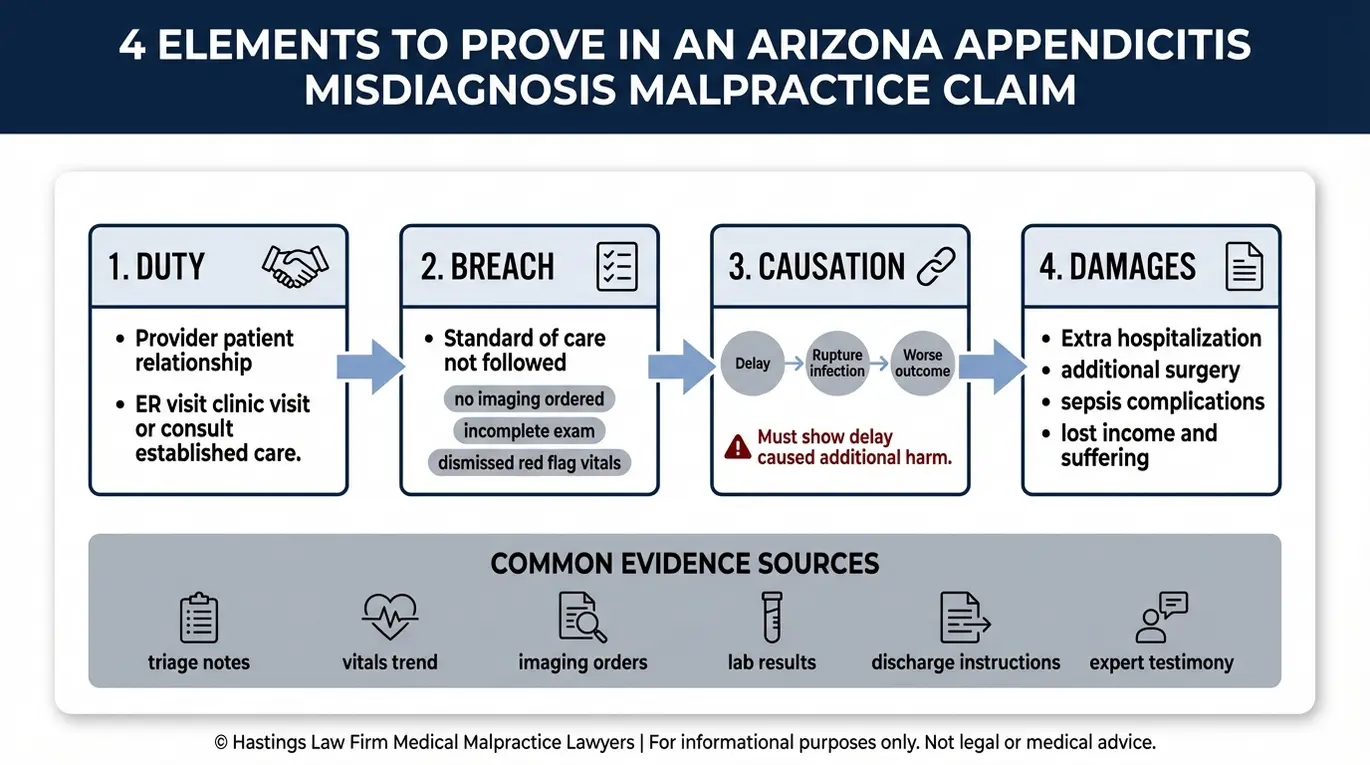
Medical malpractice claims for appendicitis misdiagnosis follow a four-part legal framework. An Arizona Appendicitis Misdiagnosis Lawyer must establish each element:
- Duty: A doctor-patient relationship existed, creating a legal obligation to provide competent care. This is typically established the moment a physician begins evaluating a patient in the ER.
- Breach: The physician deviated from the standard of care, committing a breach of duty. For example, failing to order a CT scan when clinical signs and lab results pointed toward appendicitis.
- Causation: The delay or misdiagnosis directly caused the rupture, sepsis, or other complications. The claim is not that the doctor caused the appendicitis itself, but that their failure to diagnose it in time allowed a treatable condition to become a dangerous one.
- Damages: The patient suffered measurable harm beyond what prompt treatment would have caused, including additional surgeries, extended hospitalization, lost income, or chronic pain.
Proving medical malpractice in these cases relies heavily on expert testimony from medical experts who can review medical records to show what should have been done differently. These experts apply their clinical experience to demonstrate exactly where the error occurred. They show the difference between an acceptable judgment call and a clear violation of safety protocols.
Our team works with board-certified medical experts who reconstruct the clinical timeline, examine records, and provide opinions on whether the doctor met the standard of care. At Hastings Law Firm, we prepare every case from day one as if it will go to a jury. That level of preparation strengthens our position this preparation helps our clients whether the case resolves through negotiation or at trial.
Compensation for Victims of Appendicitis Negligence
Patients harmed by misdiagnosis in Arizona are entitled to recover damages for medical bills, lost income, and the significant pain and suffering caused by the preventable progression of the illness. Financial recovery helps address the significant costs associated with medical errors and long-term recovery. The goal of compensation is to restore what the negligence took away, both financially and personally.
Economic damages cover the tangible financial losses. These include past and future medical costs such as ICU stays, emergency surgeries, follow-up procedures, medications, and rehabilitation. Lost wages and diminished earning capacity are also recoverable when the extended recovery prevents a patient from returning to work. According to the CDC’s Safe Healthcare Blog on the cost of sepsis, sepsis-related hospitalizations carry enormous financial burdens, often exceeding the cost of other high-expense conditions.
Non-economic damages address the harm that does not come with a receipt. Physical pain, mental anguish, loss of enjoyment of life, and the emotional toll of enduring a preventable medical crisis all fall into this category. These damages are assessed based on the severity and duration of the patient’s suffering.
Arizona’s Constitution (Article 2, Section 31) prohibits laws that cap the amount of damages a patient can recover for personal injury or death. This means juries are free to award full and fair compensation for appendicitis lawsuit settlements based on the evidence presented, without artificial limits. Our team documents every aspect of our client’s losses to present the complete picture of how the misdiagnosis affected their life.
Wrongful Death Claims for Fatal Sepsis Complications
If a missed diagnosis leads to fatal sepsis, surviving family members have the right to file a wrongful death lawsuit to recover funeral costs and compensation for the loss of companionship. These legal claims provide a way for families to seek justice after a fatal medical error. The death of a loved one from a condition as treatable as appendicitis is a tragedy that should not go unaddressed.
Under Arizona Revised Statutes § 12-612, a wrongful death claim may be brought by the surviving spouse, children, or parents. The purpose of these claims is to provide financial security for the family. They also help hold the responsible parties accountable for failing to meet the standard of care.
A wrongful death malpractice lawyer at our firm works with the family to document the full scope of their loss. This includes funeral expenses and the ongoing impact of losing a spouse, parent, or child. We also seek compensation for loss of consortium and companionship. These cases require rigorous medical and legal investigation, and we approach them with the diligence and sensitivity they demand.
Arizona Statute of Limitations for Medical Malpractice
Arizona law strictly limits the time you have to file a claim, generally requiring lawsuits to be filed within two years of the date the injury occurred or was discovered. The statute of limitations is a strict legal deadline that dictates how long a person has to file a lawsuit. Missing this deadline can prevent you from seeking compensation, regardless of how strong the evidence may be.
Under Arizona Revised Statutes § 12-542, the standard medical negligence time limit is two years. However, Arizona recognizes a “discovery rule,” which may extend the deadline if the injury or the negligence was not immediately apparent. In appendicitis cases, for instance, a patient may not realize until later that their ruptured appendix resulted from a diagnostic failure rather than the natural course of the disease.
Children under 18 generally have until their 20th birthday to file a claim. Even so, waiting carries risks. Medical records can be altered, memories fade, and key witnesses become harder to locate.
An Arizona Appendicitis Misdiagnosis Lawyer can evaluate your timeline and help preserve the evidence needed to build a strong case. If you believe negligence occurred, contacting an attorney promptly protects your options.
Contact the Arizona Misdiagnosis Attorneys at Hastings Law Firm Today for Help
If a doctor’s failure to diagnose appendicitis caused you or your family member serious harm, you deserve answers. Legal help is available for those dealing with the aftermath of a missed diagnosis. Hastings Law Firm is a nationally recognized medical malpractice firm. Our team includes former defense attorneys, in-house nurse consultants, and board-certified medical experts who know how to identify where the standard of care was breached.
Our founder, Tommy Hastings, is a board-certified trial attorney with over 20 years of experience. He is a 2025 inductee into the American Board of Trial Advocates (ABOTA), an honor given to elite trial lawyers. We built this firm to give patients a voice when the system fails them, and every case we accept is prepared from day one as though it is going to trial.
Your consultation is free and confidential, and you pay no attorney fees unless we recover compensation on your behalf. Call our Phoenix office or reach out online to start your case evaluation. Let us review what happened and help you understand your path forward.
Frequently Asked Questions About Appendicitis Misdiagnosis in Arizona


This content was researched and written by the Hastings Law Firm editorial team, which includes attorneys, medical professionals, and experienced researchers. Our writing is informed by internal knowledge and practical experience, and we cross-check critical details against authoritative sources cited throughout. Every piece undergoes human-led fact-checking and legal review. Because legal and medical information can change, if you spot an error, please contact us. Learn more about our content standards and review process on our editorial policy page.

Tommy Hastings, founder of Hastings Law Firm, is a board-certified personal injury trial lawyer dedicated exclusively to healthcare injury cases. Since 2001, he has represented injured patients and families in litigation against major hospital systems, pharmaceutical companies, and negligent healthcare providers nationwide. He has handled numerous high-profile cases that have drawn national media attention and resulted in multi-million dollar recoveries. He draws on that experience in his writing, helping readers understand how these cases work and what options may be available to them.
