


Arizona Aortic Aneurysm Misdiagnosis Lawyer
A missed or delayed diagnosis of an aortic aneurysm or dissection can turn a treatable emergency into a life threatening crisis, especially when warning signs are dismissed in an emergency room or primary care setting. These events often involve severe pain, neurological changes, or blood pressure differences that should trigger urgent evaluation and appropriate imaging. When the correct test is not ordered or a scan is misread, the delay can lead to rupture, organ damage, fatal outcomes, or lasting disability. If you lost a loved one due to aortic aneurysm misdiagnosis in Arizona, contact Hastings Law Firm for a free, confidential case review.

Last Updated: July 27, 2026
Trusted Arizona Medical Attorneys for Failure to Diagnose Aortic Aneurysm Claims
Losing a loved one to an aortic aneurysm that should have been caught is a devastating experience, made worse when you suspect the warning signs were right there in front of their doctors. You may be searching for answers about what went wrong and whether the care they received fell short of what it should have been. As an Arizona Aortic Aneurysm Misdiagnosis Lawyer, Hastings Law Firm focuses exclusively on medical malpractice cases like these.
Our team includes in-house nurses and former defense attorneys who know how to identify where a diagnosis failed and build a case around it. If you believe a missed or delayed diagnosis contributed to a loved one’s injury or death, we can review what happened and explain your options in a free, confidential consultation.

Failure to Diagnose Aortic Aneurysm and Dissection
A failure to diagnose occurs when a physician, typically in an emergency room or primary care setting, dismisses symptoms of an aortic aneurysm or aortic dissection, a tear in the inner wall of the aorta, as a less severe condition, delaying critical surgical intervention. This delay in recognizing the true problem can prevent the patient from reaching surgery in time.
Every minute matters with these conditions. An aortic aneurysm can exist for years without symptoms, quietly growing until it tears or ruptures. Once that happens, the window for life-saving surgical intervention narrows rapidly. Delayed diagnosis is one of the most common and most preventable causes of death from aortic emergencies.
Part of what makes these cases so tragic is the trust patients place in their doctors. Many people accept an initial diagnosis without question, even when their pain is severe or unusual. This is something we see often in medical malpractice cases.
A patient arrives at the emergency room with intense symptoms, and the physician attributes them to something far less dangerous. The patient goes home believing they have a minor issue, only for the real condition to progress. An aortic aneurysm misdiagnosis attorney in Arizona frequently encounters cases where the actual diagnosis was overlooked in favor of conditions like:
- Heart attack or angina
- Kidney stones
- Musculoskeletal back or chest pain
- Gastritis or acid reflux
Each of these conditions can share overlapping symptoms with an aortic emergency, which is precisely why the standard of care requires physicians to consider and rule out the most life-threatening possibilities first.
Understanding Aortic Aneurysms and Dissections
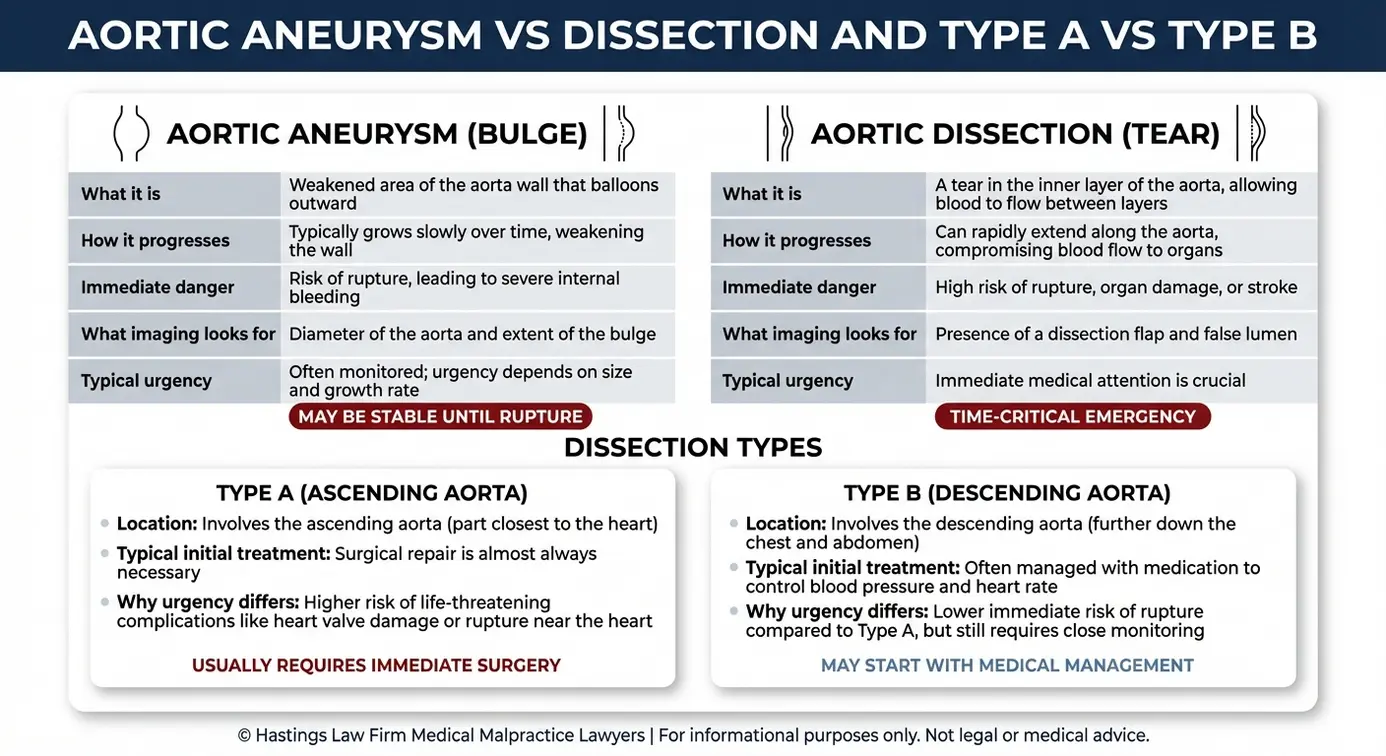
An aortic aneurysm is a bulging, weakened area in the wall of the body’s main artery (aorta), while a dissection is a tear in the inner layer allowing blood to force the layers apart. The aorta carries oxygen-rich blood from the heart to the rest of the body. A dissection is different: it involves a tear in the aorta’s inner layer that allows blood to push between the vessel walls, separating them and potentially blocking blood flow to major organs.
The two main types are classified by location. An abdominal aortic aneurysm (AAA) develops in the lower section of the aorta running through the abdomen. A thoracic aortic aneurysm (TAA) occurs in the chest portion of the aorta and is more commonly associated with dissection.
Not every aneurysm is an immediate emergency. A stable, slow-growing aneurysm may be monitored over time. But a dissection, particularly one involving the ascending aorta, requires emergency surgery.
According to JustInTimeMedicine’s review of dissecting aortic aneurysms, mortality increases significantly with each hour that passes without treatment. Research published by PubMed Central on inter-arm blood pressure differences also highlights simple bedside assessments that can raise early clinical suspicion for dissection.
| Feature | Aortic Aneurysm | Aortic Dissection |
|---|---|---|
| What it is | A bulge or ballooning in the aortic wall | A tear in the inner layer of the aorta |
| Common location | Abdomen (AAA) or chest (TAA) | Thoracic aorta (ascending or descending) |
| Urgency | May be monitored if stable | Immediate surgical emergency (especially Type A) |
| Primary risk if untreated | Rupture and internal bleeding | Organ damage, rupture, or death |
| Key diagnostic clue | Often found incidentally on imaging | Sudden tearing pain, blood pressure differences between arms |
Understanding the difference between these two conditions matters because it directly affects what a doctor should do next, and how quickly they should do it.
The Hastings Law Firm Difference
Results matter, but what truly sets us apart is how we achieve them. Every verdict, every settlement, and every Arizona courtroom victory comes from one guiding promise: To treat each client’s fight for justice as if it were our own.
This balance of skill, experience, and empathy reflects our core philosophy that justice should not only compensate the injured, but also make health care safer nationwide.

Recognizing the Symptoms Doctors Often Miss
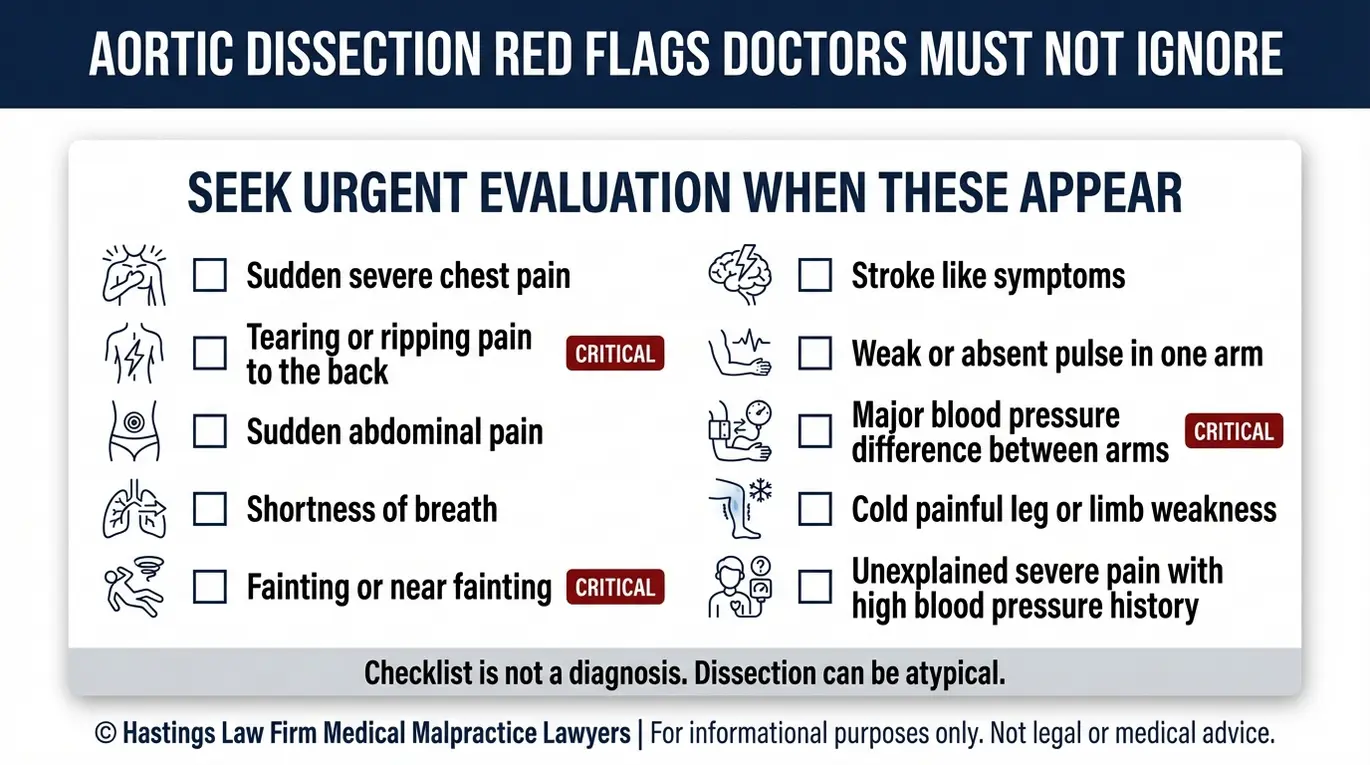
Physicians must rule out aortic dissection in patients presenting with “tearing” chest pain radiating to the back, pulse deficits, or significant blood pressure discrepancies between arms. These are well-established red flags in emergency medicine, and missing them can be fatal.
The hallmark symptom is a sudden onset of intense pain, often described as tearing or ripping, that radiates from the chest to the upper back. This type of pain is distinct from the pressure or squeezing associated with a heart attack, yet it is frequently confused for one. An Arizona aortic dissection lawyer often sees cases where this critical distinction was not explored.
Neurological signs also deserve close attention. If blood flow to the brain is disrupted, the patient may experience syncope (fainting), confusion, or stroke-like symptoms such as slurred speech or limb weakness. These can misdirect the clinical team toward a neurological workup while the dissection goes undetected.
One of the simplest and most telling assessments is checking blood pressure in both arms. A pulse deficit, a noticeable difference in pulse strength, and an inter-arm blood pressure difference, a variation in pressure readings between the left and right arms, are well-known indicators of aortic dissection.
An inter-arm blood pressure difference of 20 mmHg or more should prompt immediate further evaluation. In too many cases, this basic check is never performed.
Red Flag Symptoms That Should Prompt Evaluation for Aortic Dissection:
- Sudden, severe chest or back pain described as “tearing” or “ripping”
- Pain that migrates from the chest to the back or abdomen
- Significant blood pressure difference between the left and right arms
- Weak or absent pulse in one arm or leg
- Fainting, confusion, or stroke-like neurological symptoms
- Shortness of breath or difficulty breathing
- Loss of consciousness
Type A vs. Type B Aortic Dissection
Not all dissections carry the same level of urgency, and the distinction between Type A and Type B affects both treatment and legal analysis.
A Type A aortic dissection involves the ascending aorta, the section closest to the heart. This is the most dangerous form and almost always requires immediate open surgery by a cardiac surgeon. Without intervention, mortality rates climb sharply with each passing hour.
A Type B aortic dissection involves the descending aorta, below the point where arteries branch off to the head and arms. While still serious, Type B dissections may initially be managed with blood pressure control and close monitoring, though some do require surgical repair.
From a legal standpoint, the type of dissection matters because it defines the expected medical response. If imaging reveals a Type A dissection and surgical referral is delayed, the gap between what happened and what should have happened becomes a central issue in the case.
Common Diagnostic Errors and Radiologist Liability
Errors often stem from a failure to order the correct imaging (CT Angiography) or a radiologist misinterpreting the scan as normal due to poor image quality or rushing. Either failure can cost a patient their life.
The gold standard for detecting an aortic dissection or aneurysm is a CT angiography (CTA), a specialized CT scan that uses contrast dye to produce detailed images of the blood vessels. A standard chest X-ray is not reliable for this purpose; it may show a widened mediastinum in some cases, but it misses many aneurysms and most dissections entirely.
As documented in a PubMed Central review on diagnosing aortic dissection, failure to consider dissection in the differential diagnosis and order appropriate imaging remains a leading cause of missed cases.
A common triage failure occurs when the emergency physician does not order advanced imaging because the patient appears otherwise healthy, is young, or does not fit the “typical” profile for vascular disease. Aortic emergencies can affect patients outside the expected demographic, including those with connective tissue conditions like Marfan syndrome or those with undiagnosed hypertension. Each healthcare provider must adhere to the standard of care to prevent fatal delays.
| Imaging Test | Ability to Detect Aneurysm/Dissection |
|---|---|
| CT Angiography (CTA) | Gold standard; highly accurate for both aneurysm and dissection |
| MRI / MRA | Effective but slower; not ideal in emergencies |
| Transesophageal Echocardiogram (TEE) | Useful for Type A dissection, often used intraoperatively |
| Ultrasound | Can detect AAA; limited value for thoracic disease or dissection |
| Chest X-ray | Unreliable; misses most dissections and many aneurysms |
Even when the correct test is ordered, a misdiagnosis lawyer for aortic aneurysms may find that the failure occurred at the reading stage. Radiologists are held to their own standard of care. If a competent radiologist reviewing the same images would have identified the aneurysm or dissection flap, the radiologist can be held independently liable.
Fluoroquinolone Antibiotics and Aneurysm Risk
An emerging area of liability involves fluoroquinolone antibiotics, a class of drugs that includes ciprofloxacin (Cipro) and levofloxacin (Levaquin). Recent medical literature has linked these medications to an increased risk of aortic aneurysm and dissection, particularly in older adults and those with pre-existing connective tissue weakness.
Fluoroquinolones can degrade collagen in the aortic wall, weakening the vessel over time. If a physician prescribes these antibiotics to a patient with known risk factors for aneurysm, such as atherosclerosis, high blood pressure, or a history of smoking, without considering the vascular risks, that prescribing decision itself may become part of a malpractice claim.
Proving Liability in Aortic Aneurysm Cases
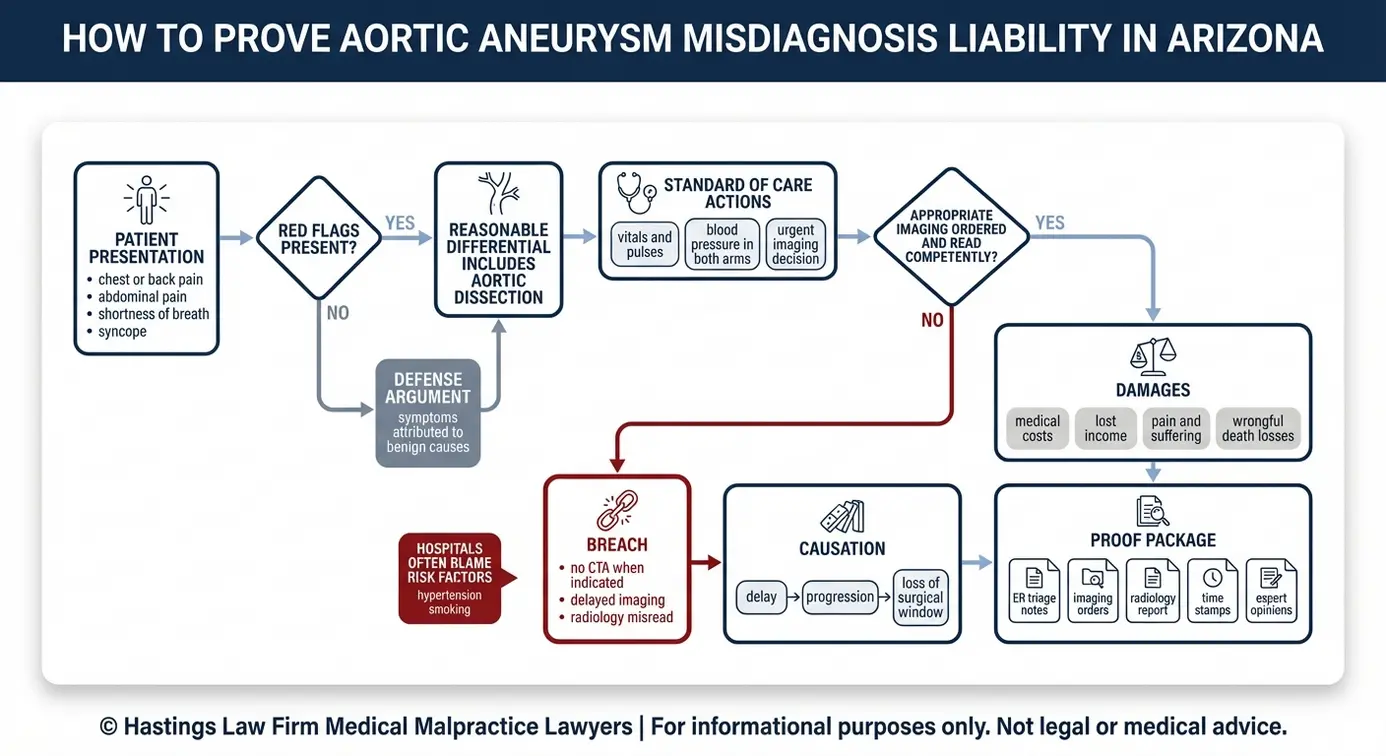
Proving liability requires demonstrating that a reasonable physician, given the patient’s symptoms and history, would have included aortic dissection in the differential diagnosis and ordered imaging based on the patient’s presentation. When that step was skipped or delayed, and the patient suffered harm as a result, the foundation of a malpractice claim exists.
As an Arizona malpractice attorney for aneurysm cases, we build these claims around four elements:
- Duty of care: The physician had a professional obligation to evaluate and treat the patient according to accepted medical standards.
- Breach of the standard of care: The physician failed to act as a reasonably competent doctor would have under similar circumstances. This could mean failing to order a CTA, ignoring red flag symptoms, or not consulting a vascular surgeon.
- Causation: The delay or failure directly contributed to the patient’s injury or death. In dissection cases, this often comes down to showing that timely surgical intervention would have significantly improved the patient’s chances of survival. A multicentre cohort study on factors affecting acute aortic dissection mortality published by PubMed Central confirms that delays in diagnosis and treatment are strongly associated with worse outcomes. Causation is established by showing that negligence led to a different medical outcome.
- Damages: The patient or their family suffered measurable harm, whether medical costs, lost income, pain and suffering, or the loss of a loved one.
One defense tactic we frequently encounter involves shifting blame to the patient’s pre-existing conditions. Hospitals and their attorneys may argue that smoking, hypertension, or atherosclerosis made the outcome inevitable regardless of the doctor’s actions.
Our firm uses a trial-ready approach to counter these strategies. We work with board-certified medical experts and vascular surgeons to reconstruct the timeline, analyze the medical records, and establish what a timely diagnosis would have meant for the patient’s outcome.
The Consequences of Rupture and Recoverable Damages
When an aneurysm ruptures due to negligence, families can recover damages for medical bills, lost future income, pain and suffering, and loss of consortium under Arizona law. An aortic rupture, which means the weakened arterial wall gives way entirely, results in massive internal bleeding that is fatal without emergency surgery. Even with rapid intervention, survival rates for a ruptured aneurysm are significantly lower than for one caught and repaired before it tears.
Families who lose a loved one to a rupture caused by diagnostic negligence can pursue a wrongful death claim under Arizona law. Those who survive a rupture or dissection often face long-term disability, ongoing medical care, and permanent changes to their quality of life.
Recoverable damages in these cases generally fall into two categories. Economic damages cover medical bills, future care costs, and lost income or earning capacity. Non-economic damages address pain and suffering, emotional distress, loss of companionship, and loss of consortium.
One important protection under Arizona law: the Arizona Constitution prohibits caps on damages in personal injury and wrongful death cases. Unlike many other states that limit non-economic awards, Arizona allows juries to determine the full value of what was lost. As a wrongful death lawyer for aortic rupture cases, we work to ensure every category of harm is documented and presented to reflect the true impact on our clients and their families.
Contact the Arizona Misdiagnosis Attorneys at Hastings Law Firm Today for Help
If someone you love suffered serious harm or died because an aortic aneurysm or dissection was missed, you deserve to know what happened and whether the care they received met the standard it should have been. As an Arizona Aortic Aneurysm Misdiagnosis Lawyer, Hastings Law Firm focuses entirely on medical malpractice, and our team has the medical and legal experience to evaluate these complex cases.
Tommy Hastings is a board-certified trial lawyer who leads our medical-legal team. Our in-house nurses review the medical records, while our attorneys, including former hospital defense lawyers, know exactly where to look for breakdowns in care. We work with board-certified vascular experts across the country to determine whether a timely diagnosis could have changed the outcome.
Time to file a claim in Arizona is limited, so reaching out sooner gives us more opportunity to preserve evidence and build a strong case. As a Phoenix medical malpractice law firm, we offer a free, confidential case review, and you pay no fees unless we recover compensation for you. Contact us today for a free consultation.
Frequently Asked Questions About Aortic Aneurysm Misdiagnosis in Arizona


This content was researched and written by the Hastings Law Firm editorial team, which includes attorneys, medical professionals, and experienced researchers. Our writing is informed by internal knowledge and practical experience, and we cross-check critical details against authoritative sources cited throughout. Every piece undergoes human-led fact-checking and legal review. Because legal and medical information can change, if you spot an error, please contact us. Learn more about our content standards and review process on our editorial policy page.

Tommy Hastings, founder of Hastings Law Firm, is a board-certified personal injury trial lawyer dedicated exclusively to healthcare injury cases. Since 2001, he has represented injured patients and families in litigation against major hospital systems, pharmaceutical companies, and negligent healthcare providers nationwide. He has handled numerous high-profile cases that have drawn national media attention and resulted in multi-million dollar recoveries. He draws on that experience in his writing, helping readers understand how these cases work and what options may be available to them.
