


Arizona Angioplasty Malpractice Lawyer
Written by: Hastings Law Firm | Reviewed by: Tommy Hastings | Updated: July 27, 2026
Angioplasty and stenting are intended to restore blood flow, but errors during or after the procedure can lead to severe complications and long term harm. Concerns often involve guidewire or catheter injuries, stent placement problems, medication dosing failures, missed warning signs, and gaps in post procedure monitoring. Some outcomes are recognized risks, yet negligence may exist when care falls below the accepted standard or when informed consent was not meaningful for an elective procedure. If you or a loved one were harmed or worse due to angioplasty malpractice in Arizona, contact Hastings Law Firm for a free, confidential case review.

Trusted Arizona Medical Attorneys for Angioplasty Negligence Claims
What You Should Know About Angioplasty Complications Negligence Claims in Arizona:
- Life threatening outcomes can follow angioplasty errors when bleeding, clotting, or instability is not promptly recognized and treated.
- Recovery can depend on whether the harm stemmed from a preventable deviation from the standard of care rather than a known complication.
- Liability can extend beyond the cardiologist when system failures or nursing negligence lead to inadequate post procedure monitoring.
- Compensation can include medical expenses, lost income, pain and suffering, emotional distress, loss of consortium, and wrongful death damages.
- Options can be lost if a claim is not filed within the applicable time limit under Arizona law.
- A required expert affidavit can affect whether a medical malpractice lawsuit can proceed in Arizona.
- Disputes can center on informed consent when elective angioplasty risks and conservative alternatives were not fully disclosed.
- Responsibility can shift away from medical malpractice when the primary issue is a defective stent, which is treated as product liability.
- Causation disputes can arise when providers attribute harm to pre existing heart disease rather than an error that aggravated the condition.
- Preventability can turn on whether records show skipped safety precautions for contrast dye in patients at elevated kidney risk.

A Healthcare Focused Law Firm
When a procedure meant to restore blood flow to your heart causes serious harm instead, the confusion and frustration can feel overwhelming. You trusted your medical team to perform a routine cardiac intervention safely, and now you may be dealing with unexpected complications, mounting bills, and unanswered questions about what went wrong.
Hastings Law Firm focuses exclusively on medical malpractice. Our legal team, which includes former defense attorneys and in-house medical staff, understands both the clinical details of interventional cardiology and the legal standards that apply in Arizona. If you or a loved one suffered an injury during or after an angioplasty or stenting procedure, an Arizona angioplasty malpractice lawyer at our firm can review what happened and explain your options.
Contact us for a free, confidential case evaluation. There is no fee unless we recover compensation for you.
What Is Percutaneous Coronary Intervention and Angioplasty?
Percutaneous Coronary Intervention (PCI), commonly known as angioplasty, is a non-surgical procedure used to open clogged coronary arteries by inserting a balloon-tipped catheter and often placing a stent to restore blood flow. It works by threading the catheter through a blood vessel and inflating it at the site of the blockage. In most cases, a coronary stent, a small mesh tube, is placed inside the artery to keep it open.
The underlying problem PCI addresses is atherosclerosis, a condition where fatty deposits called plaque build up along artery walls and restrict blood flow to the heart. Left untreated, this can lead to chest pain, heart attack, or other serious cardiac events.
Balloon angioplasty, the technique of inflating the catheter tip to compress plaque against the artery wall, is the core mechanical step in PCI. The procedure is guided in real time by fluoroscopy, a type of continuous X-ray imaging that allows the cardiologist to see the catheter’s position and the artery’s structure on a monitor.
According to Northwestern Medicine’s PCI patient education materials, the general steps of the procedure include:
- Vascular access: The cardiologist inserts a thin sheath into an artery, typically through the wrist (radial artery) or the groin (femoral artery).
- Catheter threading: A guidewire and catheter are advanced through the arterial system to the blocked coronary artery under fluoroscopy guidance.
- Balloon inflation: Once positioned at the blockage, the balloon is inflated to widen the artery.
- Stent placement: A stent is deployed to hold the artery open and prevent it from re-narrowing.
- Withdrawal and closure: The catheter is removed, and the access site is closed and monitored for bleeding.
There is an important distinction between emergency PCI and elective PCI. Emergency PCI is performed during an active heart attack to restore blood flow as quickly as possible. Elective PCI is a planned procedure for patients with stable coronary artery disease. As discussed in research from Suffolk University’s Digital Collections on physician disclosure duties, the informed consent obligations differ between these two settings, and that distinction matters when an Arizona angioplasty malpractice lawyer evaluates a potential case.
Common Angioplasty Errors Leading to Malpractice Claims
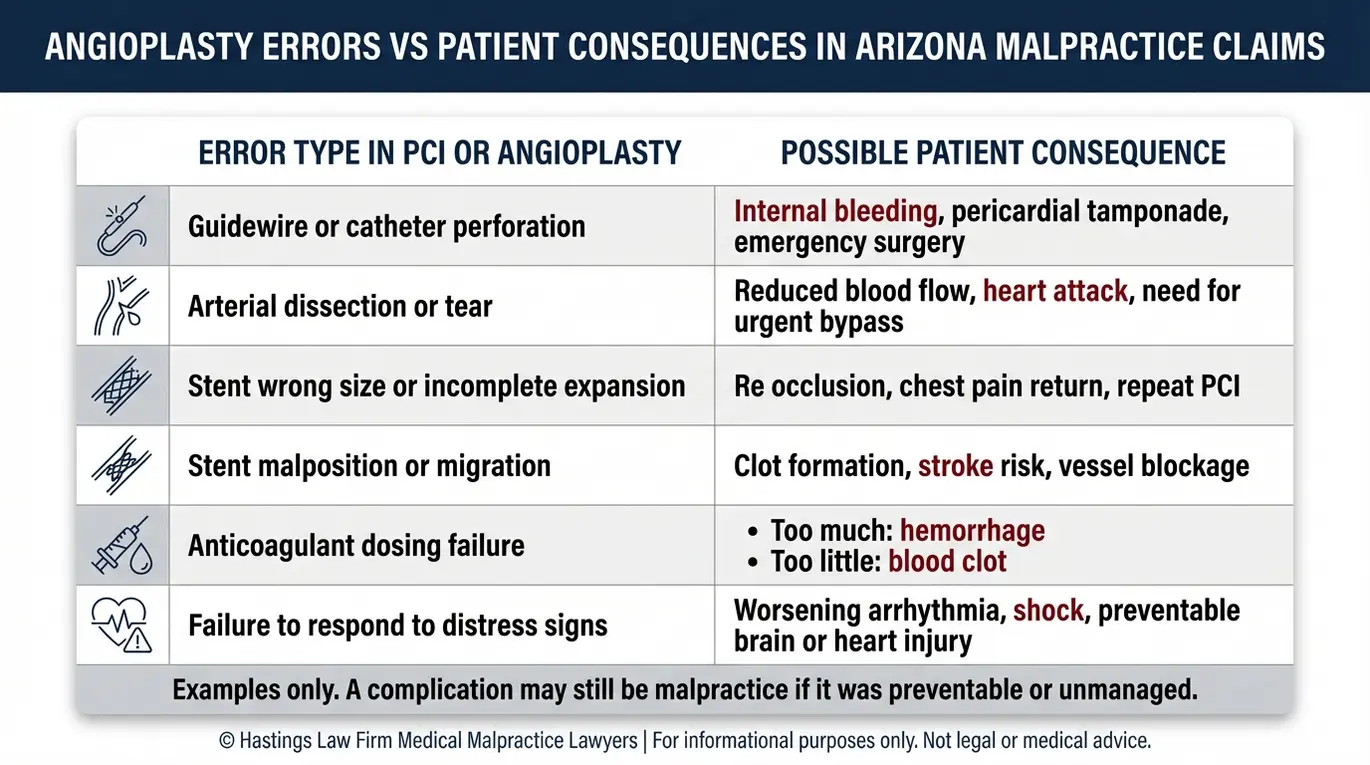
Malpractice during angioplasty often involves procedural errors such as perforating an artery with the guidewire, failing to manage anticoagulant medication leading to hemorrhage, or improperly placing a stent that causes thrombosis or migration. Interventional cardiology errors can happen at any stage of the catheterization process. Arizona angioplasty malpractice lawyers evaluate these errors by reconstructing the procedure step by step and comparing what happened against what the standard of care required.
Guidewire and Catheter Errors. Coronary artery perforation, a puncture or tear in the vessel wall caused by the guidewire or catheter, is one of the most dangerous procedural complications. A guidewire, the thin and flexible wire used to steer the catheter into position, must be handled with extreme precision. While some degree of risk is inherent, a perforation caused by improper fluoroscopy interpretation or failure to recognize anatomical challenges may constitute negligence.
An Arizona cardiac negligence lawyer can help determine if these actions were preventable. A case report published in PubMed Central documenting multiple coronary artery perforations following pericardial tamponade illustrates how these injuries can quickly become life-threatening.
Stent Errors. Placing the wrong size stent, failing to fully expand it, or crushing it during deployment can lead to immediate or delayed complications, including thrombosis (clotting within the stent) and the need for emergency corrective surgery.
Medication Failures. Patients undergoing PCI receive anticoagulants like heparin to prevent blood clots during the procedure. Administering too much can cause uncontrolled internal bleeding. Administering too little can allow clot formation, potentially leading to a heart attack, stroke, or embolism.
Failure to Respond to Distress. During the procedure, a sudden drop in blood pressure, new arrhythmia, or other signs of hemodynamic instability require immediate intervention. Delayed recognition or response to these warning signs can turn a manageable complication into a catastrophic injury.
The table below summarizes common angioplasty errors and the resulting harm to patients:
| Error Type | Potential Patient Consequence |
|---|---|
| Guidewire or catheter perforation | Arterial tear, internal bleeding, cardiac tamponade |
| Incorrect stent size or deployment | Stent thrombosis, vessel re-blockage, emergency bypass surgery |
| Improper anticoagulant dosing | Uncontrolled hemorrhage or blood clot formation |
| Failure to respond to procedural distress | Heart attack, stroke, or death |
| Excessive or unnecessary contrast dye use | Acute kidney injury |
Under the Arizona Revised Statutes Title 12, patients injured by these errors may pursue a medical malpractice claim if the evidence shows a breach of the standard of care that directly caused the harm. An angioplasty malpractice attorney can help identify which errors occurred and who bears responsibility.
Contrast Dye Complications and Kidney Injury
Every angioplasty uses iodinated contrast media, commonly called contrast dye, which makes the arteries visible on imaging. In some patients, particularly those with pre-existing kidney disease or diabetes, this dye can cause contrast-induced nephropathy (CIN), a form of acute kidney damage or renal failure triggered by the dye’s toxic effects on renal tissue.
CIN is a known risk, but it can become a negligence issue when the medical team fails to take standard precautions. These include properly hydrating the patient before and after the procedure, screening for kidney function beforehand, and limiting the volume of dye used. When these protective steps are skipped, especially for patients already at elevated risk, the resulting kidney injury may have been preventable.
The Hastings Law Firm Difference
Results matter, but what truly sets us apart is how we achieve them. Every verdict, every settlement, and every Arizona courtroom victory comes from one guiding promise: To treat each client’s fight for justice as if it were our own.
This balance of skill, experience, and empathy reflects our core philosophy that justice should not only compensate the injured, but also make healthcare safer nationwide.

Distinguishing Known Complications from Medical Negligence
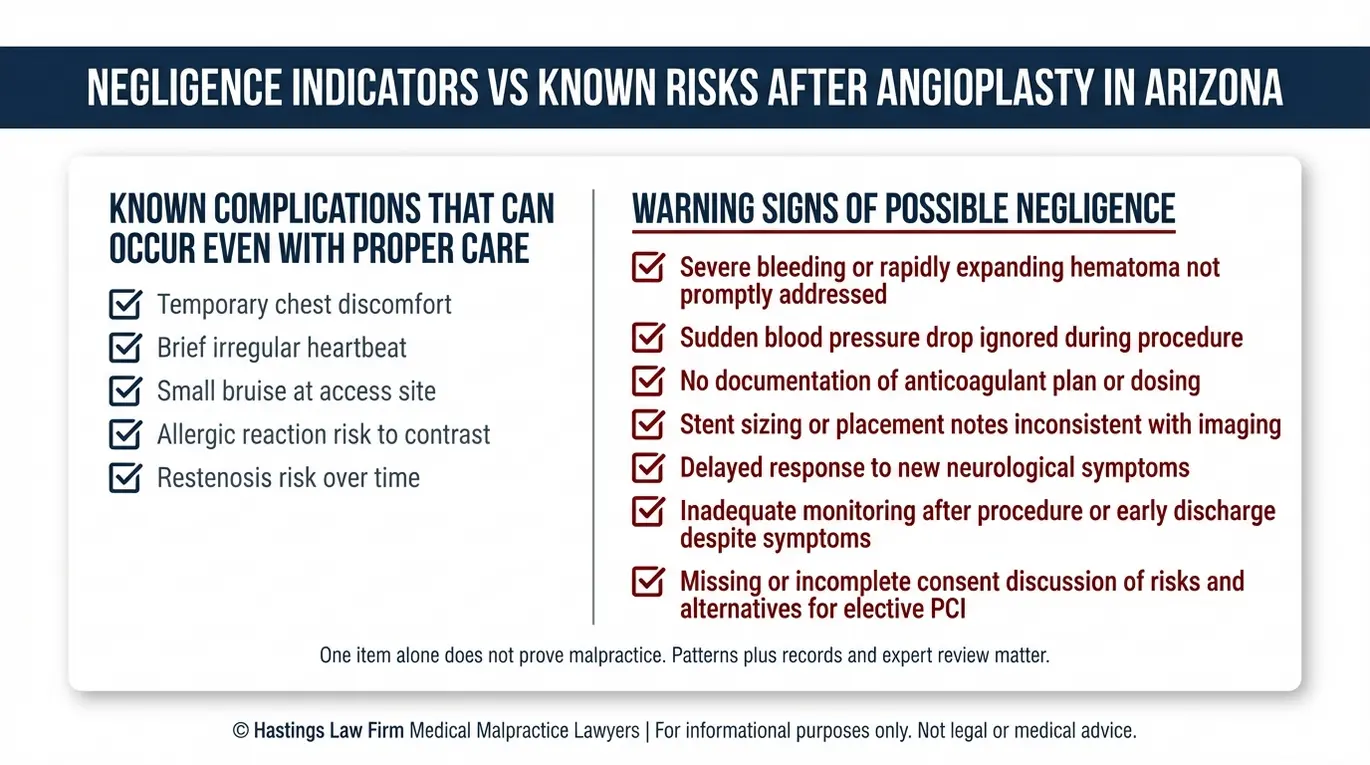
Not every negative outcome is malpractice; negligence occurs only when the physician deviates from the accepted standard of care, meaning a competent cardiologist would have acted differently under similar circumstances to prevent the harm.
The standard of care in interventional cardiology refers to the level of skill, attention, and treatment that a reasonably qualified cardiologist would provide given the same patient presentation and clinical setting. This standard is established through expert testimony, peer-reviewed literature, and accepted clinical guidelines. An Arizona angioplasty malpractice lawyer builds a case by demonstrating where this standard was breached.
Angioplasty negligence attorneys understand that one of the most common points of confusion involves the distinction between a known risk and a preventable error. A coronary artery dissection, a tear in the artery wall, is a recognized complication of angioplasty. Pericardial tamponade, a dangerous buildup of fluid around the heart caused by a perforation, is also a known risk.
But having a risk listed on a consent form does not shield a doctor from liability if their actions fell below the standard of care. For example, puncturing an artery is a known risk, but ignoring the resulting bleed or failing to have proper emergency equipment available may constitute negligence.
Under Arizona Revised Statutes § 12-563, a patient pursuing a medical malpractice claim must prove that the healthcare provider failed to meet the standard of care and that this failure directly caused injury.
The following factors can help distinguish negligence from a recognized complication:
- A known risk was listed on the consent form, but the doctor’s technique in handling the complication was substandard
- Warning signs during or after the procedure, such as a heart attack or arrhythmia, were documented in the records but not acted upon
- Standard safety protocols, such as pre-procedure imaging or lab work, were skipped
- Equipment or personnel required for emergency response were not available
- Post-procedure monitoring was inadequate or prematurely discontinued
- The procedure was performed without proper clinical justification
Our team examines the full medical record, including catheterization lab logs, nursing notes, anesthesia records, and post-procedure monitoring data. We work with independent cardiology experts to determine whether the treating physician’s decisions fell within or outside the accepted standard of care.
System Failures and Post-Procedure Monitoring
Negligence does not always happen inside the catheterization lab. Some of the most preventable injuries occur afterward, during the recovery and monitoring phase. An access-site hematoma, a collection of blood at the catheter insertion point in the groin or wrist, can develop into a serious or even life-threatening bleed if nurses fail to check the site at required intervals.
Poor ICU handoffs, inadequate staffing, or unclear post-procedure orders can create gaps in monitoring that allow complications to escalate. When system-level breakdowns or nursing negligence occur, the hospital or facility may share liability alongside the treating physician. We evaluate these institutional failures as part of every angioplasty malpractice case we take on.
Unnecessary Angioplasty and Informed Consent Issues
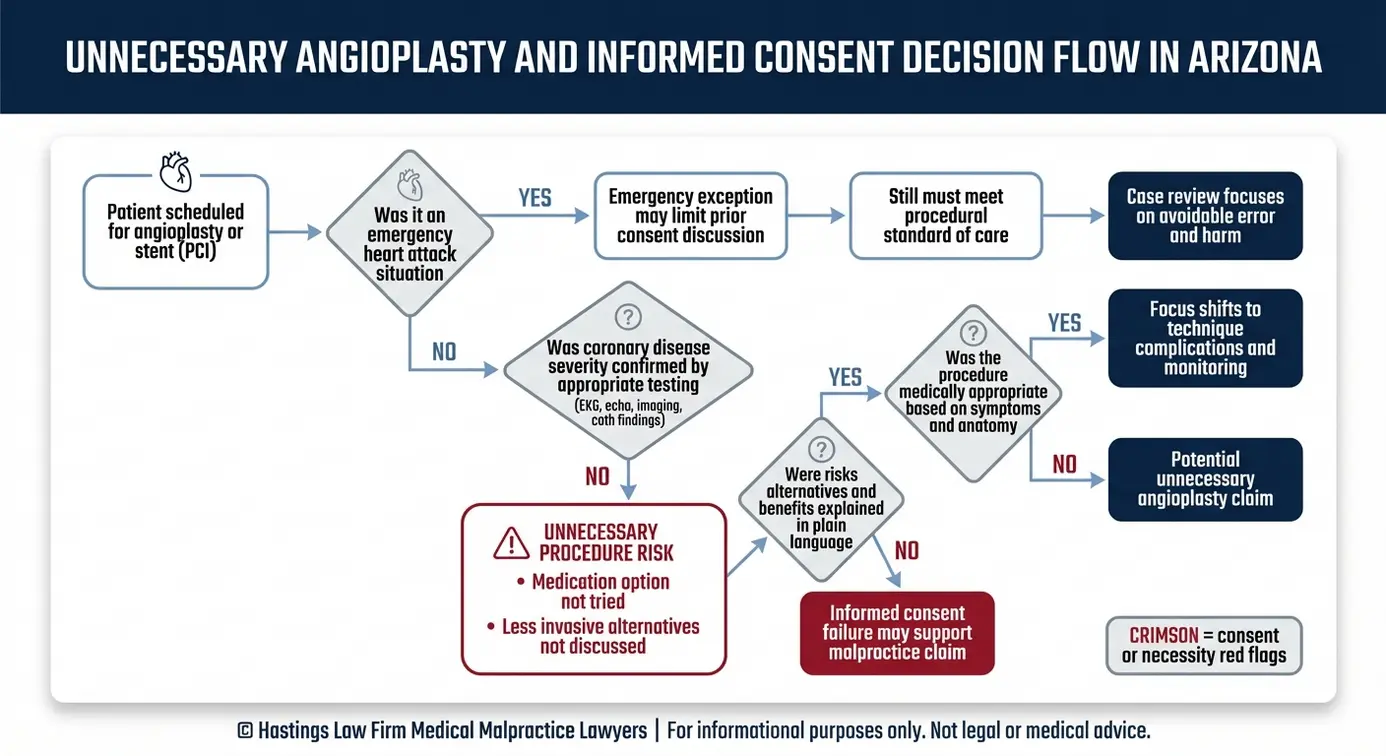
Malpractice claims may arise if a cardiologist performs an invasive angioplasty on a patient who only required medication management, or if they failed to fully disclose the risks and alternatives prior to the procedure.
Research has raised serious questions about how often elective angioplasties are performed without clear medical justification, sometimes driven by financial incentives. A systematic review in PubMed Central examined the appropriateness of percutaneous coronary interventions. It found that a significant percentage of elective PCIs did not meet Appropriate Use Criteria (AUC). These evidence-based guidelines define when PCI is medically justified rather than conservative treatment like medication and lifestyle changes.
An Arizona angioplasty malpractice lawyer can investigate whether the decision to proceed with PCI was clinically supported or whether it exposed the patient to unnecessary procedure risks. In cases of coronary artery disease, medication is often a safer first step than elective surgery.
Informed consent is the other side of this issue. Before any elective procedure, a patient has the legal right to be told about the risks, benefits, and alternatives, including the option of not having the procedure at all.
For valid informed consent to exist, the following elements must generally be present:
- The specific risks of the proposed angioplasty and stenting were explained
- Alternative treatment options, including medication therapy and lifestyle changes, were discussed
- The patient was given an opportunity to ask questions
- The patient voluntarily agreed to proceed based on the information provided
There is an important exception: during an active heart attack, the emergency nature of the situation may limit the consent discussion. But for planned, elective angioplasties, the consent requirements are more rigorous. If a patient was not meaningfully informed about conservative alternatives, the physician may be liable for performing an unjustified intervention. In any angioplasty lawsuit Arizona courts require proof that the patient would not have consented if fully informed.
Compensation and Damages in Cardiac Injury Cases
Victims of angioplasty malpractice in Arizona may recover economic damages for medical bills and lost wages, as well as non-economic damages for pain, suffering, and loss of quality of life. The specific value of a claim depends on the severity of the injury, the cost of ongoing care, and how the injury has affected the patient’s daily life and livelihood. In Arizona, these legal claims help patients manage the high costs of cardiac recovery.
Recoverable damages in cardiac injury cases can include:
- Medical expenses: Emergency treatment, corrective surgeries such as coronary bypass, extended hospital stays, cardiac rehabilitation, and future medical care
- Lost income: Wages lost during recovery and reduced earning capacity if the injury limits the patient’s ability to work
- Pain and suffering: Physical pain from the injury and subsequent procedures
- Emotional distress: Anxiety, depression, and psychological trauma resulting from a preventable cardiac event
- Loss of consortium: Compensation for a spouse whose relationship has been affected by the patient’s injury
- Wrongful death: If a loved one died during or after the procedure due to negligence, surviving family members may pursue a wrongful death claim for funeral costs, loss of companionship, and lost financial support
An Arizona angioplasty malpractice lawyer at Hastings Law Firm can work with medical and financial experts to document the full scope of your losses and build a case that reflects both your current needs and your long-term recovery.
Contact the Arizona Healthcare Malpractice Attorneys at Hastings Law Firm Today for Help
You are not just a case number. At Hastings Law Firm, every client is a partner in the process. Our team of medical malpractice attorneys, in-house nurses, and board-certified patient advocates will review your records, identify what went wrong, and explain whether you have a viable claim.
Tommy Hastings, our founder and a board-certified trial lawyer, has built this firm around one principle: holding negligent providers accountable protects the next patient. If you or a loved one was injured during an angioplasty or stenting procedure in Arizona, we are ready to listen.
The consultation is free and confidential. You pay no attorney fees unless we recover compensation for you. Contact an Arizona angioplasty malpractice lawyer at Hastings Law Firm to get the answers you deserve.
Frequently Asked Questions About Angioplasty Malpractice in Arizona


This content was researched and written by the Hastings Law Firm editorial team, which includes attorneys, medical professionals, and experienced researchers. Our writing is informed by internal knowledge and practical experience, and we cross-check critical details against authoritative sources cited throughout. Every piece undergoes human-led fact-checking and legal review. Because legal and medical information can change, if you spot an error, please contact us. Learn more about our content standards and review process on our editorial policy page.

Tommy Hastings, founder of Hastings Law Firm, is a board-certified personal injury trial lawyer dedicated exclusively to healthcare injury cases. Since 2001, he has represented injured patients and families in litigation against major hospital systems, pharmaceutical companies, and negligent healthcare providers nationwide. He has handled numerous high-profile cases that have drawn national media attention and resulted in multi-million dollar recoveries. He draws on that experience in his writing, helping readers understand how these cases work and what options may be available to them.
