


Arizona Birth Injury Lawyer
Written by: Hastings Law Firm | Reviewed by: Tommy Hastings | Updated: May 6, 2026
Birth injuries tied to labor and delivery care can leave families facing overwhelming uncertainty, ongoing medical needs, and lasting emotional strain. In Arizona, these claims often focus on whether a care team recognized warning signs, monitored fetal distress, used medications and instruments safely, and made timely decisions when complications arose. The article also addresses how post delivery care in the NICU can affect outcomes, how disputes over genetics versus preventable injury arise, and how lifetime care costs are evaluated. If you or a loved one were harmed or worse due to birth injury and labor negligence in Arizona, contact Hastings Law Firm for a free, confidential case review.

Trusted Arizona Attorneys for Birth Injury and Labor Negligence Claims
What You Should Know About Labor & Delivery Negligence Claims in Arizona:
- Long term and life altering harm can follow when labor and delivery teams miss warning signs or delay critical intervention.
- Lasting neurological injury can be linked to oxygen deprivation when fetal monitoring concerns are not recognized or acted on.
- Serious physical trauma can result when delivery instruments are used with excessive force or when shoulder dystocia is handled improperly.
- Ongoing harm can continue after delivery when NICU care is delayed or inadequate during time sensitive emergencies.
- Disputes over what caused a child condition can shape outcomes when the defense argues genetics or pre existing development rather than delivery related injury.
- Responsibility can extend beyond one clinician when hospitals have staffing or policy failures or when communication breakdowns occur across the care team.
- Hospital accountability can be contested when a facility claims a physician was an independent contractor rather than an employee.
- Financial recovery can be driven by lifetime care needs when injuries require ongoing treatment, adaptive support, and long term assistance.
- Options can narrow if time limits or special public entity requirements are missed in Arizona.
- Key evidence can be central when fetal monitoring strips, medication records, nursing notes, and facility deficiency records clarify what happened and when.

A Healthcare Focused Law Firm
When your child has been harmed during labor or delivery, the weight of that experience can feel impossible to carry. You may be managing unexpected medical appointments, searching for answers about what went wrong, and wondering whether anyone will take your concerns seriously. These feelings are valid, and you have every right to ask hard questions about the care your family received.
An experienced Arizona birth injury lawyer can help you understand what happened and whether medical negligence played a role. Founded by board-certified trial attorney Tommy Hastings, Hastings Law Firm focuses exclusively on medical malpractice. Our team of attorneys, in-house nurses, and patient advocates is here to listen, investigate, and explain your legal options. If you believe your child was injured by a preventable medical error, contact us for a free, confidential case evaluation.
Defining Medical Malpractice in Arizona Labor and Delivery Wards
Medical malpractice in labor and delivery occurs when a healthcare provider deviates from the accepted standard of care, resulting in preventable harm to the mother or infant. Establishing liability often requires proving medical negligence. The standard of care is the level of treatment a reasonably competent medical professional would provide under similar circumstances. In the delivery room, this means responding appropriately to warning signs, using instruments correctly, and making timely decisions about intervention.
One common warning sign of delivery room distress may appear on electronic fetal monitoring (EFM), a technology that continuously tracks the baby’s heart rate and the mother’s contractions during labor. When EFM readings suggest fetal distress, a condition where the baby is not receiving adequate oxygen, the care team is expected to act quickly. Failing to recognize or respond to those patterns can have serious consequences.
Many parents hesitate to question the decisions made by their doctors or nurses. Years of trusting medical professionals can make it feel uncomfortable, even wrong, to challenge what happened. But having questions does not mean you are being adversarial. It means you are protecting your child. Arizona birth injury lawyers who focus on medical malpractice understand how to review clinical decisions objectively and determine whether the care your family received fell below the standard.
These cases involve layers of medical evidence that require specialized knowledge. A general personal injury attorney may not have the clinical resources to evaluate fetal heart rate tracings, medication timing, or nursing documentation with the precision these claims demand. That is why working with a birth injury attorney who has direct access to medical professionals matters.
Common Medical Errors During Childbirth in Arizona Hospitals
Common errors during childbirth include failure to monitor fetal distress, delayed C-sections, improper use of delivery instruments like forceps, and medication administration errors involving Pitocin. Each of these failures can lead to preventable harm when the care team does not follow established clinical protocols.
Here are some of the most frequent types of errors we evaluate in birth injury cases:
- Failure to monitor fetal heart rate patterns: When nurses or physicians ignore non-reassuring patterns on the monitor or fail to escalate concerns, critical intervention time can be lost, leading to oxygen deprivation.
- Delayed C-section: This occurs when the medical team waits too long to perform a cesarean delivery after labor complications arise. In situations where labor has stalled or the baby shows signs of distress, delays of even minutes can affect outcomes.
- Medication errors involving Pitocin: Improper dosing of Pitocin can cause uterine hyperstimulation, leading to excessively frequent contractions that reduce blood and oxygen flow to the baby.
- Instrument misuse during delivery: While sometimes necessary, excessive force or improper technique during forceps delivery or vacuum extraction can cause skull fractures, nerve damage, or brain hemorrhage.
- Umbilical cord complications: Conditions such as cord prolapse or nuchal cord require immediate recognition and response. Delayed action when the cord is compressed can quickly lead to oxygen deprivation.
A birth injury lawyer in Arizona with access to medical professionals can reconstruct the timeline of events to determine whether any of these errors contributed to your child’s injury. Our team includes in-house nurses who review nursing logs, medication administration records, and fetal monitoring strips to identify exactly where the breakdown in care occurred.
Negligence in the Neonatal Intensive Care Unit
Not all birth injuries happen in the delivery room. Some occur in the hours and days that follow, particularly when a newborn requires care in the neonatal intensive care unit (NICU), which is the specialized hospital unit designed to treat critically ill or premature infants.
In the NICU, common NICU errors can result in lasting neurological harm. These include failure to promptly treat neonatal sepsis, delayed neonatal resuscitation, or inadequate management of jaundice. Oxygen deprivation that goes unaddressed in these early hours can compound injuries that may have been survivable with proper treatment. An Arizona birth injury attorney can investigate whether post-delivery care met the standard your child deserved.
The Hastings Law Firm Difference
Results matter, but what truly sets us apart is how we achieve them. Every verdict, every settlement, and every Arizona courtroom victory comes from one guiding promise: To treat each client’s fight for justice as if it were our own.
This balance of skill, experience, and empathy reflects our core philosophy that justice should not only compensate the injured, but also make healthcare safer nationwide.

Birth Injuries Caused by Delivery Room Negligence
Negligence during delivery can cause severe conditions such as cerebral palsy, Erb’s palsy, hypoxic-ischemic encephalopathy (HIE), and permanent brain damage due to oxygen deprivation. These injuries often require a lifetime of medical care, and understanding what caused them is the first step toward accountability.
Birth injuries generally fall into two categories: those caused by oxygen deprivation and those caused by physical trauma.
Hypoxic injuries occur when the baby’s brain is deprived of adequate oxygen during labor or delivery. Oxygen deprivation, also called birth asphyxia, can lead to HIE, a specific type of brain injury caused by reduced blood flow and oxygen to the brain around the time of birth. HIE is one of the leading causes of cerebral palsy, a group of disorders affecting movement, posture, and muscle coordination. The severity of these injuries depends on how long the oxygen deprivation lasted and how quickly the care team intervened.
Traumatic injuries involve physical damage during delivery. Shoulder dystocia, a condition where the baby’s shoulder becomes lodged behind the mother’s pubic bone during delivery, can result in brachial plexus injury if handled improperly. One of the most common outcomes is Erb’s palsy, which causes weakness or paralysis in the affected arm. Hypoxia can also occur during prolonged shoulder dystocia if delivery is not completed quickly.
Maternal injuries should not be overlooked. Mismanagement of preeclampsia, failure to control hemorrhage, and anesthesia complications can cause lasting harm to the mother. Arizona birth injury counsel evaluate the full scope of harm to the entire family.
| Injury | Common Negligent Cause |
|---|---|
| Cerebral palsy | Prolonged oxygen deprivation from delayed C-section or undetected fetal distress |
| Hypoxic-ischemic encephalopathy (HIE) | Failure to respond to non-reassuring fetal heart rate patterns |
| Erb’s palsy / Brachial plexus injury | Excessive traction during shoulder dystocia |
| Brain injury | Oxygen deprivation, instrument trauma, or untreated complications |
| Maternal hemorrhage | Delayed recognition or response to postpartum bleeding |
Distinguishing Preventable Birth Injuries from Genetic Defects
A birth injury is harm caused by physical pressure or oxygen deprivation during the birthing process, whereas a birth defect, also known as a congenital anomaly, is a structural or genetic abnormality that developed in the womb prior to labor. This distinction is one of the most contested issues in birth injury litigation.
Defense attorneys frequently argue that a child’s condition was caused by genetics or a pre-existing developmental issue rather than something that happened during delivery. This is a standard tactic designed to shift responsibility away from the medical team. But genetic testing, the analysis of DNA to identify inherited conditions, combined with a careful review of medical records and imaging, can often clarify causation and when the injury occurred.
| Factor | Birth Injury | Birth Defect |
|---|---|---|
| Timing | During labor, delivery, or shortly after birth | During fetal development (before labor) |
| Cause | Oxygen deprivation, physical trauma, medical error | Genetic mutation, chromosomal abnormality, environmental exposure |
| Evidence | Fetal monitoring strips, delivery records, Apgar scores | Prenatal imaging, genetic testing, family history |
| Legal relevance | May support a medical malpractice claim | Generally not caused by provider negligence |
Research published by PubMed Central confirms that birth asphyxia is associated with increased risk of cerebral palsy, reinforcing the medical link between delivery-room oxygen deprivation and neurological injury. Our birth injury attorney team works with national expert witnesses who specialize in differentiating between pre-existing conditions and injuries caused by medical error, using imaging timelines, lab results, and clinical records to establish when and how the harm occurred.

Identifying Liable Parties in Arizona Childbirth Negligence Cases
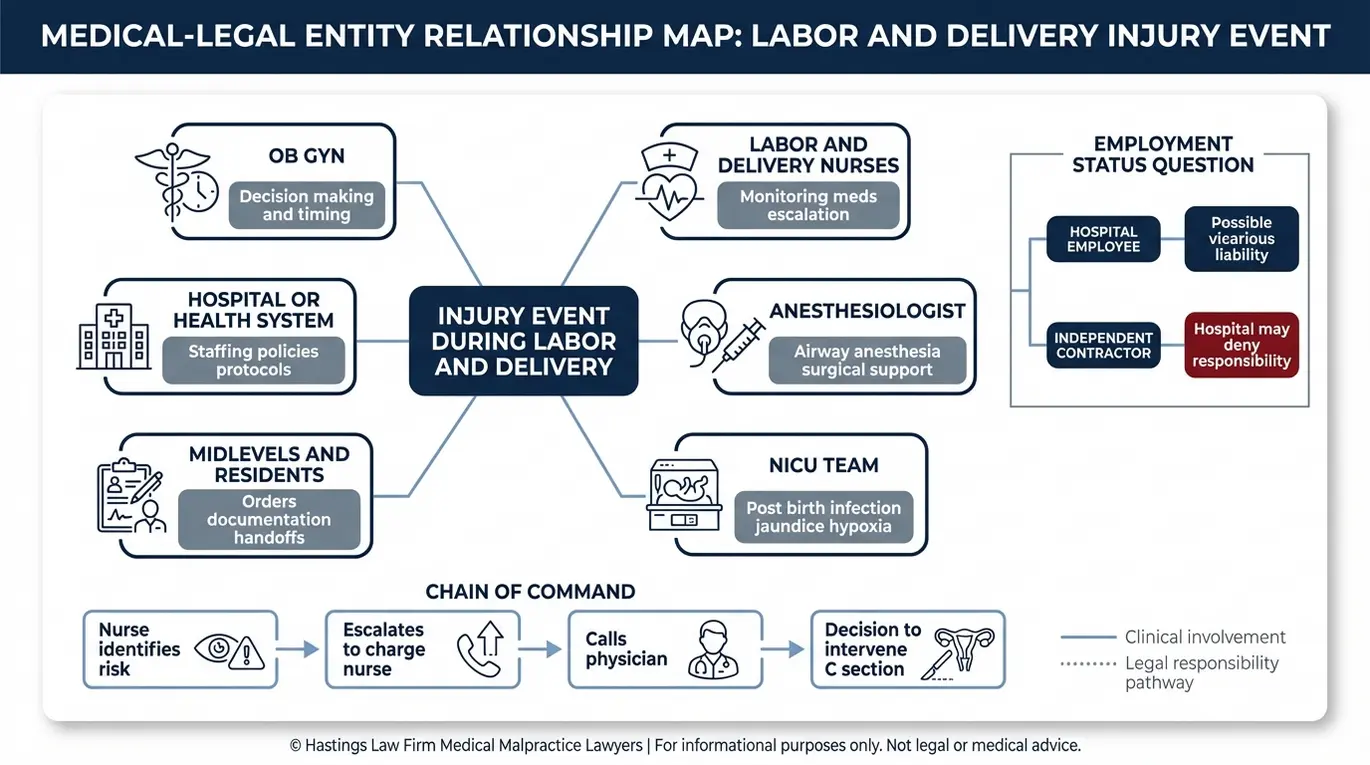
Liable parties in a birth injury case may include the obstetrician, the hospital for inadequate staffing or policies, nurses for medication errors, or anesthesiologists for mistakes during epidural placement or surgical anesthesia. Identifying every responsible party is essential to building a complete claim.
The hospital may bear liability when systemic failures contribute to harm. Hospital negligence may be established when a facility is understaffed during a high-volume shift, lacks proper fetal monitoring equipment, or has inadequate protocols for emergency response. The Arizona Department of Health Services Licensing Deficiencies Search provides public records of facility violations that may be relevant to a case.
The physician may be liable for errors in clinical judgment, such as failing to order a timely C-section, misinterpreting fetal heart rate data, or using excessive force during an assisted delivery. An Arizona birth injury lawyer examines the physician’s documentation and decision-making timeline against accepted standards.
Communication failures between members of the care team are a frequent factor. When nursing staff identify concerning fetal heart rate changes but the information is not escalated to the attending physician, or when shift changes lead to lost information, the resulting gap in care can cause serious injury. Anesthesia complications may also result if anesthesiologists make critical errors during administration. Our Phoenix birth injury attorneys understands how to trace these chain-of-command breakdowns through nursing notes, call logs, and hospital communication records.
Independent Contractor Versus Hospital Employee Liability
A common defense strategy in Arizona involves hospitals arguing that the physician who caused the injury was not a hospital employee but an independent contractor. This arises during medical malpractice litigation where the facility attempts to avoid responsibility for the provider’s actions.
We investigate the actual working relationship between the provider and the facility. Factors such as scheduling control, billing practices, and the use of hospital resources can establish that the hospital maintained enough control over the physician’s work to share legal responsibility, regardless of the contract label. This shared responsibility is often called vicarious liability.
Calculating Financial Recovery for Lifetime Care Costs
Compensation in birth injury cases covers past and future medical expenses, life care planning costs, pain and suffering, and loss of earning capacity for the child. Because many birth injuries require decades of ongoing care, accurately calculating these costs is one of the most important parts of the case.
A thorough damages analysis covers economic damages and non-economic damages, including:
- Past and future medical expenses: Surgeries, hospitalizations, specialist visits, medications, physical therapy, occupational therapy, and speech therapy
- Adaptive equipment and home modifications: Wheelchairs, communication devices, vehicle modifications, and accessible housing changes
- 24/7 personal care attendants: For children who will need assistance with daily living activities throughout their lives
- Life care planning costs: A certified life care planner projects the total cost of care over the child’s expected lifetime. Research indexed by PubMed on certification standards for life care planners coordinating care for individuals with acquired brain injury reflects the specialized expertise required for these projections.
- Loss of earning capacity: The income the child would have reasonably been expected to earn over a working lifetime
- Pain and suffering: The physical pain, emotional distress, and diminished quality of life experienced by the child and, in some cases, the parents
- Loss of enjoyment of life: The inability to participate in activities and experiences that would otherwise be part of a full life
Arizona birth injury litigation requires precise economic modeling. Our birth injury law firm works with life care planners, economists, and vocational experts to present a complete picture of the financial impact on your family, both now and for the rest of your child’s life.
How Hastings Law Firm Investigates Birth Injury Claims
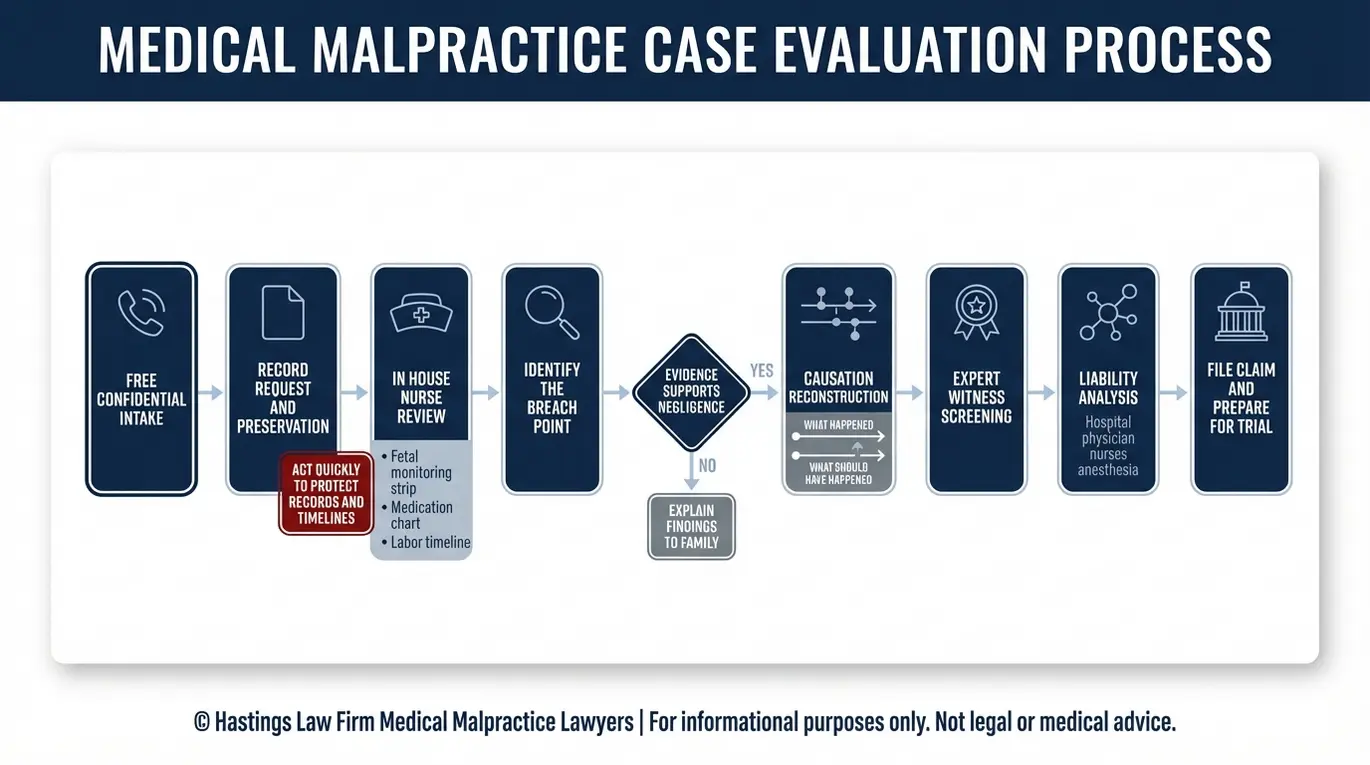
Our process begins with a free evaluation led by a patient advocate, followed by a thorough review of medical records by in-house nurses to identify the exact point where negligence may have occurred. We work on a contingency fee basis, so you pay nothing upfront and owe no attorney fees or costs unless we secure a recovery on your behalf.
Once your case is accepted, our Arizona birth injury lawyer team and medical staff work together to reconstruct the full clinical timeline. Our in-house nurse practitioners and board certified patient advocates analyze fetal monitoring strips, medication logs, nursing notes, and physician orders to pinpoint where the standard of care may have been breached. This collaboration between legal and clinical professionals is central to how our birth injury legal team builds each case.
We take this approach because families who contact us are often looking for more than compensation. They want to know what actually happened, and they want to prevent it from happening to someone else. Those goals drive every investigation we conduct.
Contact the Arizona Birth Injury Attorneys at Hastings Law Firm Today for Help
If your child suffered a preventable injury during labor or delivery, your family deserves clear answers and a legal team that knows how to find them. Arizona has time limits for filing birth injury claims, and critical evidence such as fetal monitoring data and staffing records can become harder to obtain as time passes.
Hastings Law Firm is built for exactly these cases. Our attorneys, nurses, and patient advocates work together to investigate medical negligence and hold the responsible parties accountable, so families can focus on their child’s care and future.
Contact us today for a free, confidential case evaluation. There is no fee unless we recover compensation for your family. Call our Arizona office or submit your information online to speak with a member of our team.
Frequently Asked Questions About Birth Injury in Arizona

Key Birth Injury Terms:
- Electronic fetal monitoring (EFM)
- A method of tracking a baby’s heart rate and the mother’s contractions during labor using sensors placed on the mother’s abdomen or internally. In a medical malpractice case, EFM is critical because it provides a permanent record that can show whether healthcare providers recognized and responded appropriately to signs of fetal distress.
- Fetal distress
- Warning signs during labor that a baby is not getting enough oxygen or is otherwise in danger, often detected through abnormal heart rate patterns on fetal monitors. When doctors or nurses fail to recognize or act on fetal distress, it can lead to permanent brain injury or death and may constitute medical negligence.
- Delayed C-section
- A situation where medical staff wait too long to perform a cesarean delivery when labor is not progressing safely or the baby shows signs of distress. In a malpractice claim, proving that a C-section should have been performed earlier can demonstrate that the healthcare team’s delay caused preventable harm to the baby or mother.
- Pitocin (oxytocin)
- A synthetic hormone medication given intravenously to induce or speed up labor by causing the uterus to contract. Improper dosing or failure to monitor its effects can lead to excessively strong contractions that deprive the baby of oxygen, which may be grounds for a negligence claim if it results in injury.
- Oxygen deprivation (birth asphyxia)
- A condition where a baby does not receive adequate oxygen before, during, or immediately after birth, which can cause brain damage, cerebral palsy, or death. In birth injury cases, oxygen deprivation is often the result of delivery room errors such as delayed intervention, improper monitoring, or mismanagement of complications.
- Shoulder dystocia
- A delivery complication where the baby’s shoulder becomes stuck behind the mother’s pelvic bone after the head has already emerged. If not managed promptly and correctly, shoulder dystocia can cause nerve damage, such as Erb’s palsy, and may indicate negligence if the provider failed to anticipate the risk or use proper techniques.
- Birth defect (congenital anomaly)
- A structural or functional abnormality present at birth that develops during pregnancy, often due to genetic factors, environmental exposures, or unknown causes. In malpractice cases, it is important to distinguish congenital anomalies from injuries caused by medical errors during labor and delivery, as only the latter may be grounds for a negligence claim.
- Genetic testing
- Medical tests performed during pregnancy or after birth to identify inherited conditions or chromosomal abnormalities in the baby. In the context of a birth injury claim, genetic testing results can help establish whether a child’s condition was caused by a preventable delivery error or was instead due to a pre-existing genetic factor.
- Neonatal intensive care unit (NICU)
- A specialized hospital unit equipped to provide advanced medical care for newborns who are premature, seriously ill, or injured at birth. Negligence in the NICU, such as medication errors, failure to monitor vital signs, or delayed treatment of infections, can worsen a baby’s condition and may support a malpractice claim.
- Neonatal resuscitation
- Emergency medical procedures performed immediately after birth to help a newborn begin breathing and stabilize vital functions when the baby is not breathing adequately or has a weak heartbeat. Failure to perform timely and proper resuscitation can result in brain damage or death and may constitute negligence if the medical team did not follow established protocols.
- 12 542 Injury to person injury when death ensues injury to property conversion of property forcible entry and forcible detainer two year limitation | Arizona Legislature
- 12-2603 Preliminary expert opinion testimony against health care professionals | Arizona Legislature
- Birth Asphyxia Is Associated With Increased Risk of Cerebral Palsy A Meta Analysis | PubMed Central
- Certification standards of professionals coordinating life care plans for individuals who have acquired brain injury | PubMed
- Licensing Services Statement of Deficiencies Search Page | Arizona Department of Health Services
Get Answers Today
If you think that medical negligence, a dangerous drug, or a failed medical product caused harm to you or someone you love, our team is standing by to offer guidance. We’ll explain your options under current laws and help you move forward with clarity and understanding. Case reviews are free and 100% confidential.